Video: What Would You See As You Plummet Into a Black Hole?

A new simulator has the answer

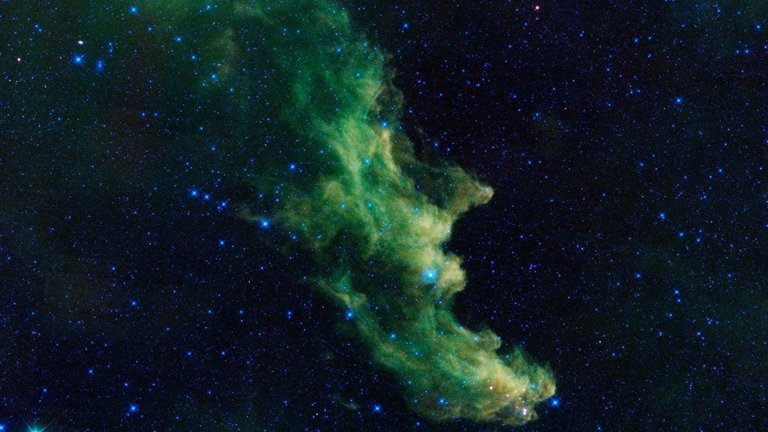
By definition, one can't see a black hole itself, only its effect on the light of intervening stars. And without some serious equipment, even that's a tall order. Luckily for all us amateur astronomers, Thomas Müller and Daniel Weiskopf of the University of Stuttgart, Germany, have created a simulation that uses actual star data to calculate exactly what seeing the Schwarzschild black hole would look like.

[ Read Full Story ]

Virginia Professor: We Have a 'Moral Obligation' to Spread Life Throughout the Universe


The world is ending. Not right now, mind you, but we can rest assured that it will end. Whether from massive star explosions in nearby solar systems, a collision with another body in space or the death of our own sun, life on this planet -- all life -- at one point will cease to be. And according to Michael Mautner of Virginia Commonwealth University, we have a moral obligation to seed life throughout the universe before that happens.

[ Read Full Story ]

Google Buzz Tackles Twitter, Facebook


Google Buzz Stream:
Google loves nothing more than redefining vast tech industry sectors with a single stomp of its Godzilla paw. And in unveiling their latest creation today, a social networking and sharing platform for Gmail and mobile phones called Buzz, the Goog Monster has set its sights squarely on Facebook.

[ Read Full Story ]

Miniature Sensor Perpetually Charges Self Using Environmental Energy


Scientistsu, engineers, and doctors yearn for tiny sensors to record a vast array of events in the world's many hard-to-reach places. And so far, the tradeoff between battery life and size has prevented sensors from becoming small enough to fit unobtrusively in the human body, or inside very small machines. Now, University of Michigan researchers seem to have solved that puzzle by creating a chip that draws energy through solar power, heat, or movement.

[ Read Full Story ]

On DARPA's List: a Real-Time, 3-D Picture of The Earth Beneath Our Feet


DARPA wants to know what's happening in the skies overhead and seeks full situational awareness on the ground, so we suppose it's no surprise that now it wants full, real-time surveillance of what's happening beneath the surface.

[ Read Full Story ]

To Deter Plague of Bark Beetles, A Boombox Blasting Bug Sounds


Bark beetles plague the forests of Canada so furiously you'd think rivers of blood and the death of the firstborn would follow hot on their heels. So far, no one has stopped the beetle rampage that has destroyed 33 million acres of trees in British Columbia. However, scientists at Northern Arizona University (NAU) may have devised a way to turn back the beetle tide using sound recordings.

[ Read Full Story ]

Marijuana Research Offers New Hope For Male Birth Control Pill


The male birth control pill has lingered for years tantalizingly just out of reach, in the realm where rumor meets science. Recently developed hormonal and mechanical contraceptives never found an audience, serving only to highlight the absence of a male pill. Now, an examination of how smoking pot lowers fertility may make the male pill more than a persistent rumor.

[ Read Full Story ]

New Breed of Variable-Pressure Touchscreens Harnesses Quantum-Mechanical Phenomenon


Tapping a principle of quantum mechanics and a medieval-looking nanoparticle, a UK firm has created a composite material that may soon deliver efficient, pressure-sensitive touchscreens to numerous devices. Yorkshire-based Peratech has already licensed the technology to a division of Samsung that provides mobile components to other handset manufacturers, but it's in the growing realm of touchscreen tech where the potential for Quantum Tunneling Composite (QTC) is most exciting.

[ Read Full Story ]

Marine Corps' Unmanned Programmable Copter Passes First Major Test


The difficulty of supplying remote outposts across rugged terrain has contributed to many of the deadliest moments in the Afghan War, by preventing the delivery of weapons and ammo to engaged soldiers, forcing supplies to travel over dangerous roads, or turning helicopters into vulnerable targets. Last June, the Marines put out a call for a helicopter UAV to solve those problems. Now, with a successful demonstration at Utah's Dugway Proving Grounds, the Marines might have found their robocopter.

[ Read Full Story ]

California Utilities to Store Off-Peak Power In Blocks of Ice


It seems like a perennial story in the Golden State: the temperatures go up, air conditioners across the state kick into high gear and power utilities simply can't keep up. Now, a group of Southern California utilities plans to combat the state's searing summers with ice, building a 53-megawatt distributed energy storage project that will lock away off-peak cooling power for use during the sweltering mid-day peak.

[ Read Full Story ]
Page 1 of 792 12345678910next ›last »


Download Our iPhone App

Stay up to date on the latest news of the future of science and technology from your iPhone with full articles, images and offline viewing


Grab the Tech Buyer's Guide iPhone App

Carry everything you need to make a smart buy on HDTVs, cameras and 14 other product categories right in your pocket


Follow Us On Twitter

Featuring every article from the magazine and website, plus links from around the Web. Also see our PopSci DIY feed


Become a Fan On Facebook

Share links with friends, comment on stories and more


February 2010: Renovating America

Innovative fixes for five of the country's biggest infrastructure messes, plus a look the quest to read the human mind, the LCD screen that might finally kill paper dead, and the world's scariest science.

Read the issue here.

Popular Science Photo Pool


Share your photos in the Pop Sci pool at www.flickr.com!