
We may earn revenue from the products available on this page and participate in affiliate programs. Learn more ›
Anyone can pull an espresso shot. Pulling a good one, however, can be a lifelong pursuit. Every new bag of beans is a new problem to solve. You have to accommodate a different roast, a different density, a different age, all of which mean a different grind size, dose, and temperature if you want the shot to actually taste good. The process can literally feel like working in a laboratory, which can be cool, but not when you’re bleary eyed and trying to get caffeinated. The trial and error of dialing in your espresso isn’t always a joyous pursuit.
The De’Longhi PrimaDonna Aromatic is the first home machine I’ve tested that genuinely alleviates that learning curve. Its new Bean Adapt and Adaptive Grinding technologies do the thing every super-automatic has claimed to do for a decade but has never really delivered: they read the beans you put in, set the machine up for them, and then keep adjusting as the shots come out. This machine certainly isn’t cheap, but it really is a complete coffee solution that will pay for itself in the long run, especially if you’re hitting the drive through every day.
Pros
- Bean Adapt and Adaptive Grinding take the guesswork out of dialing in
- Three dedicated extraction methods cover espresso, drip, and cold brew
- Cold brew in under three minutes is genuinely useful
- 5-inch touch display is sharp, responsive, and easy to navigate
- LatteCrema Hot and Cool handle dairy and plant-based milks well
- Four user profiles and six bean profiles make it a real household machine
Cons
- $2,499.95 is a serious investment for a home coffee maker
- Footprint is substantial and not every kitchen has room for it
- Automation may feel like a black box to anyone who loves to dial in manually
The short version
The De’Longhi PrimaDonna Aromatic is an unapologetically expensive super-automatic machine that can make just about every drink you’d find on a menu at a fancy coffee shop (and even a few you won’t find). The big selling points are the Bean Adapt and Adaptive Grinding features that let you quickly get your ideal cup out of any kind of beans, from Ethiopian, dark Italian roast, medium blend, or even decaf. The rest of the package (three extraction methods, a 38-drink menu, great milk frothing, award-winning design) is excellent, but the automation is the reason you’re shelling out the cash. Purists who love to dial in by hand will want to look elsewhere. Everyone who wants to replace an expensive takeout coffee habit should pay attention.
A brain for beans
To understand why Bean Adapt is a big deal, it helps to know what dialing in espresso actually involves. Every bag of beans extracts differently. A light Ethiopian roast is denser and needs a finer grind and a little more time than a dark Italian roast. Fresh beans off the roaster need a coarser grind than beans that have been sitting in a bag for three weeks. Humidity affects the grind. Temperature affects the grind. And because espresso is a pressurized, time-sensitive process, tiny changes in any of those variables mean the difference between a shot that tastes bright and balanced and one that tastes sour, bitter, or thin.
On a traditional espresso machine, you have to manage all of that and it’s an iterative process. You pull a shot, you taste it, you adjust the grinder a hair, you pull another shot, you taste that one, you repeat. Serious home baristas do this every time they open a new bag, and they keep doing it as the beans age. It’s a skill, and it takes time to develop and time to execute. Or, you could lose interest and settle for a sub-par cup.
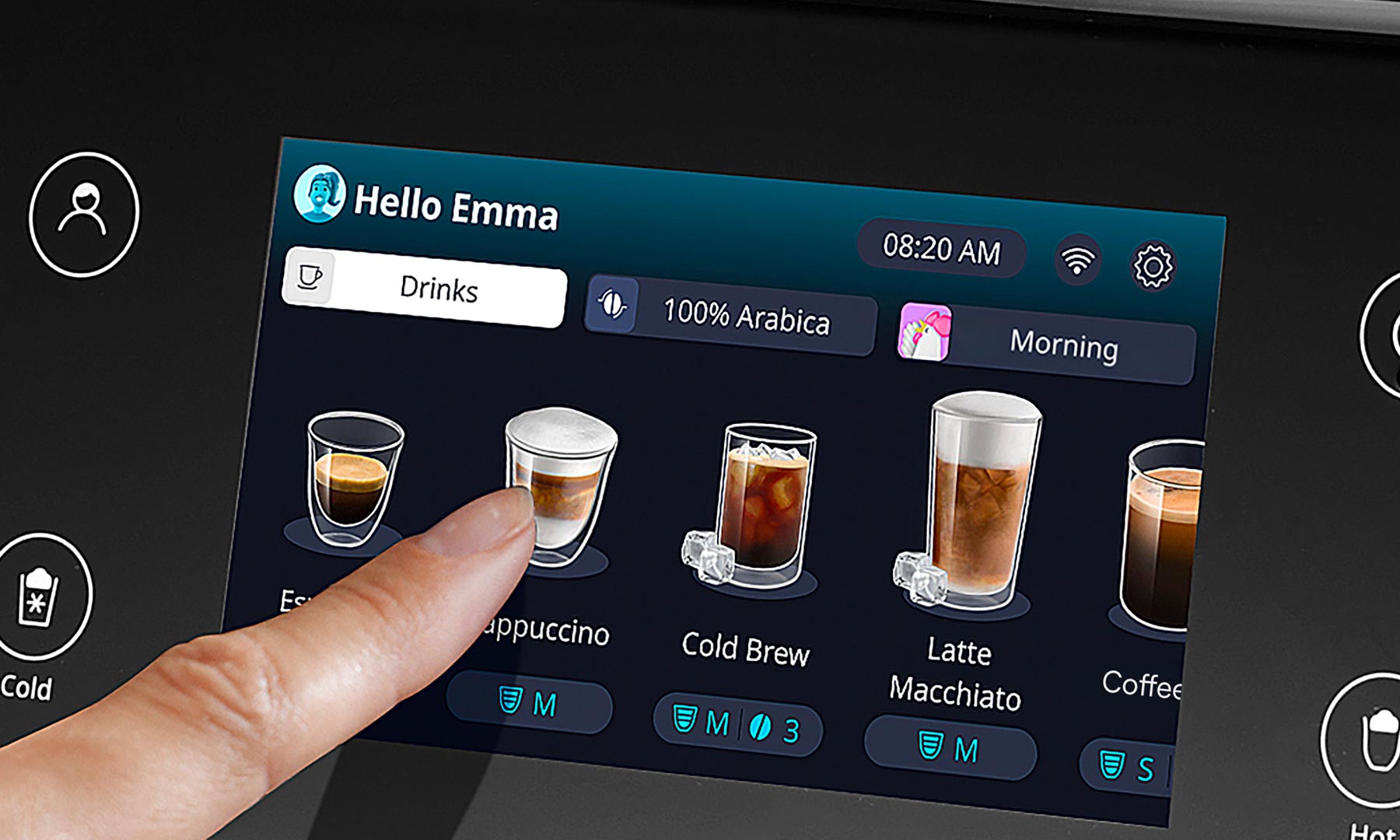
Bean Adapt attempts to (and largely succeeds in) all of that. The process starts on the 5-inch touchscreen. When you load new beans, the machine walks you through a short setup flow. You tell it the roast level on a simple scale, note the origin if you want to, and confirm a couple of other basics like whether the beans are oily (which matters for grinder behavior). From that information, the PrimaDonna Aromatic sets a starting grind size, dose, and brew temperature that it believes will produce a balanced shot from those specific beans. You save the result as a named bean profile, and from then on, any drink you pull under that profile uses those parameters as the starting point.
From there, the Adaptive Grind technology monitors extraction on every shot. It keeps track of how long the puck resists water, how the flow develops, and other variables. It uses that information to make small, automatic adjustments to the grind on subsequent shots to keep the extraction profile consistent. A tighter grind helps accommodate slightly older beans. It can recognize when a new bag is pulling faster than usual. The idea is to handle the ongoing tuning that a barista would do by hand, without you having to taste-test your way through each morning.
In practice, across four different bags of beans from four very different categories, the system has mostly gotten out of its own way. Setting up a new bean profile takes about a minute, and the first shot from each new profile has been close enough to right that only small tweaks were necessary before dialing it in felt “done.” That is not normal behavior for a super-automatic at any price, and it’s not normal behavior for a home espresso setup at all.
This is where your bean quality comes into play. You need reliable information about the roast and grind so you can start with correct information. The process still works with cheap beans (it felt a little odd pouring Costco beans into a $2,499 machine), but it’s optimized for quality materials.
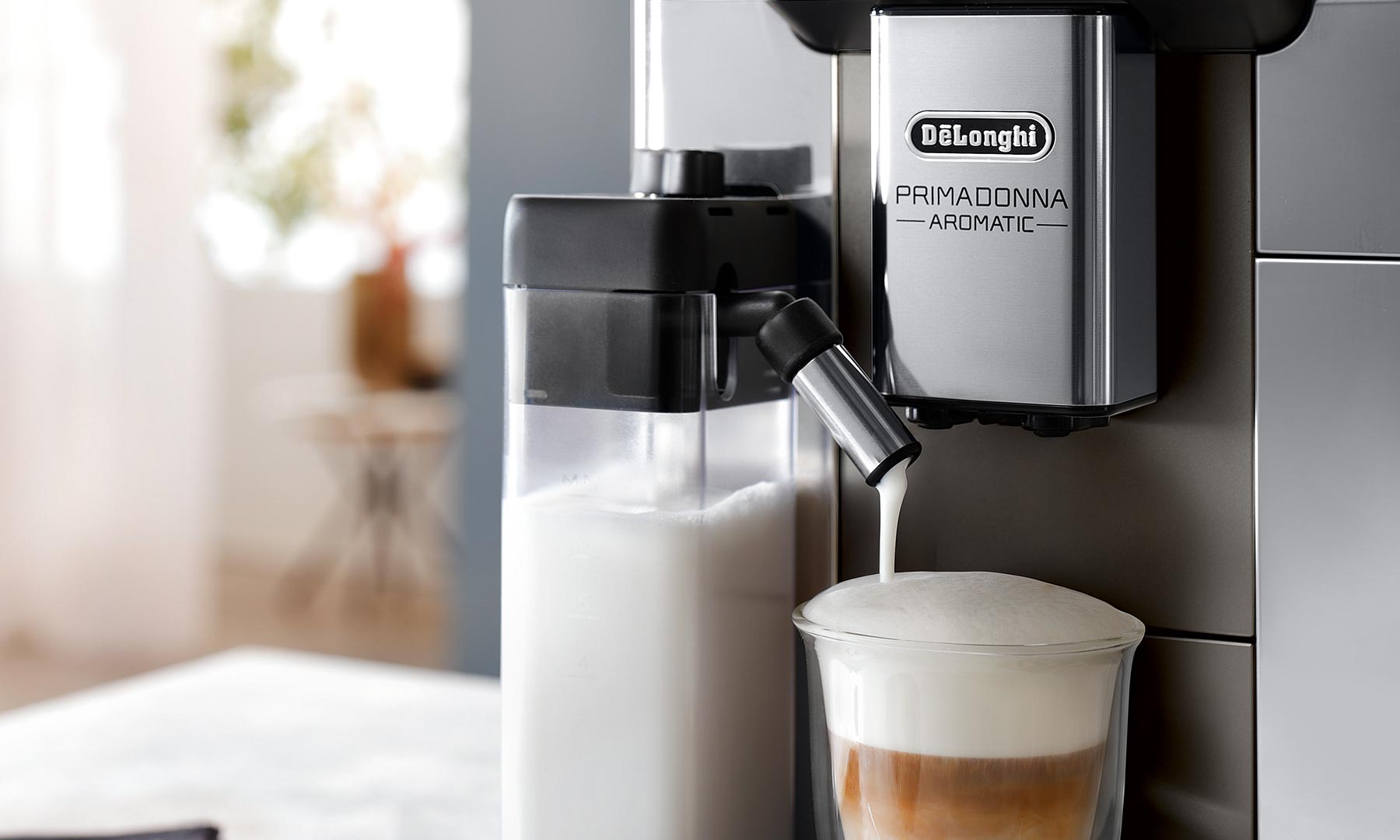
You can save up to six bean profiles at once, which sounds like a lot, but I was surprised how useful they are and how many we used. It takes the single most tedious part of switching beans and reduces it to a tap on a touchscreen.
Surely there are some true coffee snobs twirling their ironic mustaches in anger at this point in the review, but the machine doesn’t totally replace them. Bean Adapt isn’t trying to win a competition. It’s trying to make the 99th shot as good as the first one, and to let you switch beans without losing a weekend to tasting and adjusting. On that goal, it’s the most successful implementation I’ve seen in a consumer machine.
The build and design
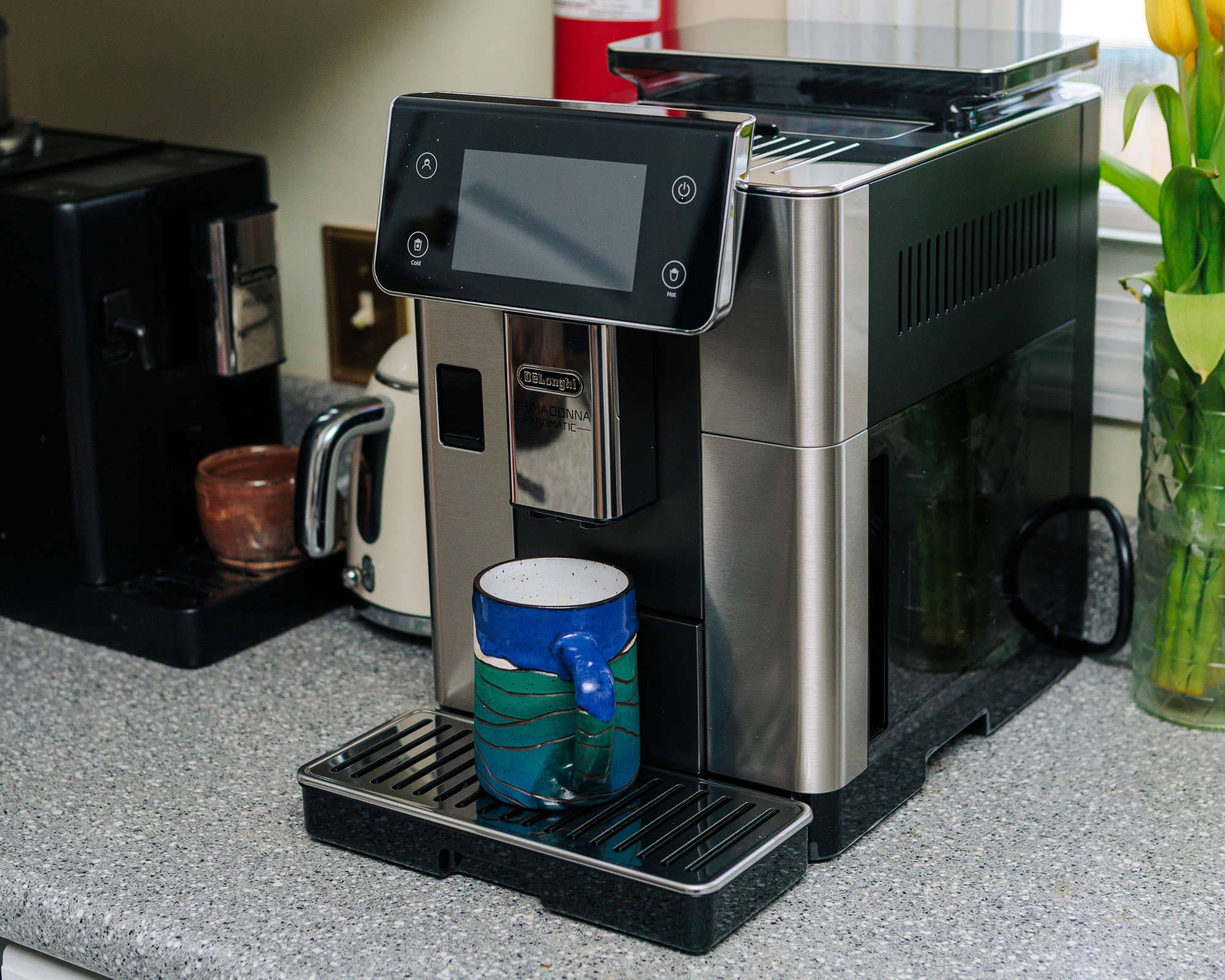
The body is wrapped in brushed stainless steel, the corners are softened rather than squared off, and the front is dominated by a 5-inch full-color touch display that feels more like a tablet than a traditional appliance screen. Even the drip tray and cup platform are finished with enough care that you notice them. I prefer the stainless look to the black on the also excellent Rivelia, but the shiny surface also is more prone to collecting fingerprints.
It’s not a small machine. De’Longhi has packed a conical burr grinder, a bean hopper, a water reservoir, a milk carafe system, and three separate extraction paths into a single chassis, and there’s no way to make that disappear. If counter space is tight, measure carefully before you buy. It is very attractive to look at, however. The translucent water tank on the site and the surprisingly elegant hopper design on the top make it worth its real estate.
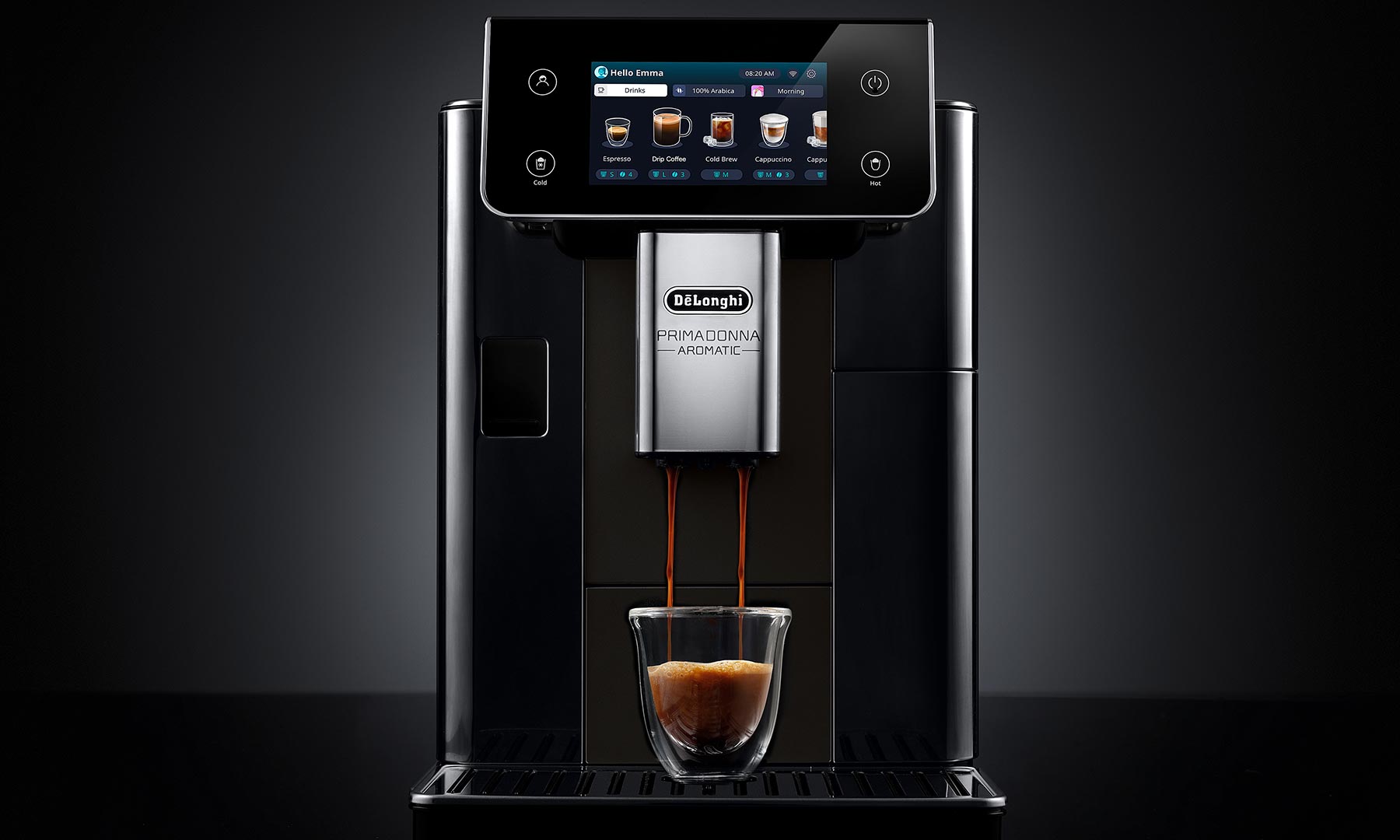
Controls are almost entirely handled through the touchscreen. There are no rows of buttons, no tactile dials, and no cryptic icons — just a menu of drinks, a settings panel, and user profiles laid out in plain language. De’Longhi has spent years iterating on this interface across its LatteCrema lineup, and the version here is the cleanest it has put out. Animations guide you through setup steps like filling the water tank or inserting the milk carafe, and prompts for cleaning and descaling are specific enough that you don’t have to go hunting for the manual.
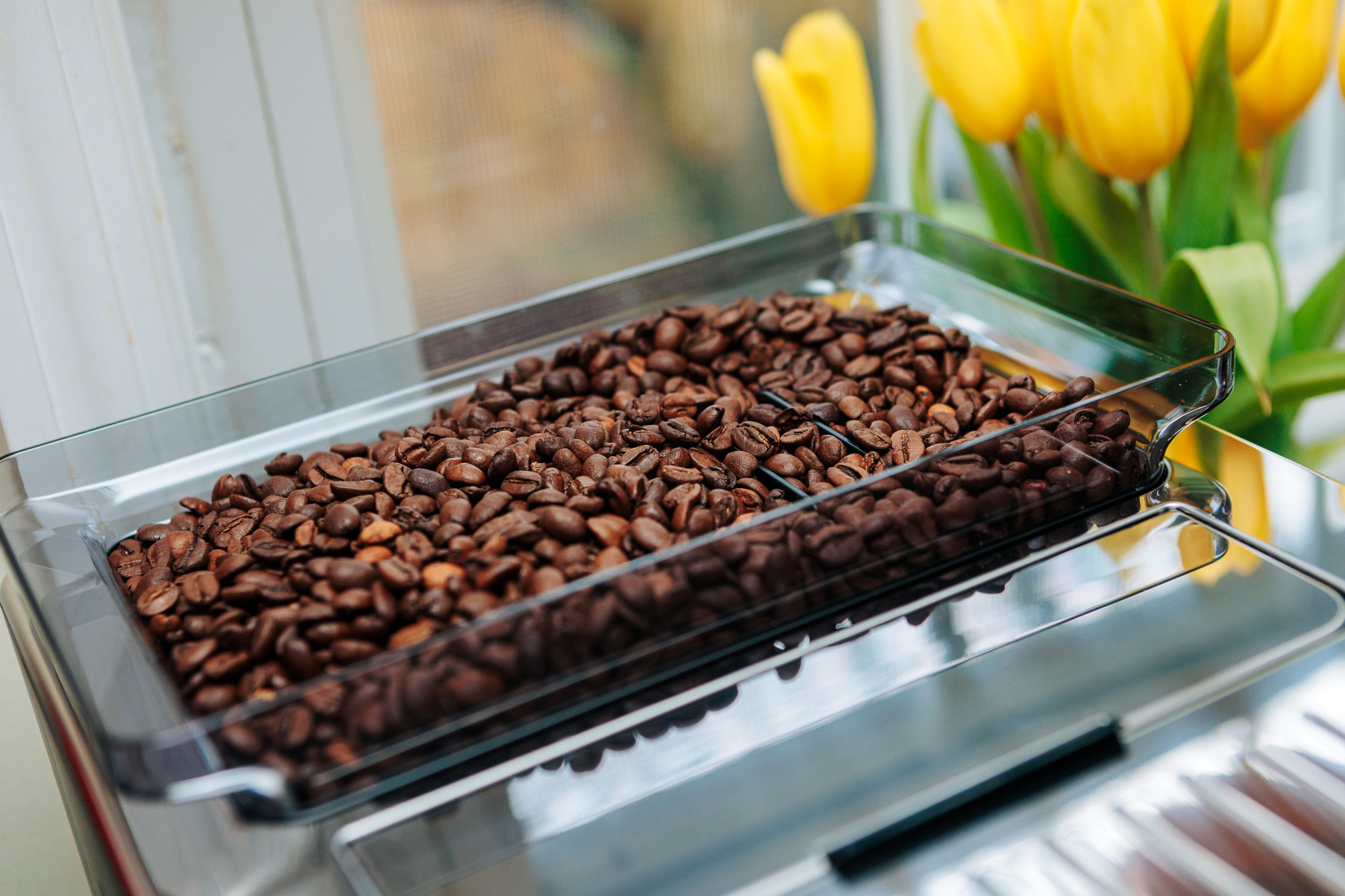
Around the back and sides, you’ll find a removable water reservoir, a bean hopper with a sealing lid to help preserve freshness, and a separate chute for pre-ground coffee when you want to use a decaf or a different bean without swapping out the hopper. The LatteCrema milk carafe clips onto the front of the machine magnetically and stores cleanly in the fridge between uses. The machine also supports four user profiles, so everyone in the household gets their own saved drinks, strengths, volumes, and milk ratios. Combined with the six bean profiles, that’s a matrix of 24 possible “this person, these beans, this drink” combinations the machine can recall at a tap.
The drink menu
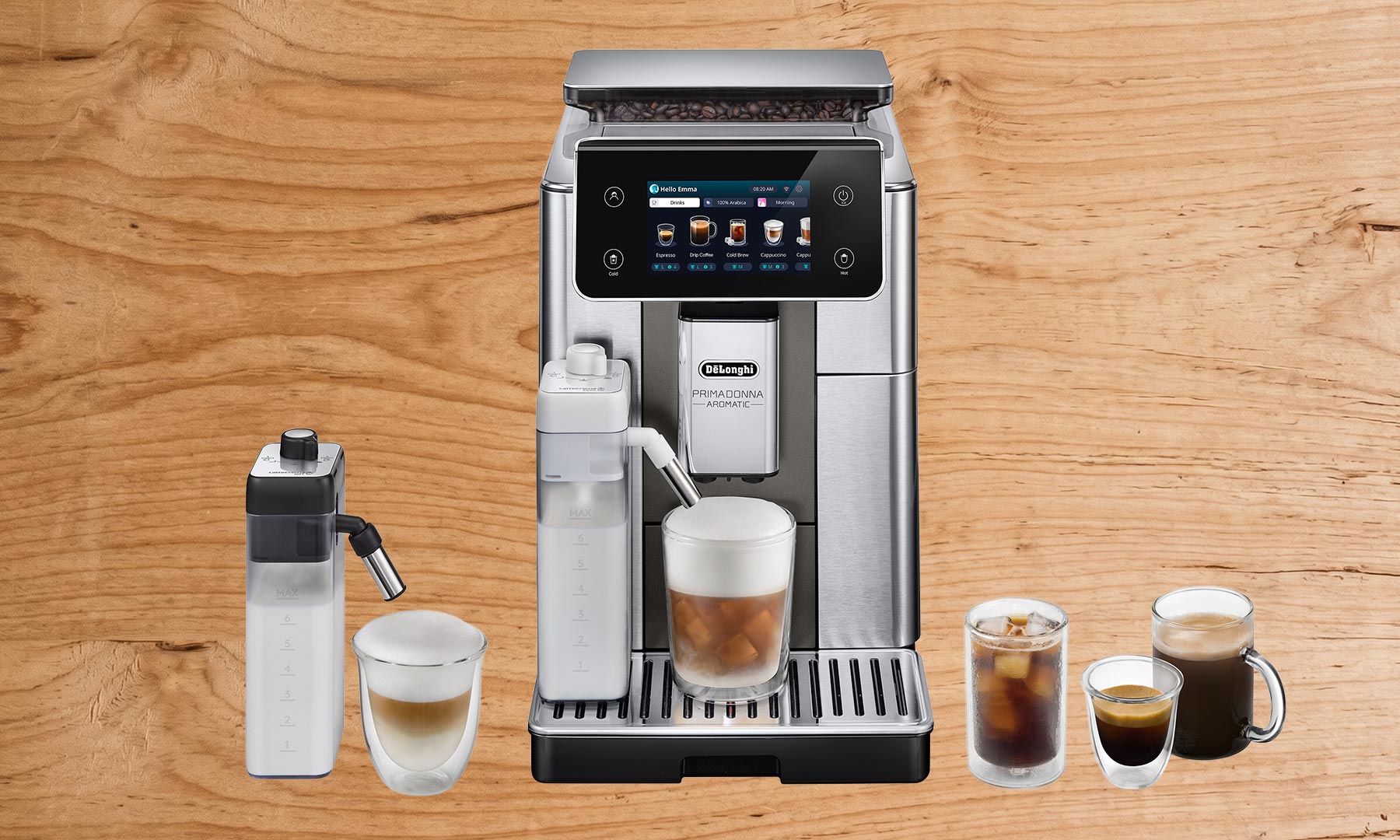
The PrimaDonna Aromatic ships with 38 preset recipes covering the full range of hot and iced drinks: espresso, ristretto, lungo, americano, cappuccino, flat white, latte, latte macchiato, cortado, iced coffee, iced latte, cold brew, and more. Each preset can be customized on strength (which translates to dose), volume, temperature, coffee-to-milk ratio, and froth level, and the customizations save to your user profile.
What makes the recipe list feel meaningful rather than a spec-sheet flex is that De’Longhi has built three dedicated extraction technologies into the machine instead of trying to force every drink through the same espresso path. Espresso drinks run through a traditional high-pressure espresso system. Drip coffee uses a separate technology tuned for longer, lower-pressure extractions, which is the single biggest reason the americano and long-coffee drinks taste like drip coffee and not like a watered-down espresso. And cold brew has its own Cold Extraction path that produces a full cup in under three minutes — dramatically faster than the 12-to-24-hour steep on a traditional cold brew setup.
For milk drinks, De’Longhi’s LatteCrema Hot and Cool systems handle the steaming and frothing automatically. The carafe houses a frothing assembly that draws milk in, injects steam (or doesn’t, for cold foam), and delivers a texture that ranges from flat steamed milk to dense microfoam to airy cold foam depending on what drink you’ve chosen. Both systems are rated to work with dairy and plant-based milks.
The app and connectivity
The PrimaDonna Aromatic connects to the De’Longhi My Coffee Lounge app over Wi-Fi. From the app, you can start a brew from another room, manage and edit bean profiles, browse recipes, and track your coffee habits over time. The app also hosts customer service access, cleaning reminders, and firmware updates for the machine itself, which is how De’Longhi has been rolling out new drink presets and tweaks to the Bean Adapt algorithms over time.
App-connected appliances have a spotty track record, and the My Coffee Lounge app has had its rough patches in earlier generations. On the PrimaDonna Aromatic, setup took a few minutes via Bluetooth handoff to Wi-Fi, and the connection has held steady. Honestly, I don’t use the app that much, but it’s nice to have for monitoring status.
The performance
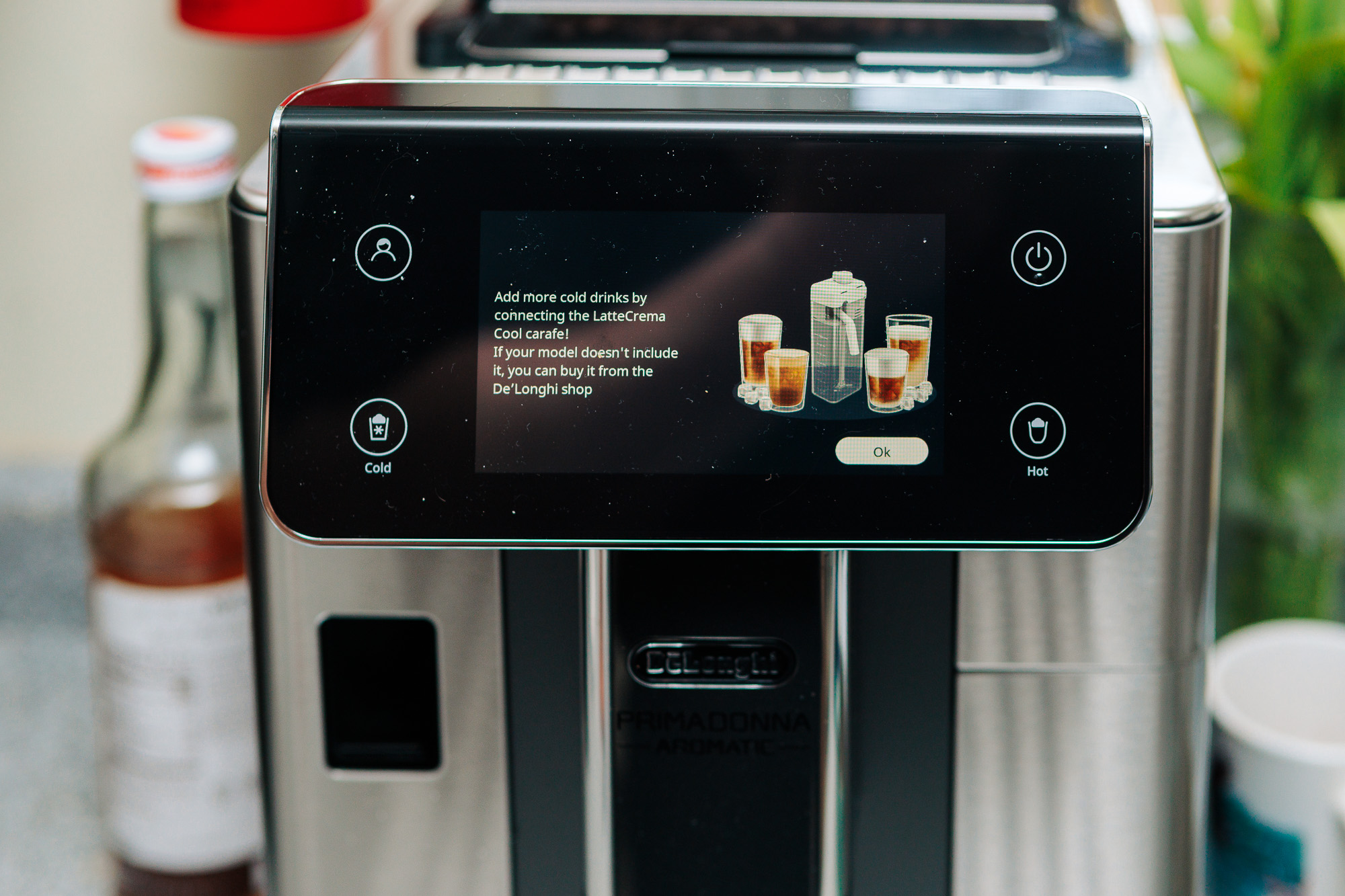
This has been my everyday coffee machine for about two weeks now and my household has gone through a lot of beans. All three extraction processes deliver as promised. My wife is an experienced barista and quickly dialed in settings that give her the style of Americano she prefers every morning. I have appreciated the cold brew setting, something my previous machine didn’t provide. It’s nice to have the option of more traditional iced coffee and cold brew depending on the day.
Bean adapt does seem to make a difference when bouncing around between different raw materials. I gave it some intentionally old beans that we had sitting around in our cabinet and it was able to figure out how to get decent java out of them without tons of tweaking.
The milk drinks are a nice touch, especially since De’Longhi provides specific containers for both hot and cold milk drinks. We didn’t use these as much as we do the typical coffee modes, but they all deliver as-promised. Washing them is simple and the on-screen directions guide you through the drink making process with ease.
The machine runs relatively quietly. The grinding function is certainly quieter than the dedicated Fellow model that we typically use in my household. My wife makes her pre-gym espresso (who needs a pre-workout, right?) at 4:45 a.m. every day and it hasn’t woken me. up yet.
Generally speaking, this machine makes a lot of promises and it delivers on all of them—at least all those that we tested (there are tons of options).
Who is it for
Let’s talk about the elephant on the counter: $2,499.95 is a lot of money. You can build an excellent manual espresso setup — a prosumer machine, a quality grinder, and a decent scale — for less. That is a real tradeoff, and anyone who loves the ritual of dialing in a shot is looking in the wrong place (even though this machine does offer plenty of customization despite the lack of tactile feedback).
But the PrimaDonna Aromatic isn’t trying to win over that buyer. It’s aimed at the household that wants consistently good espresso, cappuccinos, cold brew, and drip coffee on demand, without learning how to pull a shot, steam milk, or troubleshoot channeling. For that buyer, the math changes. A daily household drive-through latte habit could easily eclipse $2,500 in a year, and this is a machine that produces a better drink most mornings without leaving the kitchen.
The verdict
The De’Longhi PrimaDonna Aromatic is an investment, but it’s expensive for an actual reason. Bean Adapt and Adaptive Grinding are the first automation features I’ve tested in a super-automatic that meaningfully change what it’s like to live with one. Swapping between four different roasts over a couple of weeks without a taste-and-tweak cycle for each one is not something I could say about any other machine in my kitchen, at any price. The three extraction methods, the LatteCrema milk system, the 38-drink menu, the touchscreen, the design—all of that is table stakes at this tier, and all of it is well executed. But the reason to buy this machine, and the reason it’s worth $2,499.95 to the right household, is that it largely eliminates the most frustrating part of our beloved daily ritual.
Tech Specs
| Spec | Detail |
|---|---|
| Form Factor | Countertop super-automatic espresso machine |
| Best For | Households that want café-style espresso, milk drinks, drip, and cold brew from one machine |
| Extraction Methods | Three dedicated paths: espresso, drip coffee, cold brew |
| Cold Brew Time | Under 3 minutes (Cold Extraction Technology) |
| Grinder | Integrated conical burr grinder with Adaptive Grinding |
| Bean Recognition | Bean Adapt Technology with automatic grind, dose, and temperature adjustment |
| Preset Recipes | 38 hot and iced drinks |
| Customization | Strength, volume, temperature, coffee-to-milk ratio, froth level |
| User Profiles | 4 |
| Bean Profiles | 6 |
| Milk System | LatteCrema Hot and Cool (dairy and plant-based) |
| Display | 5-inch full-color touchscreen |
| Connectivity | Wi-Fi, De’Longhi My Coffee Lounge app (iOS and Android) |
| Finish | Stainless steel |
| Design Awards | 2025 Red Dot Design Award, 2025 iF Design Award |
| Availability | April 16, 2026 at DeLonghi.com and Williams-Sonoma (US); delonghi.ca, Best Buy, and select retailers (Canada) |
| Price | $2,499.95 USD / $2,999.99 CAD |
