

When we wrapped last year’s Best of What’s New awards, the PopSci staff wasn’t certain about what lay ahead. COVID-19 vaccines on their way into the public’s arms sparked hope, but signs of a looming supply-chain pinch left us wondering about the potential of the year in innovation to come. So, as we gathered to debate the winners, we were well prepared to be, well, underwhelmed. But what we found instead inspired quite the opposite reaction: Faced with the challenges of limited resources, a chip shortage, and an ongoing pandemic, engineers, developers, and scientists did a lot with what they had.
Across all our 10 categories, gains in efficiency showcased our collective drive to optimize our world. A new hair-washing system creates a luxurious lather with less water, a spin on steelmaking spits out a mere fraction of the carbon, a clever AI plans airline routes for maximum efficiency, and a simple riff on a remote control zaps the need for disposable batteries. And, all the while, our push against the pandemic netted gains in prevention, testing, and treatment that will form the backbone of our resistance to the disease for years to come.
To earn a spot among the 100 technologies on this list—a roundup we’ve argued over annually since 1988—every winner convinced us of its role on our shared path to a healthier, safer, smarter, and happier tomorrow.
Explore the winners, below.
Health

Never in recent history has the world been so engrossed by the most mundane stages of the scientific process. But for the last two years, each incremental step in science—from lab research to understand the evolution of COVID-19 and develop a vaccine to fight it, to clinical trials, to pharmaceutical approval—meant one thing: Hope. And that’s what this list of the year’s best health innovations highlights. In addition to two novel vaccines released to combat the most deadly pandemic of our time, the world also saw the first-ever drug approved to treat rare progeria, a new insulin formulation that might finally make the life-saving therapy affordable for all, and a malaria vaccine decades in the making.
Innovation of the Year
Spikevax by Moderna-NIAID & Comirnaty by Pfizer-BioNTech: Two groundbreaking vaccines for COVID-19
Spikevax by Moderna-NIAID u0026 Comirnaty by Pfizer-BioNTech

To pull humankind out of the COVID-19 pandemic, doctors and public health experts knew we would need a safe and effective vaccine. Pharmaceutical companies around the world have raced to characterize the SARS-CoV-2 virus, understand how it invades our immune systems, and develop a targeted injection to prevent it. As of November 2021, at least 28 promising vaccines have been trialed in humans, and 15 have been authorized for emergency use around the world. But two stood out enough to win our top award: Pfizer’s Comirnaty, developed in partnership with Germany-based biotechnology company BioNTech, and Moderna’s SpikeVax, which the Cambridge, Mass., company developed with the help of the National Institutes of Allergy and Infectious Disease.
The jabs are unlike any other inoculation on the market today. They are the first so-called mRNA vaccines—a technology that has been in development for decades. They work by harnessing messenger RNA, the genetic bits of code that tell our cells how to make proteins. The vaccines carry mRNA with instructions for making a protein found on the outside of SARS-CoV-2, the novel virus that causes COVID-19. Our bodies quickly destroy the errant mRNA instructions, but not before our cells build the corresponding proteins. Those proteins then attach to specialized immune cells, triggering the system to recognize them as invaders and develop antibodies against their ilk. If a vaccinated person comes into contact with SARS-CoV-2, those antibodies can spring into action, reproduce, and destroy the virus before it replicates out of control, thwarting the disease.
This duo of shots also work remarkably well. In clinical trials, both of the two-dose regimens were at least 94 percent effective at preventing symptomatic cases of COVID-19. The vaccines also fended off hospitalization nearly 100 percent of the time. While a multitude of inoculation options were crucial to curbing the spread of the virus, these two mRNA therapies are especially poised to change the course of the pandemic—and the future of preventative medicine.
Zokinvy by Eiger Pharmaceuticals: A new treatment for a rare, deadly disease
Zokinvy by Eiger Pharmaceuticals

People diagnosed with Hutchinson-Gilford progeria syndrome rarely live beyond 15 years of age, and until now treatments could only target its symptoms and complications. The disease occurs when a genetic mutation changes the shape of a protein in the nuclei of a carrier’s cells. The faulty protein, called progerin, causes cells to prematurely die. Zokinvy prevents the buildup of defective progerin, thereby minimizing the damage it can do. In addition to prolonging lifespan by several years, the new drug also reduces symptoms of heart and bone problems associated with the rare condition, which affects roughly 400 children worldwide.
NTLA-2001 by Intellia Therapeutics and Regeneron Pharmaceuticals: A big step forward for gene therapy
NTLA-2001 by Intellia Therapeutics and Regeneron Pharmaceuticals

Since 2012, researchers have been tweaking CRISPR, the gene-editing tool that easily edits the human genome, to treat diseases caused by DNA mutations. But until this year, the method, which involves injecting a patient with tweaked stem cells, had only been used to treat conditions whose mutations are in the bloodstream, such as sickle-cell anemia. In August of 2021, researchers published the results of a six-person clinical trial in which doctors attempted to fix a genetic defect that causes a rare liver condition called transthyretin amyloidosis. Packaged inside a tiny blob called a lipid nanoparticle, the gene-editing tech made its way to the liver, where it went to work correcting defective cells. There’s still a long way to go before this treatment, which is still in the first phase of clinical trials, finds its way to the market. But, if successful, it could pave the way for healing a wide variety of genetic conditions.
Inmazeb by Regeneron: A game-changing shot at Ebola
Inmazeb by Regeneron

When infected with Zaire ebolavirus, people can experience high fevers, severe bleeding, and organ failure, which is fatal in half of cases. Researchers at biotech company Regeneron have now created monoclonal antibodies—lab-crafted molecules that mimic the work of the immune system’s natural defenses to help take down invaders—to target the illness. Inmazeb is a combination of three antibodies that target a protein on the surface of the Ebola virus. In a clinical trial, 66.2 percent of the 154 people who received Inmazeb survived, compared to only 49 percent of the 153 people who didn’t. While not a surefire cure, monoclonal antibodies have been crucial in treating many viral diseases. The FDA gave an emergency-use authorization to two monoclonal antibody therapies for COVID-19 in 2021, and approved another one to treat Ebola as well.
The Ellume COVID-19 Home Test by Ellume: The first at-home test for COVID-19
The Ellume COVID-19 Home Test by Ellume
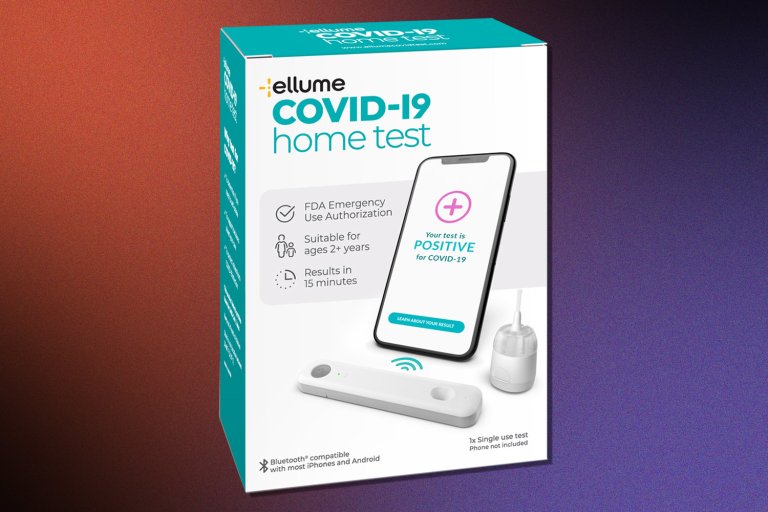
Vaccines greatly reduce the risk of acquiring and spreading COVID-19, but they’re not perfect. Breakthrough cases will continue to emerge even among highly vaccinated communities. That’s where testing comes in. The Ellume at-home COVID-19 test was the first of its kind to get FDA authorization, allowing consumers to check their COVID-19 status without going to the doctor. The test consists of a nasal swab, a dropper, processing fluid, and an analyzer. An app takes you through step-by-step instructions: Connect the analyzer via Bluetooth, empty the processing fluid into the dropper, swab both nostrils, attach the swab to the dropper, squeeze five drops onto the analyzer, and wait 15 minutes for your results. Ellume reports that the test identifies positive cases 95 percent of the time and negative ones 97 percent of the time.
Bridge-Enhanced ACL Restoration Implant by Miach Orthopaedics: A better way to fix a torn ACL
Bridge-Enhanced ACL Restoration Implant by Miach Orthopaedics
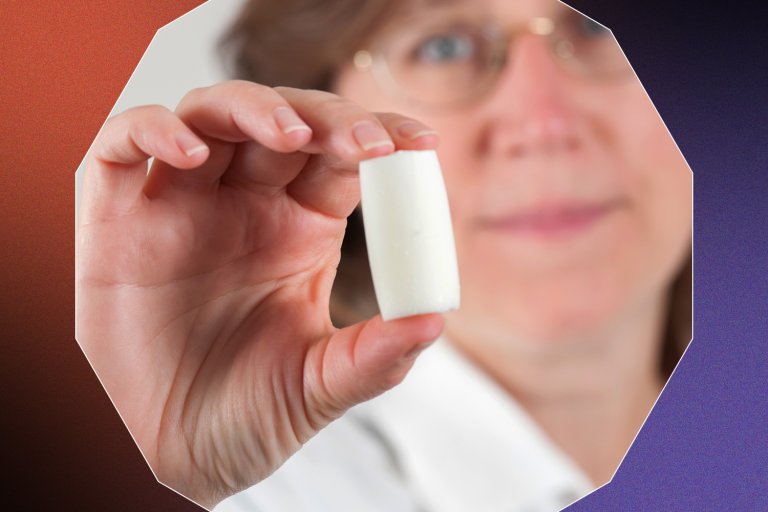
The ACL, or anterior cruciate ligament, stretches diagonally across the middle of the knee and is vital in keeping our bodies upright and stable. It’s also prone to failure; according to a 2016 report in the Journal of Clinical Orthopedics and Trauma, it’s the most common source of significant knee injury. Repairing a torn ACL requires surgery, and sometimes reconstruction—an invasive procedure where a piece of tendon and bone is taken from another part of the body, or from a donor, to rebuild the torn ligament. The newly FDA-approved BEAR Implant takes the place of that material. Made of bovine collagen, it’s secured in place between the two torn ends of the ACL to bind them together. The patient’s body absorbs the device within a few months, by which time, new, healthy tissue has grown in its place.
Naeotom Alpha by Siemens: More precise CT scans
Naeotom Alpha by Siemens

CT scans provide detailed images of the inside of the human body that help diagnose and track disease and injury. Conventional scanners create images by combining the total energy from several x-rays. During this process, some energy from the x-ray is lost, leading to lower resolution. Siemens’ new scanner, called the Naeotom Alpha, uses detectors that count photons to measure every particle of light that comes through, leading to sharper, higher contrast images of the inner workings of your body.
Semglee by Viatris, Inc/Biocon Biologics Ltd.: The most affordable insulin ever
Semglee by Viatris, Inc/Biocon Biologics Ltd.
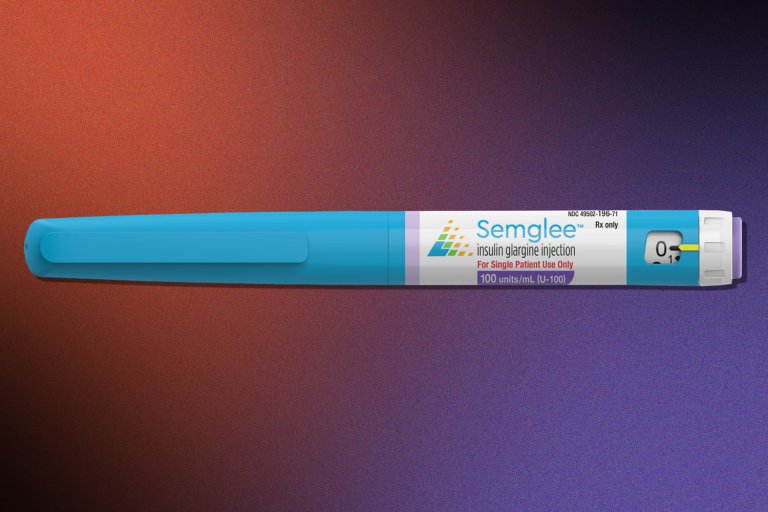
Some 34 million people live with diabetes in the United States alone. For many of them, insulin—a hormone usually produced in the pancreas that helps process glucose—is necessary for survival. Despite this, insulin remains an extremely expensive product, even for those who are fully insured. Semglee could change that. It’s an interchangeable, biosimilar insulin product—the first of its kind to gain recognition from the FDA. A biosimilar is a biological therapy (hormones and vaccines are examples) that has no meaningful difference from one that’s already FDA-approved and on the market—think of it as a generic medication that pharmacists can swap for a name-brand drug, but that doesn’t require prior approval from a doctor to make the switch. Semglee, which comes in 10 mL vials and 3 mL prefilled pens and is administered subcutaneously once daily, is medically identical to Lantus, the name brand for insulin.
Mosquirix by GlaxoSmithKline: The first vaccine for malaria
Mosquirix by GlaxoSmithKline
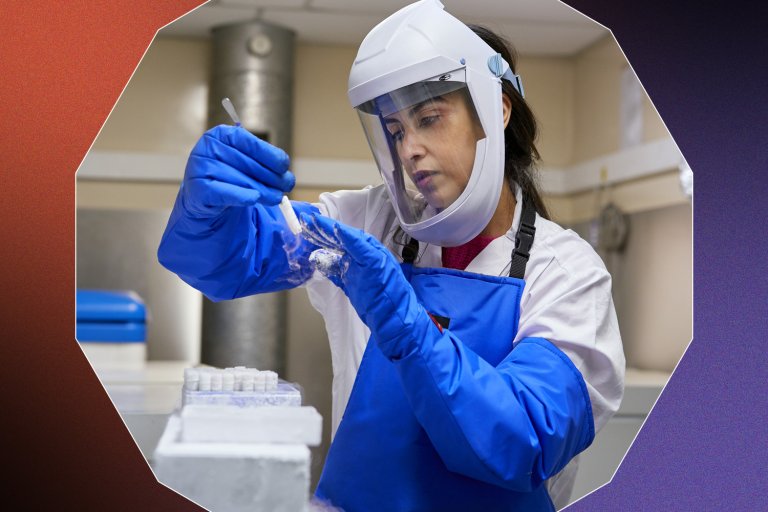
By some estimates malaria kills about half a million people worldwide every year. GlaxoSmithKline’s Mosquirix—a vaccine decades in the making—generates an immune response against Plasmoduim falciparum, which is among the most deadly of the five parasites that cause malaria, and the most prevalent strain throughout Africa. The vaccine received an endorsement from the World Health Organization; a distinction that gives it the go-ahead for wider distribution and use. While the inoculation is only about 50 percent effective against severe malaria, with a significant drop in efficacy after a year, it’s still one of the best ways to prevent the deadly disease.
Brexafemme by SCYNEXIS, Inc.: A new way to banish yeast infections
Brexafemme by SCYNEXIS, Inc.

According to the CDC, about 1.4 million people in the US go to the doctor for vaginal yeast infections each year. While over-the-counter treatments often work just fine, more stubborn cases can resist. Brexafemme is the first novel antifungal in more than two decades, representing an entirely new class called triterpenoids. It works by blocking an enzyme that helps create a protective coating around Candida fungi, which cause vaginal yeast infections. Without this covering, the microbe quickly dies off. The two-tablet formulation starts working within a few days, and remains in a person’s system for as long as two weeks to prevent a resurgence.
Gadgets

In many ways, 2021 came with a question mark. The year began with an all-remote Consumer Electronics Show, an event that offered scaled-back product lines with nebulous shipping dates. Despite all that uncertainty, 2021 turned out to be an important year for gadgets, largely thanks to the big players absorbing some of the chip shortage impacts. Two of the biggest tech companies in the world—Apple and Google—revamped their hardware; Samsung released a truly mature folding device; and Microsoft refined its Surface Pen with a seemingly small change that affects the entire experience. Of course, there were still a few surprises out there, too, one of which involved illustrations of hipster apes worth hundreds of thousands of dollars. Seriously.
Grand Award Winner
M1 chip by Apple: The MacBook’s back, baby
M1 chip by Apple
See It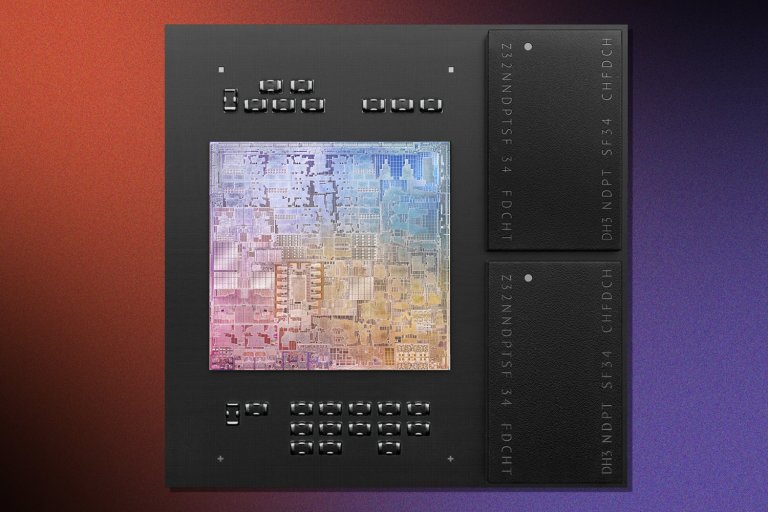
Back in 2019, Apple announced its intentions to break up with Intel, the company that had been supplying the CPUs for Macs since 2006. Then, at the end of 2020, Cupertino announced the M1. It’s a system-on-a-chip, which means one silicon slab contains the CPU, graphics processor, system memory, machine learning hardware, and just about everything else a computer needs to operate. Because Apple controls the software and hardware surrounding the M1, its systems can eliminate layers of inefficiency. The chip launched with refreshes to the MacBook Air and MacBook Pro, laptops that obliterated benchmark tests for their classes. Apple also stuck its new silicon into the Mac Mini and the new ultra-slim iMac. They’re equally as impressive. The company has already updated the M1 with the new M1 Pro and M1 Max chips, which popped in October. Laptops with those guts are already outperforming pricier Mac Pros using the old architecture. It was a big swing for Apple and, at least so far, it has been a massive achievement.
A1 Mirrorless Camera by Sony: At last, a fast, high-resolution camera
A1 Mirrorless Camera by Sony
See It
High-end digital cameras typically ask shooters to choose between high-resolution or super-fast shooting. With the A1, Sony designed an image sensor with its own onboard memory and paired it with one of (if not the) most powerful image processors on the market. As a result, this flagship body can capture 30 full-resolution 50.1-megapixel raw files per second, while performing 120 autofocus and auto exposure calculations in that same blink. For extra fun, photographers can choose to turn off the mechanical shutter and shoot in silence.
NFTs: The new art market
NFTs
See It
In March 2021, Christie’s auction house sold work by a digital artist named Beeple for $69 million. It wasn’t a painting or a sculpture, but rather a collection of non-fungible tokens, or, as they’re better known, NFTs. These tokens exist on the blockchain, public online ledgers that keep track of transactions involving digital assets. Think of them like virtual items you’d purchase in a video game, only that ownership exists IRL and can be worth thousands or even millions of dollars. Athletes and celebrities have spent big bucks buying NFTs from projects like the Bored Ape Yacht Club. Disney even made NFTs for its most popular characters, which is as clear a sign as any that the tech has outgrown the crypto bro community and hit the mainstream.
AirTags by Apple: Finders of lost things
AirTags by Apple
See It
They look like big Mentos, but Apple’s AirTags are really clever little GPS-less locator devices that help people keep tabs on stuff that’s prone to getting lost. The gadgets, powered by wee button batteries, employ a super-low-power Bluetooth connection to ping off of Apple devices on the company’s FindMy network. Each tag can ping hyper-specific location information via Bluetooth to let you use your phone like a divining rod, which turns a frustrating hunt for your keys into a fun little game of hotter/colder. The company also built in anti-stalking protections, so if someone else’s AirTag starts moving with you, it can throw up an alert on your phone.
Galaxy Z Flip3 By Samsung: The first folding phone that makes sense
Galaxy Z Flip3 By Samsung
See It
When you’re using it, the Galaxy Z Flip3 feels like a typical high-end smartphone. Oddly, that’s what makes it so special. When closed, it’s just over a half-inch thick and roughly 3.4 inches on its longest edge. That makes it small enough to fit in almost any pocket. Unfolded, it presents a 6.7-inch AMOLED display on par with chunky flagship handhelds. It’s the usability upgrades that really make this a huge leap, though: The screen is far less prone to splitting than it was in previous versions, thanks to a protective polymer film that tucks securely into the bezels at the edges to prevent peeling.
Super Resolution by Adobe: A savior of old photos
Super Resolution by Adobe
See It
Despite what you may have seen on CSI, “enhancing” a photograph typically introduces digital jaggies called artifacts that can obliterate fine details. A new feature in Adobe Photoshop called Super Resolution leverages machine learning in order to blow up photos without making them look like ancient, low-quality JPEGs. The intelligence recognizes discrete objects in the scene to fill in the gaps, without guessing blindly about what those pixels should look like. The results can modernize photos from the time when 8 megapixels—less than the resolution of a 4K screen—was a real stretch.
Tensor by Google: A smartphone chip built for AI

For its Pixel 6 and Pixel 6 Pro smartphones, Google built its own system-on-a-chip specifically to handle ambitious tasks like image processing and real-time translation and transcription—without needing to call the cloud. The Tensor chip includes two high-performance cores, a pair of moderately high-performance cores, and four efficient cores. The efficient ones handle most typical tasks while the more-powerful modules are free to crunch away. For instance, the Pixel 6 can apply high-dynamic range capture to every frame in a video, so the movies sport vibrant colors and no blown-out highlights.
Surface Slim Pen 2 by Microsoft: The most-realistic digital pen(cil)
Surface Slim Pen 2 by Microsoft
See It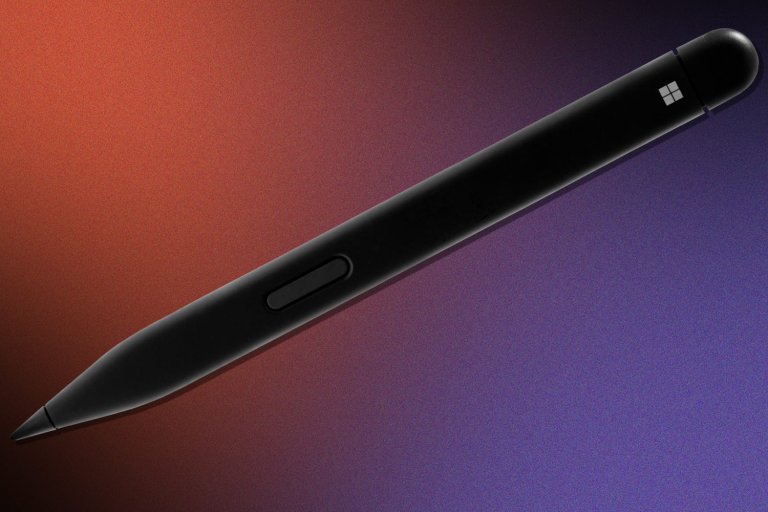
Open the Windows Sketchable App on a Microsoft Surface Pro 8 and start drawing in virtual pencil with the Slim Pen 2. It mimics the sensation of a graphic nib dragging across paper with eerie accuracy. Switch to “chalk” and the feel changes, offering a fairly accurate—though far less unpleasant—essence of marking up a blackboard. The stylus can pull off these impressions thanks to a custom chip inside, as well as strategically placed haptic motors that subtly shake and rattle with hyper precision.
Framework Laptop by Framework: A truly modular laptop
Framework Laptop by Framework
See It
Crack open most laptops, and you’re already in trouble. Manufacturers play a game of logistical Tetris every time they try to cram powerful PC pieces into increasingly trim machines. That usually involves gluing components in place, which makes the computers a nightmare to fix or upgrade. The Framework Laptop’s totally modular design expects people to swap parts as they break or become obsolete. Snap-in components make it simple to change out everything from keyboards to mainboards, memory, and ports. Ardent Right To Repair advocates iFixit gave it a 10 out of 10, which means it’ll stay out of the recycling center for way longer than the machine you’re looking at right now.
Surface Adaptive Kit by Microsoft: Making computers work for everyone
Surface Adaptive Kit by Microsoft
More info
People with disabilities often modify computing devices so they can effectively interact with them. Microsoft’s accessibility kit for its Surface computers takes that kind of hacking off their hands. Textured labels for keycaps make specific buttons easier to find without having to see them; tactile port indicators do the same thing for connectivity; and adhesive tabs with rings and lanyards make it simpler to open and adjust the laptops without the use of a person’s hands. While none of these simple add-ons are engineering marvels, they represent an effort to make Surface computers accessible to more people—without sending them out into the unpredictable world of kludgy third-party accessories.
Auto

The automotive industry came into 2021 trying to beat out some extremely tough odds, not least of which being a choked supply chain. It may seem surprising, then, just how truly revolutionary the year ended up. If you’re a fan of pickup trucks, 2021 was a banner year, with Ford bringing its super-popular F-150 into the post-combustion era, and Rivian finally delivering on its lofty promises of a versatile battery-powered truck. We even got a few pleasant surprises, such as the charming Hyundai Santa Cruz, which packs the soul of a pickup into a transformed crossover. Overall, it was a pretty good year for people who like to lug stuff around.
Grand Award Winner
R1T by Rivian: A landmark electric pickup
R1T by Rivian

Rivian, the Amazon-backed electric automotive startup, finally launched its long-awaited R1T electric pickup. In doing so, it beat (or at least matched) veterans like Ford and General Motors to the punch. The R1T is Rivian’s “adventure vehicle,” meaning that while it can do pretty much anything that a gasoline-powered pickup can, the company doesn’t promise the highest towing capacity or best overall bed volume. Instead, it’s more of a lifestyle truck—one capable of off-roading, overlanding, and just general outdoorsy activities, but in an EV with a roughly 400-mile range.
Rivian offers an array of add-ons that are especially handy for such adventuring. An optional three-person tent accessory enables camping on the go, and a slide-out Camp Kitchen stovetop fuels eat-what-you-catch fishing trips. And all that stuff neatly stows away in the R1T’s gear tunnel—a hollow just behind the cab—to avoid taking up precious bed space. Even with all of those features, it’s still a totally capable pickup truck. Each wheel is powered by an independent hub-mounted electric motor that together deliver a total of 800 horsepower and 900 pound-feet of torque. That’s enough oomph for the all-electric pickup to sprint from 0 to 60 in just three seconds. Yes, really.
CT4-V Blackwing by Cadillac: A sports sedan that stays glued to the ground
CT4-V Blackwing by Cadillac

Featuring a twin-turbocharged 3.6-liter V6 engine, the CT4-V Blackwing puts out an incredible 472-horsepower and 445 pound-feet of torque—more than enough from a sedan that can hop from 0 to 60 in less than four seconds. In order to achieve those speeds, the Blackwing employs a customized spoiler at the back, as well as air-guiding fins and a molded wing under its front, all of which keep the car pressed into the pavement so that just the right amount as air rushes over it at speed.
Santa Cruz by Hyundai: An unexpected marriage of a crossover and a pickup
Santa Cruz by Hyundai

Seemingly out of left field, Hyundai launched its all-new Santa Cruz, a compact pickup meant for urban-dwellers who need a bit more utility. The Santa Cruz has a four-foot open-top bed, but it takes its styling cues from Hyundai’s smartly designed crossovers like the Santa Fe—but with a ground clearance at a respectable 8.6 inches. The bed can’t match the total capacity found in a full-sized truck, but it can accommodate full sheets of plywood or drywall without having to angle them.
Maverick by Ford: A super-affordable, fuel-efficient truck
Maverick by Ford

Coming standard with a 2.5-liter hybrid powertrain, the Maverick is one of Ford’s most fuel-efficient offerings. It scores a 42 mile-per-gallon EPA rating in the city, which is better than many sedans. And with the Maverick’s base model starting at $19,995, it also happens to be Ford’s most affordable vehicle, period. Ford also highly encourages owners to DIY just about everything; the truck accepts 3D-printed accessories like extra cup holders or phone mounts using the in-cabin Ford Integrated Tether System (FITS).
xDrive50 by BMW iX: The car that sees when you snooze
xDrive50 by BMW iX

The iX is BMW’s technology flagship. For starters, there’s the electrochromic sunroof that can turn opaque at the press of a button, and the connected in-car overhead camera can live-stream the cabin to the driver’s phone in case of a theft event. Most important: Those in-cabin cameras also promise to monitor the driver’s state, so if they go unconscious, the car can automatically find a safe spot to pull onto the hard shoulder without putting other people at risk.
DMH-WC5700NEX Receiver by Pioneer: A modular infotainment system to update just about any car
DMH-WC5700NEX Receiver by Pioneer

Bringing older cars into the world of large infotainment screens can be difficult due to space constraints. At the same time, many modern models employ phablet-style infotainment displays that protrude from the dashboard. Coupled with shallow dashboard mounting, either setup makes replacement all-but impossible for many cars. Pioneer has thought up a modular solution in the form of the new DMH-WC5700NEX receiver. The 6.8-inch screen can separate from the rest of the in-dash electronics, so the screen can mount discretely from the rest of the unit. This means that you can place the screen, which works with Android Auto and Apple CarPlay, virtually anywhere.
Ioniq 5 V2L by Hyundai: An electric car that doubles as a power station
Ioniq 5 V2L by Hyundai

The Ioniq 5’s smart looks and tech-centric features make it seem like the perfect daily driver for any EV-curious driver. But here’s the coolest part: The car can use as much as 80 percent of its stored electricity to send juice to just about anything with a standard power cable—think of it like a giant battery pack on wheels. Hyundai says that its Vehicle-to-Load charging enables the Ioniq 5 to supply up to 3.6-kW of power to external devices, which is perfect for devices like a laptop or tablet. And during events like camping trips or a power outages, the Ioniq can supply small appliances or even charge e-bikes.
Sienna Digital owner’s manual by Toyota: An interactive way to learn about a vehicle
Sienna Digital owner's manual by Toyota

Digital owner’s manuals have been around for a few years now, mostly in the form of static text and graphics, but that hasn’t persuaded owners to actually read through the entire handbook. Toyota decided to change that by creating a companion smartphone app for the 2022 Sienna’s already-digital owner’s manual. Called the “Driver’s Companion,” the app features a narrator, called Joya, that acts like Siri, responding to voice commands in easy-to-follow conversations. This feature allows the driver to ask questions such as “What is the height of my car” or “How does the bird’s eye camera work?” and get visual and audio-based responses in the app. And to make sure that the app gets the point across, it can even quiz the driver.
F-150 Lightning Electric Truck by Ford: An iconic pickup goes electric
F-150 Lightning Electric Truck by Ford

In spring of 2021, America’s best-selling pickup started the transition away from combustion. The new battery-powered truck maintains the familiar F-150 design and comes with up to 563 horsepower and 775 pound-feet of torque, enough to shoot from 0 to 60 in 4.5 seconds or tow up to 10,000 pounds when properly equipped. As for range, batteries come large enough to cover up to 300 miles on a single charge. And if juicing up from the road, a 150-kilowatt fast charger can add an additional 54 miles of range in just 10 minutes—not all that much longer than a typical pitstop in a combustion car. To top it off, the F-150 Lightning can also act like a battery pack on wheels, supplying up to 9.6 kW of power through the same charger it uses to fill up. This means that the pickup can help keep an energy bill low during peak hours when electricity rates are high, or keep a home lit during a storm.
Jeep Wrangler Magneto Manual Transmission by FCA: An electric jeep with a six-speed manual
Jeep Wrangler Magneto Manual Transmission by FCA

The Magneto has electric motors and a battery just like other electric vehicles, but it also has something most other EVs don’t: a six-speed manual transmission. However, one component that a manual-equipped EV doesn’t need is a clutch, so Jeep left out the Wrangler concept’s third pedal. After all, an electric motor can’t stall, and changing gears is largely optional in an EV. Drivers still have the benefit (and fun!) of gear selection to control how broadly torque is applied, but with the convenience of an automatic transmission’s clutchless operation.
Personal Care

Our second year of making the most of too-much time spent at home has yielded countless products that promise to sooth our stressed minds and bodies. But the marketing around such spaces—cosmetics, skin- and haircare, and fitness, to name a few—is a minefield of meaningless buzzwords and pseudoscientific solutions. Our Personal Care winners represent some of our favorite exceptions to that woeful rule: These products harness everything from space-age physics to basic magnetism to offer genuinely innovative improvements to everyday life.
Grand Award Winner
Tempo Move by Tempo: A gym and personal trainer in an end table
The Tempo Move answers the recent smart mirror workout trend in a smaller, more affordable package.
Tempo Move by Tempo
See It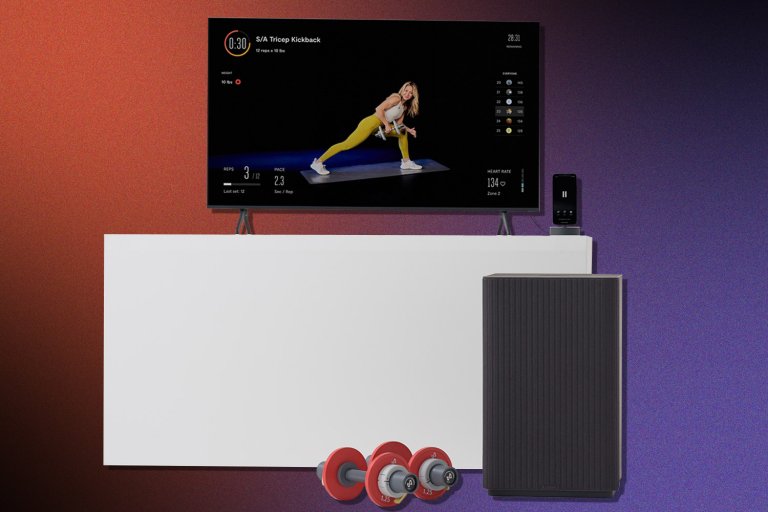
Sound familiar? In 2019, we awarded Mirror for ushering in a new era of at-home fitness, with its luxe, reflective workout screen and the promise of personal training via its built-in camera. In 2020, we spotlighted the Tempo Studio mirror-and-weights system for fulfilling that potential first—providing targeted, AI-driven strength training for folks stuck at home. In 2021, Tempo slid the needle forward yet again with Move, a weight-training setup with a footprint small enough to be practical in even wee domiciles. Move replaces a pricey mirror with the LIDAR in the front-facing cameras of any iPhone equipped with FaceID. A cradle hooks up your phone up to your TV via HDMI, so you can see your body and weight movements in real time. The Move comes with enough plates to make each of its two dumbbells a 25 pounder, and the system recognizes how much you’re lifting to tweak your workout accordingly. Coupled with data from an included heart-rate monitor, the Move’s tracking capabilities, price, and form factor put strength training within reach for anyone with enough space for a yoga mat.
They’re Real! Magnet Extreme Lengthening Mascara by Benefit Cosmetics: Lush lashes, thanks to magnets
They're Real! Magnet Extreme Lengthening Mascara by Benefit Cosmetics
More Info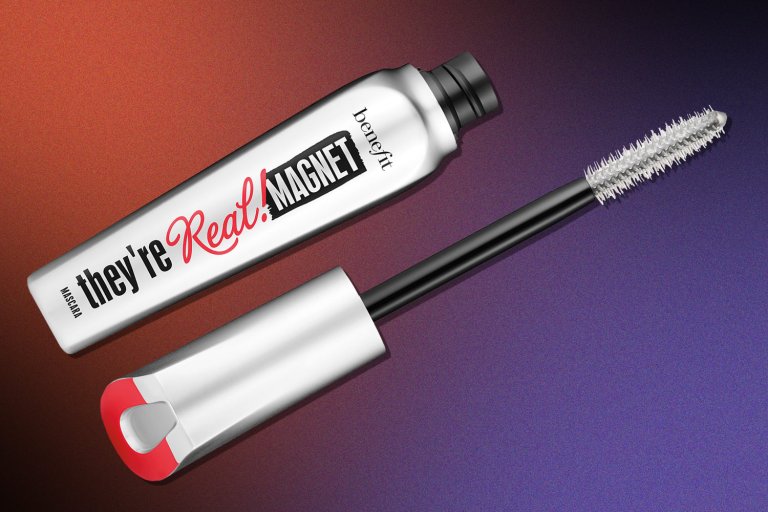
Many mascaras promise to lengthen lashes with the help of buildable dark goop, and eyelash curlers aim to shape those hairs by physically crimping them upright. They’re Real! Magnet Extreme Lengthening Mascara does both—with the power of physics. A magnet-embedded wand swipes iron-oxide-rich pigment along lashes, tapping a mechanism called ferromagnetism to evenly carry the makeup where you want it to go. The result is a clump-less lash coated for big volume and gently hoisted upward for maximum length and curl.
Supersonic Flyaway Attachment by Dyson: Banish pesky flyaways in a single pass
Supersonic Flyaway Attachment by Dyson
See It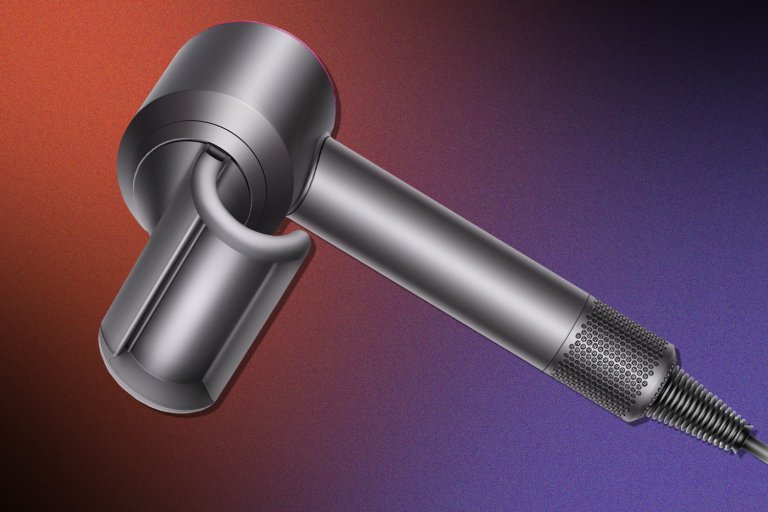
When the engineers behind Dyson’s Supersonic hair dryer arrived at a photoshoot in 2018, they thought they were in big trouble. The model’s hair was damaged and frizzy. A stylist on set, though, gave them an idea: He held the model’s hair taught with a brush while blowing the nozzle of the blowdryer downward just so, and her flyaways slipped beneath longer strands. Replicating that process became a pet project of the engineers. The resulting Flyaway attachment harnesses a quirk of airflow called the coanda effect: the tendency for jets of air to stay attached to curved surfaces once they come into contact with them. In this case, the attachment’s nozzle slides down the hair shaft and draws strands toward it, which creates a downward flow that pushes frizzy bits below the main tress. The result is a smooth finish that even amateur hands can master.
Oura Ring Generation 3 by ŌURA Health: The most discreet period tracker
Oura Ring Generation 3 by ŌURA Health
More Info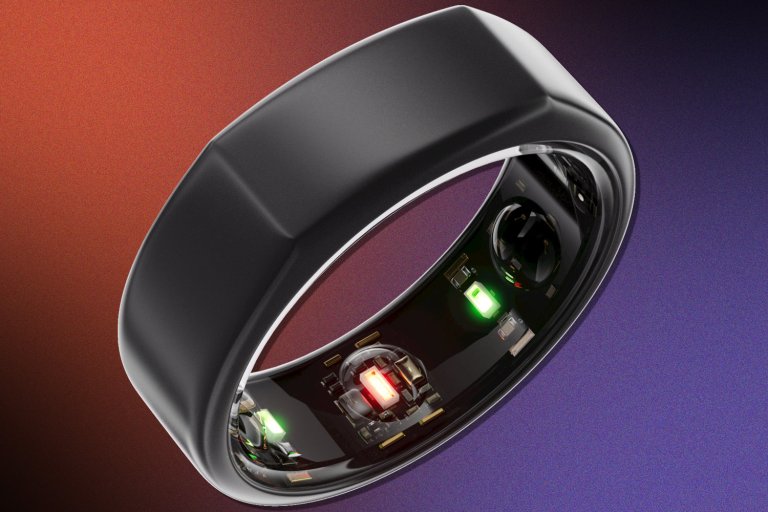
While the Oura Ring Generation 3 offers a fairly standard raft of health monitoring features—from sleep tracking to activity logging—it represents a significant improvement in reproductive health. It monitors fluctuations in body heat to predict when users will start menstruating, up to 30 days in advance. Based on the well-established connection between body temperature and ovulation, the Oura Ring is a major step ahead of most available period trackers, which are generally just calendars that rely on user input. In the future, a similar device could bundle fitness tracking with fertility analysis to lower or raise the odds of conception.
Lioness Vibrator 2.0 by Lioness: A sex toy that learns what you like
Lioness Vibrator 2.0 by Lioness
See It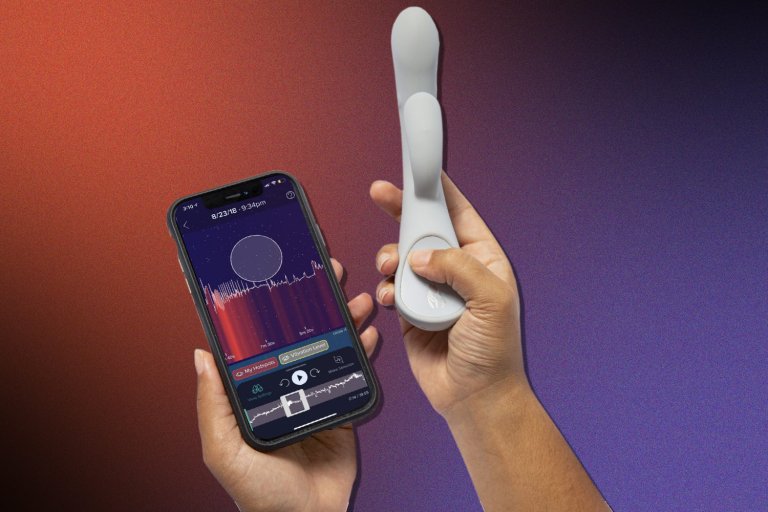
Deciphering personal pleasure can take lots of trial and error. The Lioness Vibrator 2.0 offers a potential shortcut. The toy includes onboard temperature and force sensors, an accelerometer, and a gyroscope that all work together to track pelvic floor contractions—one of the most-accurate indicators of orgasm across sexes and genders. The device analyzes those movements in an app to visualize arousal in real time, and banks that info so users can check out trends, giving them the chance to pinpoint how different kinds of stimulation affect them.
braid better by Rebundle: Plant-based braiding hair
braid better by Rebundle
More Info
Natural hair can benefit from protective styling—the braids, twists, and other looks that tuck fragile ends away from cold winds, UV rays, friction, and other irritants that can cause breakage. For many, adding extensions to the mix is a crucial way to get length while keeping hair healthy. But human hair is expensive and can come from suspicious sources, while synthetic options are generally made of plastic, which is potentially irritating to scalps and definitely irritating to the planet. Rebundle’s banana fiber-based strands provide a great look and feel for protective styles, plus they biodegrade completely in a compost pile.
SoundControl Hearing Aids by Bose: The first FDA-cleared, direct-to-consumer hearing aids
SoundControl Hearing Aids by Bose
See It
Traditional hearing aids cost thousands and require multiple trips to audiologists for fittings and follow-ups. That’s a problem worth solving: According to the World Health Organization, some 630 million people will experience hearing loss by 2030, and that number will hit 900 million by 2050. This year, Bose released the first direct-to-consumer hearing aid. For less than a thousand bucks, adults with mild-to-moderate hearing loss can buy SoundControl directly. Even better, they can adjust fit themselves with included earbud tips, and can continually tune different frequencies using an accompanying app; a user could, for example, dial up the pitch of a conversation partner’s voice while keeping the tones of passing traffic at low. For now, the aids are more basic than medical devices—they can’t pick up phone calls or play music, for instance—but the tech marks an important step in making the world more accessible.
Droplette by Droplette: A NASA-backed skincare system
Droplette by Droplette
See It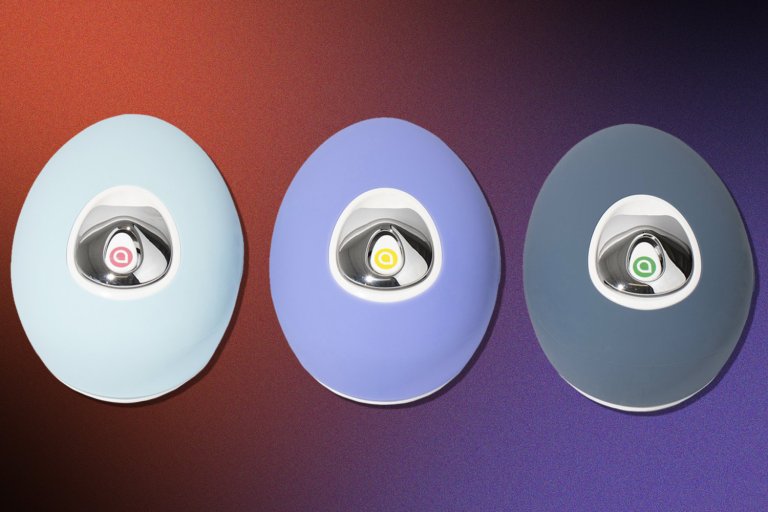
On its face, Droplette is simply an excellent addition to a skincare obsessive’s cosmetic regimen: Designed by MIT-trained female scientists, the Star Trek-esque device turns pods of treatments like collagen and retinol into a super-fine mist to help skin absorb the ingredients more quickly. Droplets 100 times smaller than the width of a human hair get that good stuff into a deeper layer of skin than a cream or serum could. With funding and support from the Walter Reed hospital, the National Institutes of Health, and NASA, the company’s ultimate aim is to use the tech to deliver drugs without needles. Research is currently underway to treat alopecia, battlefield wounds, and a painful condition called Epidermolysis Bullosa.
WHOOP 4.0 and WHOOP Body by WHOOP: A fitness tracker you’ll never take off
WHOOP 4.0 and WHOOP Body by WHOOP
See It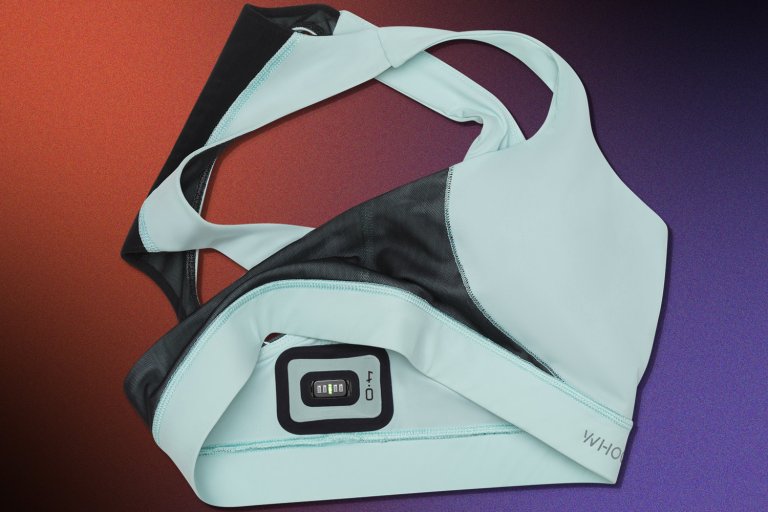
The WHOOP is already a standout in the super-saturated world of fitness wearables thanks to its focus on recovery—a metric that taps sleep quality, athletic strain, and heart rate variability to identify a user’s ideal workout and rest days. The WHOOP 4.0 cements the company’s commitment to being a health-and-wellness conscience by making the device easier to wear 24/7. Its attachable battery pack is now waterproof, so users can slap it on to recharge even while bathing or swimming laps. WHOOP has also unveiled a line of tights, boxers, bras, silicone armbands, and other clothing and accessories to keep your 4.0 nestled against a useful pulse point no matter what.
L’Oréal Water Saver by L’Oréal: A water-saving hair-washing system
L'Oréal Water Saver by L'Oréal
More Info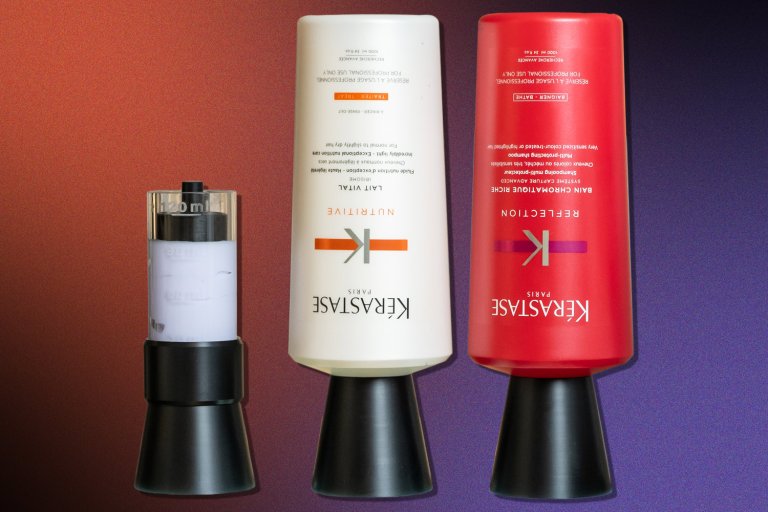
The salon experience would be nothing without a luxurious scalp massage—and the hosing down that comes with it. L’Oréal’s new washing system aims to make that ritual a little more eco-friendly. A showerhead cartridge injects shampoos and conditioners by Kérastase and L’Oréal Professionnel directly into the waterstream, which ups the efficiency of the washing and lathering process. The sprayer also produces small, fast-moving droplets that make it feel like more H2O is flowing, allowing stylists to rinse clients out with less. The result cuts down on the wet stuff by 80 percent compared to a standard showerhead. A similar product for at-home use should roll out in the near future.
Aerospace

Augmented reality, artificial intelligence, and autonomy are just some of the technologies that elevated our air and space game in 2021. AI algorithms are helping route aircraft in more efficient ways, virtual enemies are training pilots mid-flight, and autonomous wingmen are scouting the skies ahead. Meanwhile, up in space, a NASA probe is going to sail beyond Earth’s orbit on sunlight. It might all seem like flashy, futuristic stuff, but one winner represents a small but impactful perk for passengers: On some United flights, you can now use wireless headphones to connect to the seatback entertainment system via Bluetooth. Finally!
Grand Award Winner
Flyways AI by Airspace Intelligence: A smarter system for creating flight plans
Flyways AI by Airspace Intelligence

Take a flight between any two airports, and a dispatcher at the airline also serves a key purpose: They decide in advance what route the aircraft will take along the way, filing a flight plan with the FAA before takeoff. These humans working on the ground must consider variables like weather, restricted military airspace, and more. Often, they just go with a pre-existing option. Now, at Alaska Airlines, the dispatchers have an AI helper. Created by startup Airspace Intelligence, the software can suggest bespoke routes between cities, which the dispatcher can then accept or not. The suggestions result in an efficiency boost: Alaska Airlines says that since they started using the system, more than 28,000 flights have had their routes optimized, saving an estimated 15.5 million pounds of fuel and thus 24,490 tons of carbon dioxide emissions. The flights tend to land a couple minutes sooner, and not only that, the airline also has a more precise sense of when a plane will actually touch down. Passengers, meanwhile, will hopefully spend less time just circling the airport, waiting to arrive.
Starship by SpaceX: A giant reusable rocket system
Starship by SpaceX
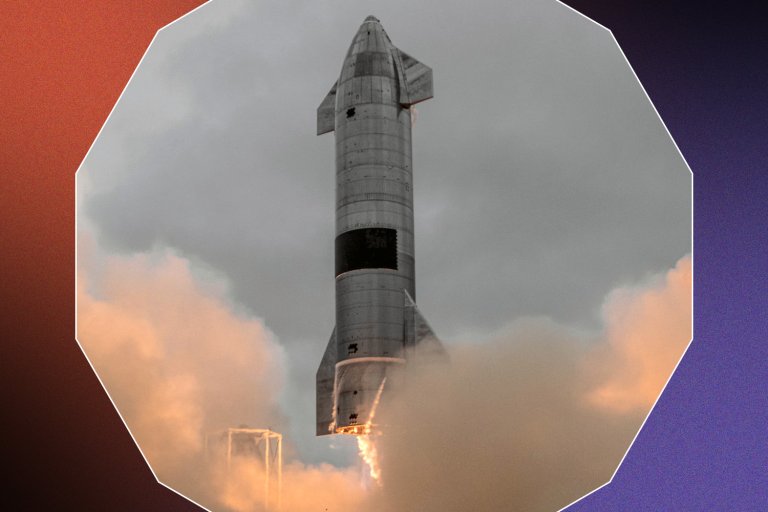
SpaceX is betting its future on one very large vehicle. The approximately 165-foot tall stainless steel Starship aims to reach Earth’s orbit, the moon, or even Mars, and then return in one piece by landing vertically. In the future, the fully reusable spaceship could even ferry people and cargo across the globe in less than an hour. Elon Musk’s science-fiction dreams have been slow to achieve lift off—the first handful of test flights ended in spectacular fireballs. But in May, a Starship prototype finally nailed its landing, showcasing a complex “bellyflop” maneuver that involved a horizontal free-fall from miles in the sky before the craft righted itself just above the launchpad. In the following months, the company began building colossal booster rockets to prepare for the first orbital test of what could become the world’s most powerful and affordable launch system.
eX1 with Bluetooth by Panasonic Avionics Corp: A Bluetooth connection in the sky
eX1 with Bluetooth by Panasonic Avionics Corp.

Plugging in headphones while trying to catch Frozen II on your seatback entertainment system is very last-century. No longer: Starting this past summer, passengers on any United 737 MAX 8 aircraft could simply connect to the Panasonic system in front of them via Bluetooth with their own headphones (AirPods or otherwise). A metal tube full of competing wireless signals represented a complex problem to solve, but in the end, those Disney songs never sounded so good.
ATARS by Red 6: Augmented reality training for fighter pilots
ATARS by Red 6
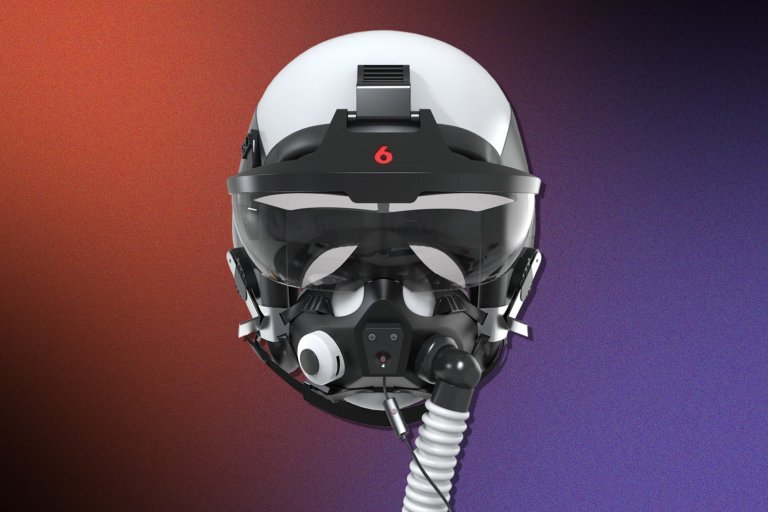
Military pilots train in simulators on the ground or in real aircraft in the sky, but new technology from a company called Red 6 blends those two ideas. A fighter pilot can don a helmet with an Airborne Tactical Augmented Reality System (ATARS) while flying in real life, and see virtual adversaries or airborne friendlies alongside them on their visor. That creates a much more realistic scenario than simply simulating the presence of a fictional aircraft on a plane’s radar: Fighter pilots can have the benefit of training in simulated multi-plane exercises in the sky. The tech also avoids the cost and logistical complexity of getting multiple real aircraft airborne. Red 6 is in the process of retrofitting a T-38 training jet with ATARS for the Air Force, and could do the same with an F-16 next.
Near Earth Asteroid Scout by NASA: Truly solar-powered space exploration
Near Earth Asteroid Scout by NASA
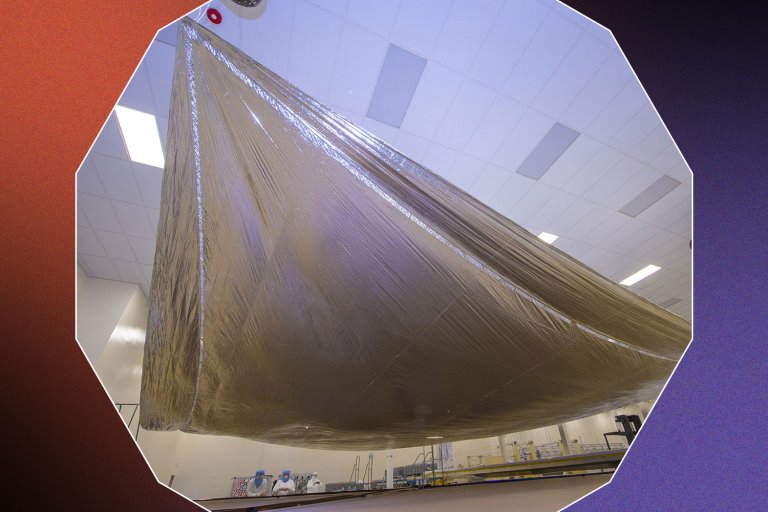
To navigate space, probes fire their thrusters and spew a trail of hot gas behind them. But the shoebox-sized Near Earth Asteroid (NEA) Scout, which NASA engineers readied for launch in July, will traverse tens of millions of miles pushed along almost entirely by sunlight. The spacecraft’s school bus-sized solar sail is made from a tough, Saran-wrap-like plastic that catches sunbeams as the probe leaves our planet behind. This tech builds upon previous prototype demonstrations in low Earth orbit, such as LightSail 2. Over the course of two years, NEA Scout will adjust its speed by 5,000 mph or more, enough to match the pace of an asteroid, map most of its surface, figure out what it’s made of, and determine if it’d be a good target for human exploration. It costs around $30 million, roughly a tenth the price of a bigger, fuel-laden mission.
Redwire Regolith Print by Redwire Space: Bricks made from ‘moon dust’
Redwire Regolith Print by Redwire Space
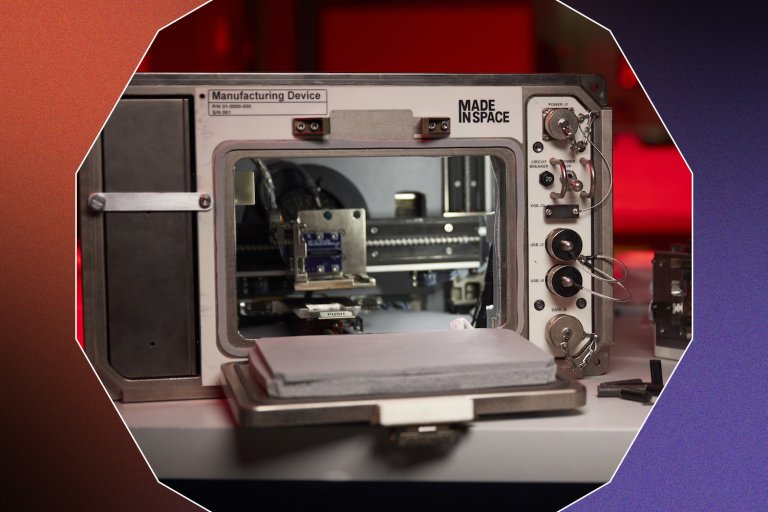
If humans ever build dwellings on the moon, the secret to affordable lunar construction might lie in three gray, palm-sized bricks, whose humble appearance belies their extraordinary roots. The slabs emerged from a 3D printer aboard the International Space Station, which squeezed them out in near-zero gravity about 250 miles above Earth. They are made largely from simulated moon dust, or “regolith,” which includes compounds like silica and alumina. Astronauts installed custom attachments to the printer, which let the device fuse regolith rather than its usual plastic—a first for 3D printing in space. The simulated moon bricks splashed down on the pale blue dot in September and are being tested for strength. Researchers hope that supersized versions of the machine will someday turn real moon dust into essential infrastructure, such as lunar roads and landing pads.
Skyborg by the US Air Force: The brains for a robotic wingman
Skyborg by the US Air Force

Losing a drone flown by an AI is much less costly than losing an F-35—and the person in it—which is why the Air Force’s vision for the future includes fighter-jet-like drones partnered up with traditional aircraft. These robot planes could fly ahead of the ones with pilots to send back intel or carry out a weapons strike in dangerous territory. The Air Force’s Skyborg program doesn’t want to wed the intelligence to any specific hardware, so it’s developing the Autonomy Core System, or ACS, to pilot different makes of drones. The system has already been used to fly a drone from a company called Kratos, as well as multiple General Atomics MQ-20 Avenger drones.
ELSA-d by Astroscale: A plan to safely usher satellites to the afterlife
ELSA-d by Astroscale
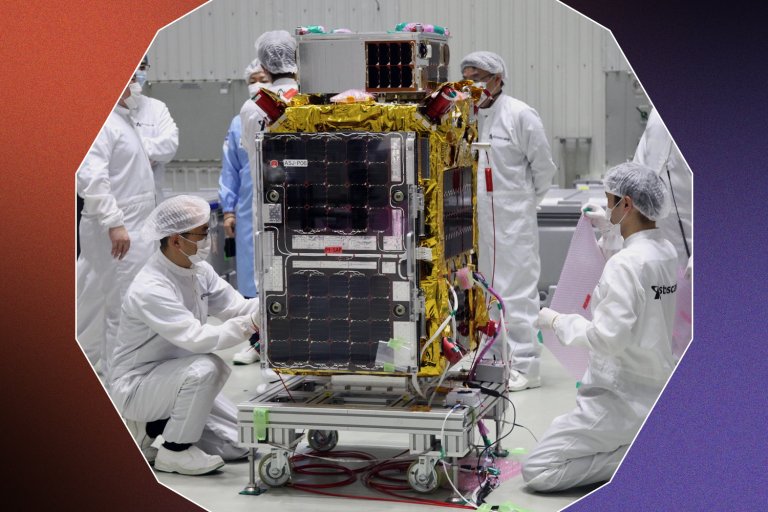
More than 3,000 dead satellites circle the globe today. Astroscale, a company founded to combat this growing challenge, is demonstrating one way to drag future satellites out of the sky when their time is up, pulling them down into the atmosphere to burn up in a controlled way. In March, it launched its ELSA-d spacecraft, which features a magnetic ring that can snap onto any other satellite equipped with a matching component; in August, it released a nearly 40-pound box and captured it during a test run. Next, mission controllers will task ELSA-d with a much more daunting job: using sensors to semi-autonomously chase down and snag the same box while it’s spinning out of control. If it succeeds, the vehicle will pave the way for a larger model capable of dealing with compatible satellites weighing up to 1,750 pounds.
MQ-25 Stingray by Boeing: A drone that refuels fighter jets
MQ-25 Stingray by Boeing

Tiangong by the CMSA: A new space station with ion-drive thrusters
Tiangong by the CMSA

A new state-of-the-art outpost now orbits the Earth. China launched the core module of what will become the Tiangong (“heavenly palace”) space station on April 29, and the floating habitat is currently hosting its second group of occupants. Tiangong will measure about one-sixth the size of the International Space Station’s when it’s completed in 2022, but it already features bells and whistles missing from the aging ISS: The three-person crews can now enjoy hot meals during their months-long stays, courtesy of a custom microwave designed for use in space. And, in a first for a crewed vehicle, the module is equipped with four ion drives—hyper efficient thrusters that use electricity to expel charged particles.
Engineering

From deadly floods in Queens, New York, to a deep-freeze in Texas, the climate crisis is banging on the US’s front door. This year’s top engineering innovations reflect a growing awareness that crucial industries like construction and shipping can no longer conduct business as usual. These honorees answer some of the burning questions about the future of a burning planet, including how to address tough-to-decarbonize realms like food and energy production. Outside of just green tech advancements, these technologies reveal safer ways to mine, introduce AI that can untangle hidden mysteries of DNA’s structure, and provide a much-needed dose of high-flying fun.
Grand Award Winner
HYBRIT Green Steel by SSAB, LKAB, and Vattenfall: Steel with a smaller footprint
HYBRIT Green Steel by SSAB, LKAB, and Vattenfall
MORE INFO
Steelmaking yields between seven and nine percent of the world’s carbon emissions, mostly due to a specially processed type of coal called “coke.” At temperatures as high as 3,000°F, coke reacts with oxygen in iron ore, purifying the metal into a form needed to make steel—but belching carbon dioxide in the process. To reduce the footprint, a Swedish industrial consortium developed Hybrit, a steel whose production taps hydrogen, rather than carbon, to transform iron ore. The hydrogen, freed from water, reacts with the oxygen in ore in a machine called a shaft furnace, heated to 1,500*F with fossil-free wind energy and hydropower. The scheme releases hydrogen and water, instead of carbon dioxide, and the resulting “sponge iron” melts in an electric arc furnace with a small amount of carbon to create steel. Hybrit says the process has carbon dioxide emissions less than 2 percent of those from the standard coke-fueled regimen. This past summer, Volvo took delivery of the first batch of this “green steel” and used it to make a mining and quarrying vehicle.
MS Green Ammonia by Wärtsilä Norway and Grieg Edge AS: A cleaner way to ship
MS Green Ammonia by Wärtsilä Norway and Grieg Edge AS
MORE INFO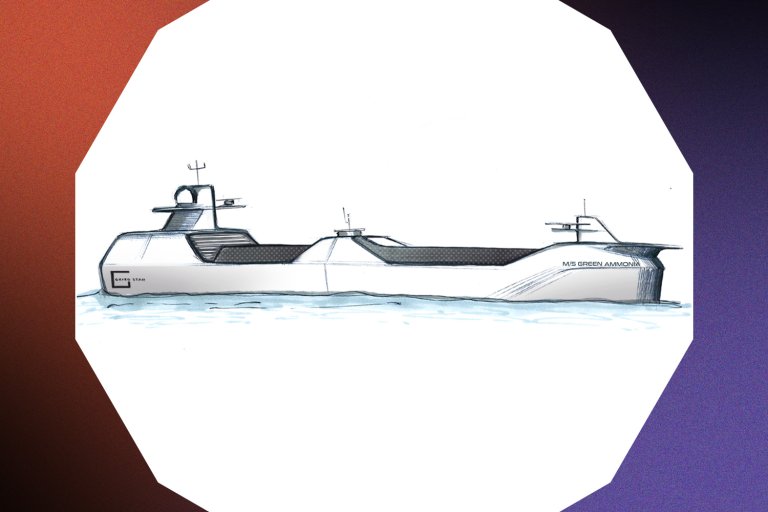
Container ships fuel our economy of cheap consumer goods, but create almost three percent of the world’s carbon dioxide emissions. Electric batteries don’t have the energy density to efficiently power the massive vessels—and plunking chargers in the middle of the ocean is pretty much impossible. This year, Finnish engine maker Wärtsilä teamed up with the Norwegian logistics giant Grieg to bet on carbon-free ammonia to propel future ships. Powered by a Norwegian wind farm, engineers will use electrolysis to create hydrogen gas that reacts with nitrogen in a factory to create ammonia. Wärtsilä already completed an engine burning a mix of 70 percent ammonia, and is planning a pure ammonia version to deploy in a tanker in 2024.
Shrimp Farms by Vertical Oceans Pte. Ltd.: Your downtown sustainable seafood farm
Shrimp Farms by Vertical Oceans Pte. Ltd.

Global hunger for farmed shrimp has destroyed some 3.4 million acres of mangrove forests since 1980, mostly in Southeast Asia. Tearing apart those carbon-absorbing ecosystems gives the practice a footprint higher than dairy cattle, pigs, or chicken. Disease outbreaks and waterways choked with waste also plague the industry. The “Vertical Oceans” model takes the whole operation indoors. The shellfish live in modular school-bus sized tanks, and algae, seaweed, and bottom-feeding fish filter out waste. This way, nearly 100 percent of the water gets recirculated, and there is no need for a sewer. A prototype in Singapore delivered 10 harvests of shrimp this year, totaling more than a ton of crustaceans.
Genoa San Giorgio Bridge by Camozzi/Ingersoll/Renzo Piano: A bridge that spots its flaws
Genoa San Giorgio Bridge by Camozzi/Ingersoll/Renzo Piano
MORE INFO
It’s not entirely clear what caused the 2018 collapse of the Genoa bridge in Italy that killed 43 people. Experts theorize that heavy traffic loads, and corrosion from salty air, factory pollution, and high-rising river waters all played a part. So after Genoa-born architect Renzo Piano designed a replacement, a variety of automatic sensing features were added to detect faults. A pair of two-ton inspection bots traverse the bridge on a carbon composite track, taking 25,000 photos of the undercarriage every eight hours, which allows machine vision software to spot any anomalies. Solar panels meet 95 percent of the bridge’s energy demands, including for lighting and sensors that check for dangerous joint expansion.
BOLT, The Ultimate Sea Coaster by Carnival Cruise Line: The first sea-bound floating rollercoaster
BOLT, The Ultimate Sea Coaster by Carnival Cruise Line
MORE INFO
Normal roller coasters use gravity to send thrill-seekers zooming and looping. But if you want to build a ride on a cruise ship—where stable, level ground is far from guaranteed—you have to get creative. Carnival Cruise Line’s BOLT coaster uses electricity to power its wee motorcycle-esque cars along a long, looping track. Riders control the speed, up to 40 mph, and travel 187 feet above sea level. Using the motor for propulsion, rather than steep freefalls, prevents the experience from reaching unsafe speeds.
‘Big Jim’ by Form Energy Inc.: Batteries that could make dirty electricity obsolete
'Big Jim' by Form Energy Inc.
MORE INFO
To maintain fully renewable grids, utilities need big, inexpensive batteries to meet peak demand when the wind isn’t blowing or the sun isn’t shining. But, the lithium-ion cells inside laptops and EVs are expensive. So Form Energy has pioneered a new and highly efficient battery chemistry based on one of the most abundant metals in the Earth: iron. The company’s “Big Jim” prototype discharges electrons by reacting ambient oxygen with iron, creating rust. Inbound electrical current turns the rust back into iron, releasing oxygen, and recharging the battery. Environmental engineers say a battery that runs at $20 per kilowatt-hour is the magic number for utilities to say goodbye to coal and natural gas—which is where Form Energy hopes to price Big Jim’s final product.
AlphaFold by DeepMind: AI that predicts the 3D structure of proteins
AlphaFold by DeepMind
MORE INFO
Before this year, science knew the exact 3D shape of only 17 percent of the proteins in the human body—essential components of life responsible for everything from cell maintenance to waste regulation. Understanding how these chains of amino acids pretzel themselves into unique configurations has been something of a holy grail for 50 years. AlphaFold, a machine learning algorithm, has now cracked the structures of more than 98 percent of the 20,000 proteins in the human body—with 36 percent of its predictions accurate down to the atomic level. DeepMind has put its source code and database of predictions in the public domain, opening up new possibilities for those developing new medications, doctors trying to create inhibitors for pathogenic mutations, or designers developing new materials.
SkyCool Panels by SkyCool Systems: Using the sky as an air conditioner
SkyCool Panels by SkyCool Systems
MORE INFO
Air conditioners and fans already consume 10 percent of the world’s electricity, and AC use is projected to triple by the year 2050, sucking up more energy and pushing heat back into the surrounding landscape. SkyCool is breaking this dangerous feedback loop with rooftop nanotech that reflects light. Coated with multiple layers of optical films, the aluminum-based panels bounce radiation at wavelengths between 8 and 13 micrometers, a specific spot that allows the waves to pass through Earth’s atmosphere and into space. In doing so, the panel temperatures decline by up to 15°F, offering emissions-free cooling to a building’s existing systems. A prototype installed last fall on a grocery store in Stockton, Calif., cooled water pipes beneath the panels to chill the store’s refrigeration system—saving an estimated $6,000 a year in electrical bills.
Avatel by Orica and Epiroc: A pair of robotic hands for laying explosives
Avatel by Orica and Epiroc
MORE INFO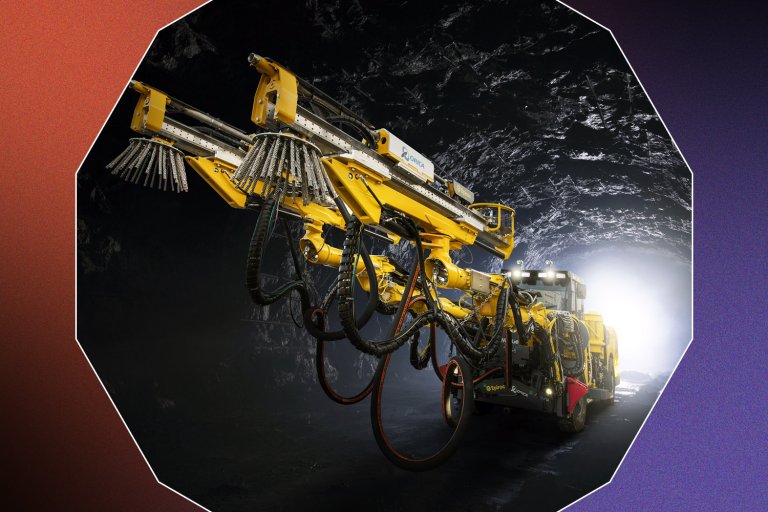
Mining is one of the world’s most dangerous industries, but those who have to blast the tunnels are particularly vulnerable—not necessarily from explosives, but from seismic activity or rock falls that occur while laying the charges. Like a jumbo version of Ripley’s power loader from Aliens, the Avatel robot allows a single employee to place explosive charges to access to the gold, copper, and iron ore. From a protected cabin, the miner manipulates a pair of arms to place explosives, while engineers and geologists back at the control room remotely offer real-time advice as conditions change. Once the charges are set, the driver moves the Avatel clear and wirelessly sends a signal to detonate.
Saildrone Explorer by Saildrone: A look into the eye of a hurricane
Saildrone Explorer by Saildrone
MORE INFO
To understand how hurricanes intensify and better forecast future disasters, scientists need data about barometric pressure, air and water temperature, humidity, and wind conditions inside a raging storm. Powered by the sun and wind, the autonomous 23-foot Saildrone became the first-ever robotic vehicle to navigate into the eye of a hurricane this past September, when it entered the category 4 storm Hurricane Sam. With its instrument wing shortened to better endure extreme conditions, the Saildrone vessel offered first-of-its-kind footage and readings, all amid winds hitting 120 mph. Labs across the country are already putting this floating Swiss Army Knife, which offers data from the ocean’s surface missing from satellite imagery, to work: NASA to augment imperfect satellite readings and study climate change, and NOAA to survey the health of Alaskan pollock.
Entertainment

It’s been a banner year for enjoying high-end content at home. Many of the biggest blockbusters debuted on streaming services like HBOMax and Netflix at the same time they showed up in theaters. Those big-budget flicks make us crave new TV tech, and this year met the challenge with two impressive new screen schemes. In music, several of the largest streaming services started offering spatial audio, which adds an impressive 3D effect to tracks, and Sony answered the call with a new portable speaker. And of course, there are also plenty of new content creation tools, like Shure’s broadcast-quality USB microphone and Panic’s black-and-white-only handheld game system, which is every bit as innovative as it is adorable.
Grand Award Winner
Dual-Cell ULED 4K TV U9DG by Hisense: A new way to make on-screen images pop
Dual-Cell ULED 4K TV U9DG by Hisense

Since the dawn of flatscreen TVs, most displays have relied on an LCD panel with colored filters in front of a backlight to create the pictures we see. Manufacturers have done some truly impressive things with this same basic setup, but the tech’s ever-present glow is not great for producing deep, inky blacks that maximize contrast and make the image really pop. That’s because the light can bleed through the LCD panel where it shouldn’t. In order to solve this problem, Hisense developed a simple, but ingenious, solution that adds another layer called a luminance control panel. In addition to the typical 4K LCD panel, a second 1080p LCD layer creates an extra barrier to stop bright areas from bleeding into the shadows. As a result, Hisense squeezed roughly 40 times more contrast out of this TV than it could on a typical screen. It even boasts brightness advantage over pricier OLED sets that can sometimes suffer from screen-ruining burn-in after heavy use.
Playdate by Panic: The anti-next-gen gaming console
Playdate by Panic

This adorable little console looks like a chubby Game Boy. Panic’s lo-fi device even has the monochrome, non-backlit screen which harkens back to Nintendo’s handheld. Playdate’s simplicity makes it the antithesis to the brightly-colored eyeball onslaught and microtransactions that can make smartphone games feel like a grind. The gadget uses built-in WiFi to download new games—two per week for 12 weeks keep things fresh. Future titles will be part of release “seasons,” and Panic plans to release a free SDK so anyone can make their own games. Some titles require the crank on the side, which adds a unique tactile element to the experience.
Steam Deck by Valve: A high-end gaming PC in a handheld
Steam Deck by Valve

With a 7-inch, 1,280-by-800-pixel screen nestled between two sets of controls, Valve’s handheld looks reminiscent of a Nintendo Switch. In reality, though, the Steam Deck is a full-on, portable gaming PC that can run even the most power-hungry titles from Steam’s online catalog. Valve teamed up with PC hardware maker AMD to create a custom CPU and GPU to handle the computing demands that come from AAA titles like Red Dead Redemption 2 or Team Fortress 2. It also comes with 16 gigs of RAM and super-fast SSD storage on-par with what you’ll find in the latest generation consoles.
Neo QLED by Samsung: Smaller backlights, massively better picture
Neo QLED by Samsung

Rather than relying on light sources around at the edges of the TV, displays with a feature known as local dimming tap arrays of LEDS directly behind the panel. This gives screens much better control over contrast and detail. Samsung’s Neo QLED line uses teeny tech to amplify that potential. Its miniature versions of the now-common diodes—roughly 1/40th the height of typical LEDs—don’t require a lens over their tops to disperse light. That allows Samsung to cram more of them onto its panel and bring them closer to the surface, creating a dense array with minimal light bleeding where it shouldn’t go. Paired with an AI-driven image processor, Neo QLED images fill an 8K screen with bright detail—even when it’s upscaling lower-res content, which, for now, is always.
SRS RA5000 by Sony: A wireless speaker built for 3D audio
SRS RA5000 by Sony
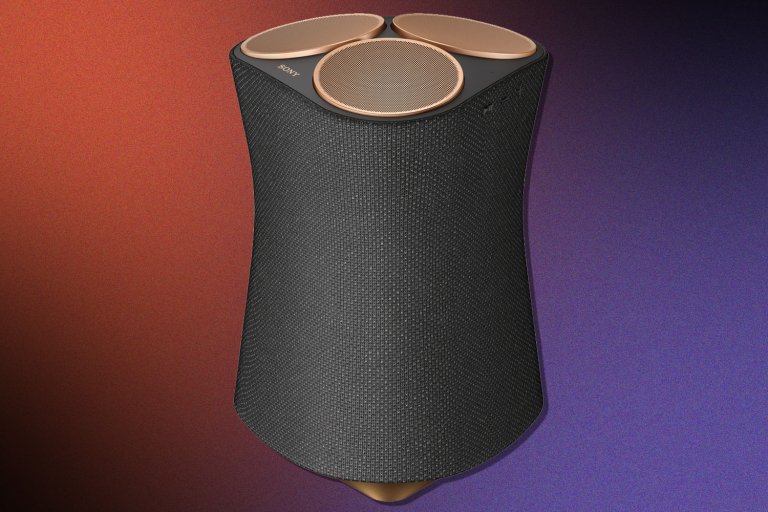
Spatial audio adds a 3D element to music, simulating a true surround sound experience that makes it seem as though you’re sitting in front of the band. It was a big year for this type of immersive audio, as it landed on large streaming platforms including Amazon Music, Tidal, and Apple Music. Sony’s SRS-RA5000 Bluetooth speaker drastically rearranges its internal components to support those multi-dimensional recordings in a single device. Its seven speakers fling notes and voices throughout the room: three fire upward, three go straight out from the sides, and a woofer points downward to create booming bass.
ATEM Mini Extreme ISO by Blackmagic Design: An mini control room for high-end streaming
ATEM Mini Extreme ISO by Blackmagic Design
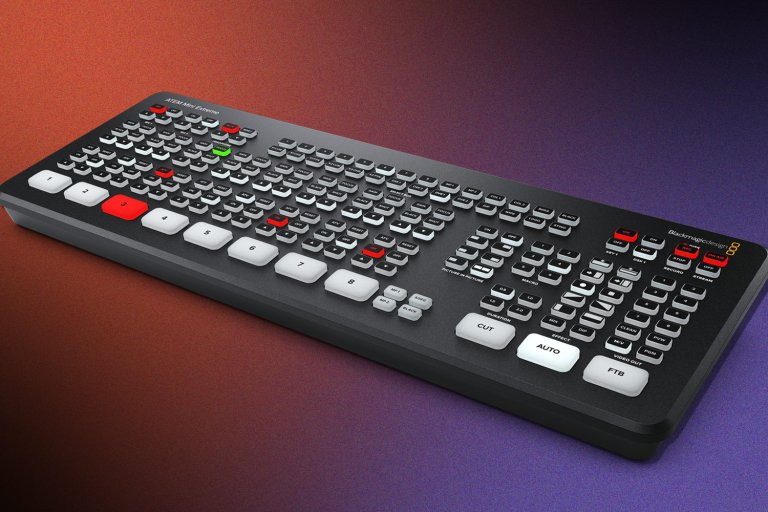
Live-streaming content has come a very long way from someone simply holding up a smartphone camera. Blackmagic’s switcher gives content creators a scaled-down version of a big-wig broadcast control room. The board pulls in up to 8 channels of content via HDMI and allows a director to adjust levels and switch between signals on the fly—just like in a pro studio. The board can connect through a smartphone to stream over a cellular connection, or can output to a recorder. It does all this for a very small fraction of what a huge production board would set you back.
RF5.2mm f/2.8 Dual Fisheye Lens by Canon: A single lens to shoot VR
RF5.2mm f/2.8 Dual Fisheye Lens by Canon
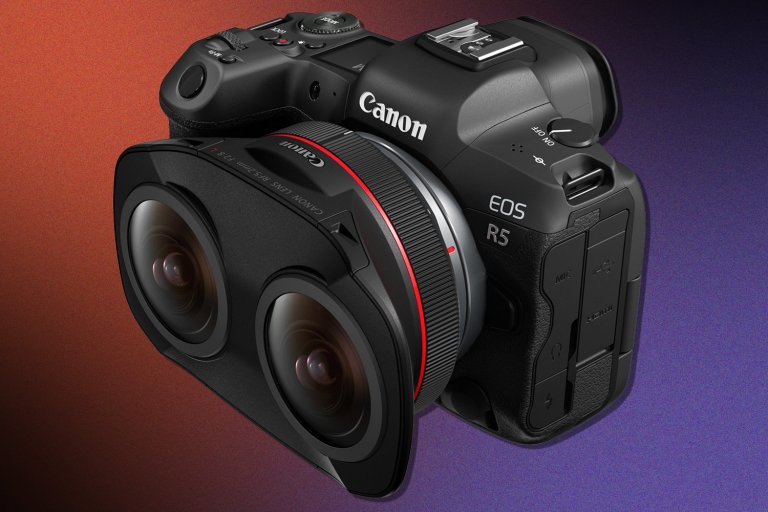
Shooting VR or even 3D content typically requires at least two cameras capturing images from slightly different angles. Instead, Canon has integrated two lenses into one housing. Each 12-element lens creates an image that covers half of the image sensor in a full-frame camera. A super-wide focal length enables a 190-degree field of view, which means the setup can see slightly behind itself. Once the footage goes through an editing tool like Adobe Premiere, viewers can get the full VR or stereoscopic 3D experience through a headset like the Oculus Quest 2.
SolarCell Remote by Samsung: A remote that ditches AAAs
SolarCell Remote by Samsung
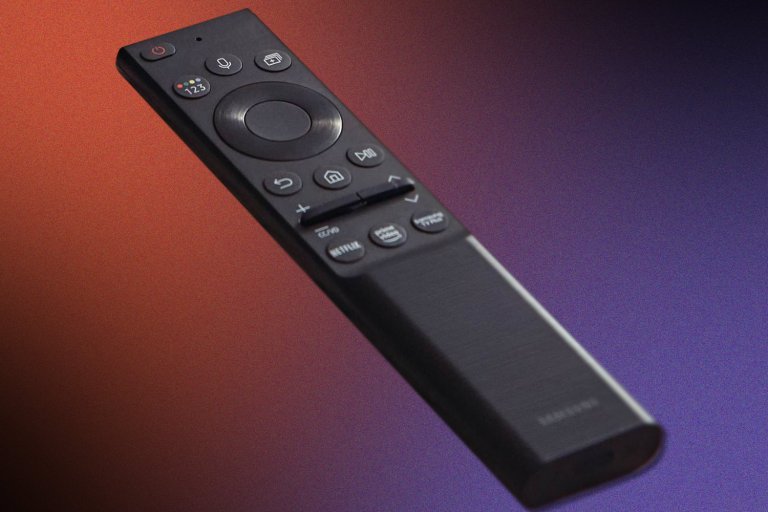
Many TV remotes still rely on alkaline batteries, which feels like an anachronism in 2021. So Samsung developed a controller with a solar panel built into its backside. Like your old high-school calculator, the remote can pull all the power it needs from any kind of indoor illumination. In the off chance it needs a little extra juice due to heavy use or lots of time spent in the dark, a USB-C port on the bottom provides another charging option. Samsung estimates that its plans to include these remotes with its TVs will eliminate the need for roughly 99 million AAA cells over the next seven years.
MV7 Podcast Microphone by Shure: An iconic pro microphone for anyone
MV7 Podcast Microphone by Shure
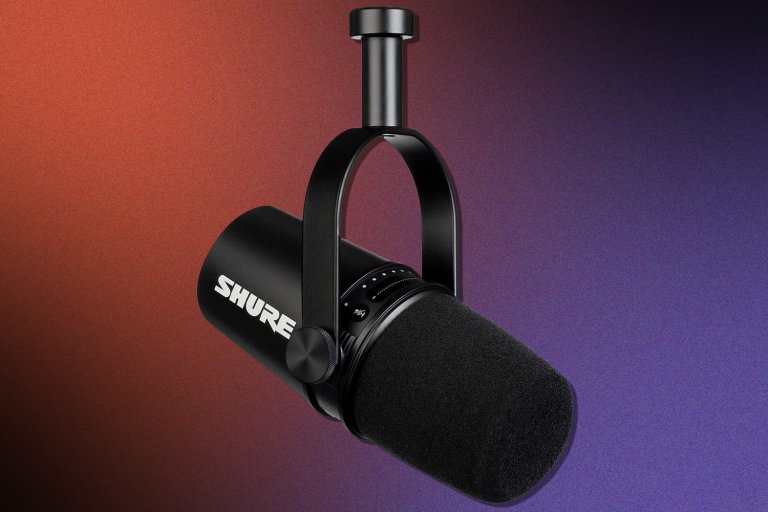
The original Shure SM7B microphone is a staple for podcasters and audio broadcasters thanks to its relatively compact size and superlative quality. Unfortunately, its XLR-only connection meant creators needed a mixing board and some audio know-how to use it. The MV7 has the same recording components and voice-isolating pickup pattern as its pro sibling, but it can also plug directly into a computer via USB. Shure’s companion desktop app provides all the essential settings normally found on a mixing board, including gain, mix, and an EQ limiter. (Simplified EQ and tone presets like “natural” and “bright” give an assist to anyone who isn’t quite sure what all that means.)
Mustang Micro by Fender: A guitar amp that fits on a keychain
Mustang Micro by Fender
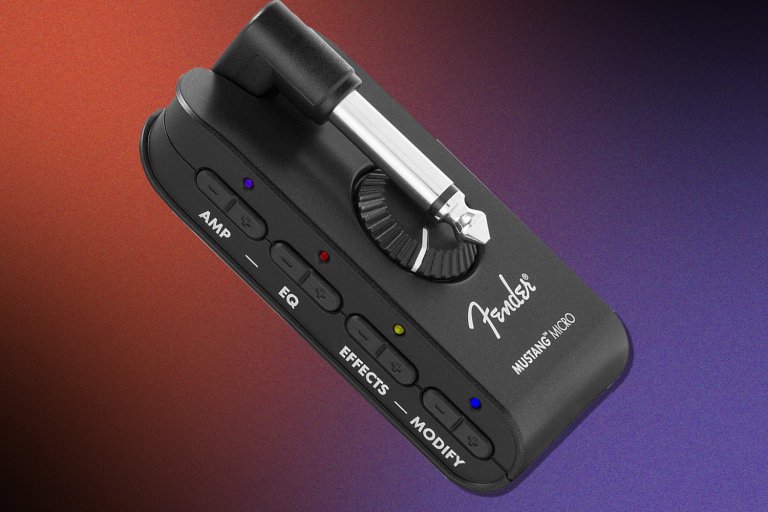
About the size of the average car key fob, the Mustang Micro is a full-fledged guitar amp in a package small enough to toss in a pocket. The wee device plugs straight into any electric guitar or bass and sends riffs to a pair of wired headphones. Musicians can toggle among 12 amp-mimicking tones and 12 effects pulled from Fender’s full-sized Mustang line of amps. Connect it to a smartphone or other device via Bluetooth to pull in audio and jam along with any song—without driving the neighbors nutty.
One by Backbone: Turn a smartphone into a portable console
One by Backbone

Whether players choose to stream games from Xbox, PlayStation, or Steam, the Backbone controller helps provide a consistent, high-end experience a smartphone alone can’t touch. Plugged directly into an iPhone’s Lightning port, the controller offers all the familiar buttons and analog sticks of a full-fledged console’s interface—while the hard connection drastically cuts down on game-ruining lag. And, thanks to the telescoping brace that runs across the back of the device (from which Backbone gets its name), players don’t have to worry about accidental drops or disconnects.
Home

One of the things we think a lot about here at Popular Science is how to do more with less. That often means repurposing scraps, finding out-of-the-box solutions, or simply stocking our homes with products singularly capable of making our lives easier. This year, the best home products include a utility knife that turns into a scraper, a robotic vacuum-mop that knows how to avoid wetting your carpet, and shingles that very well could contain recycled asphalt from your neighbor’s old roof.
Grand Award Winner
Hair screw tool by Dyson: A tangle-proof vacuum head
Hair screw tool by Dyson
See It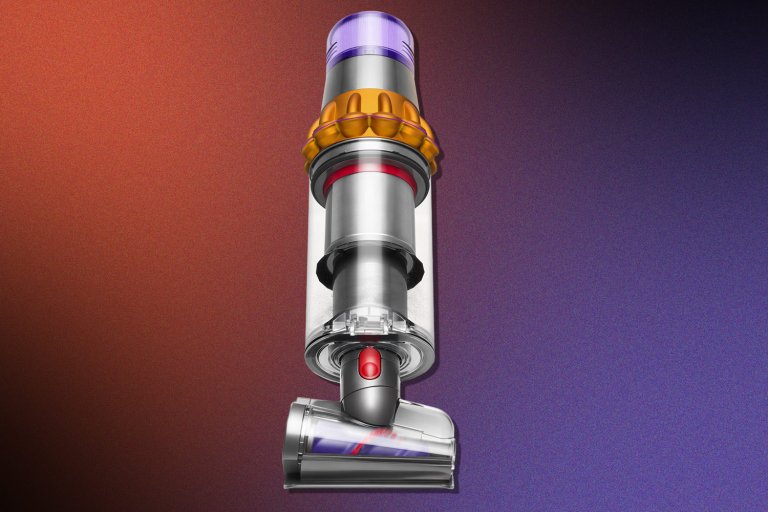
Anyone living with a long-haired person or pet knows all-too-well the struggle of clearing a vacuum brush head after a thorough cleaning. Those formerly luscious locks love to loop, loop, loop around the rotating cylinder until it’s so clogged you have to wield scissors or a utility knife to free it—barely able to tell which bristles are built in and which used to be on someone’s dome. Dyson solved this modern woe by eschewing the standard tubular brush head shape for a cone inspired by the ancient design of Archimedes’ screw. Pop one of these onto the end of a compatible Dyson vacuum (including the V8, V10, V11, Outsize, and V15) and those obnoxious hairs will find it harder to hang on. As the screw spins, it funnels follicle-grown filaments off its skinniest end, where the bristles are also softer to shake off any hairy grasps. There, they’re helpless against the suction of the vacuum—leaving more hair in the dustbin and less cleanup when you should be done cleaning.
Scraper utility knife by ToughBuilt: A transforming utility knife
Scraper utility knife by ToughBuilt
See It
The blade-flipping action on this multipurpose tool is just so smooth.
A utility knife is a toolbox must-have. A scraper is much more specialized, but there are plenty of jobs—say cleaning up paint on and around a window—that demand both. ToughBuilt’s first-of-its-kind cutter morphs into a scraper. Press the button on the side of this 6.5-inch-long tool and push it forward to unsheathe the razor; keep going and the blade will flick 90 degrees, locking in place for scraping. There’s also a paint-can opener on the back for when you need it.
Creami by Ninja: Any frozen ingredient can be ice cream
Creami by Ninja
See It
This ice cream maker will also make sorbet, gelato, milkshakes, and more.
Traditional ice cream makers can spend 20 to 40 minutes churning ingredients into the tasty treat we all love. The Ninja Creami spits out its chilled desserts in just 5 minutes. Drop frozen ingredients like fruit into one of the machine’s pint containers, and the appliance shaves them into fine ice particles that match the creamy texture of a well-made dairy delight. When it comes to recipes, you’re essentially limited only by your imagination—if you can freeze it, it’s dessert.
Roborock S7 by Roborock: No mistakenly mopped carpets
Roborock S7 by Roborock
See It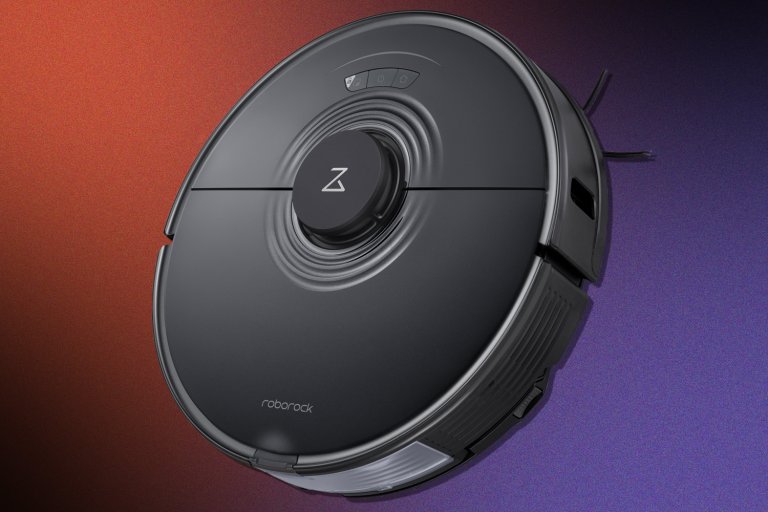
If your floors are a mix of carpet and wood—or any other hard surface—it can be risky to buy a cleaning robot that vacuums and mops. Without significant babysitting, a bumbling device can easily soak a shag by dragging its wet, dirty sponge into the wrong room. Not the Roborock S7, which can detect carpet and lift its mopping attachment to avoid making a mess. It knows what’s underfoot thanks to an ultrasonic sensor that blasts sound at the floor, reading the echo to determine what’s soft and what’s not. We like to think it screams so you don’t have to.
G5 Graphite Core Bonded Cookware by All-Clad Metalcrafters: The lightest, quickest cookware
G5 Graphite Core Bonded Cookware by All-Clad Metalcrafters
See It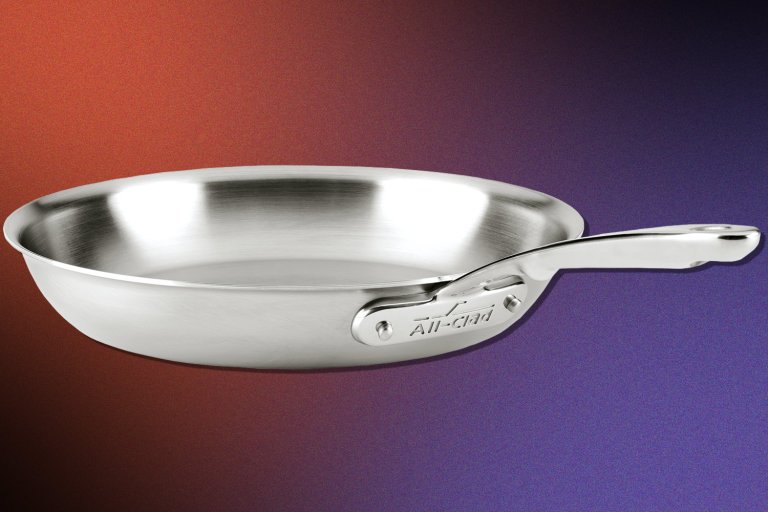
More than six years of metal research turned into seven patents and one line of All-Clad pans. The stainless steel and aluminum bodies have pyrolytic graphite cores that heat up faster than copper thanks to the arrangement of the carbon atoms inside. They’re also 80 percent lighter, making these pans good for tossing onions and flippin’ pancakes. Not only will the pans withstand the highs of your oven or broiler, but they’re so eager to take on heat that they work well at even the very low temps that delicate foods like fish demand.
Powerstack 20V Max Compact Battery by DeWalt: A lighter, more powerful tool battery
Powerstack 20V Max Compact Battery by DeWalt
See It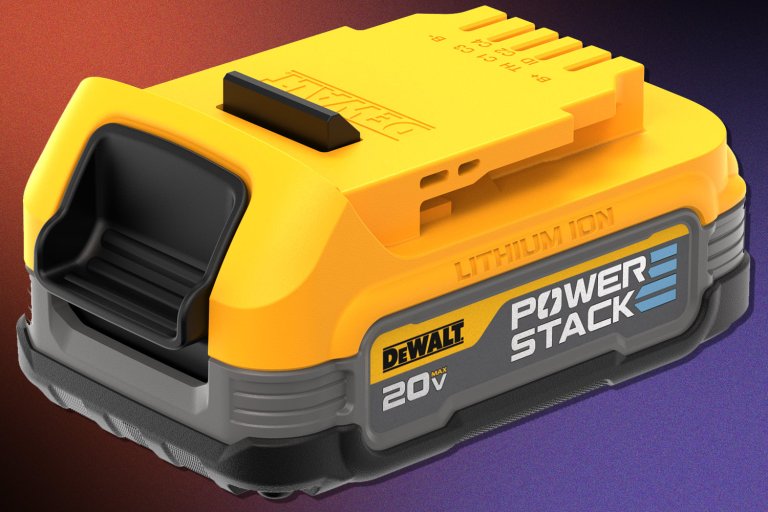
DeWalt’s new Powerstack pouch battery represents a whole new approach to energizing cordless tools. While standard lithium-ion bricks are stuffed with vertical, cylindrical cells—and have only been getting bigger as manufacturers look to add more power and runtime to their products—DeWalt’s batteries use stacked cells, so there’s no wasted space. This both reduces weight and boosts output: They’re 25 percent smaller than the previous generation and 50 percent more powerful. They also fit existing 20V Max tools and use the same charger as all DeWalt lithium-ion batteries, so you won’t have to buy new gear to add them to your kit.
Recycled asphalt shingles by GAF, a Standard Industries company: The first shingles to contain recycled asphalt
Recycled asphalt shingles by GAF, a Standard Industries company
See It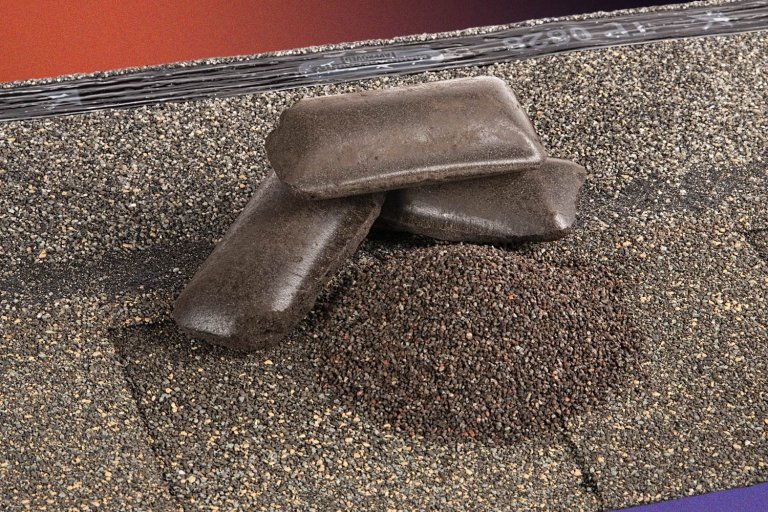
There’s no reason to throw away shingles if you can just reuse them.
Discarded roofing shingles typically end up tossed in landfills or incinerated. Those that do get reused are usually melted down and packed into roads. GAF, however, has figured out how to turn about 90 percent of this demolition scrap into usable material for new shingles. Once the discarded sheets of asphalt are cleaned of construction debris, they’re cut into 4-inch squares and two carpet beater-like machines remove any grippy granules that may degrade the quality of the mix. The clean 4-by-4s get ground into a powder, sieved, and separated to get the asphalt in one place, packed into briquettes, and tossed back into the standard shingle manufacturing process. The new ones contain up to 15 percent recycled material.
Top Load Washer with 2 in 1 Removable Agitator by Whirlpool: Two types of washing in one machine
Top Load Washer with 2 in 1 Removable Agitator by Whirlpool
See It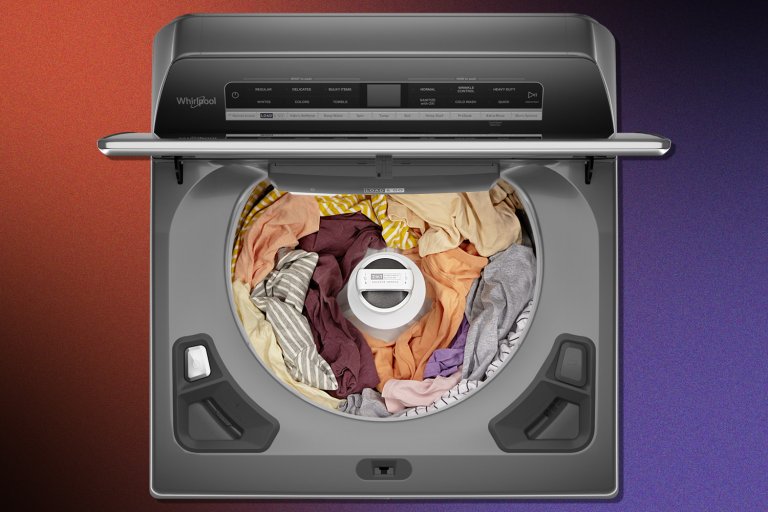
Here, the agitator is in place, but you can always take it out.
Some top-loading washing machines have an agitator in the center—a bulky rod that jostles clothes around to get them clean—while others rely more on your garments rubbing against one another to scrub themselves clean. Whirlpool’s new top-loaders do both. Leave the 1.15-pound agitator in place for heavy washing jobs (say, all your jeans) and pull it out for a gentler cycle. A spring-loaded cap plugs the hole so your clothes won’t get snagged and torn.
3D Motion Detection by Ring: A doorbell camera that won’t bug ya
3D Motion Detection by Ring
See It
The Ring Video Doorbell Pro 2 is just one of the products that feature radar.
Most home security sensors are passive, in that they gather information from the environment and try to interpret it. This can lead to frequent false positives, like if a motion detector clocks a curious crow as a potential intruder. Ring’s newest video doorbells and camera-equipped floodlights have gone the active route, becoming the first home security devices to use radar to visualize the world. These little gadgets broadcast waves up to 30 feet (you set the distance). Radar excels at tracking motion, and the cameras’ computer vision is good at identifying objects. Combined, the technologies make the system better at interpreting what’s actually in front of it.
Security

Year two of the pandemic brought a new flood of security concerns—domestically, internationally, and, of course, digitally. But companies and researchers stepped up their game. The US military demonstrated its most comprehensive anti-drone technology to date in the New Mexico desert; the Los Angeles Fire Department put the first robot firefighting vehicle in the US on the streets; and a router maker launched a partnership to bring top-shelf anti-virus tech to smart devices. It may not be enough to outright guarantee that you’ll sleep peacefully at night, but at least there’s less of a threat of being hacked through the Bluetooth on your alarm clock.
Grand Award Winner
Total Cookie Protection by Mozilla: A ‘cookie jar’ that one-ups online trackers
Total Cookie Protection by Mozilla
MORE INFO
Firefox beefed up its browser in a way that Chrome, Safari, and Bing still haven’t.
Cookies make the internet work a little more smoothly by remembering a user’s browsing habits, but when the data trackers follow individuals across different sites, a useful tool becomes a privacy liability. Firefox, the browser by Mozilla, introduced an optional feature called “Total Cookie Protection,” which in a meaningful way limits the trails of crumbs you leave behind online. Instead of storing all of an individual’s information together, this new approach makes each site keep its tracking in a separate “cookie jar” without pulling data from others. That means you can click “accept” with more abandon when you get pelted by the cookie disclaimers that are now the norm across the Web.
THOR (Tactical High Power Operational Responder) by the US Air Force Research Laboratory: Defeating drones with directed energy
THOR (Tactical High Power Operational Responder) by the US Air Force Research Laboratory
MORE INFO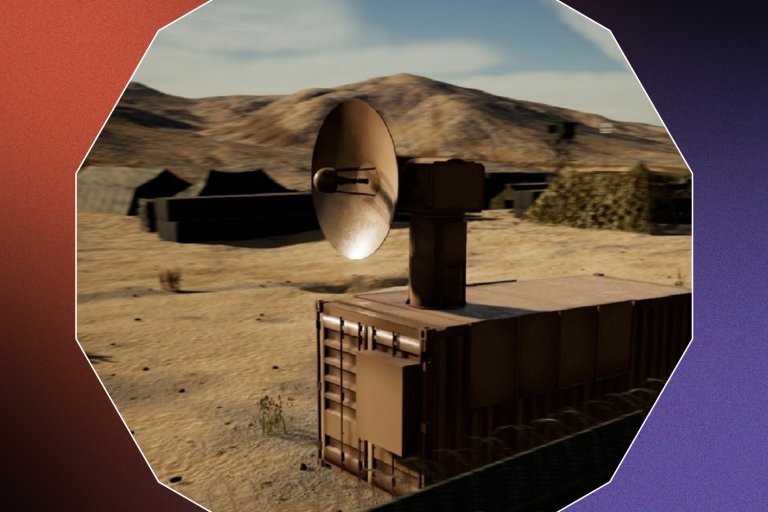
It looks like a giant satellite dish, but THOR marks an important first step in bulking up drone defenses.
Small, expendable drones can spy on soldiers, or worse, attack them with explosives. Fighting these machines, many of which are built cheaply or with commercial parts, means looking for a cost-effective countermeasure that can disable multiple drones at once. With the Air Force’s THOR, the military has a new tool to fry an entire swarm. The system emits high-powered microwaves that hurt electronics, but not people or wildlife. Compact enough to fit on in a shipping container or a C-130 cargo plane, this electrically powered weapon can be set up in a few hours—ready to protect anyone nearby.
Thermite RS3 by Howe & Howe and Textron Systems: Letting robotic firefighters tackle the toughest blazes
Thermite RS3 by Howe u0026 Howe and Textron Systems
MORE INFO
The Thermite RS3 can be outfitted with a tilting ventilator to maximize water flows.
Firefighters rush into danger to extinguish dangerous blazes. But what if they didn’t always have to? Newly adopted by the Los Angeles Fire Department (LAFD), the Thermite RS3 is a robot ranging from 5 to 7 feet tall and 3,000 to 4,000 pounds (depending on the equipment it’s packing) that can help put out flames without risking the lives of firefighters. The remotely operated RS3 rolls on tank treads, sports thermal and optical cameras, and can blast 2,500 gallons of water a minute. In December 2020, the LAFD used its new prize to beat back a blaze from inside a building—after human firefighters had been called to safety outside.
YubiKey Bio Series – FIDO Edition by Yubico: Encrypted biometric security at your fingertips
YubiKey Bio Series – FIDO Edition by Yubico
CHECK PRICE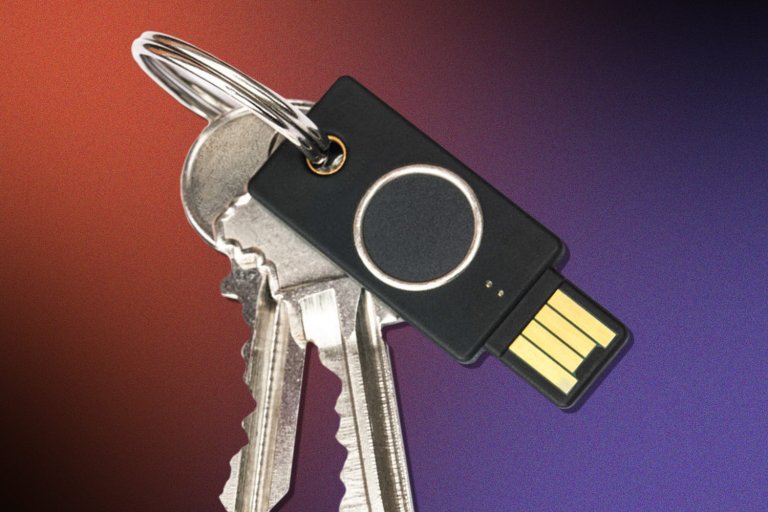
The USB key maker and security favorite finally cracked the code on biometric access.
Physical security keys offer an option for password-free logins or two-factor authentication that don’t require punching in codes or relaying text messages. YubiKey, which has made this kind of useful and buttoned-up hardware since 2008, launched its first biometric fobs in 2021. The key reads a fingerprint, a personalized marker that it stores securely and locally on the device itself. Using the gadget, which comes in both USB-A and USB-C models, for password-less authentication allows it and the fingerprint to work together as a multi-factor check on logins.
FRAG-CT by DEVCOM Soldier Center: Turning bomb craters into better armor
FRAG-CT by DEVCOM Soldier Center
MORE INFO
The tool can analyze most any detonation, from a grenade, to a heavy artillery round, to a barrage of bombs.
Analyzing the debris left over after a bomb blast can lead to a better understanding of the explosive, and inform the design of better armor. Fragmentation Rapid Analysis Generator using Computed Tomography, or FRAG-CT, is a tool made by the Army’s Development Command that can process data from a test range 200 times faster than the current method, which involves painstakingly collecting shrapnel and mapping explosions by hand. By collecting 3D images of fragments, the tech can lead to armor designs more capable of resisting blasts, among other vital ballistics insights.
IG-PRO 31 Interceptor by Iguana Pro USA: A boat on treads that’s a real amphibian
IG-PRO 31 Interceptor by Iguana Pro USA
MORE INFO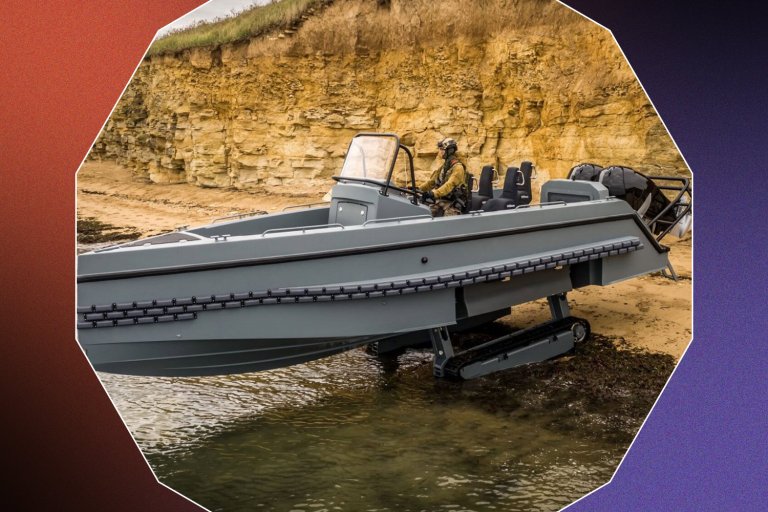
The vehicle zooms over the water—and then cruises over sand beaches.
What has a top speed of 50 knots and two sets of retractable treads? A morphing craft called the IG-PRO 31. Built by Iguana Pro, the 32-foot-long vessel is an amphibious motorboat that can pull itself up on beaches and into hiding. Sold to the US Navy in October 2020, the Interceptor offers special forces more options for where to land—and how to get their boat to a safe shelter space once ashore. On terrain, the tracks can pull the craft forward at more than 4 miles per hour. The machine also offers a useful tool for rescue work on sea or the beach.
Mail Privacy Protection in iOS 15 by Apple: A double-mirror trick for email tracking
Mail Privacy Protection in iOS 15 by Apple
MORE INFO
See the trackers in your inbox before they see you.
Some email marketing techniques rely on invisible pixels—hidden code that lets the sender know if you’ve opened a message or not. A privacy feature included in the iOS 15 update introduces a novel behind-the-scenes process that blocks those sniffers in their tracks. Once the feature is activated, Apple opens the email on its servers first, and then forwards the message to the user, effectively stopping the tools from knowing when (or even if) the recipient opened the email. It’s a clean way to build privacy back into inboxes normally teeming with data collection.
World Flood Mapping Tool by UN University’s Institute for Water, Environment, and Health: Flood risk from the past and present, mapped for the future
World Flood Mapping Tool by UN University's Institute for Water, Environment, and Health
MORE INFO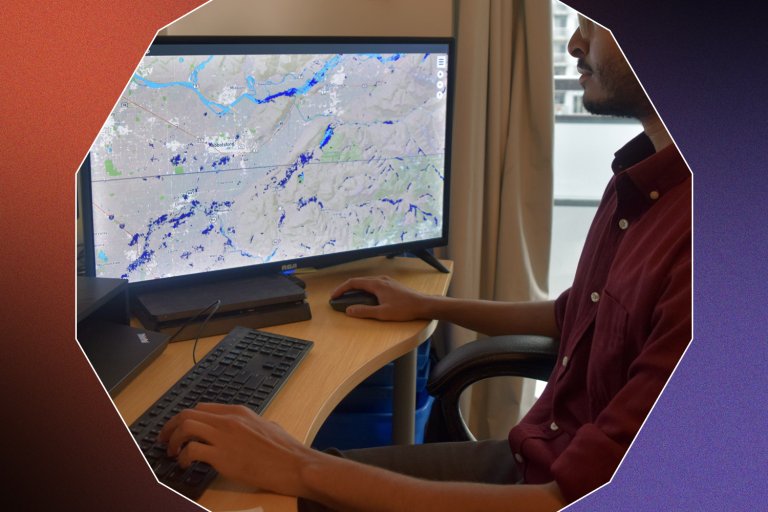
The free global tool is the first in a series from the United Nations’ climate experts.
In the face of climate change, knowing where and when water levels have already risen is an invaluable resource. The World Flood Mapping Tool, made for the United Nations, runs in a browser and can show where past floods have occurred, down to the street level, in any given spot on the globe. The tool draws from Google Earth and Landsat data collected since 1985, is accurate within 30 meters, and includes both population and land use filters—both of which should help planners mitigate harm from future deluges. Later versions will include AI-generated risk maps.
NETGEAR Armor powered by Bitdefender by NETGEAR and Bitdefender: A mega router with total smart-home protection
NETGEAR Armor powered by Bitdefender by NETGEAR and Bitdefender
See It
The average number of smart devices in US households shot up from 11 to 25 in 2021.
Every new internet-connected device in a home has the potential to be a new path around security for a malicious actor. NETGEAR Armor includes antivirus protection in a router, ensuring protection at the connection point between a growing army of smart doo-dads and the outside internet. In addition to using algorithms to learn a user’s normal behavior and flag unusual activity, the system’s security tools also scan outgoing data for logins, social security numbers, and banking info, and block those from reaching prying eyes.
Tactical Humanitarian Operations Response (THOR) by Verizon Frontline: A mobile network and disaster response center, all in a pickup truck
Tactical Humanitarian Operations Response (THOR) by Verizon Frontline
more info
You might recognize that chassis from a Ford F-650.
After a natural disaster, most Americans have to rely on ad-hoc infrastructure to remain connected. Verizon’s THOR is a mobile all-in-one vehicle built for disaster response. The rig can restore cell service on its own 5G or LTE mobile network, which is powered by a small retractable cell tower and satellite uplinks. To help first responders, THOR can also launch a tethered drone or a fleet of winged robots to see the surrounding area, capturing useful real-time information about what is and isn’t passable terrain.
Sports and Outdoors

The past year and a half have taught us all how important it is to get outside and stay active—whether that means an easy hike or an epic day of mountain biking. The year’s top new gear makes those adventures better, safer, more comfortable, and more inclusive. We’ve chosen killer new shades for your next run, hiking pants designed to fit more bodies, and a helmet that will let you know when it (or you) have had one too many bad bumps. Plus, there’s even a kit made just to help your bathroom breaks in the woods leave less of a mark.
Grand Award Winner
160E by Yeti: The best e-mountain on the planet
160E by Yeti
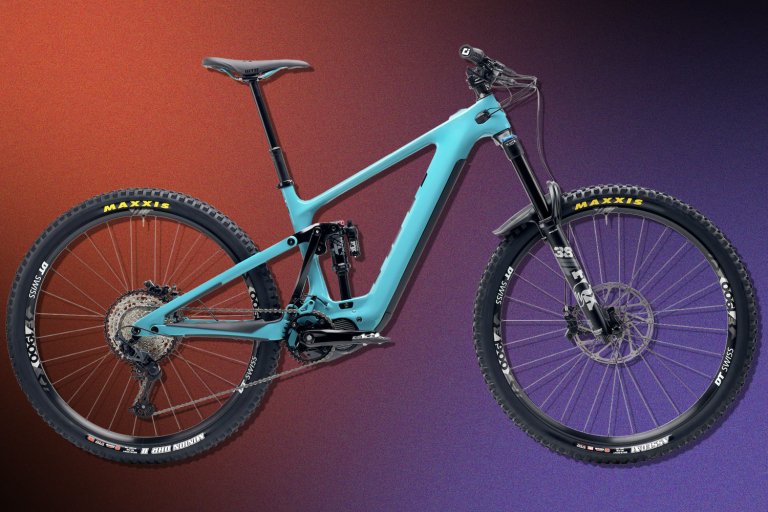
Why not use electricity to help you get up that hill?
When Yeti Cycles set out to build its first electric mountain bike, the company needed to do better than just slapping a battery and motor to an existing ride. The race-driven brand wanted a cycle that would scream uphill and bomb downhill at record-setting speeds, but do it with the same feel of other analog Yetis. Having a motor on board increases the whip’s acceleration and tire torque, meaning the ride could lose traction and spin out when traversing gravel, rocks, and roots if the team didn’t correctly manage that extra power. To keep a grip, they designed an entirely new suspension platform, called the Sixfinity linkage, specifically tuned for mountain-climbing e-bikes. One essential piece lies in how the rear triangle of the frame moves with the back wheel; a unique joint under the seatpost dynamically adjusts the geometry of the frame as cyclists crank over obstacles. This, and a series of other suspension modifications, result in a carbon-fiber ride that, when pedaling and climbing, reacts to the trail without too much springiness or the tires losing their connection to the ground.
Kato by Oakley: Frameless sunglasses from the future
Kato by Oakley
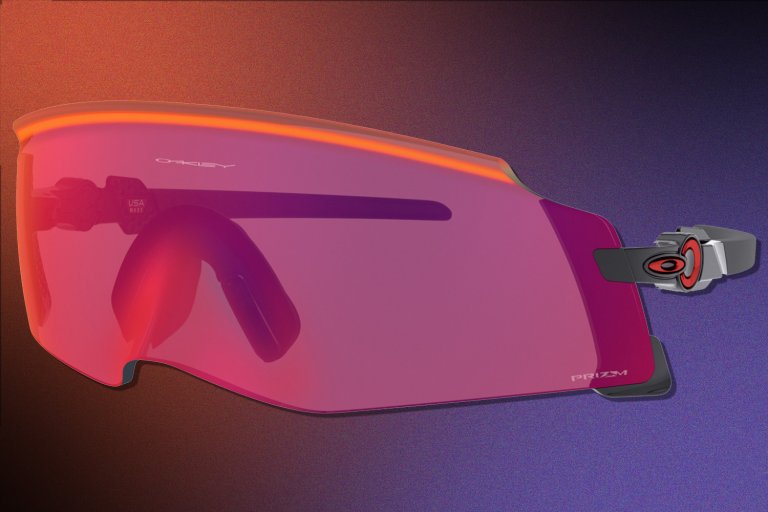
Frames? Where we’re going, we don’t need frames.
Put these new shades on your face, and you’ll instantly feel a bit like Doc Brown from Back to the Future. That’s because, instead of frames, the lenses on Oakley’s Kato sunglasses act as the frame themselves. The curved piece of polycarbonate has a lip at the top and a curvature for your nose, both of which lend it structure. Without a top or bottom frame, the wraparound specs give the wearer a sweeping, unencumbered field of view. Designed mainly for athletes like cyclists or runners, the sunglasses weigh just 34 grams, sitting in front of the face like a snug, sweeping visor.
Beast18 and Beast28 by Matador: A collapsible backpack that’s anything but flimsy
Beast18 and Beast28 by Matador
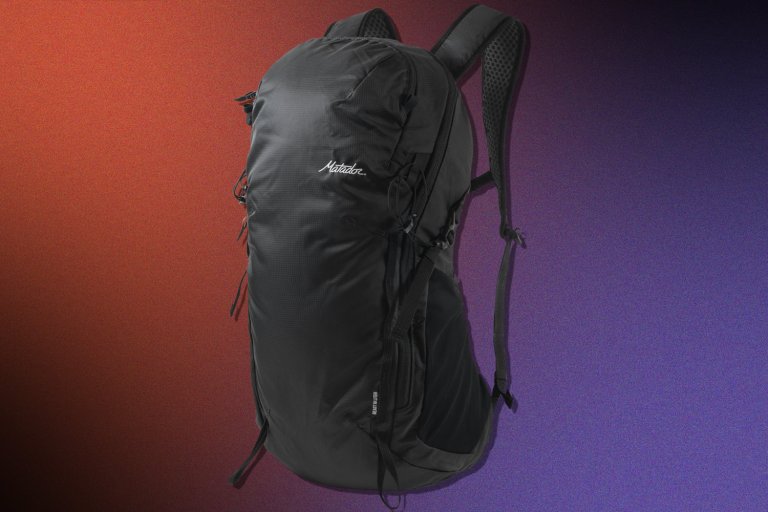
The backpacks come in two sizes.
These two mountaineering backpacks have a unique trick up their nylon sleeves: they can compress down into a small package, but still retain structure in their expanded forms. The Beast18, for example, becomes a roughly 10-inch disc, but unfolded it is about 20 inches long. A loop of hardened, yet springy stainless steel runs along the pack’s perimeter to create a semi-rigid frame shaped something like a peanut. The pack collapses similarly to a nylon windshield sun screen: Flip it in half at the middle (creating a figure-8 shape with the metal loop), then fold it over on itself. The metal’s strong memory helps it snap back into shape.
Core Construction by Voormi: A soft fabric that repels rain
Core Construction by Voormi

This hoodie acts like a rain jacket.
Waterproof, breathable jackets are typically a little crinkly, because their moisture-blocking prowess relies on a special membrane sandwiched and glued between other fabrics. The Core Construction material from Voormi does it differently: Instead of laminating fabrics together, the company knits yarn through the membrane itself. The new material nets hoodies and a range of other garments—such as cycling jerseys or running wear—that’ll provide rain protection, but feel as soft and breathable as a sweatshirt.
Ponderosa Pants by Alpine Parrot: Hiking pants for every body
Ponderosa Pants by Alpine Parrot

The pants come in both “river” and “mountain” fit.
Clothing companies typically approach plus-size offerings as simply scaled-up versions of smaller sizes, an approach that fails to recognize that a person’s proportions may not simply be a larger version of a size six. The Ponderosa Pants not only come in sizes 14 to 24, but offer two distinct fits for plus-size body types. One, called mountain, is best for bodies with broader hips than waists, while the river model works better for folks with hips and waists that measure about the same. Made from nylon and elastane, the garments dry quickly, offer two-way stretch, and have five roomy pockets.
PACT Kit by PACT Outdoors: A better way to bury your business
PACT Kit by PACT Outdoors
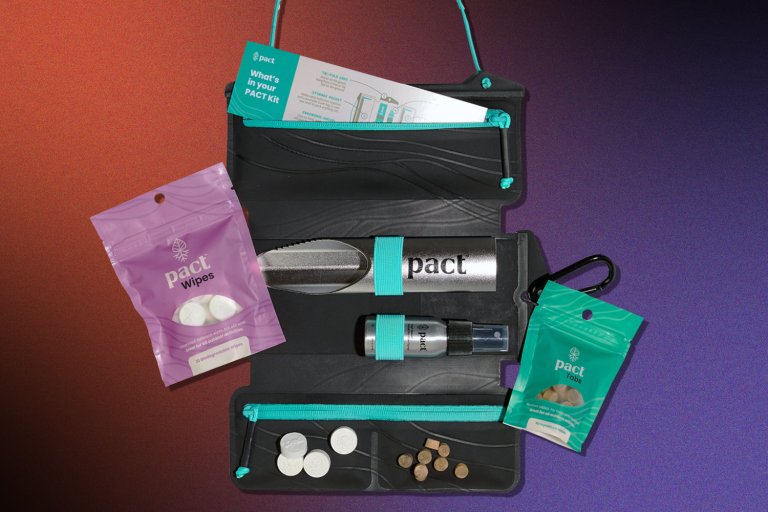
Making number two a number-one priority.
Sometimes when you’re on a hike, ride, or other adventure, you just gotta go. If you’re carrying this kit, you’ll have everything you need to bury your business. Dig a hole with the aluminum trowel, do as nature intended, and drop in three of the included tablets of mycelium. The fungi will break down poop ten times faster than the ground would on its own. Combined with included biodegradable wipes, the system also zaps e-Coli and other pathogens by an average of 66 percent, reducing the likelihood that those baddies will get into water sources and make people sick.
Redster CTD Helmet by Atomic: A helmet that tracks its own health
Redster CTD Helmet by Atomic
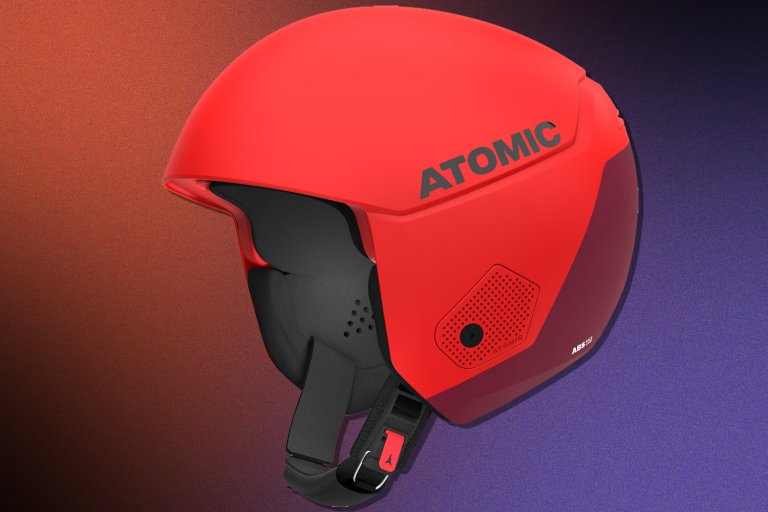
Safety gear that measures its own health, so you can safeguard your own.
A helmet is essential when skiing, but a damaged one will do you no good. Atomic’s Redster CTD brain bucket lets you know when it’s spent. A built-in impact sensor measures blows in five different zones—whether that hit is from a tree (or just dropping it in the parking lot)—and an accelerometer records and evaluates the location and force to determine if the helmet still has the integrity to provide full protection. Atomic’s smartphone app provides a green, yellow, or red indicator on its health. In the event of a severe fall, the app can also notify an emergency contact to your coordinates.
Osmo tent fabric by Nemo: Fast-drying, non-drooping tent toppers
Osmo tent fabric by Nemo
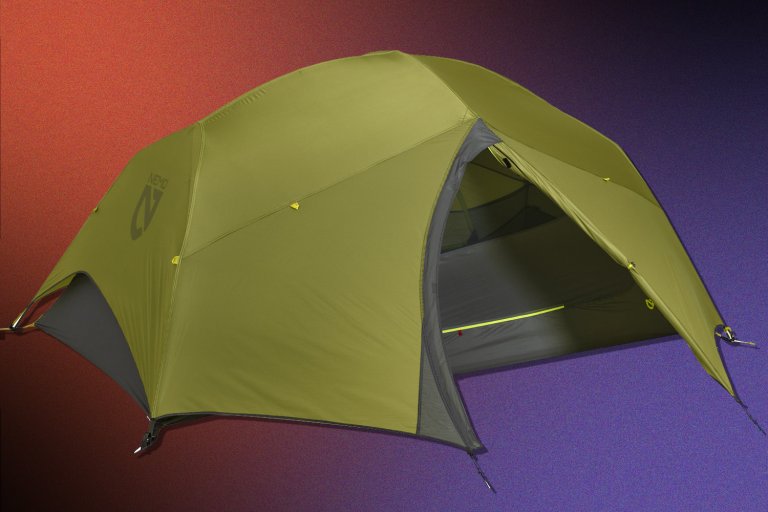
Tent fabric with a new design.
Most backpacking tent flys—the tarp-like portion that goes over the shelter to protect it from rain—are made from lightweight nylon coated with polyurethane. But if you’ve ever woken up to a wet, saggy mess, you’ve experienced the material’s shortcomings. It’s stretchy, absorbs moisture, and takes what can feel like forever to dry. Nemo’s new Osmo fabric is made from a checkered weave of durable, weather-repelling nylon and moisture-wicking polyester. The result is that it dries much faster than other tent flys, and doesn’t sag. The material will debut in three Nemo tents in 2022.
Descent T1 Transmitter and Descent Mk2i Dive Watch by Garmin: Syncing underwater with sound
Descent T1 Transmitter and Descent Mk2i Dive Watch by Garmin
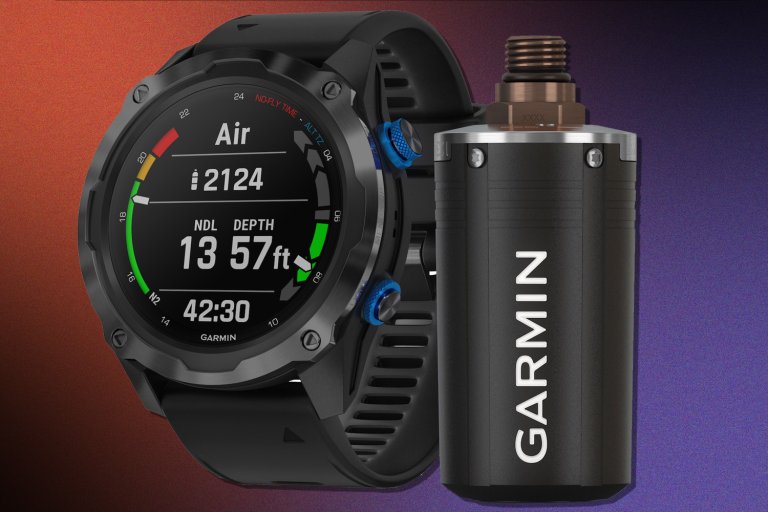
The transmitter connects to the dive watch via sonar.
Scuba divers typically use radio transmitters to monitor their tank pressure. But those waves don’t travel well in water. Sound waves, or sonar, can move significantly farther through the wet stuff. Garmin’s Descent T1 transmitter taps those audio frequencies, allowing groups of divers to keep closer tabs on one another. The beacon reliably delivers tank pressure data, air time, and gas consumption rates for up to five divers to Garmin’s Mk2i dive watches from up to 30 feet away.
RockShox Flight Attendant by SRAM: The smartest mountain bike suspension
RockShox Flight Attendant by SRAM
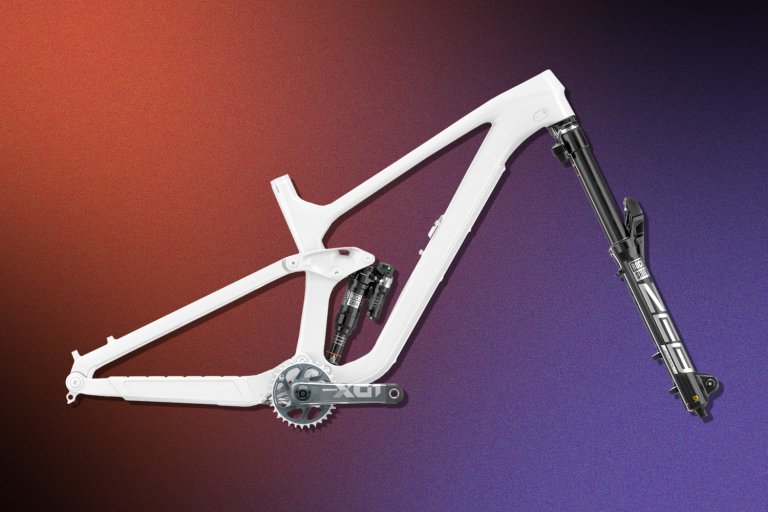
This suspension system actively makes changes to the tune of 200 decisions per second.
For mountain bikers, pedaling on smooth terrain with a bouncy suspension wastes energy, but a soft springiness is welcome when cranking over rocks and roots. The battery-powered Flight Attendant suspension automatically adjusts itself on the fly. Accelerometers in the shock and fork and a sensor in the crank feed motion and force data to an algorithm that decides how to tweak the suspension to suit the terrain. In fact, the Flight Attendant makes 200 decisions per second, sending signals to a pair of motors in the suspension to make it softer or firmer (or keep it the same). For now, it’s only available on bikes from YT Industries, Canyon, Trek, and Specialized, but someday you may be able to retrofit it onto an existing ride.
Credits:
Package Editor: Rob Verger
Judging Panel: Rachel Feltman, Stan Horazcek, Corinne Iozzio, Rob Verger
Category Editors: Sara Chodosh, Rachel Feltman, Stan Horazcek, Corinne Iozzio, John Kennedy, Claire Maldarelli, Purbita Saha, Sara Kiley Watson, Rob Verger
Researchers: Kelsey Atherton, Jordan Blok, Berne Broudy, Andrew Rosenblum, Rebecca Sohn, Rob Stumpf, Terri Williams, Charlie Wood
Design Director: Russ Smith
