
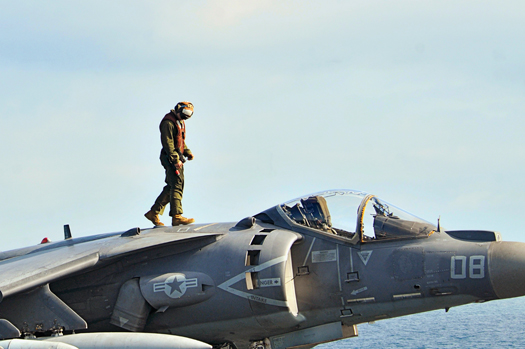
Early in 2008 on the Black Sea coast, a Georgian drone flying over the separatist enclave of Abkhazia transmitted an instantaneous artifact from the age of human flight—the video record of its own destruction by an attacking fighter jet. What happened that day was born of incendiary post-Soviet politics. The Kremlin backed Abkhazia and was furious that Georgia had bought surveillance drones to watch over the disputed ground. Georgia’s young government flaunted its new fleet, bullhorning to diplomats and to journalists like me what the drones were documenting of Russia’s buildup to war. I remember the Georgian bravado. We have drones. Ha! We have arrived. Tensions led to action. Action came to this: A Russian MiG-29 intercepted one of Georgia’s unmanned aircraft, an Israeli-made Hermes 450, which streamed live video of the fighter swinging into position. The jet pilot fired a heat-seeking missile. Viewed on the drone operator’s screen down below, the missile grew larger and its exhaust plume grew longer as it rushed near. Then the screen went fuzzy. Georgia’s drone was dead.
Decades from now, those few seconds of video might be cued for knowing laughs—remember when fighter jets ruled the skies, and drones were helpless before them? Cautious minds best not bet against that. But that day is long off. For now, the video delivers the opposite message. The Hermes 450’s lopsided encounter with a MiG served to remind people that, for the foreseeable future, the roles of traditional military fighter and attack aircraft—flown by men and women buckled inside—remain secure. Drones are a complement, not a replacement, to the aircraft flown by the people within.
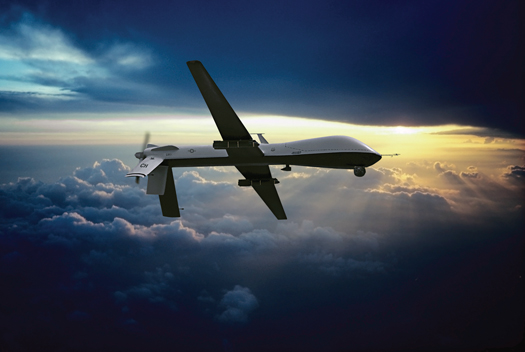
There are many reasons for this. Stepping past the unsettled questions of morality and law, the restraints on drones are connected to a pair of stubbornly related facts: Technical limits restrict the missions that unmanned aircraft can perform, and drones, for all their abilities, are very vulnerable machines. Whatever futurists predict, in the arena of air-to-air warfare, drones can neither reliably defend themselves nor consistently elude a determined attack. The best models might excel at patient surveillance or electronic jamming, or be lethal to stationary targets on the ground. But when faced with another plane, they can’t really fight. This is why American drones have been used most extensively and successfully in places, most notably Afghanistan and Iraq, that offer politically permissive airspace or where the presence of friendly pilots keeps potential foes away.
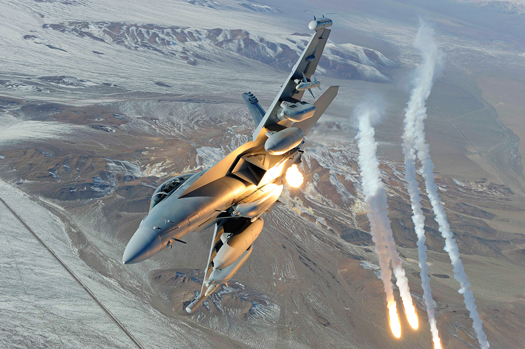
What this means is that drones present a new variable in an old equation. This is an age in which different types and classes of aircraft work alongside one another. Just as helicopters and fighter jets coexist (along with transport aircraft, re-fuelers, electronic warfare platforms and strategic bombers), unmanned aircraft fill niches in a complex force. Early this year, I lived aboard an American aircraft carrier for roughly three weeks and flew backseat on an F/A-18 combat sortie over Afghanistan. Drones crowded much of the airspace over Afghanistan, watching over American units, searching for the Taliban and occasionally dropping ordnance. But fighter and ground-attack aircraft crowded the skies, too, and pilots were in constant radio contact with the troops below, ready to provide strafing runs or air strikes for any unit that needed help—missions that drones do not do well. The roles for drones expand with each new design cycle. But beyond close air support, there are missions that cannot yet be flown remotely, and will not be flown remotely anytime soon.
Warfare drones can neither reliably defend themselves nor consistently elude a determined attack. Faced with another plane, they can’t really fight. Imagine, for a moment, a dogfight. Now imagine trying to design and manufacture a machine that can do what the combination of a trained pilot and weapon-system officer and modern strike fighter do. To understand how aerial combat is different from the many missions that drones have performed successfully, like the slow loiter over a target to watch a suspected Taliban gathering spot, it is helpful to distill what is required of a pilot and aircraft as they close in on another fighter plane. A dogfight comes to this: Whoever is operating the first aircraft must perceive the second aircraft, assess its capabilities, anticipate where that other aircraft will be—both in the next few seconds and beyond—and then maneuver into a position to counter any threats from the opposing aircraft and to make, to use the language of war, a killing shot.
Click here to view this article on a single page, or continue to page two below.
Other factors enter the scenario and give an aerial fight its context. These include weather, changes in terrain (such as the nearby presence of mountains), fuel levels, emotion, rules of engagement, the proximity and attitude of other aircraft (including commercial aircraft that could enter the battle area), the weapons and defensive packages on each combatant aircraft, and the ambient and background thermal conditions that influence some of them, especially heat-seeking missiles. Pilots and backseaters absorb all of these factors and make decisions at a snap, often as both aircraft fly through G-multiplying dives and turns at tremendous speeds. A ground-attack aircraft can rely on similar acrobatics. One pilot I saw being debriefed by an admiral after returning from an airstrike to help pinned-down American troops near the Pakistan border described rapidly planning an attack angle to release his bomb and then having to bank hard and almost vertically to prevent his F/A-18 from entering Pakistan’s airspace. This was a case of precision, high-speed flying that could prove impossible in the near future for a remotely piloted aircraft.
To be sure, fighter- and attack-aircraft crews praise drones, which they see as having carved out a vital place in modern air forces. They also see where drones might hit a set of design hurdles. The first would be to develop a full mix of sensors and a means to fuse all of the gathered data together, so that a remote pilot might have an idea of what is happening to, and around, an aircraft in a distant piece of sky. This technology does not exist. Even if a sensor suite were created to inhale this information instantly, detractors might say that no one could write the algorithms to handle the real-time permutations required for a remotely piloted aircraft to assess risk and make decisions as quickly as a human. Moreover, some of what happens in the mind of a pilot in a cockpit is guided by feel for his aircraft, something that comes from ability, training and experience. How do you capture that in an app?
The second design hurdle has to do with the limits of compromise. To make a drone more maneuverable, it would need a larger engine. A larger engine drives up size and weight, which means the aircraft must carry more fuel and will most likely lose in-flight loiter time. More sensors would probably change the profile of a drone, increasing its radar reflection and reducing its stealth. Almost every time features are added, the drone changes, and those changes come with costs.
“The biggest limitation that you’re talking about with drones is connectivity.” With remoteness, a pilot might lose the ability to control his craft.But the sensors and the software and the push-pull tension inherent in drone design are only part of it. Captain Dale Horan, a career Navy fighter pilot who recently served on a deployment to Afghanistan and Iraq as the commander of Carrier Air Wing 9, has an accommodating view about the technology and the programs that could be created. The real limit, he says, might not lie at the programmer’s cubicle. If the right sensor suite existed so that a pilot flying an aircraft remotely could see what he needs to see, and “if you have a high enough data rate, an algorithm probably can be generated to put the airplane in the right piece of sky to counter that threat.” (It is not lost on pilots, or anyone else, that skeptics of the computer age once said no machine could ever best the masters at chess.) But then came the catch. “If the net is jammed or the data link is bad, that drone is not going to be able to make that correction,” Horan says.
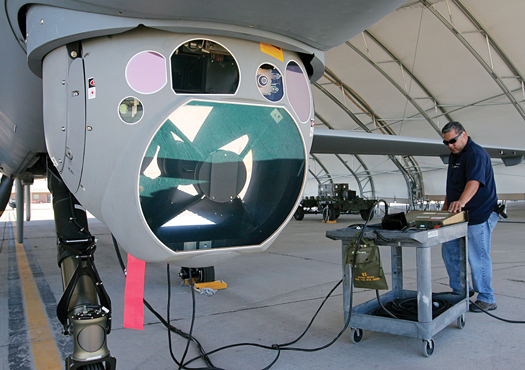
And there is a limit not often discussed. Any sensor system that could seize and interpret all the data required for a pilot to fly a dogfight remotely would face a technical challenge: transmitting that much data, in two directions, in real time. To sketch a crude example, imagine using your smartphone to remotely pilot an unmanned aircraft 1,000 miles away, at night, in bad weather, in skies crowded with a mix of friendly and commercial aircraft in different aviation corridors and altitudes. Now imagine trying to fly that same aircraft remotely when it is under a complex attack, and your smartphone signal grew weak or spotty. The reasons for the frustrating signal could be many—deliberate jamming, environmental interference, a broken part on either end or anywhere in between, or all of the above. Lieutenant Commander Fran Catalina, of VFA-41, a Navy F/A-18 squadron, put it this way: “The biggest limitation that you are talking about with drones is connectivity.” With remoteness, a pilot might easily lose the ability to continuously pilot a complex aircraft—yet another reason fighter pilots are not going to be phased out anytime soon.
A dogfight is only one example of a combat situation in which neither the sensors nor the data links would be robust enough. Similar problems would apply to attack aircraft flying into hostile airspace to strike a target. Consider an oft-discussed option: the laboratories of a nation’s nuclear program. For the sake of war-gaming, assume that the approach will be beyond what pilots call non-permissive. The crews expect to face anti-aircraft gunfire and missile attacks from ground defenses, along with communications jamming and the potential for fighter jets scrambling to meet the sortie en route.
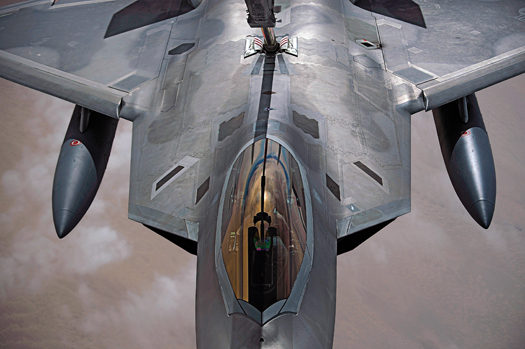
Those who train for this kind of warfare know that no drone yet exists that could handle such a scenario. The drone would have to be alert to all of these factors, relay them to a remote pilot on the other side of the world, and make corrections in the time required to react. Missions like these will remain the work of the same classes of aircraft—and the pilots and weapon-systems officers who fly with them—who have been flying these missions for decades. With each design cycle, drones will no doubt be further integrated into the busy mix of a modern military air campaign and maybe, eventually, into missions over hostile airspace with anti-aircraft guns and enemy fighters. But humans will be up there with them, flying old-school pilot-on-the-ejection-seat flights and calling the shots. As that day perhaps draws near, the limits on where drones can fly will remain. The MiG that punched that Hermes 450 out of the sky laid out a fact unlikely to change soon. When the skies turned violent, all the Hermes could do, in the end, was watch—even its own fiery end.
C.J. Chivers, a former marine, is a senior writer for the New York Times and the author of The Gun, a social history of the AK-47.
