Mars Reconnaissance Orbiter Captures Images of Phoenix Lander's Descent

In a first for NASA, the MRO's high-resolution camera was trained on little brother Phoenix's successful landing this weekend

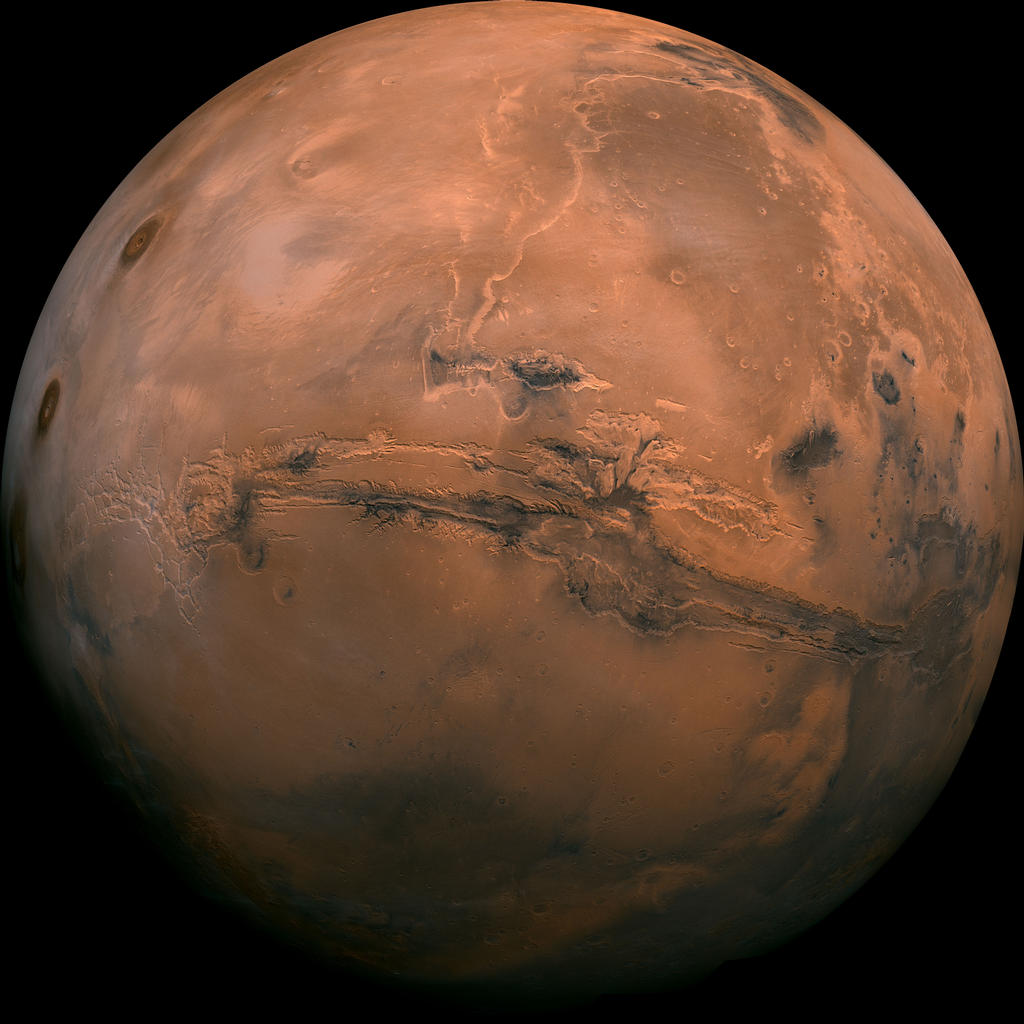
Phoenix Lands: The Mars Reconnaissance Orbiter captured this stunning image of the Phoenix Lander making its descent.  NASA/JPL/University of Arizona
In the first ever instance of a spacecraft photographing the landing of another craft on Mars, the Mars Reconnaissance Orbiter captured this incredible image of NASA's Phoenix Lander making its descent on Sunday. Phoenix landed successfully and has already begun transmitting images from its landing zone in Mars's northern polar region, where it will be conducting meteorological and geological surveys over the course of its three-month mission.

Despite a minor hiccup in its data relay via the orbiting MRO, the mission appears to be proceeding without any technical issues. The MRO is just one of several craft currently in Mars orbit that will serve as relay transmitters to help Phoenix send data back to Earth.

Phoenix's main mission objectives involve the study of water ice in Mars's northern polar region. Its robotic arm will be able to capture icy soil samples which will be analyzed for past or present signs of microbial life. Phoenix's research will also help lay the groundwork for potential manned exploration by providing a detailed analysis of life-sustaining elements found in the Martian soil.

Click here to see the image at full resolution.

For more images from the Phoenix mission, launch the gallery here.

5 Comments

Comments

DarkFx

from Winnipeg, Manitoba

Article Rating: 
0

Excellent Capture!

In something completly out of the topic, can you arrange a Plasma thrusted multifrequency detector directly out a direction so eventually we may capture the image or sound of the past?

0 out of 2 people found this comment helpful
I found this comment 
 
Article Rating: 
0

Stunning indeed...

I wonder if the sat-cam used is better than the ones used on google earth, i mean to be able to see the lander at all...

What surprises me most is that the satellite managed to take a photo during it's 7 minute decent. I know the chances of even landing on mars was low, but to have the satellite there at the time is even more impressive.
quote: "the chances are like trying to drive a golf ball from (i forgot which US city) to a moving 4 inch hole in Sydney, Australia" from one of the panel members of the first briefing after landing.

0 out of 0 people found this comment helpful
I found this comment 
 
Article Rating: 
0

The classic 'golf shot' statement for any space flight is overused and overplayed. Spacecraft are launched in the general direction they're headed (admittedly within a tight tolerance) and then use multiple opportunities to adjust their flight path. Not all the opportunities are used, but it's much different than the 'golf shot'

As to having spacecraft over the necessary area, the arrival time of Phoenix has been known down to a few seconds resolution for months. Other satellites had that time to sync their orbits to be in the proper location to contact or photograph the arrival.

0 out of 0 people found this comment helpful
I found this comment 
 
Article Rating: 
0

Gonazar-
The camera used to snap this image is not likely to be nearly as powerful as our global imaging satellites. Our satellites orbit much higher than the Mars orbiter. Also, they have the Earth's atmosphere to contend with, which has a tendency to absorb a lot of visible light. Mars is about half the size of the Earth, with a very, very thin atmosphere.

2 out of 2 people found this comment helpful
I found this comment 
 
Article Rating: 
0

I've sent the following letter to every link I can find at the Contact Us page at the Popsci.com site, and all I get back is instructions to go to Popsci.com and click on Contact Us. I'm sick of no-brain, knee- jerk responses that just lead me in circles! I'm hoping THIS link will finally get an intelligent response!
-------------------------------------------------------------------------------------------
I apologize for this, but I couldn''t find a proper questions-to- PopSci format at your site. In the June 1999 issue, on pages 54 and 55 you published an article that I THINK was titled "Solar Travel." It had a rough scale model of the solar system displayed at the bottom of the pages. I knew immediately that this scale model would come in handy for some of my writing somewhere, sometme, and scanned the two pages into my computer for future reference. Somewhere along the line, the second page got deleted, somehow, and the original magazine has long since been thrown out by my throwaway-happy wife. I went to Popsci.com to look for the article, but I can''t find it anywhere. Is there any chance that illustration is still
somewhere in your database? And if so, can you tell me how to get to it, so that I can use it as a point of reference for a SF/Fantasy novel I'm working on?

Thank you.
Dennis L. Crabtree
notfromhere5@yahoo.com

0 out of 0 people found this comment helpful
I found this comment 
 

Flickr Block Header

Share your photos in the Pop Sci pool at www.flickr.com!
Current theme: Seasonal Science
Our latest winner

Subscribe for 2 free issues!

may2008_cover.jpg