Last Friday, we bade adieu to NASA’s 30-year Space Shuttle program as Atlantis lifted off for the very last time. Practical or not, the loss of our capacity for manned spaceflight is a little depressing for those of us who uphold interstellar travel as the paragon of human progress. While we can respect NASA’s decision to prioritize other projects, we can hardly fathom how something as futuristic as human space travel ended up becoming a part of our country’s past.
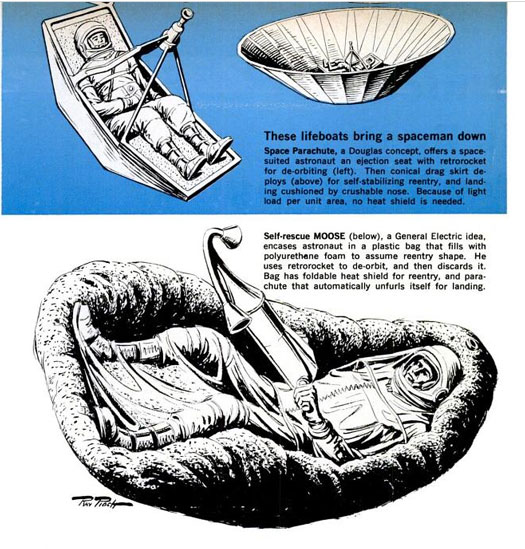
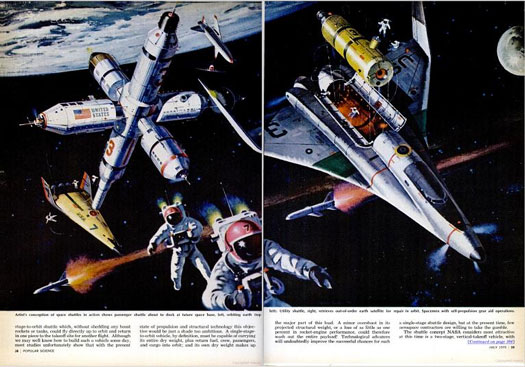
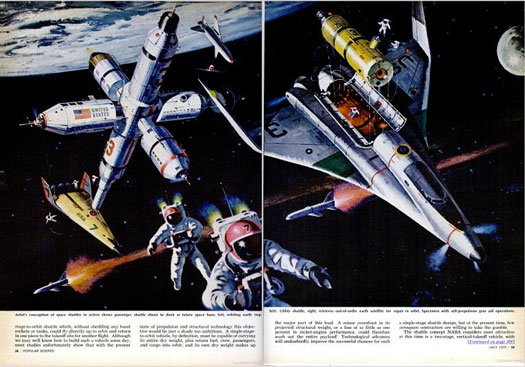
Ironically enough, the past can look a whole lot like a distant tomorrow when you study it through our 138-year archives. So until NASA can afford to send humans back into space, let’s reminisce on the agency’s golden age by flicking through our most dazzling space features.
Click to launch the photo gallery.
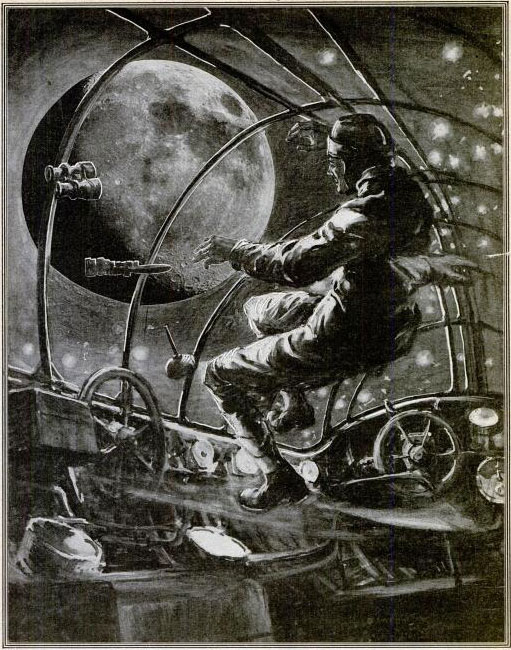
In 1919, we’d hardly begun the golden age of aviation, let alone the age of space travel, but we couldn’t look to the skies without wondering what it would be like to break through the atmosphere and soar among the stars. Illustrations from that period depict crew members floating in zero gravity while sporting the typical aviation garb: pilot caps, bomber jackets, and leather boots.
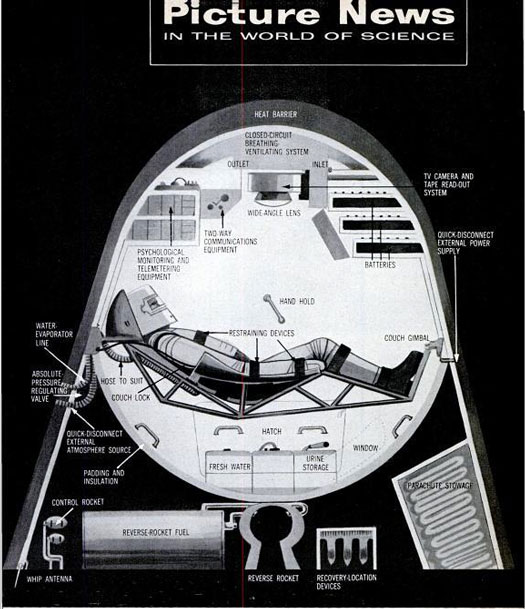
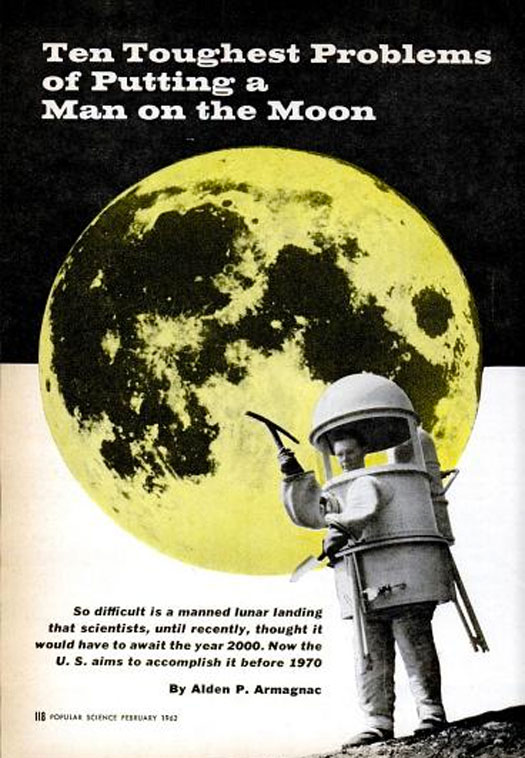
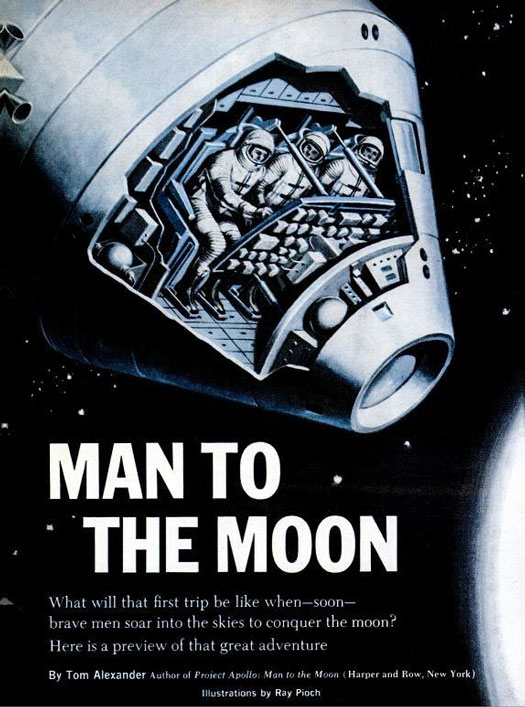
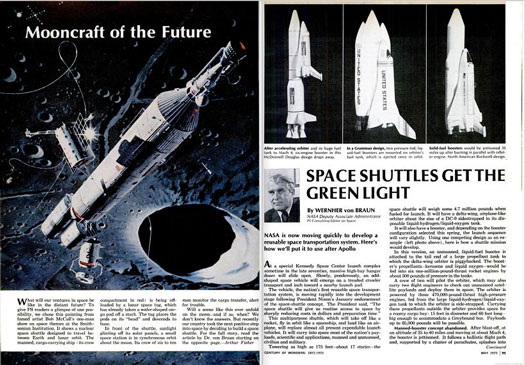
Forty years down the road, astronauts started looking more like they do today. Space technology progressed so quickly between those decades that if we continued at that rate, we’d likely have visited Mars by now. Consider how NASA sent a man to the moon just eleven years after it was founded. After the first manned moon landing, Dr. Wernher von Braun predicted that civilians would travel to space by the late 1970s. President Nixon’s formal endorsement of the Space Shuttle program further convinced him that humans would never by able to stay put on land.
“The old argument over manned vs. unmanned space flight would thus simply disappear,” von Braun wrote in 1972. “With manned, reusable shuttles providing cheaper transportation into orbit than any other system, the shuttle will corner the space-transportation market.”
Those sentences might be a little sad in retrospect, but as Rebecca wrote last week, there’s no reason to conclude that that the end of manned spaceflights marks the end of NASA. With endeavors like Juno’s mission to Jupiter and MSL’s rocket to Mars, it’s clear that progress endures and people prevail, albeit with their feet on the ground.
Click through our gallery to read about Apollo 11, the Space Shuttle’s debut, and the various musings of Dr. Wernher von Braun.