
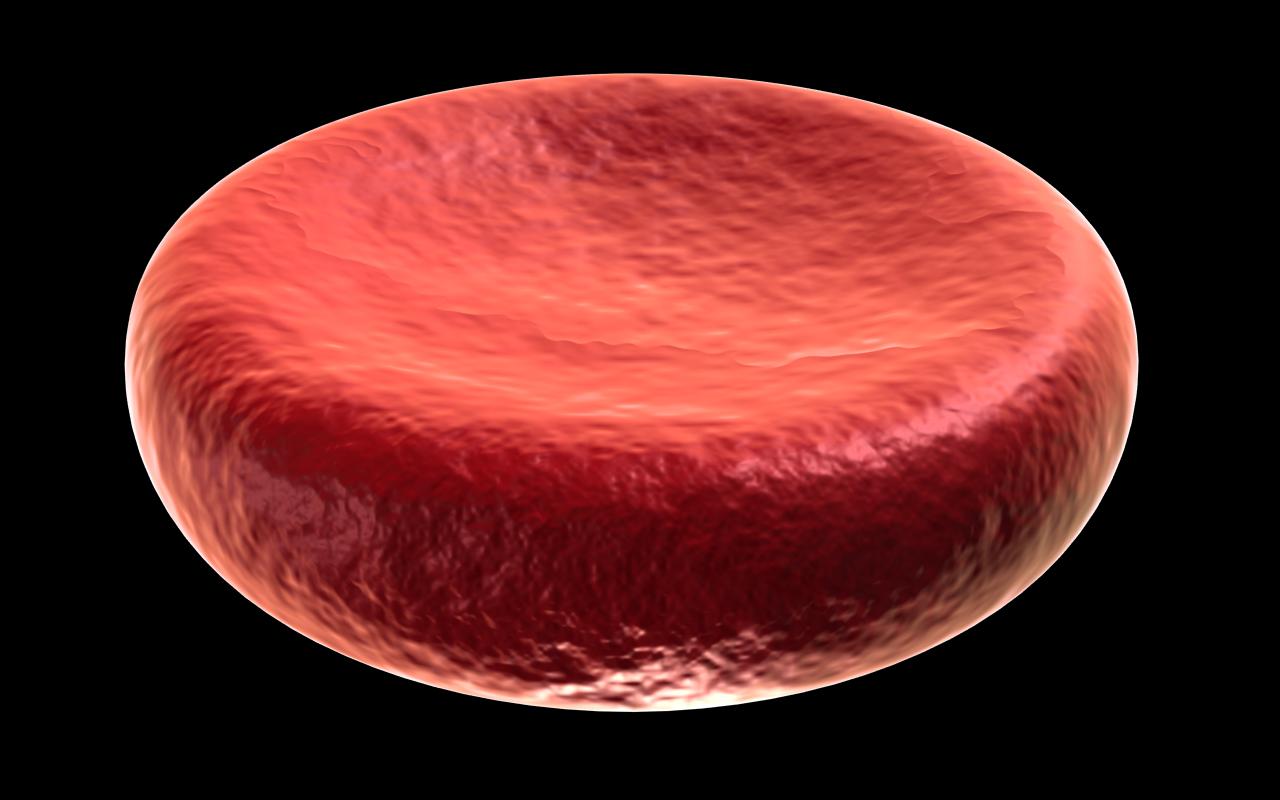
Red Blood Cell Wikimedia Commons

Artificial blood may become a common reality, thanks to the first successful transfusion of lab-grown blood into a human. Luc Douay, of Pierre and Marie Curie University, Paris, extracted hematopoietic stem cells from a volunteer's bone marrow, and encouraged these cells to grow into red blood cells with a cocktail of growth factors. Douay's team labeled these cultured cells for tracing, and injected 10 billion of them (equalling 2 milliliters of blood) back into the marrow donor's body.

After five days, 94 to 100 percent of the blood cells remained circulating in the body. After 26 days, 41 to 63 percent remained, which is a normal survival rate for naturally produced blood cells. The cells functioned just like normal blood cells, effectively carrying oxygen around the body. "He showed that these cells do not have two tails or three horns and survive normally in the body," said Anna Rita Migliaccio of Mount Sinai Medical Center in New York.

This is great news for international health care. "The results show promise that an unlimited blood reserve is within reach," says Douay. The world is in dire need of a blood reserve, even with the rising donor numbers in the developed world. This need is even higher in parts of the world with high HIV infection rates, which have even lower reserves of donor-worthy blood.

Other attempts to synthesize blood have focused on creating an artificial blood substitute, rather than growing natural blood with artificial means. For example, Chris Cooper of the University of Essex in Colchester, UK, is working on a hemoglobin-based blood substitute that is less toxic than the protein in its unbound state. Artificial blood substitutes present a solution for transfusions after natural disasters and in remote areas. The artificial substitutes do not require refrigeration, unlike fresh and stem cell-grown blood.

The stem cell method has its own pros, though. "The advantage of stem cell technology is that the product will much more closely resemble a red cell transfusion, alleviating some of the safety concerns that continue around the use of the current generations of artificial products," says Cooper.

While Douay's results, published in the medical journal Blood, are a major step forward, mass-produced artificial blood is still a long way away. A patient in need of a blood transfusion would require 200 times the 10 billion cells that Douay and his colleagues used in the test. Robert Lanza, one of the first people to grow red blood cells in a lab on a large scale, suggests using embryonic stem cells, which could generate 10 times the amount grown by Douay.

[New Scientist]

13 Comments

Q

Great NEWS! It is a bloody about time! This is wonderful medical science!

intestin: check
muscle: check
trachea: check
blood: check...

like sayd above, Great science ! ^^

---
bored? lets go mine the stars... ^^

And, for the first time, Vampire McDonald's!
Suits the creepy clown...
-Spouting a fountain of nonsense since 1995-

So a few months ago research said that 1% of humans are Immune to AIDS and when they transferred the bone marrow to an AIDS patient they showed no symptoms of AIDS (doesn't mean that they don't have it just means its Inactive). So does that mean if we take bone marrow from some of though's 1% that we all could be Immune to AIDS???? or if we get it it will stay Inactive???

Is this applicable to all blood types? Universal blood would open an immense amount of doors..

Eric18

the one time it actually worked was a very rare scenario, the chances of dieing from the surgery were around 70% but he was going to die regardless which is why they did it anyway.

it's an extremely risky surgery with a very small chance of it working (with a high risk of it killing you). also HIV is curable if caught soon enough.

Eric18,
It can't work on a larger scale because only a small percentage of people are a match for a bone marrow transplant from the 1% of people who are immune to HIV.
The gene that causes the 1% to be immune is found in mostly eastern Europeans. So finding a match for people of Africa is near impossible, if not impossible.

Do I see TruBlood in a bottle here soon?

" Science without religion is lame, religion without science is blind." Albert Einstein

I think it's a great innovation and will help the hospitals and military greatly.

I believe this could also be used for blood doping. Look out everyone Lance Armstrong might make a big come back...

I donate blood platelets (usually 2 units/ one quart, depending on my platelet count) every two weeks. I've been doing that for many years. Not many people could donate even if they wanted to, due to various personal factors: they don't weigh enough, they have a family history of certain diseases, their platelet count is not high enough to donate, they had the flu or another infection recently, they visited a country that has an incidence of malaria, they have a history of lung or heart problems, etc... there is a long list of factors that bar someone from donating, either temporarily or permanently.

Several times I decided not to take trips with friends just because I did not want to eliminate myself from the donor list. I maintain a rigid lifestyle just to keep my blood products safe.

It makes me feel good to be helping to save the lives of kids at Children's Hospital, but it would be such a relief if such artificial blood products did make it into use. People like myself would be able to live more normal lives. I would like to visit parts of China, Thailand and elsewhere that I cannot visit now.

Is this suitable for vampires?

@ spirulina:

yes,only if they are compatible in major & minor crossmatching...


July 2013: The Future Of Flight

The incredible innovations, like drone swarms and perpetual flight, bringing aviation into the world of tomorrow. Plus: today's greatest sci-fi writers predict the future, the science behind the summer's biggest blockbusters, a Doctor Who-themed DIY 'bot, the organs you can do without, and much more.


Online Content Director: Suzanne LaBarre | Email
Senior Editor: Paul Adams | Email
Associate Editor: Dan Nosowitz | Email
Assistant Editor: Colin Lecher | Email
Assistant Editor: Rose Pastore | Email

Contributing Writers:

Kelsey D. Atherton | Email
Francie Diep | Email
Shaunacy Ferro | Email

circ-top-header.gif
circ-cover.gif
bmxmag-ps