We may earn revenue from the products available on this page and participate in affiliate programs. Learn more ›
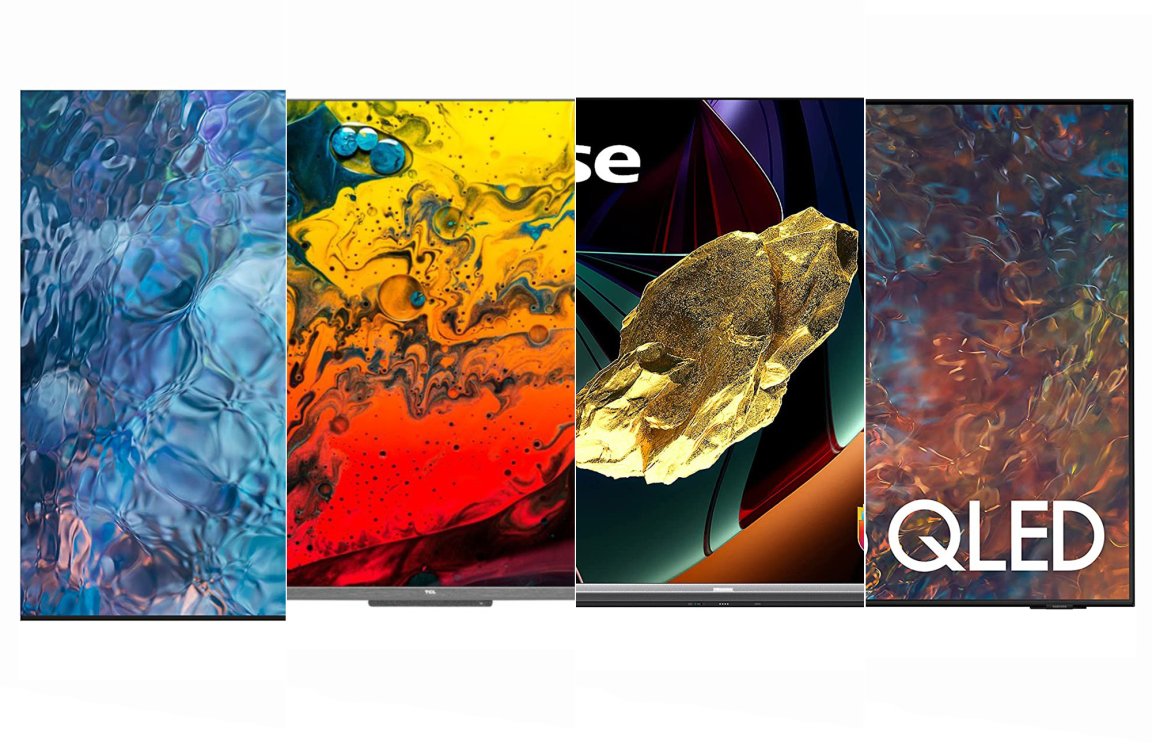
If you’re looking to buy a big, expensive new TV, there are really two types to choose from right now, including QLED TVs. You’ve probably heard of OLED TVs, with their pure blacks, but what about QLED TVs? In a sense, QLED is the more conservative display technology, as it’s an evolution of existing LED tech. While it doesn’t always reach the qualitative heights of an OLED, the best QLED TVs deliver an incredibly bright and vibrant picture for movies, TV, gaming, and more, often at a more affordable price. While these high-end sets get better yearly, these are the best QLED TVs to buy right now.
- Best overall: Samsung QN90C Neo QLED TV
- Best budget: Hisense 65U8H QLED U8H Series Quantum 4K
- Best 8K: Samsung QN900C Neo QLED 8K
- Best for gaming: TCL 65-Inch QM8 QLED 4K Smart Mini-LED TV
- Best slightly older model: Samsung QN90A NEO QLED
- Best “budget” 8K: Samsung QN900A QLED 8K
How we chose the best QLED TVs
The writers and editors at Popular Science have decades of combined experience writing about, reviewing, and generally nerding out about high-end TVs. This collection of recommendations comes from a mixture of hands-on review experience (including our best overall), brand reputation, spec comparisons, editorial reviews, and user feedback. We prioritized models that best represent QLEDs strengths. QLEDs often offer exceptional brightness and solid value for their picture performance. You’ll notice several newer QLED technologies here, including Samsung’s Neo QLED and Mini-LED. These represent a very notable improvement over some already excellent TVs.
The best QLED TVs: Reviews & Recommendations
The best QLED TVs offer a great all-around picture as bright and vibrant as anything you can find on the market right now. Since QLED is Samsung tech, you will notice that the list features a larger-than-average number of Samsung TVs. Despite that, there’s a good amount of variety among the manufacturers in the mix–as much variety as one can expect in a list of TVs with the same display type, anyways.
Best overall: Samsung QN90C Neo QLED TV
Best overall
Samsung QN90C Neo QLED TV
Pros
- Exceptional picture quality
- Full-featured operating system
- Elegant design
- Snappy performance
- Solid upscaling
- Bright
Cons
- Ports are on the back of the TV rather than on a remote box like some other Samsung models
Specs
- Sizes: 43”, 50”, 55”, 65”, 75”, and 85”
- Backlight: Neo QLED
- Ports: 4 HDMI 2.1, 2 USB-A, Ethernet, Optical audio, RF
- Operating system: Tizen
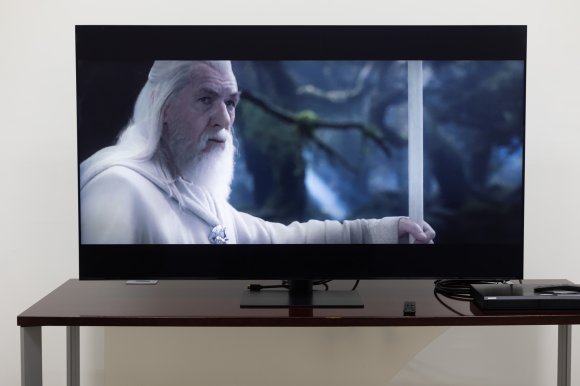
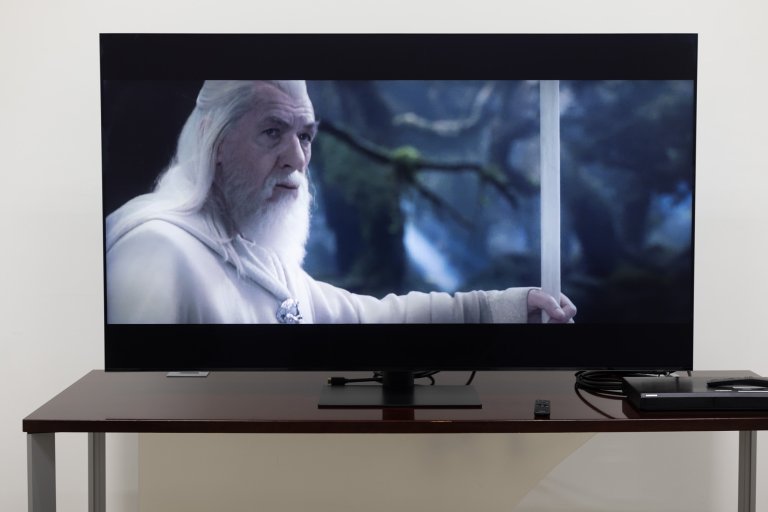
Samsung is the heavy when it comes to QLED TV—the company has been at the forefront of the technology since it debuted. The new QN90C relies on the company’s Neo QLED technology, which mixes the bright, poppy colors that typically come with Quantum Dots with the excellent contrast ratio and black levels offered by Mini-LED backlighting. This allows you to crank the brightness if you’re in a well-lit room, but you can still tame its performance and maintain the subtlety you want from movies and other high-production value content once the lights go down.
Samsung’s desire to do everything with their TVs is both a strength and a weakness. There are tons of features here, including four HDMI 2.1 ports for maximum connectivity, as well as a pair of USB ports, and a very robust operating system that’s compatible with just about every popular streaming app you could ask for. That operating system can sometimes feel a little too robust to the point that it’s bloated and requires a learning curve to navigate quickly.
In my time testing the QN90C, I played several AAA PS5 games, including Returnal, and found the motion smooth, the graphics crisp, and the colors extremely poppy. While watching Alien on 4K Blu-ray, the TV did a very solid job creating well-defined details, even in the shadowy areas that can get muddy on some TVs. This is a great all-around TV worth considering, especially if your room is often too bright for an OLED to really shine.
Best budget: Hisense 65U8H QLED U8H Series Quantum 4K
Pros
- Very affordable
- Full HDMI 2.1 compatibility
- Variable refresh rate for better gaming
- Mini-LED backlight for excellent contrast
Cons
- Not as bright as some other models
- Better mounted on the wall since the stand is just OK
- Sizes: 55”, 65”, and 75”
- Backlight: QLED
- Ports: 4 HDMI 2.1, Ethernet, Optical audio,
- Operating system: Google TV
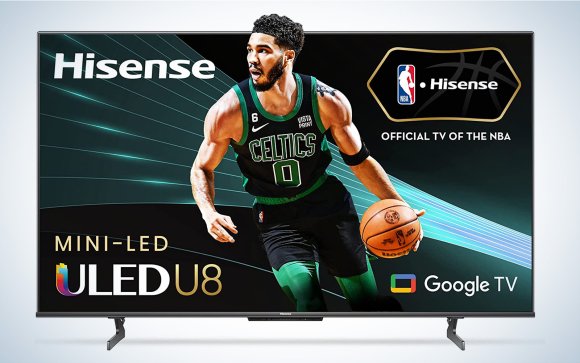
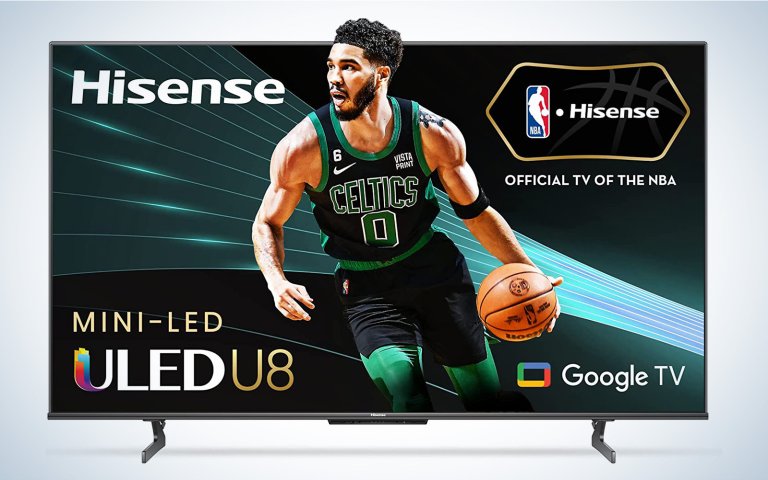
Even when it’s not on sale, this Mini-LED-driven QLED TV offers a ton of features considering its price tag. The 65-inch model retails for just $949, roughly half what some of its competitors cost.
The most surprising feature at this price point has to be the Mini-LED backlight. By shrinking the light sources, Hisense has refined its illumination tech to crank up the contrast and improve black levels. Smaller light sources lead to less picture-ruining light bleed.
This TV also offers variable refresh rate tech in the form of AMD Freesync. And a quartet of HDMI 2.1 ports offers solid connectivity that will work with high-bandwidth devices like next-gen consoles and beyond.
While the picture is excellent, it can’t quite directly compete with other higher-end models. And you’ll notice the savings in some of the fit and finish. The stand, for example, is fairly lackluster, so we definitely recommend hanging it on the wall if that’s an option. You’re also relatively limited in sizes with just 55-inch, 65-inch, and 75-inch options. So, while it’s not a half-priced flagship killer, it’s absolutely a TV that punches well above its weight.
Best 8K: Samsung QN900C Neo QLED 8K
Best 8K
Samsung QN900C Neo QLED 8K
See It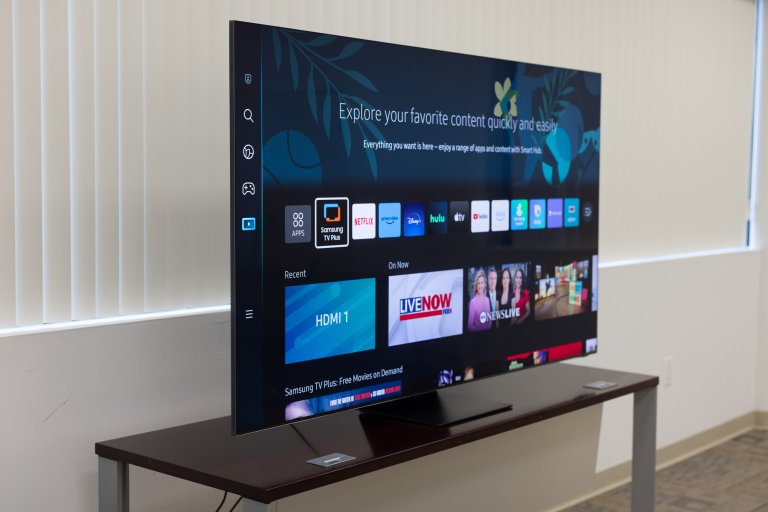
Pros
- Excellent upscaling to 8K
- Every bell and whistle
- Ports live on a remote box rather than on the back of the TV
- Mini-LED tech translates into exceptional contrast
- Vivid HDR picture
- High-end finishes
Cons
- Expensive
- Sizes: 65”, 75”, 85”
- Backlight: Neo QLED
- Ports: 4 HDMI 2.1, 3 USB-A, Ethernet, Optical audio, RF
- Operating system: Tizen
Samsung’s flagship TV leaves you wanting for absolutely nothing. Yes, it’s an 8K display, which means it has a total resolution above 32 megapixels. That’s a ton of image8K data. And while there’s almost no native 8K content to consume at the moment, this TV offers Samsung’s most powerful image processor designed to seamlessly upscale content to fill that massive resolution. During our testing period, I watched content from several streaming services, including Netflix and Hulu, and found the upscaled 8K image to look excellent. Plus, you’ll be ready to go as 8K support slowly grows for devices like the PS5 or Xbox Series X.
Beyond all those pixels, this TV offers a heap of high-end features. Samsung’s NeoQLED tech integrates Mini-LED tech with Quantum Dots for a bright, contrasty picture with super-accurate color. For gaming features, you get Samsung’s dedicated gaming mode and other more advanced features like variable frame rate to combat unwanted artifacts or screen tearing.
While this is a great all-around TV, the high price tag definitely reflects its flagship nature. There are only three sizes in this current lineup and they start north of $5,000. That would be slightly easier to justify if there were more native 8K content out there, but it will be a while before that’s a reality. If you’re buying this TV, it’s because you want the absolute best and you won’t have to think about buying a new TV for a while. Or, you just want to flex on your 4K-watching pals.
Best for gaming: TCL 65-Inch QM8 QLED 4K Smart Mini-LED TV
Best for gaming
TCL 65-Inch QM8 QLED 4K Smart Mini LED TV

Pros
- Bright
- Capable of 240Hz refresh rate at 1440p
- Full HDMI 2.1 compatibility
- Solid contrast from the Mini-LED backlight
Cons
- 240Hz mode isn’t full 4K
- Sizes: 65”, 75”, 85”
- Backlight: QLED (Mini-LED)
- Ports: 4 HDMI 2.1, Ethernet, Optical audio, RF
- Operating system: Google TV
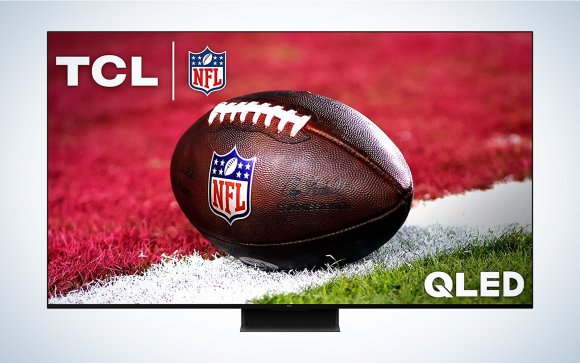
For many gamers, smooth, fast gameplay overshadows pure resolution or even image quality in terms of importance. It makes sense. Would you rather lose a game that looks immaculate or win one that looks pretty great? The QM8’s big differentiator comes in the form of the Game Accelerator mode, which doubles the refresh rate up to 240fps at the cost of some resolution. It runs at 1440p when the framerate is cranked instead of its native 4K. Luckily, 1440p is still plenty of pixels to look great, and that smooth performance can be a real advantage in gaming situations.
As for the rest of the TV, this is Hisense’s flagship, and its specs suggest as much. It mashes Mini-LED tech together with QLED to get a bright, contrasty picture (2,000 nits max is pretty bright) that does justice to prestige TV and AAA video games. It has all the modern connectivity and HDMI support you could also need. And, because Hisense is a value-oriented brand, it all comes at a price that starts lower than most of its competition.
It’s not without compromises, of course. The remote is somewhat lackluster, and the Google TV platform can sometimes be awkward. But this is a truly great value, especially if you’re playing a lot of games on your TV.
Still great: Samsung QN90A NEO QLED
A Samsung For All Seasons
Pros
- Incredible picture
- Mini-LED
- Lots of sizes
- 120Hz and FreeSync support
Cons
- Only one HDMI 2.1 port
Specs
- Sizes: 50, 55, 65, 75, and 85 inches
- Backlight: Mini LED
- HDR: HDR10
- Wide Color Gamut: Yes
- Ports: HDMI 2.0 x 3, HDMI 2.1 x 1, USB 2.0 x 2, Ethernet, RF (cable) Input, Optical, 3.5mm headphone jack
- Gaming Features: 120 Hz frame rate, FreeSync/G-Sync support
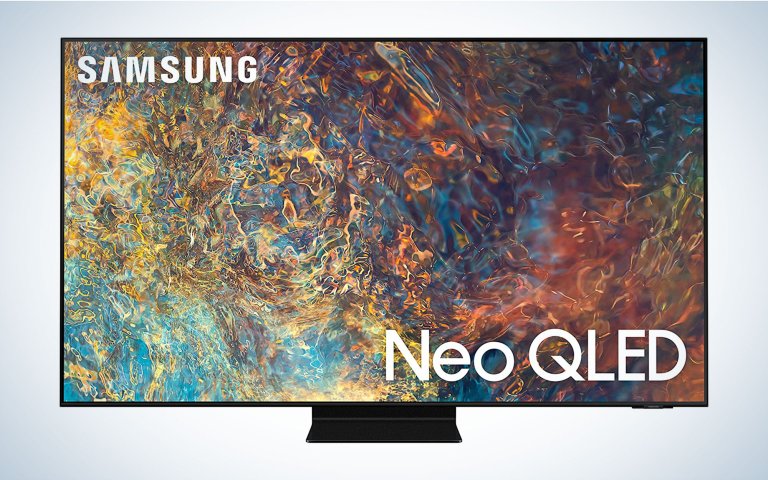
While this is technically last year’s model, it’s still more than capable of competing with the highest-end TVs on the market. Plus, since it’s a little older, you can probably get a really solid deal on it. The Samsung Q90A is, in every sense of the word, a top-of-the-line TV. The Mini-LED-lit panel produces an ultra-bright vibrant picture with strong color reproduction and has all the features you should hope for in a high-end TV, including Wide Color Gamut and a high refresh rate for gaming.
In typical Samsung fashion, it also features a wide variety of special features, including Q-Symphony, a surround-sound feature that reduces audio lag with compatible soundbars, and Ultra Viewing Angle mode, which adjusts processing to reduce the impact of sitting off to the side. Whether or not you buy into the hype behind the buzzwords, the Q90A is a well-rounded TV with a killer look.
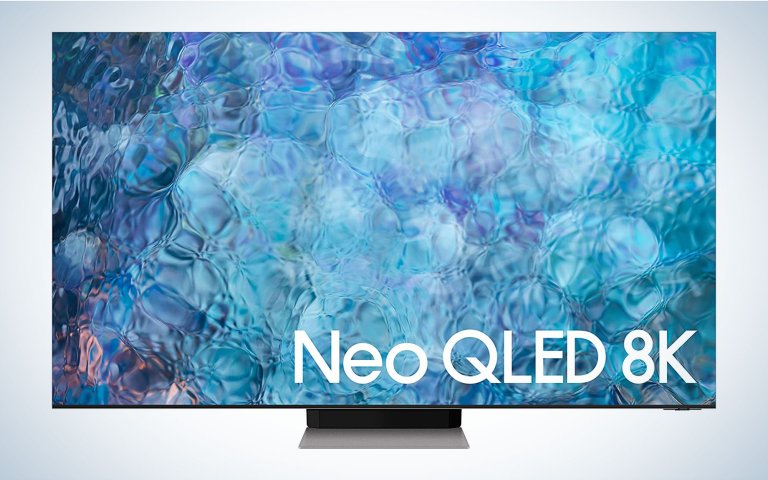
Best “budget” 8K: Samsung QN900A NEO QLED 8K
The Overkill Pick
Pros
- 8K resolution
- Very bright
- Four HDMI 2.1 ports
Cons
- You don’t need an 8K TV
- Extremely expensive
Specs
- Sizes: 65, 75, and 85 inches
- Backlight: Mini-LED
- HDR: HDR10, Dolby Vision
- Wide Color Gamut: Yes
- Ports: HDMI 2.1 x 2, HDMI 2.0 x 2, USB 3.0 x 1, USB 2.0 x 1, Ethernet, composite video, composite audio output, RF (cable) Input, Optical
- Gaming Features: 120 Hz refresh rate, FreeSync and G-Sync compatibility
That said, if you want an 8K QLED TV and don’t want to spend absolutely absurd money, the Samsung QN900A is the way to go. It delivers a bright picture thanks to its Mini-LED backlighting and has many great gaming features. (If you can use this TV to play 8K content in the foreseeable future, there’s a good chance you’ll get it through a PS5 or Xbox Series X.)
What is a QLED TV?
QLED stands for “Quantum Dot Light-Emitting Diodes.” (Please do not ask me why the Q stands for two words.) Invented by Samsung, QLED is a display backlight technology that augments a conventionally backlit Liquid Crystal Display with a “transmissive” layer of tiny dots that enhance the screen’s color, brightness, and contrast. (Transmissive displays, like LCD, have multiple layers of different materials in front of the backlight to control how much and what kind of illumination gets transmitted through it.) Samsung’s QLED TVs also feature a Quantum processor that adjusts and maintains brightness and color accuracy moment-to-moment.
As a hybrid of LCD display and LED backlighting technology, QLED manages to overcome common issues with color accuracy, including a faded “blooming” effect around bright spots on your picture. In less technical terms, QLED TVs offer a sharper, brighter picture than conventional LCD or LED sets.
Importantly, new display technologies are frequently associated with QLED because it’s a new, high-end TV display design, but they are not part of the QLED screen stack. Most notably, many high-end QLED TVs feature Mini-LED backlighting. This separate display technology enables “local dimming,” or the ability for your TV to enhance or reduce its brightness in specific areas to enhance its contrast. We’ve described Mini-LED as an alternative to QLED and OLED TVs in the past, and technically it is, but companies frequently combine the two and market the tag-team as a high-end QLED TV. As we’ve seen with Samsung’s Neo QLED and LG’s QNED TV lines, QLED displays with Mini-LED backlighting tend to be the best of the best, at least for now.
Who makes QLED TVs?
As I mentioned before, the QLED design, integrating the Quantum Dot layer into an LCD screen, is a Samsung invention. Whenever you see a QLED TV, the actual display panel was made by Samsung. Because Samsung makes the displays, it is the biggest proponent of the technology and makes more QLED TVs than any other company. But Samsung is not the only company that offers QLED TVs. TCL, Hisense, LG, and Vizio all produce QLED models.
QLED vs. OLED
If you’re shopping for a TV right now, chances are there are three options in front of you: LED, QLED, and OLED. If you’re looking at a high-end TV, you’re really just choosing between QLED and OLED. OLED stands for “Organic Light-Emitting Diode.” Contrary to the name, however, it is not a variation of LED TV technology like QLED. OLED TVs can independently control the brightness of every point on the screen, allowing it to make colors more vibrant and achieve a “perfect” black tone by turning lights off completely. For this reason, you’ll never see the light bleeding through dark areas and washing them out.
While OLED has become the preferred choice among critics for high-end TVs, QLED conveys several distinct advantages, while generating an incredibly high-quality picture when done right. First, QLEDs tend to get much brighter than OLED panels, making them better for rooms with lots of windows and outside light. Second, because QLED is a riff on LCD and LED technology, not a brand new thing, it tends to be less expensive. There are mid-range QLED TVs, but OLEDs only come in varying shades of expensive. (You may not notice that looking at our picks, though.)
What to look for when picking the best QLED TVs
It’s important to keep in mind that there’s a wider range of picture quality and price among QLED TVs than there are among the best OLED TVs or the best TVs for gaming. The Quantum Dot has some benefits but isn’t a magic bullet. Ultimately, you judge the best QLED TVs the same way you would any other: by their picture quality. Is it bright enough? Are the colors vibrant, sharp, and accurate? Does it have the features you want for gaming or support for high-end audio gear? The best QLED TVs fit your specific space and viewing habits.
Size
Most people assume that a bigger TV is always better because they’re more expensive. Technically, that isn’t correct. The size of your TV should correspond to the size of the room when you plan to place it and how far away you will sit from your TV when you use it. If you sit too close to your TV, it may hurt your eyes over time. If you sit too far away, you may have trouble seeing the image’s fine details. There are a number of sites that offer screen size calculators to help you figure out how your TV will fit your space. Here are a few common sizes and distances:
- 42 inches – 5.9 feet
- 50 inches – 7 feet
- 55 inches – 7.7 feet
- 65 inches – 9.1 feet
- 75 inches – 10.5 feet
Does it have Mini-LED backlighting?
Frequently, the big difference between the very high-end QLED TVs and their budget-to-mid-range versions is the addition of Mini-LED backlighting, which greatly enhances the TV’s brightness and enables local dimming, or the ability to change the brightness of different parts of the screen, similar to an OLED TV. Its presence doesn’t automatically guarantee a stunning picture: Some TVs have more precise backlight control than others and a wider range of brightness. Still, even on its worst day, local dimming makes colors pop, making dark colors look darker and bright colors look brighter.
It also maximizes High-Dynamic Range, a complimentary feature that adjusts brightness to make especially dark and/or bright light conditions look more realistic. A brighter TV is one of the main advantages of a QLED TV, especially at the top of the line, so looking for the highest possible NIT count, a unit of measuring brightness, and local dimming are important factors for telling the difference between QLED TVs at similar price points.
Resolution
There isn’t a whole lot to say about TV resolution in 2023. Almost all new TVs support 4K resolution or 3840 x 2160 pixels. And, frankly, you wouldn’t want to buy anything else at this juncture. There’s no reason to buy one of the few remaining 1080p TVs when even budget models from major manufacturers support 4K. While 8K TV exists, there’s little to no native 8K content yet. Though there will be some difference in picture quality thanks to digital upscaling, an 8K TV is more of a statement piece than anything else. (That said, there are still enough of them out there that I will recommend an 8K QLED, just in case.)
Color accuracy and Wide Color Gamut
Okay, we’ve gotten to the nerdy part. When you look at a wall of TVs in a store, and you can just tell that some look better than others but can’t really figure out why, it’s often a combination of better brightness, which we’ve discussed at length, and color accuracy. Color accuracy, in short, is your TV’s ability to accurately produce colors more representative of real life (or how they would look if that lightsaber was real instead of digitally generated). Measuring color accuracy requires special equipment, which is why it’s primarily discussed on forums and in reviews, but you can tell very clearly that it’s especially good when you look at an image of a flower and think, “That’s the reddest red I’ve ever seen.” You can also tell when it’s incredibly bad because you won’t be able to tell if the same flower is red or pink, orange, or purple. This is the No. 1 reason to go to a store and see a TV in person before you buy it. The specs related to color accuracy require a lot of technical know-how to use effectively, but your eyeballs won’t lie to you.
That said, there is one color-related feature worth looking for as you peruse different TVs, QLED or otherwise. Wide Color Gamut is often described as a complement to High-Dynamic Range, and it does exactly what it sounds like it would: It allows your TV to show a wider array of colors, allowing for more accurate reproductions of specific shades. It may allow you, as an example, to see the difference between seafoam green and teal rather than just a generic pastel blue-green. It also allows for more “bit depth,” which affects color saturation: Sometimes, a color should look supernaturally deep, and other times it should look faded. With Wide Color Gamut, the TV can get closer to both of those things.
Viewing angles
Another general TV feature that’s surprisingly important, but can feel hard to quantify or convey by description, it’s important to judge how a TV looks when you don’t sit directly in front of it. All TVs are designed for that perfect front-and-center viewing experience, but what happens when you have friends over, and someone’s sitting way off to the side? All TVs have some spots where the picture looks distorted, but some are better than others. Some companies, including Sony and Samsung, tout “wide viewing angle” TV modes that can improve things somewhat, but bad viewing angles cannot really be undone.
Gaming features
The newest and rarest features on the premium TV are related to refresh rate, or the number of times your TV can redraw its picture every second. In video games, there’s a direct correlation between your TV’s maximum refresh rate and your game’s top frame rate. Most games on consoles run between 30 and 60 frames per second, and most TVs top out at 60Hz, so frame rate hasn’t been a technical concern for TV manufacturers until recently. The PlayStation 5 and Xbox Series X can run some games at 120fps, so players who want the best of the best will look for TVs capable of a 120Hz frame rate. You’ll also need HDMI 2.1 ports (and the appropriate HDMI cables) that have the bandwidth to support that level of fidelity to achieve that high bar.
Lastly, some TVs also support variable refresh rate technology, which syncs the target frame rate of your game or computer with the screen’s frame rate for more efficient processing and fewer display-related glitches. There are two variable refresh rate standards, AMD FreeSync and Nvidia G-Sync: The Xbox consoles support FreeSync, and PC players may want one or the other based on their hardware. The PlayStation 5 and Nintendo Switch don’t currently support variable refresh rates.
FAQs
This is an interesting question. While there aren’t many “budget” QLED TVs, there are plenty of solid mid-range QLED TVs, so you don’t technically have to spend “extra” money on QLED unless you’re targeting a TV under $500. In theory, the answer should be “yes.” QLED enhances brightness and color reproduction, leading to a substantially improved picture over a standard LED-backed LCD TV.
That said, when I see this question, I can’t help but wonder if we’re actually talking about spending extra on a QLED TV or spending extra on a high-end QLED TV with Mini-LED backlighting, since the two technologies are often conflated. Without knowing more, I would say yes: By and large, Mini-LED generally enhances local dimming and contrast, which are crucial to conjuring a sharper, crisper-looking picture and maximizing HDR.
QLED is still a relatively new technology, so it’s hard to say how long they typically last. According to Samsung, QLED should last seven to 10 years of “typical use” before you start to see any tangible picture degradation, which typically manifests as a loss in brightness. Samsung doesn’t define what “typical use” means, but we’re going to take an educated guess and say that we’re talking about a few hours per day.
Burn-in is a form of visual degradation on some TVs over time. When you leave a static image on your screen for a long time, a faded silhouette of the image may linger even after the image has changed. The Achilles Heel of OLED TVs is a relatively high chance of burn-in over time.
According to Samsung, QLED TVs cannot generate burn-in. (This is abnormal; most TVs are at least capable of generating a “ghost image” or screen burn-in late in their life cycle.) We haven’t independently verified this, so I won’t say that it’s true, but there’s enough evidence to suggest that QLEDs are more resistant to burn-in than OLEDs, potentially making them more durable in the long term.
Final thoughts on the best QLED TVs
- Best overall: Samsung QN90C Neo QLED TV
- Best budget: Hisense 65U8H QLED U8H Series Quantum 4K
- Best 8K: Samsung QN900C Neo QLED 8K
- Best for gaming: TCL 65-Inch QM8 QLED 4K Smart Mini-LED TV
- Best slightly older model: Samsung QN90A NEO QLED
- Best “budget” 8K: Samsung QN900A QLED 8K
Looking forward, at least in the short term, I expect that QLED, rather than OLED, will be the technology that disseminates to more budget-friendly TV models. Since OLED is an entirely different type of screen technology, rather than an evolution of LED-backed LCD TVs, it stands to reason that it will scale down to cheaper TVs faster. In that sense, QLED is the TV of the moment, whereas OLEDs are the TV of the future.
That’s all really just semantics and speculation, though. Don’t sweat it too much: There’s a whole world of technical screen quality analysis out there if you really want to dive in and figure out what TV has the best picture. It’s a serious investment of time and effort, though, so I think you’re better off taking what we’ve talked about, going to the store, and—armed with a little know-how—picking the TV that looks right to you. Because, if you’re like me, all the specs fall away as soon as the opening credits start rolling.
More TV roundups to help you find the perfect set:
- Best 8K TVs
- Best TVs for gaming
- Best TVs for PS5
- Best OLED TVs
- Best Roku TVs
- Best TVs under $300
- Best TVs under $1,000
- Best 40-inch TVs
- Best 55-inch TVs
- Best 65-inch TVs
- Best 70-inch TVs
- Best 75-inch TVs
- Best outdoor TVs