
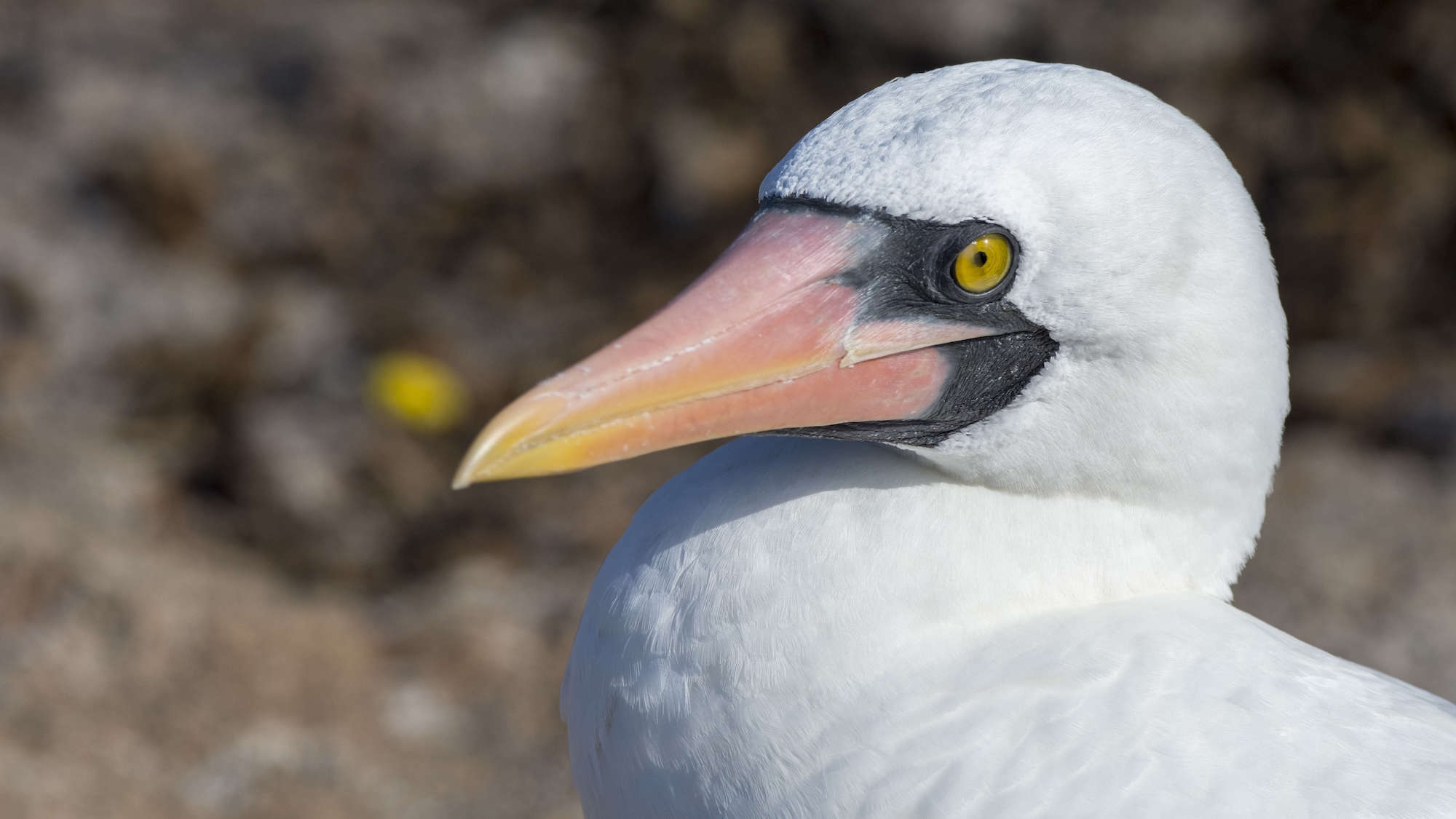
A Galápagos bird species is stunning behaviorists with their “freewheeling” lifestyles. Described in the journal PLOS One, female Nazca boobies (Sula granti) will openly mate with potentially dozens of males before settling on a parenting partner. What’s more, the conspicuous behavior doesn’t appear to bother their final suitors.
“You don’t expect to see females just running back and forth trying to copulate with so many males. So yeah, that’s a huge surprise,” study coauthor and Wake Forest University biologist David Anderson said in a statement.
Birds like swans, geese, and albatross are famous for their monogamous partnerships, but the behavior is far from the norm. In fact, ornithologists have observed extra-pair fertilizations in most avian species. In these instances, a female clandestinely has sex with an interloper, while her chosen male partner ultimately helps raise the offspring.
Despite this, Anderson explained most researchers traditionally view seabirds as “models of monogamy,” and often use them as cornerstone case studies for avian social hierarchies. But over 74 days of observation, biologists documented female Nazca boobies freely selecting multiple sexual partners, with one topping the list at 16 different males.
The findings are only the second known example of female birds displaying total reproductive control aside from lek-mating birds. Lek mating refers to when certain animal species’ males congregate and compete for female attention via elaborate courtship displays.
“That’s just mind-blowing for a seabird,” said Anderson. “Many of these female boobies are really freewheeling it when it comes to sexual behavior.”
The Nazca boobies’ trysts aren’t constant occurrences, however. Interestingly, Anderson’s team confirmed a female booby will eventually have more sex with their chosen breeding mate. The extra-relation encounters also dwindle to almost zero whenever they’re ovulating.
“She’s copulating with other males in the lead up to the breeding season, but genetic data showed that they’re never the father of her children. This reconciles evidence that females are shopping around, but it never results in fertilized eggs in the end,” Anderson said. “These flings are sex, but not reproduction.”
So, why the permissiveness among male Nazca boobies? According to the study’s authors, the answer can be phrased as its own question: What choice do the male Nazca boobies have?
Males are generally physically larger in most bird species, which often allows them to intimidate or injure females. This doesn’t end the outside sexual meetings, but it does lead to greater concealment. In contrast, male boobies are much smaller and weaker than the females.
This means the females can engage in “whatever sexual behavior is best for them, and there’s nothing the males can do about it,” said Anderson. “The males are afraid of the females, and also won’t risk alienating a female since there are so few of them.”
As to the benefits of such a free spirited lifestyle, the biologists are still searching for an explanation.
“Why are these females doing it, if it’s not leading to a fertilized egg?” said Anderson. “We would very much like to know the answer to that.”
