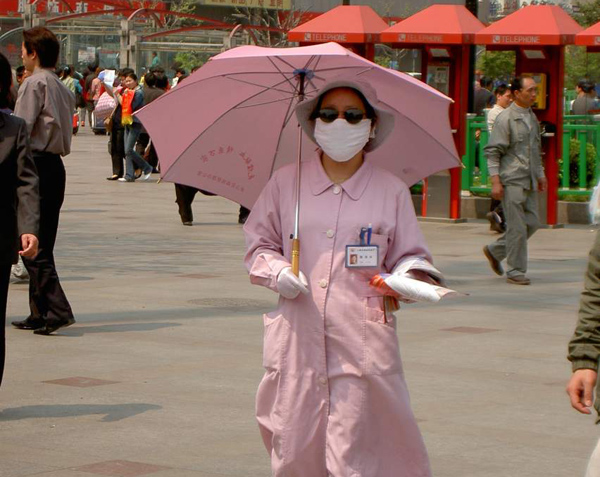
What makes a disease deadly in the twenty-first century? Medicine has never been more advanced; our understanding of spread and infection, never more sophisticated. And yet, we may be poised for the largest and most devastating pandemic the human race has ever encountered.
Diseases that could have been effectively eradicated decades ago continue to ravage developing nations. In the wake of natural and manmade disasters, cholera, tuberculosis and the like spread even more easily, aided by tenuous medical infrastructures and close living quarters for refugees. Meanwhile, wealthy nations are no less imperiled, their citizens endangered by a massively consolidated food supply and by antibiotics prescribed so indiscriminately as to potentially destroy their efficacy altogether.
But, if medical advancements may be our undoing, they also pose our only salvation. Launch the gallery here to see 10 of the world's deadliest diseases—the contagious monsters that threaten our very way of life—and to learn how science is holding them at bay.
Stay up to date on the latest news of the future of science and technology from your iPhone with full articles, images and offline viewing
Featuring every article from the magazine and website, plus links from around the Web. Also see our PopSci DIY feed
Share links with friends, comment on stories and more
In our December issue, Popular Science names the 100 best innovations of the year: bombproof wallpaper, self-parking cars, the fastest helicopter, and 97 more. Plus inventor profiles and videos.
Check out the best of what's new here.
I was disappointed to see neither Malaria nor HIV/AIDS on this list. More than 40 million people are living with HIV (UNAIDS), and 40% of the world's population is at risk for malaria (WHO). Every year, 500 million people are infected with malaria, and a child dies from malaria every 30 seconds (WHO).
Although I was impressed that EV71 was included in the list, some of the infectious agents that made your list instead of Malaria and HIV/AIDS hardly warrant consideration as deadly diseases that could be the source of the world's next pandemic.
SARS, as you pointed out, was effectively controlled by a focused effort from the global disease prevention community. Furthermore, its CFR (case fatality rate) is 15% and “simple infection control techniques, such as frequent hand washing can go a long way toward slowing the spread of the disease." (WHO, Consensus document on the epidemiology of severe acute respiratory syndrome (SARS))
Ebola, as you pointed out, has several factors that confine it to the area of its local outbreak. The fact that it both must be spread by close contact (normally fluids) and has no clinical latency (it presents right away) means that it remains confined to small, local outbreaks. It would take many extremely significant mutational changes for Ebola to become capable of causing an epidemic.
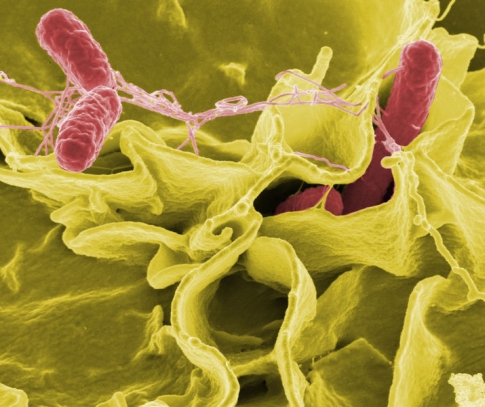
E.coli and Salmonella, while both prominent in the news as significant food-borne illnesses, should by no means be included in a list of the Top 10 "deadliest diseases." While their outbreaks are somewhat widespread because of the risk of contamination inherent in massive food-processing endeavors, these bacteria are not often deadly. In illness-causing SHEC (Shiga-toxin producing E. Coli) infections, "most people get better within 5–7 days" according to the CDC. Similarly for Salmonella, "the illness usually lasts 4 to 7 days, and most persons recover without treatment." (CDC)
Some of the infectious agents included in this list of "Deadliest Diseases" seem to be either not very deadly or unlikely sources of a pandemic. Why are they included instead of Malaria and HIV/AIDS, diseases that are both sources of current deadly pandemics?
would be that HIV/AIDS and malaria arent as communicable worldwide. While malaria can be transmitted through mosquitos, youd be hard pressed to find a large outbreak in this country (perhaps that is a bit biased, but)... moreso with HIV.AIDS; faulty blood transfusions, unprotected sex, intraveinous drug use and birthing being the ways to spread or contract... take that vice e. coli or salmonella reaching the publics food supply before anyone is the wiser.
Recently I thought much about vaccinations and problems connected with this huge worldwide pharmaceutical business.
Many scientists point to vaccinations as the biggest contributor to most diseases: allergy, mental diseases, autism etc.
Though our understanding of human being and his health is bigger and bigger in today world money is more important than human health and life. That's why most nationals health departments always encourage or even make it compulsory to vaccinate so doctors do.
I don't want to say that vaccinations is completely wrong. I just want to say that we need a deeper discussion on the problems connected to immunization. We need to know also if the vaccinations are produced in the best possible way or just to make money.
Vaccinations alone are responsible for near-eradicating some of the world's worst diseases, including polio. From a public health standpoint they are the crowning achievement at eradicating communicable disease.
With regards to the concerns regarding autism, most recent studies have shown there to have been no decrease in the incidence of autism among babies who received or did not receive vaccines containing the preservative thimerosal (believed by some to cause autism when administered in childhood vaccines.)
The pharmaceutical companies removed the preservative from childhood vaccines under public pressure and occasionally under legal command, thereby requiring that these vaccines be made in single-dose-only form (expensive) and often must also be refrigerated (impossible in many third world countries -- say, for WHO campaigns aimed at immunizing the third world against Polio.)
Jertle1's comment RE: Malaria and HIV is right on the mark. Along with TB, Malaria routinely ranks in the top 5 of health threats worldwide. It kills a child every 30 seconds, 24 hours a day, 365 days a year. You missed the ball on this one.
rszczypka's comments show a what happens when people take everything they read at face value. As dontbother points out, although the anti-immunization crazies get a lot of publicity, their claims have been thoroughly discredited. Polio is a good example. When immunizations were stopped in certain countries in Africa, due to pressure from particular leaders, areas that had been polio free for several years soon had cases (and newly crippled children) again. In Europe, parents convinced by Wakefield's specious arguments left their kids unvaccinated, resulting in the largest resurgence of measles in decades.
SARS is a bit of a joke and hardly a deadly plague I think less then 2% of those infected actually die and it certainly doesn't deserve to even be on that list.
Also no HIV this disease has a nearly 100% fatality rate you can delay death but not stop it.
And no hantavirus this bug lives in rodents and has been spreading and unlike sars your going to need more then nigthquil if infected.
You'll need dialysis to survive the renal failure and it's not like a bad flu like SARS you wish for death.
Now Ebola and drug resistant TB are nasty.
Still who ever compiled this list is no expert.
I gave this story a zero only because I couldn't give a lower score.
I was looking for my daily dose of fear.
u want nasty?............. rabies n tetanus are nasty.... read up...