
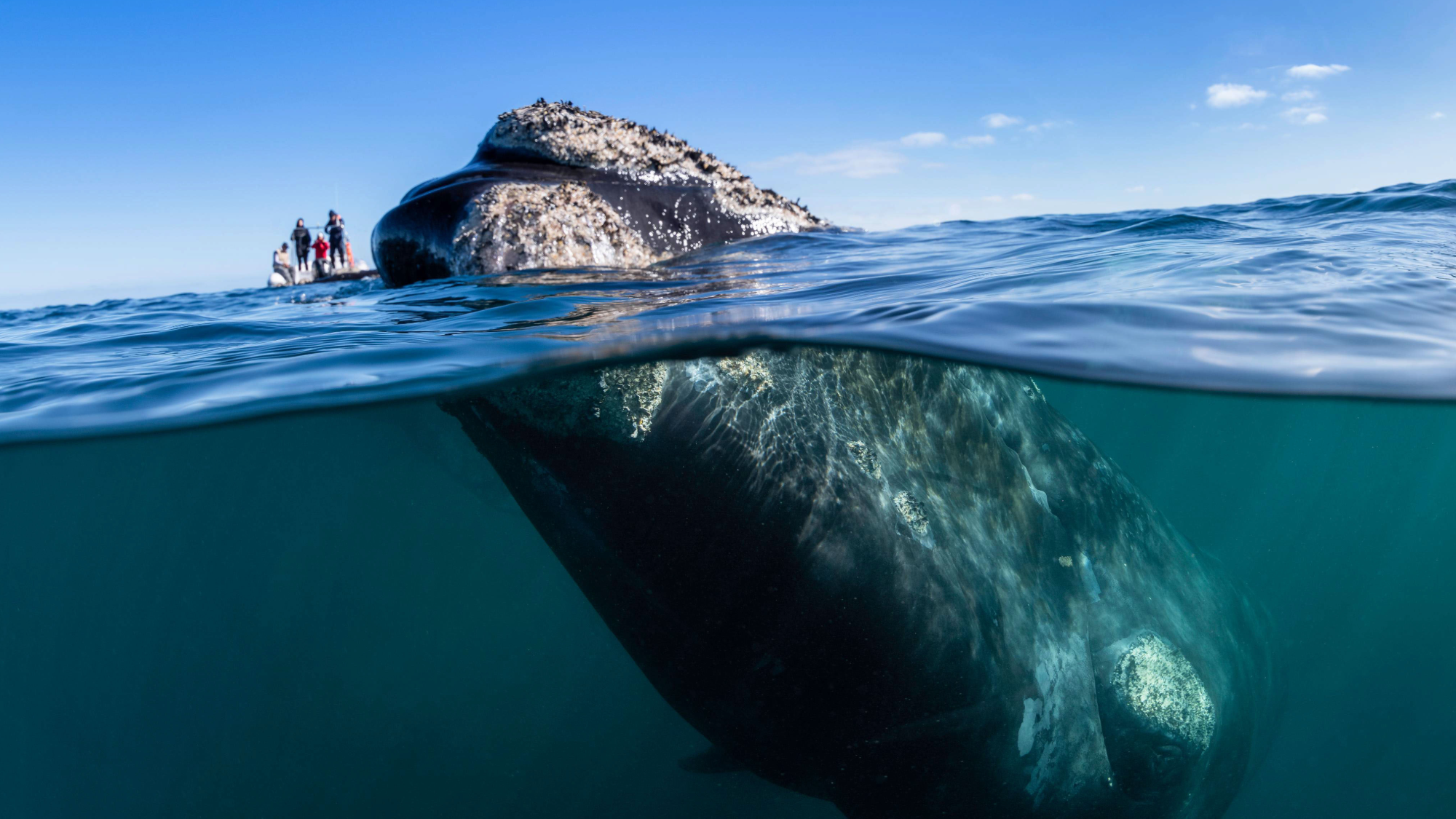
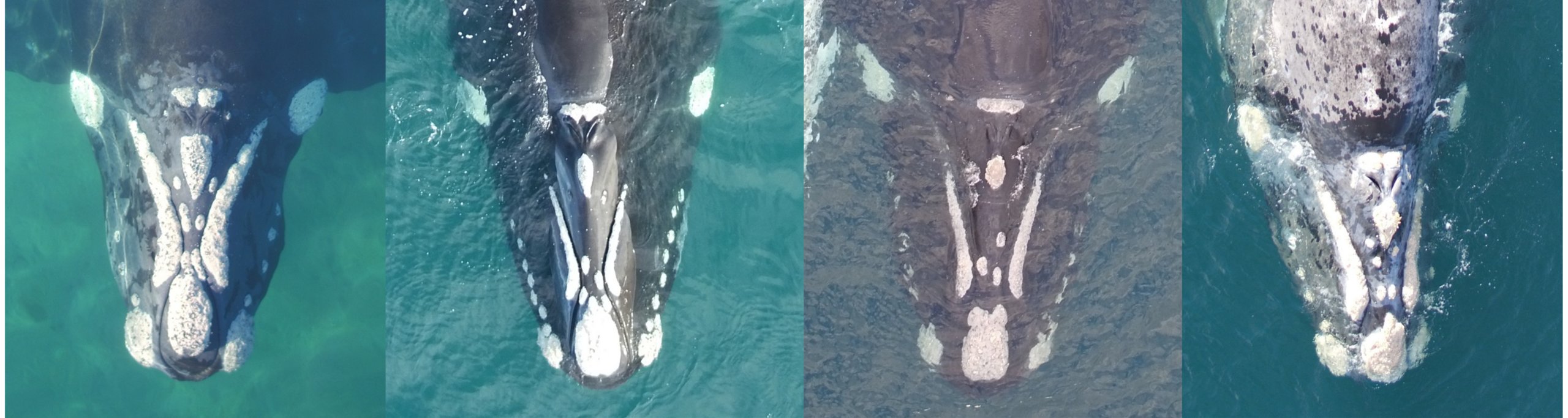
How do you tell the difference between two individual southern right whales (Eubalaena australis)? Just like humans have unique fingerprints, these large baleen whales have identifying arrangements of callosities on their heads. These bumpy, raised patches of thick skin are similar to the calluses on our feet, and are also likely caused by friction.
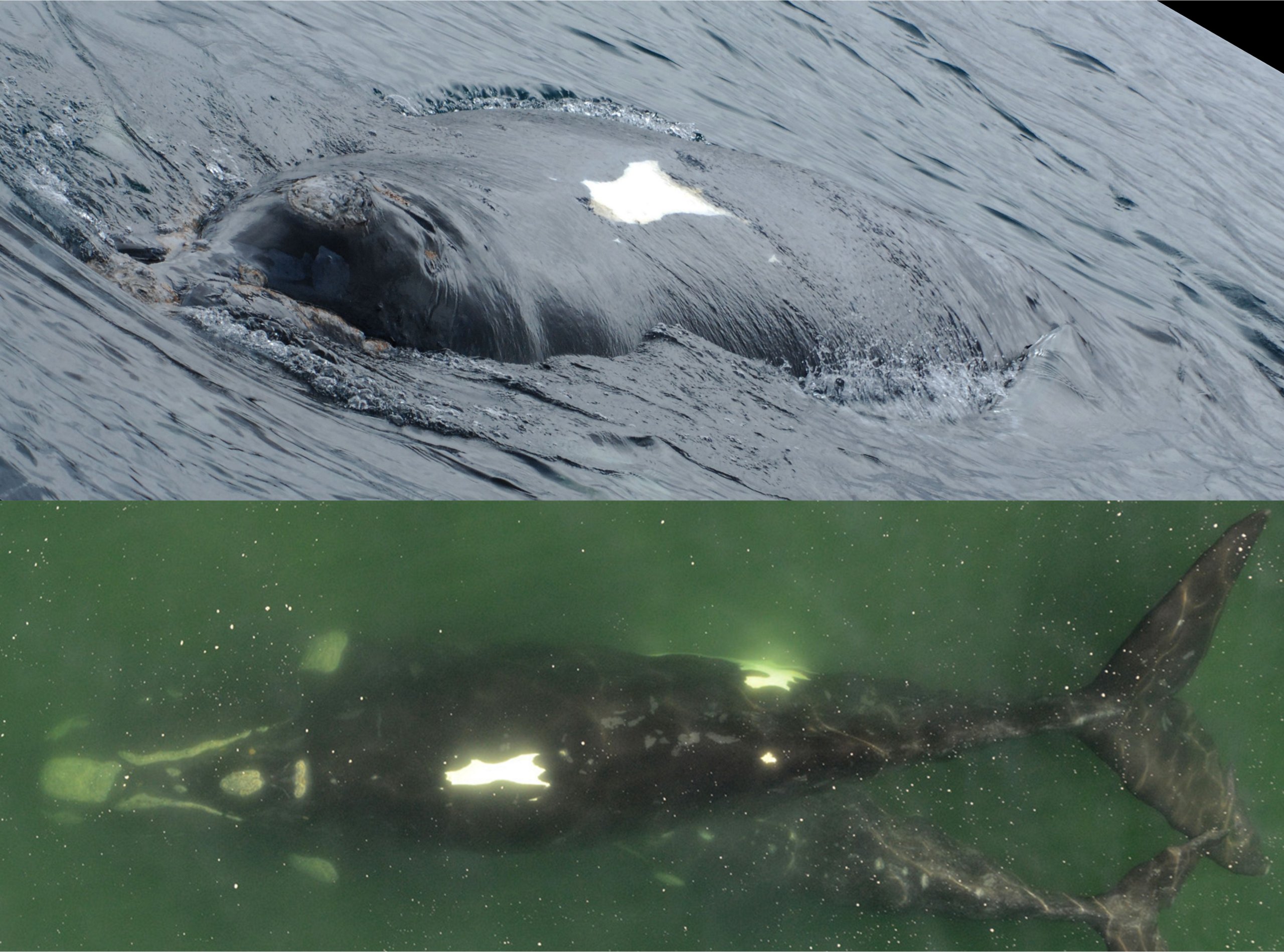
These head bumps feature plays an important role within a Southern Right Whale Research Program project in which researchers take aerial photographs of southern right whales at Península Valdés in Patagonia, Argentina. The photographs captured by a drone or plane help scientists pick out new or previously known individuals, register their sex, age, body condition, and if they have calves.
This information comes together in a database of the world’s longest-running scientific whale research project based on photo-ID, and contains critical data on over 5,000 identified whales. These details help scientists investigate everything from reproductive success and population abundance, to their survival. And since 2016, the database has also included work from citizen scientists.
“We launched a citizen science project in collaboration with the Puerto Pirámides Whale-Watching Guides Association to incorporate whale photographs taken from tourist boats into our aerial survey catalog,” the New England Aquarium and Argentina’s Instituto de Conservación de Ballenas (ICB) shared in a joint statement. The ICB leads the Southern Right Whale Research Program and co-leads the aerial photography project with Ocean Alliance.
“Through this initiative, the local community plays an active role in the research and conservation of southern right whales,” the ICB added. The New England Aquarium supports the citizen science initiative through their Marine Conservation Action Fund.
And these citizen scientists have certainly pulled their weight over the last 10 years. Whale-watching guides have contributed over 460,000 photos, which has led to the identification of 278 new whales and 122 previously recognized whales that hadn’t been officially documented by the aerial surveys.
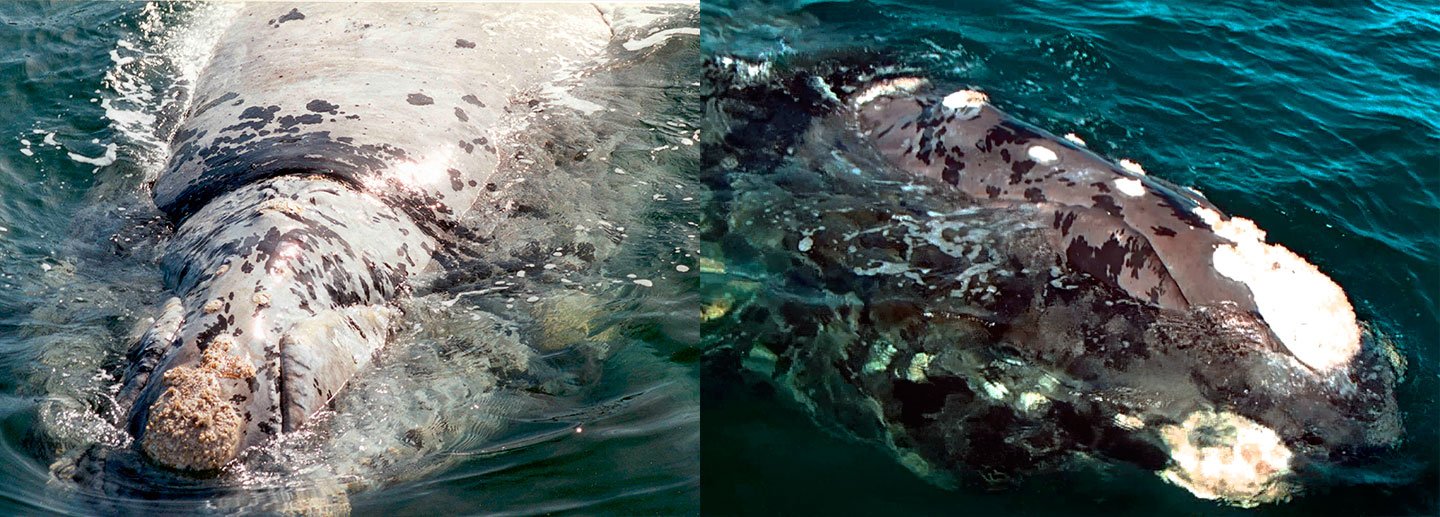
“Calves are particularly challenging to identify from aerial photographs because their small heads and still-developing callosity patterns lack sufficient detail, especially in older analog images,” according to the statement. “For this reason, most whales are not identified in their first year of life, making boat-based photographs especially valuable.”
For example, a citizen scientist’s 2007 photograph of a mother whale with her calf allowed researchers to figure out when that calf, captured by aerial surveys in 2008 and 2016, was born and who its mother was.
In the next phase of the citizen science component, the team will also accept drone photographs from the whale watching community. As for people who want to get involved without traveling to Argentina, they can participate in the Southern Right Whale Adoption Program.
