

The world’s largest, fully battery-powered jet officially completed its maiden flight. The successful test run marks a noteworthy step forward for long-awaited electric aircraft and battery technology broadly, but don’t expect to book a fully battery-powered flight anytime soon.
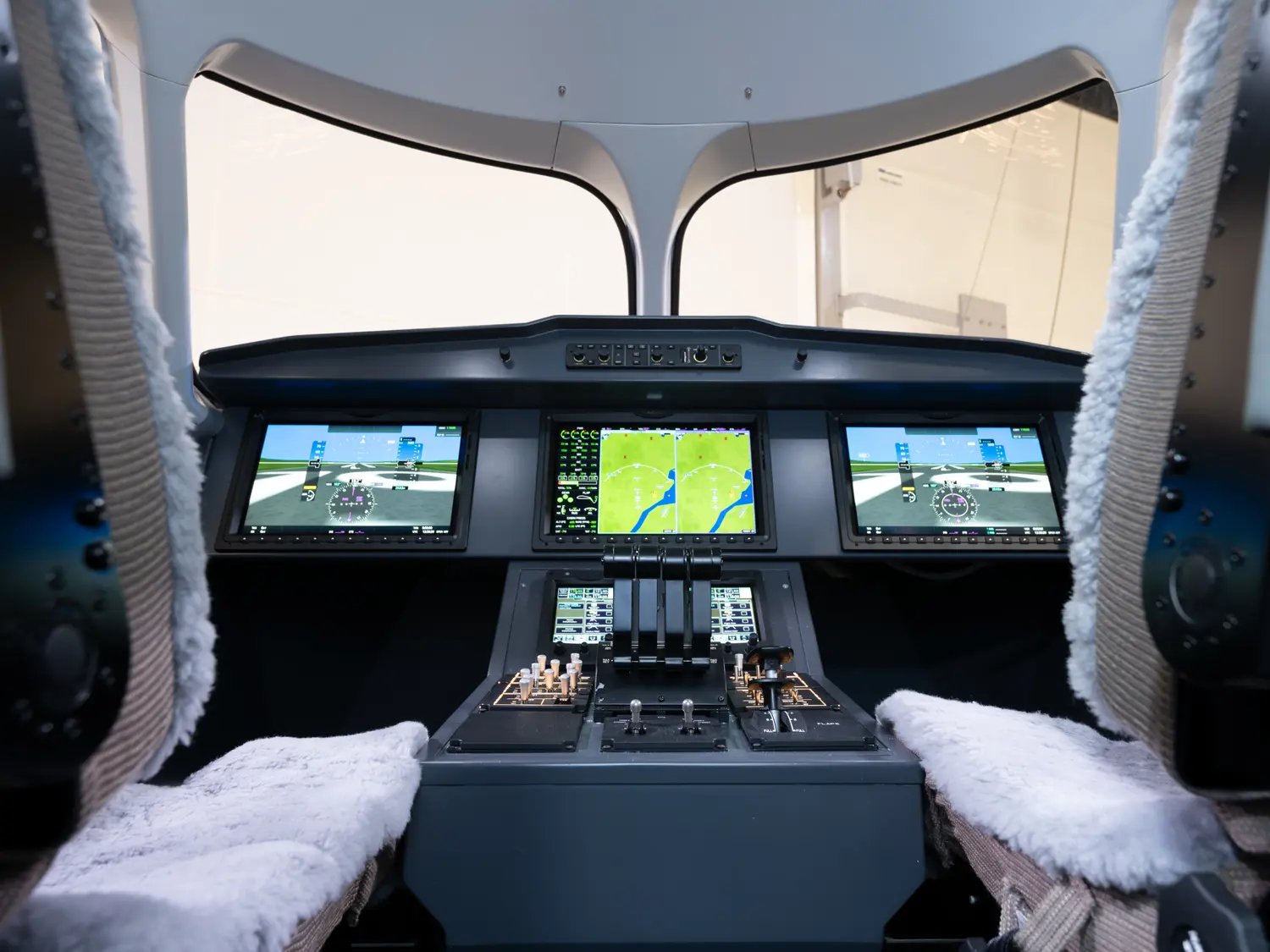
Manufactured by Los Angeles-based Heart Aerospace, the plane is called the X1. It has a 106-foot wingspan, measures 76 feet from nose to tail, and weighs more than 25,000 pounds, roughly the weight of an empty school bus. The 30-seat plane took off earlier this week from a regional airport in upstate New York, and flew for 27 minutes on battery power alone, reaching an altitude of 1,100 feet. It didn’t carry passengers, just a single pilot.
This week’s flight was an early test run for Heart’s broader commercial ambition: a hybrid-electric plane called the ES-30, which the company ambitiously hopes to bring into service by 2031. That model has already garnered interest from major airlines including United, Air Canada, and JSX, drawn in by the promise of lower maintenance costs and insulation from volatile jet fuel prices.
“With the first flight of X1, Heart Aerospace has demonstrated electric flight at the scale of a commercial airliner,” Heart Founder and CEO Anders Forslund said in a statement.

Heart Aerospace – X1 First Flight – World’s Largest Electric Aircraft – Electric Airliner
Heart Aerospace was founded in Gothenburg, Sweden, but officially relocated to Los Angeles in April 2025 as part of its effort to get its regional hybrid-electric plane off the ground. It’s one of several aviation companies capitalizing on rapid innovation in battery tech in recent years to try to reshape air travel, or a small, regional segment of it at least. The potential benefits are two-fold. On one hand, battery-powered planes, especially those drawing electricity from renewable sources, offer a cleaner alternative to environmentally harmful jet fuel. Aviation broadly accounts for an estimated 2.5 percent of global carbon dioxide emissions. Worse still, planes produce other harmful heat-trapping emissions like nitrogen oxides. The aviation industry set a goal of becoming carbon neutral by 2050, but even with innovations in sustainability and cleaner fuel, that target seems almost certain to fail.
Emerging electric aviation could make a dent in those emissions, but it certainly won’t transform the industry in the near future. The bigger sell for airlines comes from promised cost savings. Anyone who’s flown in the past six months likely knows that the cost of jet fuel is heavily subject to world events. Jet fuel prices averaged $3.50 per gallon a week prior to the test flight. That’s up 63 percent from last year. Beyond just fuel, though, electric motors also have fewer moving parts, which, in theory at least, means they should require less costly maintenance and repair. Automakers have made similar arguments when advocating for electric vehicles.
Heart claims that a combination of less fuel and maintenance combined should make their eventual ES-30 40 percent cheaper to operate than conventional regional aircraft of similar sizes. Going further, the company claims that all electric X1 test flights used just $5 of electricity. That sounds impressive at first, but it’s worth noting what that eye-grabbing figure leaves out. That single-figure dollar only measures the raw energy costs and not other operating costs like crew, airport fees, maintenance fees, long-term battery degradation, and other expenses. How much airlines actually save if they switch the hybrid eclectic plane, and whether any of those savings get passed on to travelers, remains somewhat unclear.
“Electric commercial aircraft have the potential to fundamentally reshape airline economics and, ultimately, lower the cost of air travel for passengers,” Forslund added
Heart claims that savings on fuel and maintenance combined should make its eventual ES-30 40 percent cheaper to operate than conventional regional aircraft of similar size. Going further, the company claimed Wednesday that the all-electric X1 test flight used just $5 worth of electricity. That sounds impressive at first, but it’s worth noting what that undeniably eye-grabbing figure leaves out. The five-dollar stat only measures raw energy consumption, and doesn’t account for other major operating expenses like crew, airport fees, maintenance, long-term battery degradation, and insurance. How much airlines would actually save by switching to the hybrid-electric plane, and whether any of those savings would be passed on to travelers, remains unclear.
Fully electric air travel lack range
Heart isn’t the only company trying to electrify the sky. Rolls-Royce has built a small, fully electric race plane that can reach a zippy top speed of 387 miles per hour. Harbour Air, meanwhile, has developed a fully electric, six seater sea plane. Much-hyped vertical take-off and landing (VTOL) companies like Joby Aviation and Archer Aviation are also bringing small, helicopter-like electric planes to market, aiming to ferry travelers from city centers to airports over shorter distances.
That’s all well and good, but extending electric aircraft range to the point where it can reliably replace a regional commercial carrier remains difficult. Several companies, such as Washington state-based Eviation Aircraft, are competing in the space, but they are ultimately limited by the inherent trade-offs of battery tech. Basically, the larger the plane gets, the larger the battery it needs to fly. But batteries are consistently heavy, and eventually they get so large that the plane simply can’t carry them alongside passengers and cargo. Worse still, batteries are dead weight: unlike conventional gas-powered planes, which get lighter as they burn through jet fuel during a flight, electric planes maintain essentially the exact same weight from takeoff to landing.
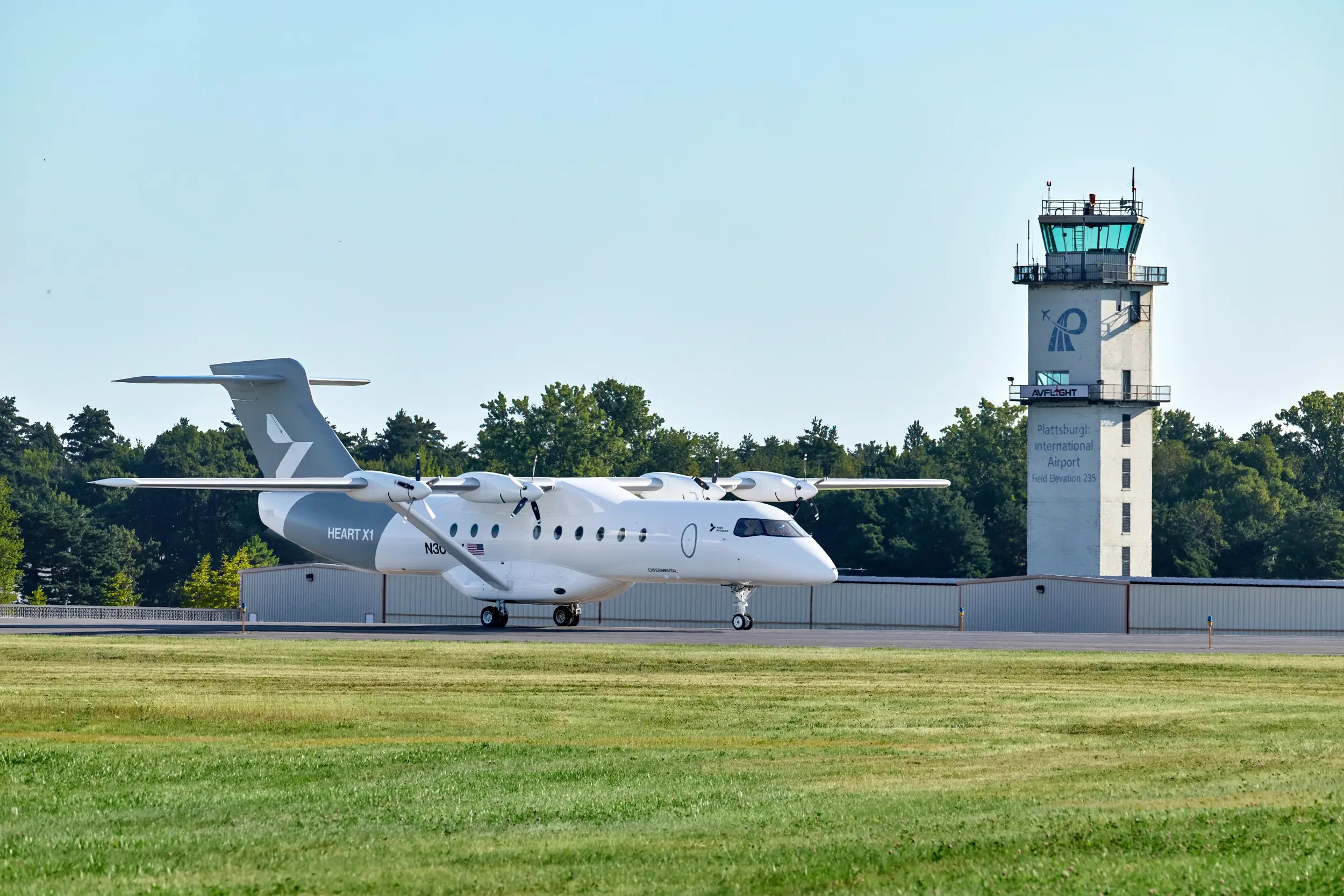
That’s where Heart’s hybrid approach kicks in. When running entirely on battery power (as the X1 did this week), the plane has a top range of around 125 miles. That’s simply not enough to reliably replace most regional air travel, while maintaining required reserves for emergencies. However, with the addition of a combustion engine range-extender, that maximum range extends closer to 500 miles. That’s more than enough to cover short regional hops, like routes along the heavily trafficked Northeast Corridor.
In other words, as noteworthy as it is to see an electric plane of the X1’s size successfully take flight, the true next step in terms of what travelers might actually feasibly board is hybrid-electric. For now, at least. Battery technology continues to improve, giving optimists hope that a hybrid approach (much like with cars before it) could buy time and provide a smooth transition while technology catches up to make fully electric solutions viable.
Related Stories
