
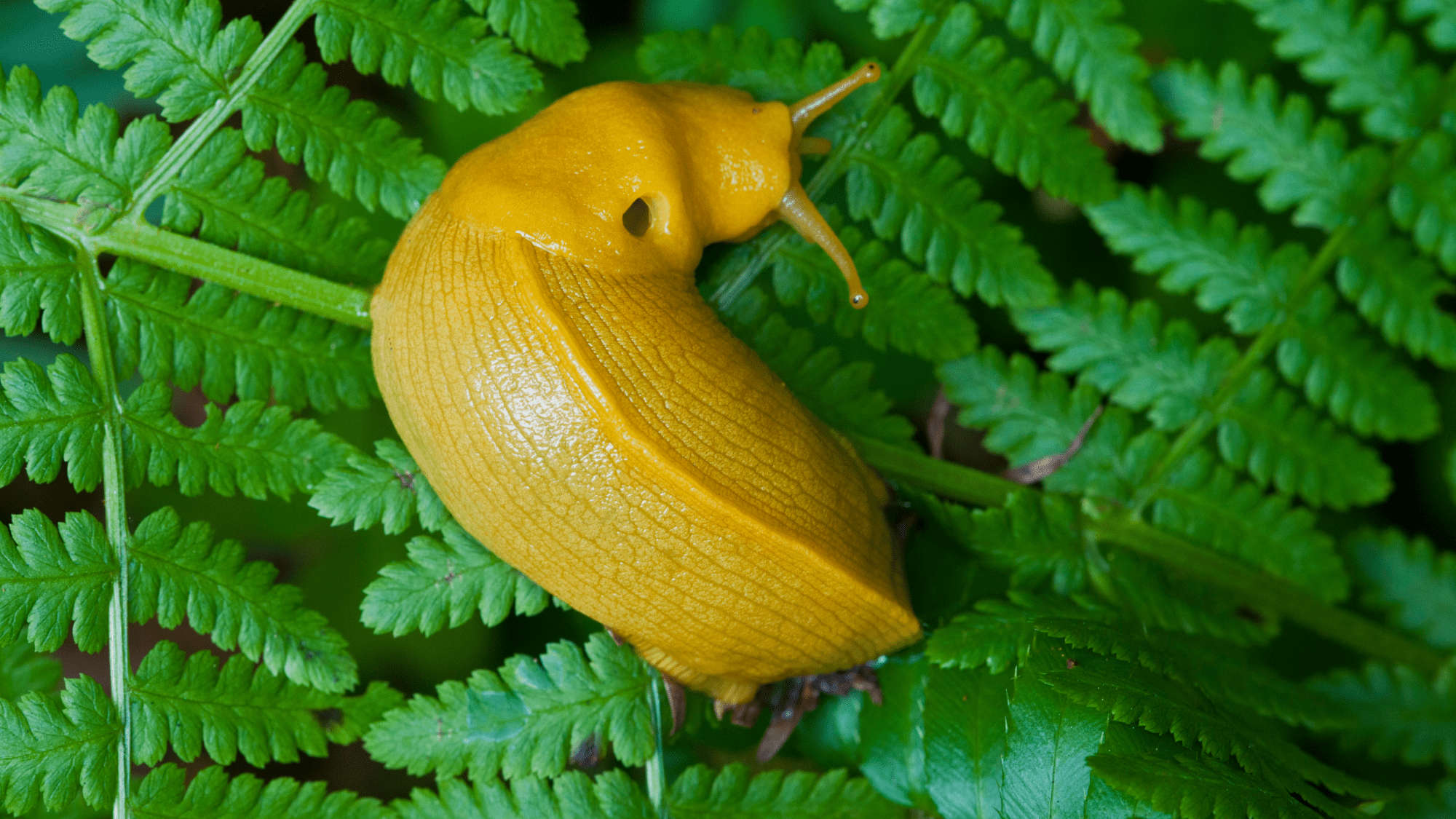
What’s yellow, oblong, and slimy all over? If you’re thinking of a ripe banana, you’re close—but the mystery object is also among Earth’s slowest animals. We’re talking about the banana slug, members in the genus Ariolimax.
These mollusks travel only 6.5 inches per minute on average, using a muscular foot to move across slime. Besides its iconic slowness, banana slugs are also one of the largest terrestrial mollusks, and one of the largest slugs.
Even though they take their sweet time, they are important members of their ecosystems—as decomposers, they process dead animal and plant remains, according to the team at the Golden Gate National Recreation Area in California. A recent video features a close-up of a banana slug munching on some greens—slowly, of course.
These slugs “are a great reminder for us to slow down and take a break when we need it. In this case – a snack break!” the team writes. “They also indulge in the occasional mushroom or seedling treat, all with the use of their radula.”
The radula is a tongue-like body part on the slug’s underside. It’s made up of roughly 25,000 tiny “teeth,” that mash up the slug’s snack before it gets swallowed. If you ever come across a banana slug, you’ll notice a hole on its right side—that’s what it breathes through.
Despite its name, banana slugs can be brown, white, green, and black, and some are spotted. But all banana slugs—as well as all mollusks—have a muscular cavity that surrounds their respiratory chamber as well as other organs. Speaking of anatomy, a single banana slug also has both male and female components, but they usually don’t fertilize themselves.
The fruit-wannabe can be found in wet regions on North America’s West Coast and is the University of California, Santa Cruz’s mascot as well as California’s official state slug.
Next time you see this slimy slug, may it prompt you to slow down and smell the roses!
