
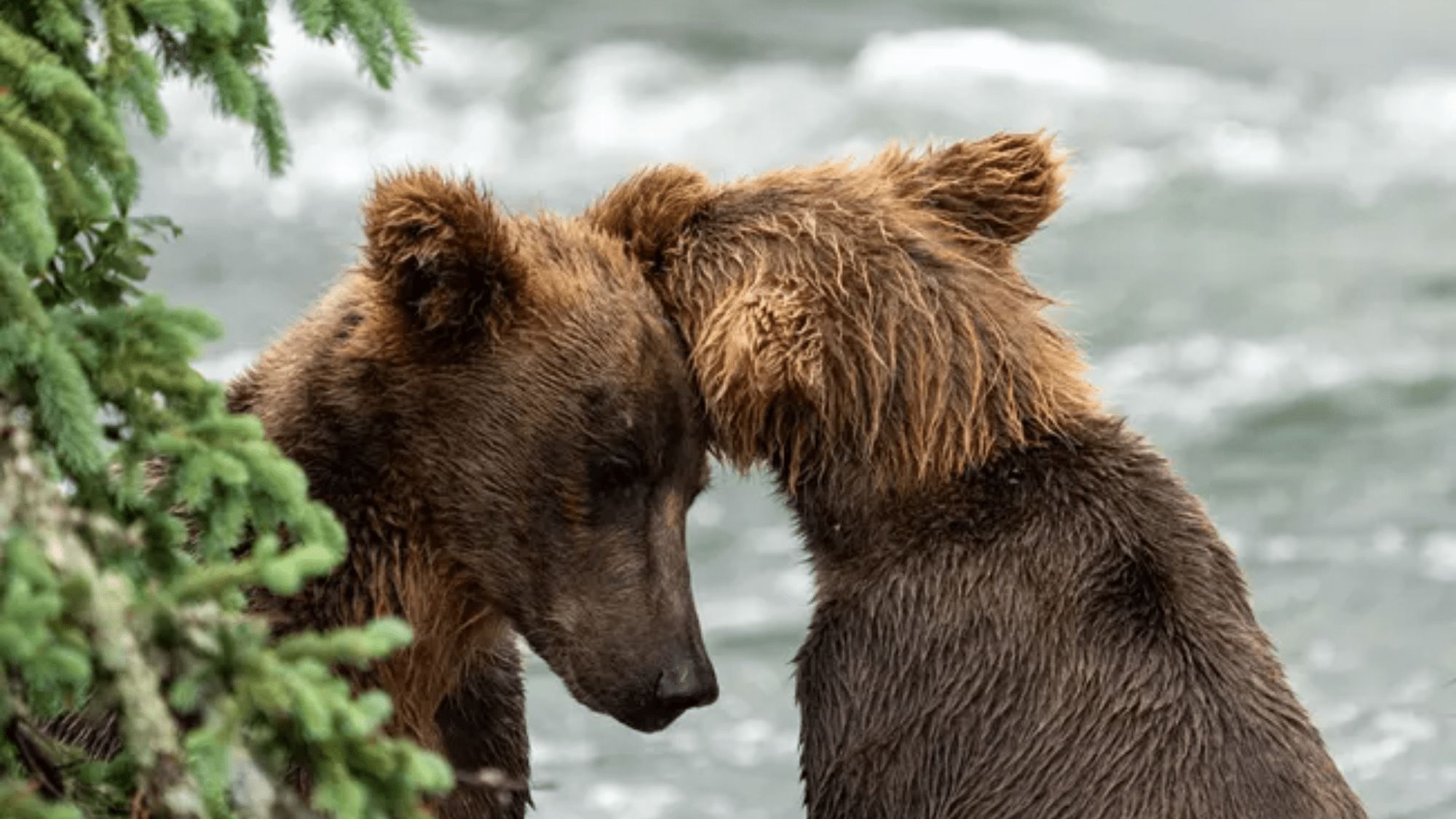
If you’ve been spending the summer keeping cool in the great indoors watching the famous brown bears (Ursus arctos) of Katmai National Park and Preserve in Alaska, you may have noticed fewer bears on camera recently. But do not panic.
Every year in late June, the brown bears return to Brooks Falls for the salmon migration. Now that August has arrived, the salmon have reached their spawning grounds and are more spread out in the Brooks River. Since the fish dispersed, the bears must spread out too. While looking for more salmon to eat, they will explore the region’s streams, and take advantage of other food sources like berries.
Later this month, the salmon will begin to weaken and die after spawning. Once the fish weaken, the bears will have an easier time catching them again. By September and into October, more bears will return to the lower Brooks River, just in time for the big Fat Bear Week competition. An adult male bear can go from roughly 700 pounds when the season begins to over 1,200 pounds by the fall.
You can still catch them from time to time on explore.org’s live cameras and should see them more often as we get closer to September.

LIVE River Watch – Katmai National Park, Alaska | explore.org
This year’s livestream featured an example of how unpredictable (and upsetting to humans) nature can be. On Tuesday, July 28, the live-cams captured a young brown bear cub being killed and eaten by an unrelated mother bear (Bear 806). The deceased cub was born this spring and the child of Bear 909, a 10-year-old brown bear. Bear 909 started the season with two cubs, but has now lost both.
On Sunday, August 2, one of Bear 335’s (also known as Jolly) cubs died, after following three unrelated cubs up a tree. The mother of the cubs already in the tree attacked Bear 335’s cub, who did not survive the encounter. The identity of the mother bear who killed the spring cub was not confirmed.
Following the first cub’s death, naturalist Mike Fitz and park rangers Christine Loberg and Sarah Bruce hosted the chat about the “challenging” incident. The team said that while infanticide by female adults does occur, this is likely the first documented case occurring at Brooks River.
While there is no one answer as to why mother bears are killing cubs, some experts suspect bear adoption, food scarcity, and fights for dominance all play a role.
Explore.org later released a tribute video to Bear 909’s two cubs on social media. The organization that runs the cameras confirmed that Bear 909’s first cub disappeared earlier in the season and its fate is not known. The other cub was the one attacked and killed by Bear 806.
This season has not been all sad news. A cub with distinctive silver fur has also been spotted on camera. The cub belongs to bear 677 aka Xena. Not much is known about 677, but she was first officially observed in 2025, after being spotted on the livecam in 2024. She reportedly keeps to herself most of the time and was spotted fishing the far side of the Brooks River in early July.
