
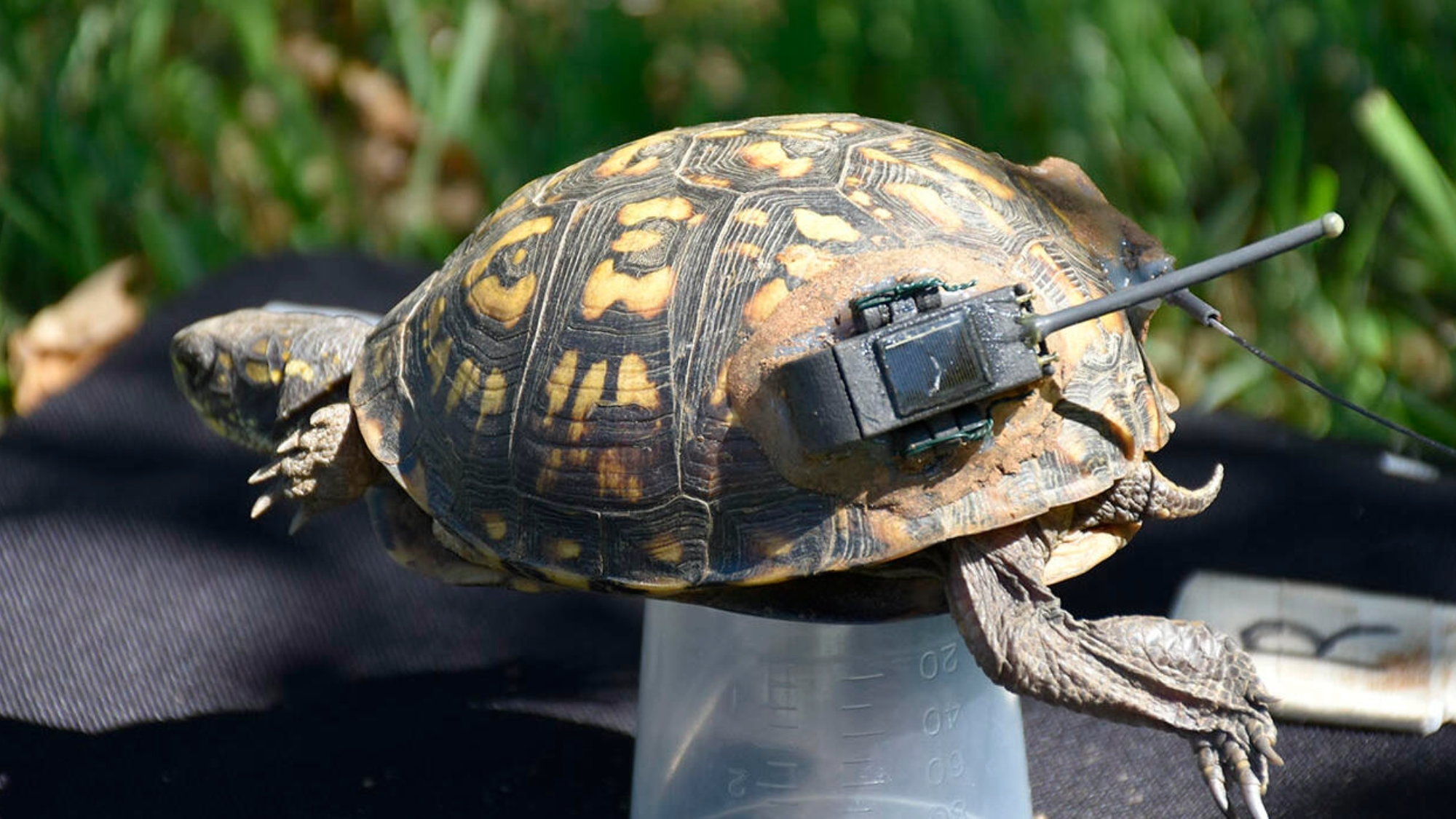
Earlier this year, a team of researchers in Virginia spent more than eight weeks tracking down Eastern box turtle (Terrapene carolina carolina) nests, employing a technique that seems straight out of ancient Greece’s Minotaur myth.
The Turtle Conservation Ecology Lab has been collecting data on Eastern box turtle habits since 2022. The team started studying their nest survival rates in the spring, hoping that their research will better inform conservation leaders on how to safeguard Virginia’s native turtles’ nesting sites.
Mark Ketner, a researcher with the lab, and his field collaborator found 16 nests, but the search for each one began before the nest had even existed—with the mothers. Working with turtles that had previously been tagged with a telemetry transmitter and a GPS tag, the duo uses a VHF receiver to track down the turtle. Just like in the movies, the receiver beeps faster the closer they get to the turtle. Once the signal peaks, the researchers start looking through the underbrush.
If they find a turtle, the duo note down basic information about the reptile before checking to see if the (presumably female) turtle is carrying eggs, which would make her a gravid turtle. To check for eggs, the scientists feel for a hard bulge under the skin just above the hind legs. This approach, however, doesn’t always provide a definitive answer, and is where the portable X-ray machine comes in.
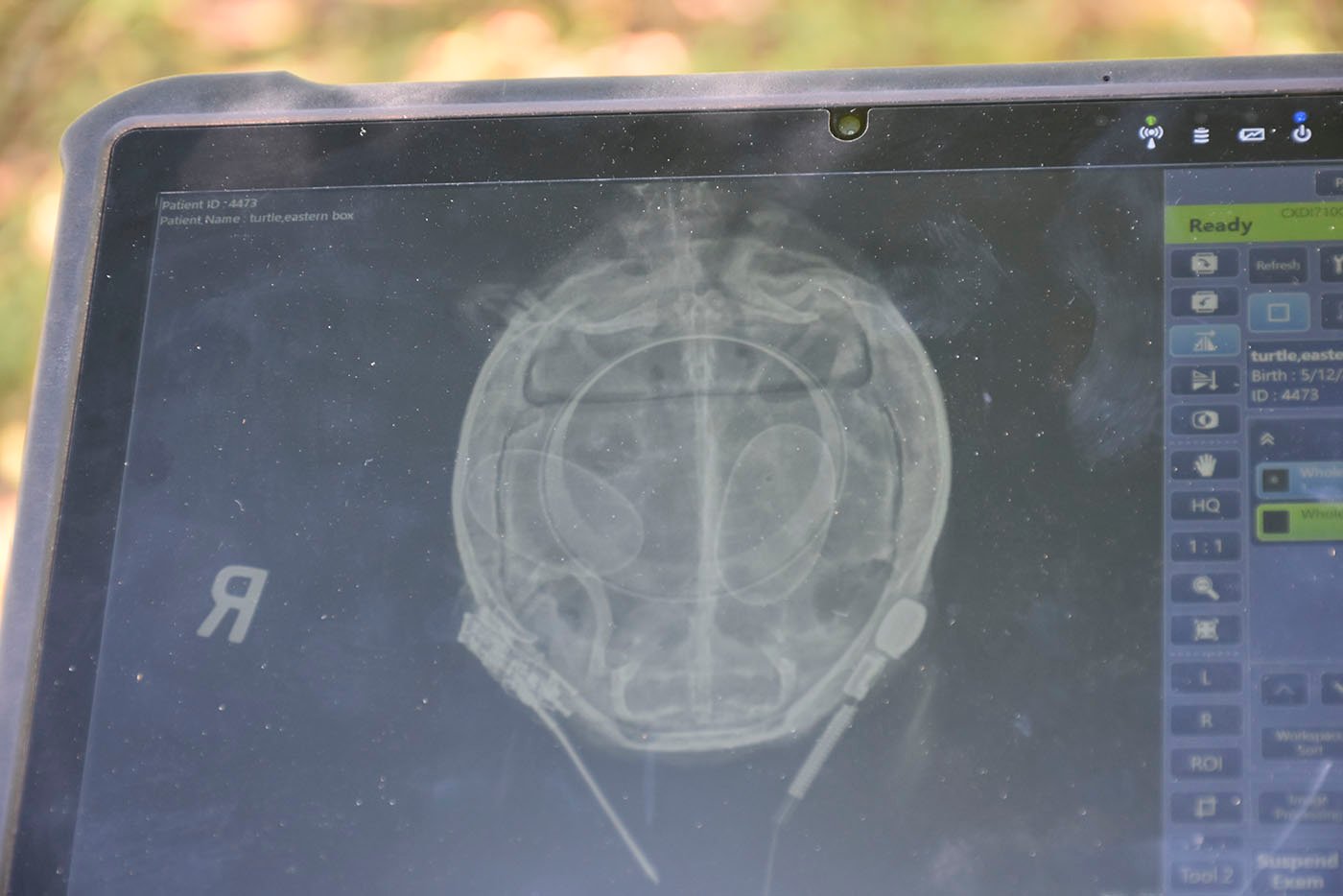
To make sure the turtle doesn’t move around, they place the reptile on top of an upside down cup as a veterinary technician captures an X-ray scan. If the scan reveals that the turtle is carrying eggs, the two researchers record it and then attach a spool to the turtle’s shell. They then return her to where she’d been discovered and tie the end of the thread to a small flag.
The researchers are essentially the Ariadne to the turtle’s Theseus. The mothers-to-be pull the thread along like the Greek hero did as he wandered through the minotaur’s labyrinth. The researchers then return the next day, track down the turtles, and weigh them. If the turtle weighs less than before, it means that she’d laid her eggs in the vicinity.
“At this point we’re usually bent over, following this thin piece of thread for hundreds of feet… we look kind of silly doing it,” Ketner said in the statement.
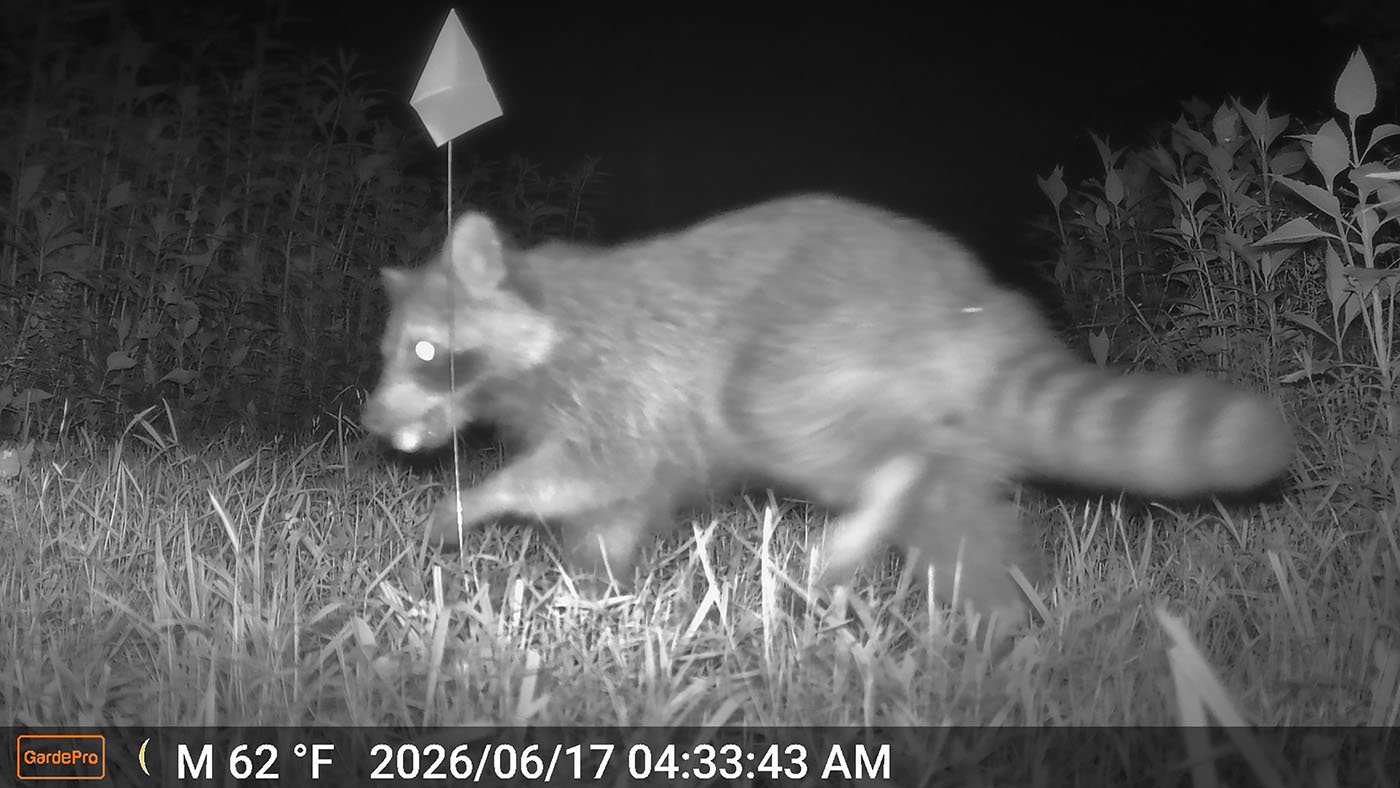
Once a nest is discovered, Ketner and his field collaborator plant a small flag, take down some associated information, and set up a camera to keep an eye on it remotely.
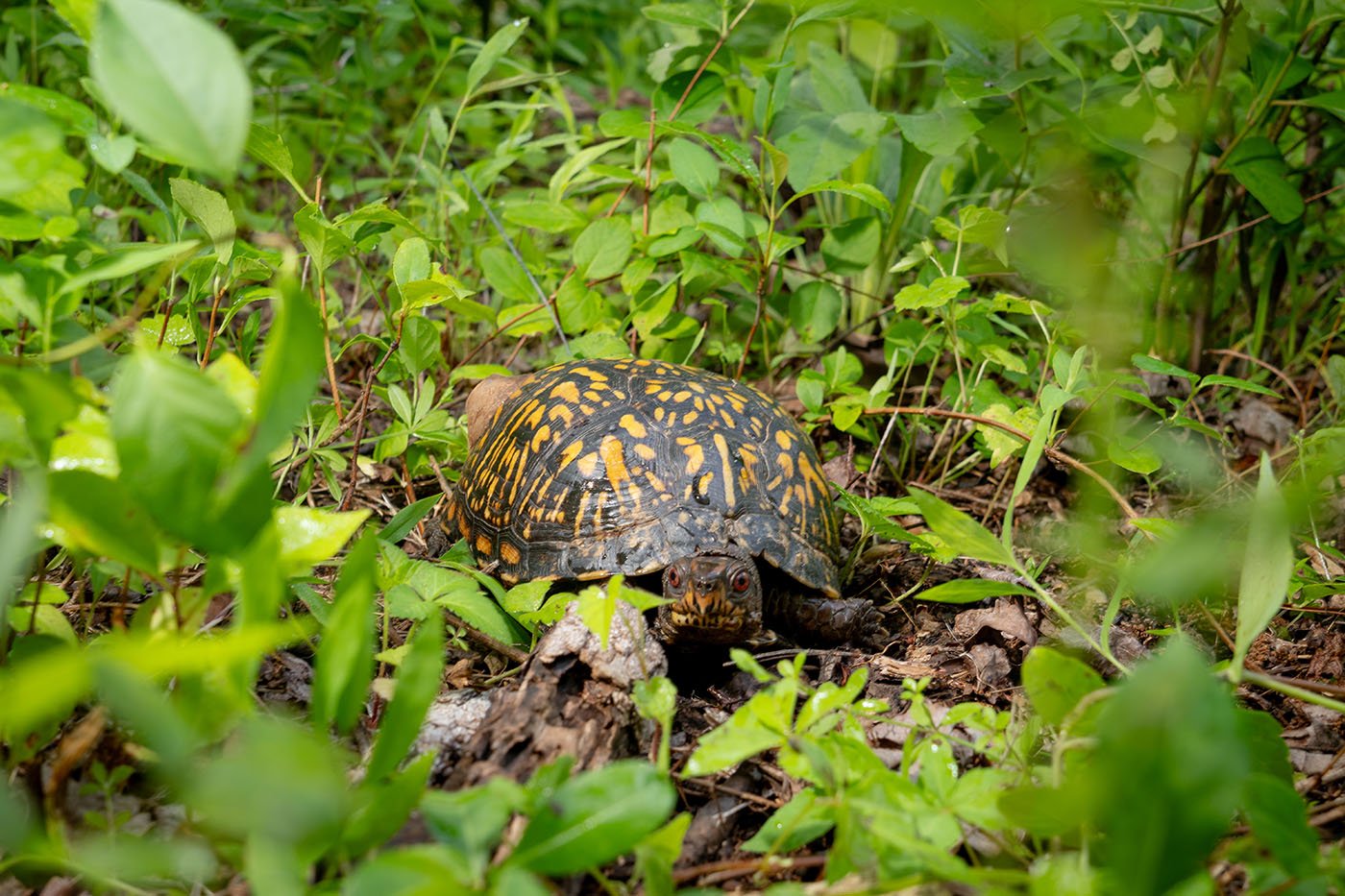
Eastern box turtle eggs hatch after around two months,but not all of the 16 nests that the team identified made it. In fact, the eggs from 13 of those nests were quickly destroyed and eaten by predators. Box turtle nest predation may be up to 90 percent, according to the team.
“Nest predation adds a layer to turtle population decline that I don’t think many people are aware of,” Ketner explained. “It’s easy to picture a turtle’s biggest threat as a spray of pesticide or a car on a country road. But we’re seeing they’re in danger before they’ve even hatched.”
Mark Ketner
The data the team collected this season doesn’t change anything for these hatchlings, but it does shed light on the factors currently threatening this species, and the more scientists know about an animal, the better equipped they are to protect it. There’s still a lot to learn, however, and next year the Turtle Conservation Ecology Lab will be gathering further nest information.
“Collecting all the right the data is a slow, steady process,” said Ketner, “but they’re turtles. They figured this out over 200 million years ago, and they know exactly what they need. Our goal is to figure that out too, but in less time.”
