

We may earn revenue from the products available on this page and participate in affiliate programs. Learn more ›
To say Summer 2026 has been a scorcher would be an understatement. In Europe, prolonged heat waves and record-setting hot days have crossed the threshold from unpleasant to deadly. This year alone, Europe has already reported around 25,000 heat related deaths. And more heat waves are on the way.
The United States hasn’t escaped unscathed, but it’s managed to mitigate the heat’s lethality thanks in large part to widely accessible air conditioning. An estimated 90 percent of U.S. households have AC in 2026, compared to just around 20 percent of households in Europe. In the United Kingdom, which is on track to set a record for heat-related deaths this summer, AC is only a fixture in around 5 percent of households.
But that near-ubiquity in the U.S. wasn’t always the case. Modern electrical air conditioning didn’t exist until 1902, and it would take another half century for the technology to become affordable enough to be commonplace. Before that, people had to get creative. And while it might seem hard to believe for many Americans who have come to view climate-controlled seasons as the standard, AC was actually met with eyebrow raising skepticism for much of the early 20th century.
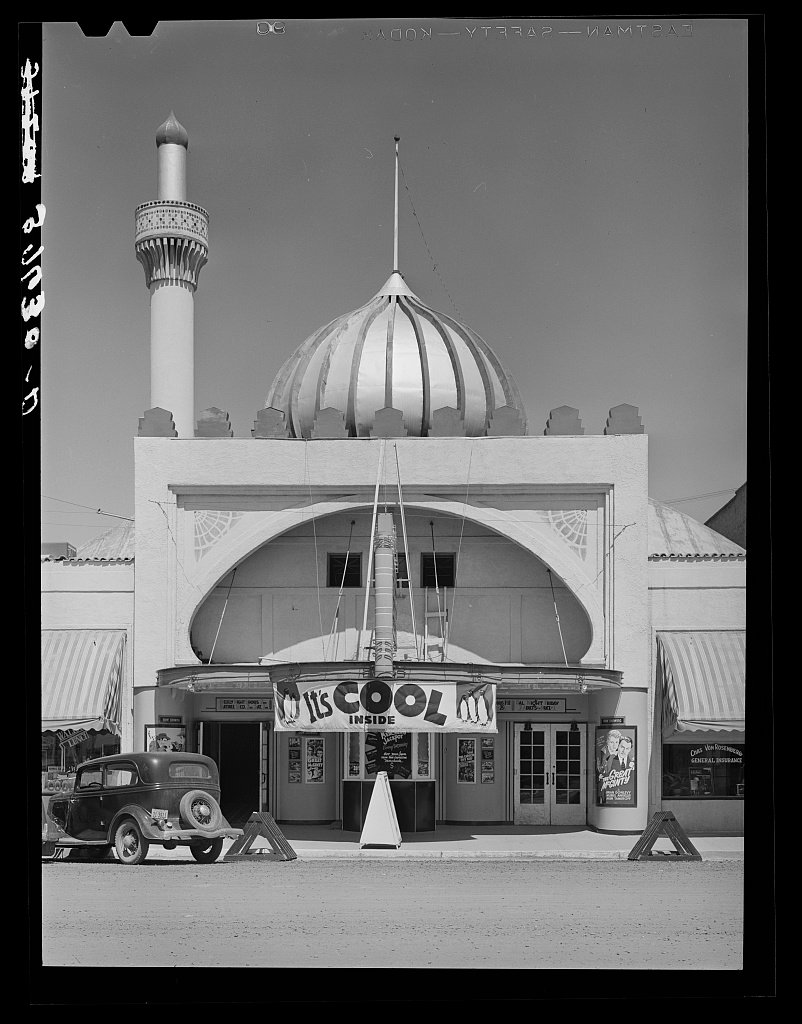
Still, the public gradually warmed to the concept, often after being exposed to it in large gathering places. Long before air conditioning was ever considered for homes, it was first adopted in factories and warehouses in an effort to increase efficiency. Success there then led to the technology’s implementation in movie theaters and then department stores.
Theaters from Chicago to Houston would heavily advertise their ice-cool amenities, which would draw in eager, sweaty crowds. Marsha E. Ackermann, author of the 2002 book Cool Comfort, wrote that air conditioning “was part of the total entertainment experience.” At least at the beginning, seeking out AC relief was a communal affair. Cool theaters also likely contributed to the rise of summer blockbuster films. Prior to the introduction of AC into theaters in the 1920s, movie-going was still somewhat seasonal. Viewers coming in to escape the heat wound up creating a habit of summer film watching that persists today.
‘White gold:’ the big business of shipped ice
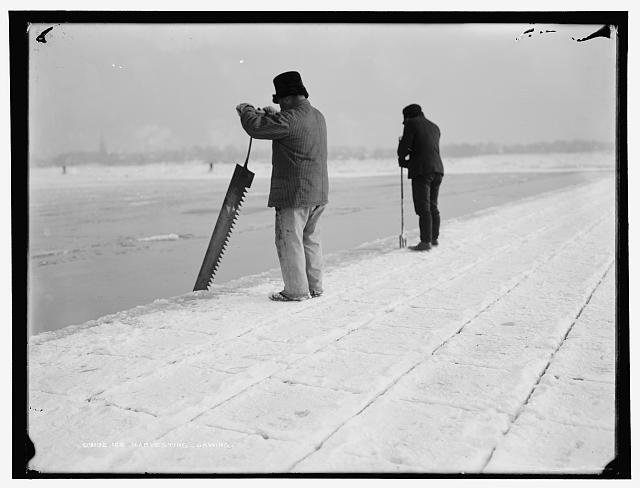
In lieu of widely available AC, Americans relied on a sophisticated infrastructure of ice transportation, sometimes referred to as the ice trade. This cross-country and transatlantic network began in the early 1800s. It persevered until the 1930s when mechanical cooling and refrigeration became more widely available. Huge blocks of ice, sourced from frozen lakes in the Northeast, were cut with handsaws and other tools, then moved to insulated warehouses where they could be stored for months.
Horse-drawn wagons would then transport these ice blocks all across the country, and special shipping vessels were even built to send U.S. ice as far away as Kolkata.
But, as anyone who’s watched an icy soda turn watery on a summer day can probably gather, moving hard ice to warm climates wasn’t exactly foolproof. Author Salvatore Basile notes in his 2014 book, Cool, How Air Conditioning Changed Everything, that an ice shipment might lose two-thirds of its weight to melt by the time it finally reaches its destination. That massive inefficiency, and the considerable labor involved, earned shipped ice the moniker “white gold.” Basile notes the price of ice in the mid-19th century was 10 times the price of beef.
The ice also wasn’t necessarily the same quality people are used to in 2026. Pollutants from the lakes where the ice was sourced would often get trapped inside the blocks, and horses would sometimes leave droppings on them during the journey. When the ice finally did melt, it often emitted a foul odor.
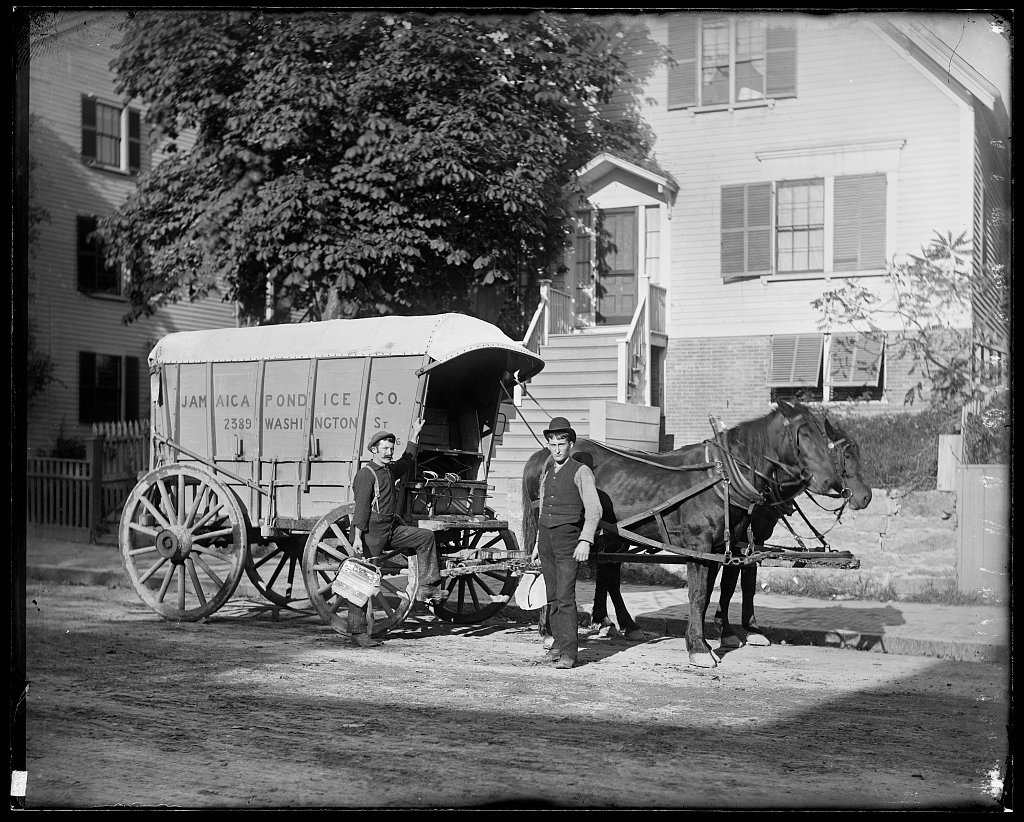
Americans who could afford it regularly had large ice blocks delivered to them by “icemen.” (This was an era when milkmen were also a common sight.) And like the milkman, good-looking couriers delivering the coveted cooling relief became a source of jealousy for insecure husbands. The trope was common enough that composer J. Fred Helf even wrote a famous song titled “How’d You Like to Be the Iceman?” Most often, people would place the ice in an icebox to keep perishables cool.
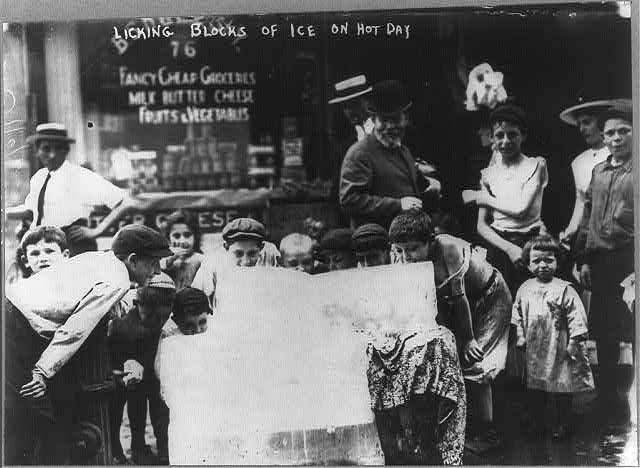
But ice also served as a more direct form of relief: People would sometimes place massive ice blocks on the ground and sit on top of them, fanning themselves with the cool air evaporating off the block. Photos like the one below show children licking massive ice blocks for a slight reprieve from the summer heat.
Ice-cooled drinks and ice cream are still popular ways to beat the heat today, but before AC, they were viewed with even greater reverence.
In 1922, according to National Geographic, Americans consumed an estimated 325 million gallons of ice cream. The frozen treat was popular enough that major alcohol manufacturers like Anheuser-Busch, who were prevented from selling booze during Prohibition, started producing ice cream instead. Yuengling, another beer-maker, reportedly produced two million quarts of prepackaged ice cream in 1928.

Americans got creative with fan designs
Odds are anyone enduring a toasty day today without AC will instead turn to an electric fan. But both AC and electric fans are relatively new inventions. Manual, hand-powered fans, by contrast, date back several thousand years, at least to ancient Egypt. Fan designs evolved over the years in both size and style, with some so large they required servants to operate them.
But for the average American staying cool, the fan they were most likely to use dates back to the early 1800s, with the advent of the first mass-produced paper folding fans. They weren’t the most effective, but their cheap design meant they were often handed out for free at larger gatherings and events like churches or political rallies.
The U.S. was also a testbed for a number of failed fan innovations. President George Washington was among the early adopters of a strange “fan chair” contraption that used a foot pedal to power a connected overhead fan. Benjamin Franklin even invented his own similarly styled rocking chair, with a pedal powering a looming palmetto-leaf fan.
Related: [5 ways to stay cool without blasting the AC]
Inventor Schuyler Wheeler created what’s widely considered the first true electric fan in 1886, though it came about during a time where only a tiny minority of Americans actually had electricity in their homes.
A number of other long forgotten fans designs emerged to fill the gap until electricity became more widely available. In 1910, for example, E. Paillard & Co made a wind-up table fan that could supposedly run for around 30 minutes. Around the same time, Lake Breeze Motor Company released their own table fans powered by alcohol, gas, and kerosene.

Rooftop naps and fireplace bedrooms: sleeping outside was necessary
Prior to widespread AC, Americans generally adjusted their habits more to match the seasons. Though many people today make slight changes to their wardrobe during different times of the year, that variation was much more pronounced in the past. Americans would typically reserve shirts and dresses made of wool or other heavy materials for winter and turn to lighter linens for the summer months.
The burden of enduring heat also wasn’t borne equally. Wealthy families with the means often decamped to summer homes located near bodies of water or up in the mountains. The widespread rollout of automobiles around the turn of the 20th century made that option more readily available.
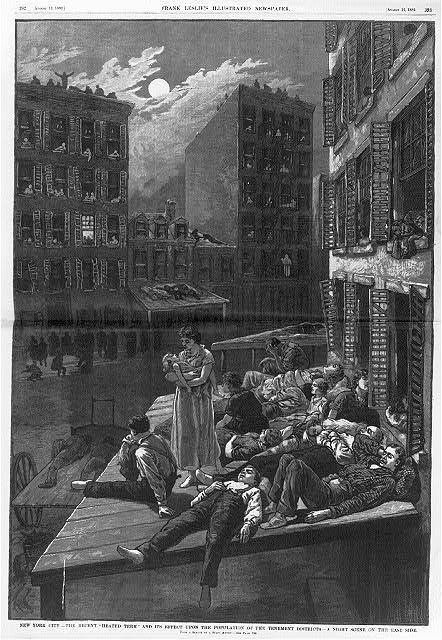
Those stuck in dense, urban cities would often try to beat the heat by spending more time on roofs, where they could take in a breeze. That was somewhat risky business: Basile notes it wasn’t uncommon for pedestrians to find the corpses of people who had rolled off their roofs the prior evening while trying to catch some sleep.
Others without roof access would sit and sometimes sleep on their firescapes to escape their sweltering hot boxes. This practice was common enough that early 20th century police records were reportedly full of fines for residents blocking fire escapes with their mattresses.
Homes were designed with heat in mind
Homes and apartment buildings were also built much more specifically with heat in mind prior to widespread artificial cooling. Many houses were built with cupolas (basically the summer version of a chimney), which use a stack effect to naturally send warm air upward and out.
Ceilings were also often taller, to spread hot air out and encourage it to rise. Homeowners during that time would also commonly plant tall trees on either side of the house to provide natural shade.
Opening windows also helped a great deal, but that seemingly simple solution actually wasn’t all that viable until the mid-19th century. Up until then, glassmaking was expensive, which meant glass windows were limited to a wealthier portion of the population.
Once glass was more widely produced in the 19th century thanks to industrialization, architects began placing windows at either end of rooms to allow for cooling cross breezes. Porches also became more common in the mid-19th century, especially in southern states, giving households a quick and easy way to step out of their baking homes.
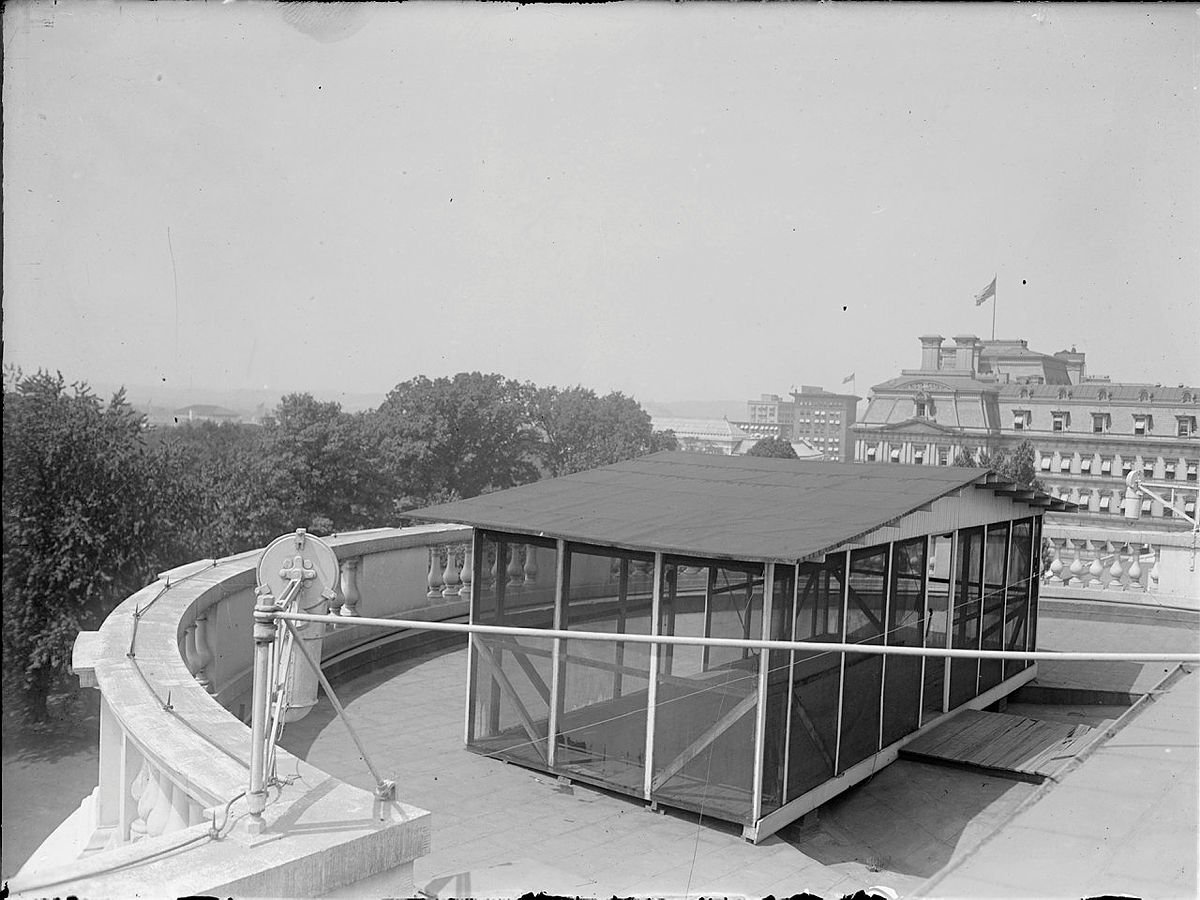
But porches weren’t limited to the front of the house. For a brief period in the early 1900s, “sleeping porches” were constructed on home roofs, back patios, or as additions to access more natural breezes. President William Taft even installed one of these screened-in porches on top of the White House in 1910.
Will America’s AC obsession go global?
Though many Americans got their first sample of air conditioning in movie theaters and department stores, the real society-level transformation occurred around 1950 with the proliferation of portable window units. The devices increased in efficiency and dropped in price over the next two decades, leading to rapid adoption countrywide.
In 1969, just 12 percent of U.S. households had AC. By 1980, that percentage had climbed to 55 percent. Today, it’s nearly 90 percent. That transformation has made summers less sweaty, but it’s also driven more profound economic and demographic changes.
Researchers have credited AC adoption with encouraging population shifts towards southern states. The technology also played a critical role in the rapid economic growth of major metropolitan cities in the South, like Phoenix, Atlanta, and Houston.
Air conditioning as an expectation rather than a comfort is still a uniquely American phenomenon, though there are signs that’s changing. Politicians across Europe are using the influx of deaths from this year’s historic heat waves as a rallying cry to push for fewer restrictions around new AC installation.
And those calls aren’t limited to Europe either. The International Energy Agency (IEA) predicts two-thirds of households worldwide could own an AC system by 2050.
Underlying that future, however, is an unavoidable paradox: Heat waves are getting brutal and hot enough that living without AC can be deadly, but current AC systems are also so energy-intensive that rolling them out on a wider scale will almost surely result in warmer long-term temperatures.
So, if you do crank up the AC, be mindful of how much energy it consumes and maybe take a moment to ponder the long, long history of people going without the comfort of a cool home or apartment in the summer. And if the machine does break down, there’s always ice cream.
In The History of Every Thing, Popular Science uncovers the hidden stories and surprising origins behind everyday things.
Related 'The History of Every Thing' Stories
WWII helped create Tupperware. Potlucks made it iconic.
From bones to steel: Why ice skates were a terrible idea that worked
The first playgrounds were for adults, not kids
Andrew Jackson’s White House once hosted a cheese feeding frenzy
From real nails to kangaroo leather: Soccer cleats went on a wild journey
