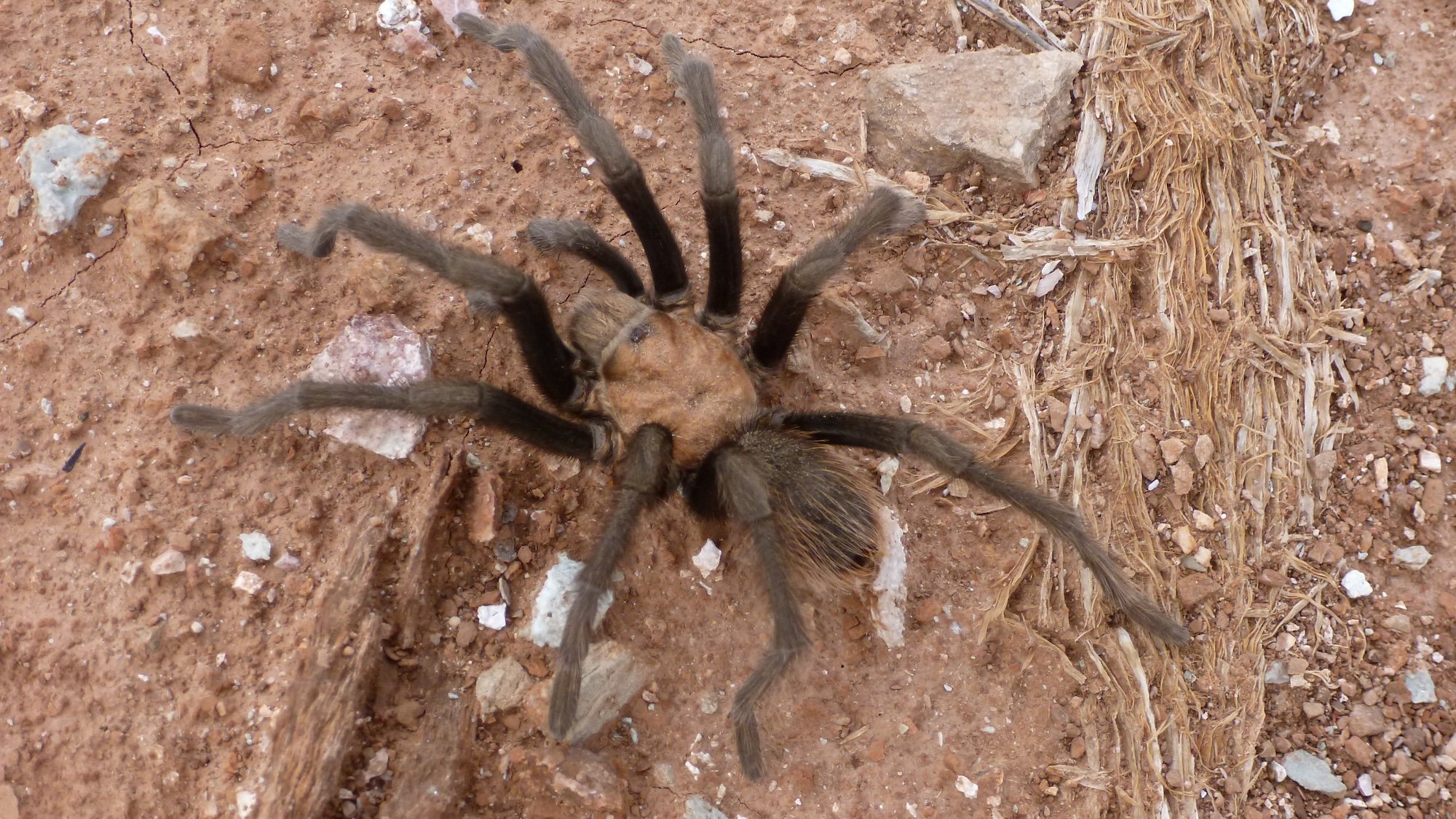
The desert tarantulas (Aphonopelma iodius) residing in Utah’s Zion National Park aren’t exactly the most social desert dwellers. Despite regularly growing over five-inches in length, the hairy arachnids are rarely spotted by visitors. Instead, the non-venomous spiders spend most days hidden in their underground burrows and generally only venture out at night to hunt for insects and other small prey. Since a single meal can sustain a tarantula for a few weeks, these hunting excursions are few-and-far between.
Their usually solitary schedule only begins to change as the summer months shift to fall. Beginning around late-July, male desert tarantulas will brave both the brutal daytime heat and its watchful predators like foxes and roadrunners to look for love. Or, at least, what counts for “love” when it comes to spiders—a willing mate and the chance to become her next meal.
In a recent social media post, Zion National Park officials reminded the public that August is typically the start of desert tarantula mating season. That means visitors are more likely than usual to spot these eight-legging suitors prowling for partners on roads and walking trails. These aren’t young bachelors, though. Male A. iodius tarantulas don’t reach sexual maturity until about seven years old, at which point they will emerge during mating season armed with sperm sacs stored on their front pedipalps. Once they reach a prospective female’s burrow, the spiders will then begin tapping the nearby ground and vibrating in hopes of winning her attention. A successful proposal will then see the male deposit his sacs via the female’s spermatheca organ.
The new couple’s honeymoon doesn’t last long. In many cases, it never even starts, since a female tarantula often devours her mate shortly after copulation. The males who escape unscathed don’t last long, either. Having fulfilled his reproductive duties, these spiders typically die after the mating season’s end in mid-autumn. Females will eventually lay their eggs the following spring or early summer, and often live to do it all over again. Unlike a male tarantula’s 10-year average lifespan, females often live to 25-years-old.
“If you see a tarantula in Zion during your visit, give them plenty of space, do not try to pick them up, and wish them luck on their quest for love,” added park officials in their recent post.
The advice isn’t only for visitors’ benefit. The desert tarantula may not be venomous, but its bite is still pretty painful while its finely barbed belly hairs are plenty irritating. Regardless, it’s always best to let the spiders do their thing—regardless of whether or not love is in the air.