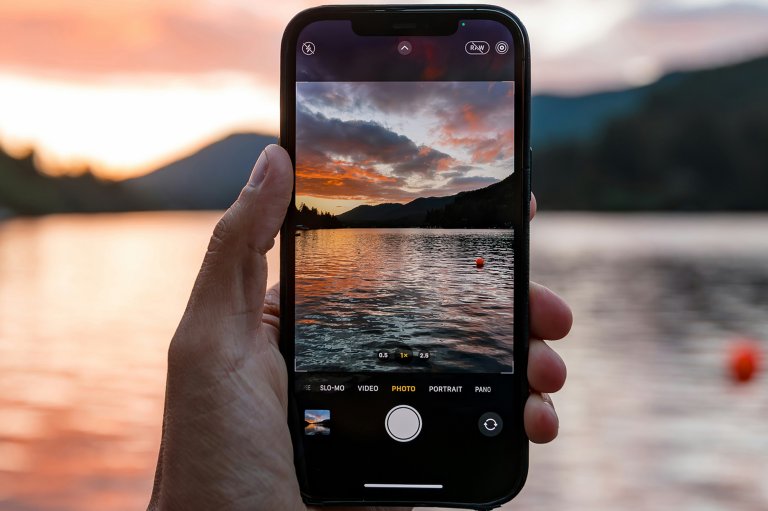
You want to get more into photography. You've got somewhere between a few and several hundred dollars to spend on a camera. You want to learn a little bit about how this stuff works, so you can tweak some settings to get better shots, but mostly you just want your pictures to look good. You want a nice background blur. You want sharp focus, accurate colors. You want shots taken in low light to have a minimum of noise and blur. Great! This is exciting for you.
Here's what you shouldn't do: you shouldn't buy a DSLR.
Photokina 2012, going on this week, might be the moment when the DSLR loses its ascendancy among aspiring amateurs. Two years ago, DSLR was the obvious best option. Alternatives (which I'll get into) were in their infancy, still too expensive and too limited to really recommend, and entry-level DSLRs were starting to get really good, so if you wanted to jump into photography, you bought a DSLR. That's what everyone's always said (well, "always" meaning in the digital age). Want to get into photography? DSLR. But that's no longer true. DSLRs have serious weaknesses for the entry-level photographer, and suddenly there are options without those weaknesses.
Photokina this year has been, in large part, about making tiny, easy-to-use cameras with startlingly good image quality. Here's what you should buy instead of a bulky, difficult DSLR.
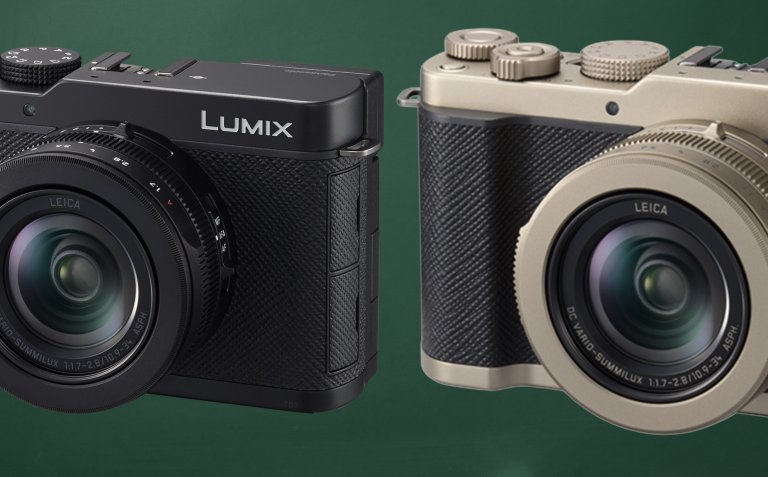
The ILC needs a decent name, and quick, because for a category that's so well-suited for so many mainstream photographers, it has a name that's simultaneously arcane and vague, intimidating and uninformative. ILCs, also called mirrorless cameras, consist of a very thin, very small body, the size of a medium-sized point-and-shoot. But they have sensors bigger than any point-and-shoot, and tons of advanced options, and if you want, you can swap out lenses (hence, "interchangeable lens"). Here's what's important about them: they're only marginally bigger and more complicated to use than point-and-shoots, and they take photos in the same league as entry-level DSLRs.
Normal folks don't carry around two pounds of misshapen camera with them. A slim, 350-gram camera like the Sony NEX-6 slips into a jacket pocket or purse--or, if you don't wear especially tight pants, into a pocket. And the NEX's lens is tiny, a little 30-mm pancake lens, meaning this is one of the first ILCs that will in fact slip into a pocket.
Another great advantage to ILCs that often gets overlooked is that their navigation is informed much more by point-and-shoots than by DSLRs. The Sony NEX-C3, an interchangeable-lens camera, has a clickwheel, shutter, movie button, play button, and two context-sensitive buttons. That's it. It looks pretty much like the crappy point-and-shoots everyone's used to.

The argument every photographer will make is, well, DSLRs are laid out that way for a reason--for speed when you need to change settings on the fly. But you know who doesn't need to save two seconds while adjusting the auto-exposure lock? Pretty much everybody. The NEX series, one of the best in the ILC category, has a menu system that's "pretty similar" in featureset to Sony's Alpha DSLR series, says Pop Photo's Stan Horaczek, a definite pro and DSLR user himself. "Though," he said, "it can seem easier for a novice to navigate ILC menus because there are fewer buttons and knobs all over the place." And that's great, because by removing the camera as a technical object to be mastered, budding photographers can focus on what's arguably more important--the photo itself, and skills like composition and timing. Many of these cameras, like the Olympus Pen Mini, have modes to help you do just that.
But the most important thing? The images you can take with these cameras are amazing. I've completely switched from my big ol' Nikon to a combination of the Olympus PEN E-PM1 and miscellaneous Sony NEXes, which are half the size, as little as half the cost (in the case of the Olympus), and do very, very few things worse. They do everything I need, and I'm so much more excited to use a tiny sleek camera than my old DSLR. It's a flat-out more pleasant experience.

ILCs have tradeoffs, of course. DSLRs have a dedicated sensor for autofocus, one completely separate from the sensor used to take a picture. ILCs are too small for that, so they use the same sensor. That means autofocus is slower. The sensor in an ILC is a bit smaller, which limits the amount of light it takes in, which in turn means worse performance in low light. The lenses are more expensive and fewer in number. There's often no electronic viewfinder, so you have to use the live-view screen, like you would with a phone or lesser point-and-shoot, which can be hard to see in sunlight and may make it hard to keep the camera steady.
That's all true, and every photographer will go on at length about it, but here's the thing: it doesn't really matter. Because ILCs are small, attractive, increasingly inexpensive, and take great pictures. They offer manual control when you want it and simplicity when you need it. That's what matters.
You can even go down a step from the ILCs to, well, non-interchangeable-lens cameras, a category name somehow even more cumbersome than the ILC. (Some folks are calling them "advanced compacts.") Essentially, these are tricked-out point-and-shoots. The big boys in the category are the Canon S100-series (the S110 will come out soon) and the Sony RX100. The S100 is a great point-and-shoot with tons of manual options that turns out great pics. The RX100 is, well, we're not really sure what it is yet. It looks like a point-and-shoot, but it has a monster sensor for that category, and the test shots we've seen are astounding. And that's the direction compacts are going. Stan quipped "Sensor size war is the new megapixel war," and it's a war we all want, because bigger sensors equals better photos (unlike megapixel count).
And that's why, if you don't really care about stocking up on multiple lenses, you might want to look to this category. Brian Lam, proprietor of the no-nonsense gadget-recommendation site The Wirecutter, says "Most people who buy entry-level DSLRs don't get a second lens, typically. The RX100 is a great replacement for that." If you have a DSLR and your only lens is the 18-55mm that came with it? You made the wrong call.

If you want a look at the future, check out the Sony RX1--kind of like the RX100, which is expensive at $650 but also a great option for lots of people, taken to an extreme. At $2,800 and with a non-interchangeable prime lens (meaning, no zoom at all), the RX1 is definitely not for the beginner; though we haven't seen final image quality yet, Lam said, "The RX1 is right for someone who is a pro and wants a specific backup camera, or someone who makes over $250,000 a year." But it's a sign of things to come. It's got a full-frame CMOS sensor, the same sensor as in giant DSLRs that cost thousands of dollars, and the image quality to match. And it fits in your pocket.
How do these exist? For advanced compacts, camera manufacturers can put in any kind of weird sensor size they want, since the camera doesn't have to conform to a particular lens system. ILCs all have to work with the dozens, sometimes hundreds, of lenses in their lens system. But if you take away its ability to exchange lenses, the camera can have any size sensor at all, because you're creating the lens system individually for this camera and nothing else. So make it huge! Make the lens awesome, since there's only one! Then the photos are incredible, and what you've lost might not be something that many people need in the first place.
Size: DSLRs are enormous, problematically-shaped gadgets. There's no other portable gadget with such an unapologetically non-portable shape--your phone, tablet, laptop, gaming console, ebook reader, those are all flat. Hell, even giant headphones fold up into themselves. But DSLRs are bulky, heavy, roundish and squareish at the same time. They do not fit in a pocket, purse, or neatly in a messenger bag. They don't rest well against your back in a backpack. There's a reason there's a thriving economy of DSLR-specific bags.
I have a Nikon D5100, a low- to mid-range but quite nice DSLR. I love the photos I can take with it. And I never use it, because I never have it with me, because it is a giant lump of black buttons and screens and lenses. And the D5100 is small for a DSLR. But something like a Sony NEX? It fits comfortably anywhere. I take it with me everywhere. By downgrading my camera size, I've significantly upgraded the quality of my photos, because I actually use the nice fancy camera.

Approachability: Look at the back of this Sony A55 (above)--an excellent camera and winner of Pop Photo's Camera of the Year award. You've got: a shutter with an on/off switch, a ring with nine options, an unlabeled click wheel, a five-way directional pad (with each direction doubling as a secondary function), and and array of buttons scattered around the body, including Menu, Finder/LCD, D-Range, Movie, AV, AEL, Fn, Play, Trash, and one tiny unlabeled black button underneath the lens. Are you exhausted? That is exhausting.
If you're just getting into more serious photography, a DSLR's button layout is a major obstacle to overcome, and, more importantly, an unnecessary one. It's not that people can't learn, or even that they shouldn't--it's just that for many users, there's no need. To someone who's only used a point-and-shoot, you know what a DSLR looks like? A fucking* airplane cockpit. A simpler layout lets a novice learn at his or her own pace, adding skill and expertise, feature by feature, without that initial wall to climb. There's no need for that type of user--which, it bears mentioning, we all were, once--to feel threatened. This isn't school. This should be fun.
Commitment: Buying a point-and-shoot is easy; the decent ones are pretty similar. But buying a DSLR is more like buying a smartphone. You're not just buying a camera, the same way you're not just buying a phone. You're buying into an ecosystem, where only certain accessories are available to you. Canon lenses don't work with Nikon bodies. A case made for a T3i won't fit a 5D Mark III. And like a smartphone, your first purchase is just that--the first of what is supposed to be many. You need apps for your phone, and you need lenses, different kinds of flash setups, bags, straps, tripods, microphones, and more for your DSLR. DSLRs are fantastically flexible, but they rely on modularity.
Someone who just wants to take their photography one more step, who may do it on impulse and not ever buy another lens, doesn't need that flexibility. DSLRs should be, and will be very soon, for experts. For pros, or passionate amateurs. Sports photographers, bird-watchers, people who want to build a multi-thousand-dollar collection of lenses. But for those of us who just want to take better pictures, dammit, there are amazing options just for us.
* Editors' note: We hear you, readers! Now excuse us while we go wash out our mouths with soap.
140 years of Popular Science at your fingertips.
Each issue has been completely reimagined for your iPad. See our amazing new vision for magazines that goes far beyond the printed page
Stay up to date on the latest news of the future of science and technology from your iPhone or Android phone with full articles, images and offline viewing
Featuring every article from the magazine and website, plus links from around the Web. Also see our PopSci DIY feed
Engineers are racing to build robots that can take the place of rescuers. That story, plus a city that storms can't break and how having fun could lead to breakthrough science.
Also! A leech detective, the solution to America's train-crash problems, the world's fastest baby carriage, and more.


Online Content Director: Suzanne LaBarre | Email
Senior Editor: Paul Adams | Email
Associate Editor: Dan Nosowitz | Email
Contributing Writers:
Clay Dillow | Email
Rebecca Boyle | Email
Colin Lecher | Email
Emily Elert | Email
Intern:
Shaunacy Ferro | Email
The DSLR "moment" was a long one and I don't think they're done yet. The author makes a very valid point and it's one I agree with, if the camera is simpler, it's easier to learn photography. However, mastering the intricate details of manual photography adds a degree to your pictures you just won't get with point and click methods.
Also, I agree they're bulky but like the author says, they're designed that way for a reason. If you're shooting low light, their design makes it easier to cradle the camera correctly. Their design also allows for one handed shooting and camera adjustments. Without writing an entire rebuttal article, I think the author presents some very valid points but is jumping to the wrong conclusion.
Last, I know that profanity cannot be helped in the comments but in the article?! Seriously?! To me the inclusion of profanity in the article just seems to indicate the author had a bad experience with his DSLR and is wanting to take it out via the writing. Profanity is simply not needed in journalism.
Since when does Popular Science writers condone the use of taboo words like '.ucking' etc? This writer needs someone to edit him to normally accepted speech as kids will be reading these articles too.
"Here's what you shouldn't do: you shouldn't buy a DSLR."
So I should't shouldn't buy a DSLR. Okay now I am confused.
I can agree that someone who just wants their pictures to look good shouldn't buy a DSLR, but anybody who wants to get into photography beyond taking photos of their friends and vacation photos, should absolutely buy a DSLR. Even the most basic amateur should learn how to operate in manual (even if they don't use it that often) and should have access to the features of a DSLR. Entry level systems aren't as expensive as you make them out to be. For a few hundred you can get a decent DSLR and kit lens and do just fine.
I agree with 3ddraft and gizmowiz. Using foul language in writing like this, I thought, was the domain of college freshman. I often email articles to friends, some of whom are teachers and share the articles with their students.
Its unprofessional, and adds nothing to the article.
Seth Turnlund
www.tengtianchinese.com
Just getting into photography? Great!
Buy a real camera, buy a DSLR.
Start learning the basics, start learning the meaning of the values.
Making snapshots with ‘auto’ settings is not what learning photography is about.
I think you seriously under estimate people. Every entry level DSLR has an "auto" mode. Any DSLR is easier than the 35mm manual SLRs us old timers had to learn on. I don't think you'll find many people under the age of 40 (I'm just throwing a number out for example purposes right now) that's intimidated by knobs and buttons.
"A *ucking airplane cockpit."
Seriously, what happened to the QA team that checks all article? or does PopSci even have one?
-=SisaR=-
I wouldn't call myself a photographer, at least not in the professional sense, but I've been taking pictures as a hobby for 8 years across a ton of different cameras, and I have to agree to a degree with this article. Yes a DSLR will take way better pictures then your average point and shoot, but at a price tag of 500-3000$, not to mention the bulk and sometimes complexity. But there are also high end point and shoots in the 300$ range that from my experience take pictures that are indistinguishable in quality from DSLRs. And I know people will say how manual settings are better than auto, and your right. But these high end point and shoots all have manual control modes, so at that point whats the advantage of a DSLR?
Definitely a novice picture-taker here (I hesitate to even use the moniker "photographer").
I generally agree with most of the previous comments. I do think you make an interesting argument though, and some valid points (eg the size, bulk, plastic complexity of entry-level DSLRs). I think there is still a niche for DSLRs, just as I think there is still a niche for the old 35mm film cameras - I guess it depends on what sort of result you are after.
The whole purpose of an SLR, digital or otherwise, was to aid framing a picture since it gave assurance what you saw through the viewfinder was what the film or sensor saw by eliminating the parallax of a TWIN lens reflex. A LCD viewfinder screen does the same thing - only better.
Additionally, the flip-up mirror in SLR's shook the camera blurring the image so pro cameras had lock-up features to eliminate mirror shake. In other word the key feature of SLR's had to be eliminated to get a great picture.
Camera's are moving in the right direction away from SLR's. I predict the future pro camera will be a black box with exchangeable lenses and a wireless connection to a tablet which becomes the viewfinder screen. If you want a handheld, the box will snap onto the back of the tablet.
If you're shooting a landscape or wildlife, put the camera on a tripod and get back in your climate controlled car with the tablet to wait for the perfect moment to shoot.
Basically, the DSLR today is more than just a photo camera. Today, the DSLR has evolved into a Motion Film Camera. And in Fact, most Pro Users are using DSLRs to make BIG TIME Hollywood films with Film like and RAW like quality in Film. So the DSLR is as much a Film Camera as it is a photo Camera these days. . . .
Here's a hint: If you don't know what "RAW", "ISO", or IS stand for, then don't even bother getting even the entry cameras the author mentions above . . . just use your phone to take pictures . . .
The SLR may not be dead yet, but it is only a matter of time before it is history (for most people). The issue is that the smaller compact cameras are going to continue their steady improvement in quality, features, and ease-of-use. Manual modes are already available on many.
Sure the big SLRs will always be a step ahead with even more features like slow-motion HD video, but all you have to do is wait a couple of years and those features will start showing up in the compacts.
By your offensive word choice, Dan, you relegate your credibility and this article to the self same gutter whence came your vocabulary.
:-/
Way too much information on why not to buy a camera.
I've read popsci.com and the magazine for over 15 years. i also curse like a sailor on any given day and among friends, don't care at all if some one swears.
yet, in the context of a professional article on a major publication's website? what the heck happened to let that slip through? completely inappropriate and more so, unnecessary. it's not offensive to me - it's just unprofessional.
I will agree with @menoc that DSLRs make excellent video cameras, their larger bodies are (at least to me) easier to hold steady for video, the longer zooms their bigger lenses can offer are a plus, the hardware inside a DSLR may also be more powerful in terms of processing power and therefore result in a better video quality to file size ratio. And DSLRs are a lot more upgradable, being able to (in some models) add microphones, lights, and remote operation equipment.
I read my Popular Science magazines and then give them to my 11 year old son every month. I'm not sure if the foul language exhibited in this article makes it into the print version, but I imagine it's the same editorial group who reviews the articles, so I don't want to take the chance. Unfortunately, you may have lost an opportunity to hook an 11 year old subscriber for life. Very unprofessional.
Thee only thing I agree with in this article is that the DSLR's are indeed bulky and hard to carry around. I don't think they are on their way out just yet. I have a DSLR and I love it! No way would I go back to a point and shoot! Not unless I had no other choice. I can handle the bulkiness. I like the speed of my camera. For me it was not that hard to learn the controls so I do not got a clue what this guy is even referring to or even to learn the settings and manual mode, I use it 99% of the time. I am big into tech stuff so I think I have that advantage that most stuff like this does not stump me, it comes pretty naturally for me. I do not like waiting for a camera to do something as often has happened in my experience with point and shoot cameras. I love that I can capture something right as it is happening and without the captured picture being a blurry mess. I am also not willing to give up things like quality in low light. I think that all the things you end up having to buy for these and the quality you get is worth it. I have heard of mirrorless cameras and I am not sure if about how I feel about them yet. I will tell you what though I would take this much more seriously and trust it if it were coming from a true Professional Photographer. And I must say I agree with many people here who were stunned with the language used! Very very unprofessional! It was a major turn off for me! Almost makes you not even care to read the rest!
The reason DSLR is still around is because the manufacturer wanted it to.
They purposely make mirrorless inferior to DSLR in the area of auto focus speed, smaller sensor, no electronic viewfinder, totally different lens system etc so the pro don't switch to it and continue to spend 10k for a pro DSLR. All the money spent on the shutter/mirror system to improve speed, sound and vibration can be saved to spend on somewhere else. There was a time SLR was inferior during the 35mm film era because of the mirror. For film, there is advantage to use SLR but for digital, there is no reason except man made ones.
Bravo Dan, I couldn't agree more. I do not ever partake in commenting on sites like this but really enjoyed this article and wanted to leave feedback and especially after seeing a few people complain, i took the time to sign up to voice my thoughts.
Firstly--I was one of those Dslr owners with a single lens and often wondered if there was any alternative. Thanks for the insight, it will help me with my next purchase.
Next i Also want to thank you for adding life to the article with some humor-- I had a bad day and was laughing out loud at the cockpit comment. Perhaps the folks who are complaining should lighten up a bit.
I have read popsci ever since I was a kid, and the humor is a welcome addition. Please keep it coming, don't let a few Debbie Downers get in the way!! Maybe throw up a disclaimer at top of article in case they want to move on to something "G" rated.. Well done!!
I'm making $86 an hour working from home. I was shocked when my neighbour told me she was averaging $95 but I see how it works now. I feel so much freedom now that I'm my own boss. This is what I do, Red97.com
Classy article there chief. This the sort of stuff I expect to read in the editorial column of the community college newspaper.
I won't argue that there may be better options for the novice photog than a DSLR. But to say the time of the DSLR is over is a bit far reaching. If you don't have the aptitude to learn the functions in a DSLR maybe serious photography isn't for you. Feel free to check out instagram, it sounds like it's right up your alley.
Sure, some newer point and shoot cameras may have a watered down manual mode, but I promise you I can dial in an exact exposure setting on my DSLR faster than someone trying to navigate through the settings in a point and shoot menu.
What qualifications do you have to proclaim that DSLR's are done?
Oh, and you spelled damn it wrong.
Cheers.
Good article, was recently thinking about getting a DSLR, but was dreading carrying a DSLR around everywhere and looking like a pretentious prick. Anyways, thanks, sure some DSLR fanboys will be mad about this one, but great informative article.
Ma, can you wash this guy's mouth out with soap? It's kind of dirty.
The size of a DSLR is for a reason: it is more stable in your hand and offers more external buttons. It is not designed with the average person in mind. It is designed for the professional who knows how to use the features and wants to adjust the settings quickly. The professional accepts and expects the product to be bulkier with more structural stability. Camera manufacturers know this and design for it. Sorry, but if you want to know photography at a professional level, you need to know the tools of a professional.
There's nothing "pretentious" about a DSLR, it's just a tool, no more, no less - it's not what the fashionistas and hipsters are rocking is it!
I don't mind the idea of mirrorless if the viewfinder is decent and using my existing lenses with an adapter isn't an ergonomic knightmare. Camera body, couple of pancake lenses would be a nice pocketable setup.
But DSLRs exist because they provide form, function and results. I expect the two forms to slowly merge in all honesty.
DSLRs are the emerging market for filmmakers, amateur and professional. To say that point and shoot cameras are replacing them is asinine statement. The article's title is a cheap kind of car salesman tactic to get hits. Real classy. Point and shoot cameras are great because they can fit your pocket and take anywhere, but they are extremely limited in shot composition and quality. That above photo in the article I had to cringe that the writer thought it was a good photo in low light. I would say the point a shoot camera's time is expiring because phone tech is advancing and replacing the amateur need for pocket cameras. I would bet that a Nokia Lumia 920 phone with it's floating optical lens could take a much better photo in low light.
Many of you are missing the point. DSLRs are NOT the only serious cameras anymore. Do you want to shoot RAW and shoot full manual? Do you want pano mode, aperture priority, shutter priority and full program options? Want a big sensor? You no longer need a DSLR for that. In fact those who argue that a DSLR is needed to learn the basics of photography are wrong. Try a fully manually film rangefinder camera if you want to get really serious. It's what I used to learn. The new generation of mirror-less cameras, like the Sony NEX6, do everything a DSLR does. But they do it in a smaller package.
Camera technology is going through a big transformation right now. Greater functionality is available in smaller packages. That, I think, is the point.
I agree with the comments on the f-word. Just not necessary and it detracts from an informative article.
The entry cost for dSLR is so low nowadays that most people brought them as PS replacement. I had personally came across a few instances whereby dSLR owners don't even know how to take a picture with their newly acquired dSLR. They still shoot at arm-length. Sometimes they may had accidentally pressed the red-dot (video recording button) and then try to take a picture without stopping their video. So they cannot review their photo just taken or didn't took at all. They may as well stick to their PS instead.
A lot of what the author of this article states is true, and has been echoed by many pro level photographers since before Photokina. However there are a few key areas in this article that I very much disagree with.
I think the main point I conflict with this article is how it defines a photographer. A photographer is perhaps just someone who takes pictures, but a good photographer I have always thought of as someone passionate about photography no matter their skill level. A true photographer in my eyes is someone who cares about the image above all, the ones who is willing to carry many prime lenses in a heavy bag just to get the ultimate capture. The tools used are about obtaining quality and ability foremost. The ability for the camera to fit in a pocket is least on that persons list of concerns.
These smaller interchangeable lens cameras are indeed amazing, I even know some pros that have them as 3rd cameras for certain travel uses and I highly recommend them to those looking to take really nice pictures at a friend’s wedding or vacation type situations. I know too many people, who as this author puts it, buy a DSLR and keep a basic kit lens on it never going off Auto. For them, it is a waste of their money, and a waste of the camera. Yes in the hands of a pro you can obtain stunning results with these interchangeable lens cameras, and it is ultimately the photographer, not the camera that is important. But if you are into photography, real photography, becoming acquainted with a DSLR at some point is I believe vital, as you will likely find yourself upgrading down the road as well as collecting good glass.
So I think this is in fact not the end of the DSLR. It may be the end for the how entry level DSLRs are sold and used, but not the end. In actuality I think it will I think be a good thing for the DSLR. I hope a lot of the entry level DSLR cameras will now become MORE complicated, giving those truly interested in real photography a greater tool for learning the ropes for their road to becoming a pro. DSLRs need to cater to those looking for convenience will be passed off to the interchangeable lens cameras. Some of this is already seen in some basic DSLR models offering settings only found on higher end models, and I am encouraged by that.
It's unfortunate, though I suppose, predictable, that Popular Science is only looking at the camera. Photographs are the product of not just the Camera, but also the lens.
Because Mirrorless Interchangeable Lens Cameras generally have such short flange focal lengths (the distance between the lens mount and the surface of the image sensor), the lenses must bend light more than in other types of cameras, in order to project an image over the entire sensor. A natural and unfortunate consequence of this is that the lens produces more vignetting (darker corners), more lateral chromatic aberration (color fringes), and more field curvature (softer corners.)
Every one of Sony's NEX lenses that have an equivalent Alpha (dSLR) lens, cost more and don't perform as well. Every one of the Micro Four-Thirds lenses that have an equivalent (dSLR) Four-Thirds lens, cost more and don't perform as well.
This is not going to change. When you go with a Mirrorless Interchangeable Lens Camera, you must accept either poorer image quality or more expensive lenses. ... usually both.
Popular Science may be enamored with the cameras, but if someone intends to use a camera to take photos, they should take a hard look at the lenses as well. That is the part where Popular Science has let you down.
@PopSci,
Please don't use foul language. My daughter and my niece/nephews read this magazine. They're still a bit young for f-bombs.
I would like to point you to one of your own articles:
http://www.popsci.com/announcements/article/2011-07/guide-commenting-popsci-articles
Really, Dan? This from the f***ing assistant editor? (your choice of language, Dan, not mine...) That alone let's me think that the article has a loss of objectivity.
I own a DSLR and a mirrorless interchangeable lens camera. They each have their place and while close in consumer functionality, they are not yet the same...yet. I point newbies to the Nikon 1, etc because most people are confused by options, and won't want to learn. They still want to point-and-shoot, but have a high-quality sensor and lens.
A better summary of the article would have been:
"Don't want a DSLR? Don't buy one. Confused by buttons that give you control? Dummy down as much as you want as there are products for however simple you want it."
I agree that mirrorless cameras are amazing, but I hate having to go into a menu to make a few changes that would be quick & easy on my DSLR. That said, I expect that I will own a mirrorless camera in the next year or so to have for certain situations.
Although I am not offended by the use of profanity, I was surprised to see it here on a "reputable" website. I don't think that comparing a DSLR to "an airplane cockpit" or "the space shuttle cockpit" would be less funny or relevant than using profanity to make your point.
What does offend me is that you would use language that would get this post banned was I to include it. We're expected to accept your freedom of expression but not be granted the same freedom? Perhaps you should consider your audience when you pen your next brilliant article, or perhaps should find a different publication for which to write, one more suited to your expressive needs.
Digital or not, the SLRs were never meant for the casual picture taker. I have both, and I certainly use my point and shoot more.
Dude, why are you so mad? So they have a lot of buttons. No need to freak out about it. My first camera was a Canon Rebel XTi when I was 15. It was confusing at first, but I chose that camera because I wanted to learn so that's what I did. Carrying around a bulky camera is just part of the trade. Kids made fun of me on field trips but did I care? Not really! I have the best memories through my pictures!
If all you want to do is take pictures then a point and shoot is fine, if you want to do serious photography then a DSLR is what you want.
Ever wonder why those lens' can be so big? There is a science to them. The better the quality of the lens the better the quality of the photograph and the more diverse the lighting conditions can be.
Photography is not taking snapshots. There is an art to it. Sure you can get some beuatiful shots with those sleek little point and shoots and even some of the smart phones; but they will not approach what a DSLR can do.
I used an Olympus OM-1 for many years before moving to digital. That camera was all manual (nothing automatic) and I used to get outstanding photographs. There is a learning curve with the DSLR's but once you got it figured out, you can create fantastic photographs. Just switched to a Canon 7D and with my Sigma zoom lens I am able to capture images that no point and shoot could ever do.
A very outstanding article regarding opinions on cameras. What I fail to understand is the use of profanity in expressing one's opinion. Considering those who would read such articles may be still in elementary school do editors of Popular Science condone such language? If this is the case, then I find no reason to continue my subscription.
Dear Dan...why would you want to take away a device that many people are perfectly happy with using? I've had an SLR in various forms since 1980. I seriously doubt that the market is dead! As for that Nikon D3X pictured in the top of your article...I'd dearly love to get my hands on one. I currently have a Nikon D200 & a D7000. Even though it's complicated, & yes it would take some time to master the controls, & get used to the menu layout & buttons, it would still be welcome in my house. I take great portraits, landscapes, etc. Just because you don't know what you're doing, doesn't mean everyone with a DSLR is in the same boat. I wouldn't mind having an ILC camera for when I choose to travel light or maybe for street photography, but I'd probably still carry one of my DSLRs with me just to make sure I captured exactly what I wanted. Yup they weigh a lot...there's no argument there, but the images I get are far more superior than from a point & shoot. Sorry dude, but in my world, the DSLR is king. My hands are plenty large...in fact, it feels more than a little awkward to attempt to hold a P&S model. Same thing happens with a cell phone camera, plus there's no options, no control of shutter speed or aperture. Yup, I shoot in manual. I learned that way back when Kodak & film was all the rage.
I take it that the Nikon D5100 is just too complicated for your brain to handle. That must be the reason for your use of the 4 letter word....I'm sure you prattle off plenty as soon as you take out the D5100. That's fine. Perhaps what you need is an old school Polaroid camera that spits out images once the sole button is pushed. By magic, you watch as the photo "develops" right before your eyes. You & your friends can ooh & aah while the photo gets more vivid & darker. Oh but what about picture quality? Well to be honest, it sucks. But for no-brainer type photos, you certainly can't go wrong. Even your phone's camera is more complicated than that!
Ditto to ie Shutterbug
And adding:
Putting the language aside,
Maybe this should be a lesson in how to write a biased personal opinion for a major publication loosely based on fact?
After all that is where this poor excuse for an informative article excels.
There is no one ILC camera that can offer what you imply.
Maybe the Sony 6 and 3 combined with an Olympus E-MP1 and a very expensive 45mm f/1.8 can? Nope!
Especially at the same price of a low end DSLR.
Sure, they give great results and for a lot of point and shooters,of which you are one since it is glaringly obvious you are NOT a Photographer, is all the camera they'll ever need.
Sure you can also learn about shutter speeds and aperture and how they effect your photos. But.....
The lenses,plus accessories, like an EVF, etc, you will if you aspire to get professional looking photos with that "pop" of sharp main subject with a smooth "Bokeh" (Out of focus background) you will need a lens that, on an ILC, will cost you much much more than the basic camera/kit lens combination did.
Your Nikon can achieve that with the addition of one of a couple of available f/1.8 lenses that are a much better choice and much cheaper.
Looks like another case of art vs pictures.
I can also draw stuff on blue lined paper with a#2 pencil and it could be enjoyable enough to look at - or I can get those pesky sets of special pencils, high quality artist's pencils that deliver reliable, even tone at carefully graded hardnesses, and some bulky quality paper and make some art.
I am a two million plus exposure photographer who studied with Ansel Adams--your writer just doesn't know what he doesn't know. Basically "better" cameras won't take pictures better than cheap ones--all are pretty good theses days, but they will take good pictures under a wider range of conditions. I used to use Rollei, now use Nikon D-800, which does about as well as the Rollei's. Anyway, as Ansel would have told you, taking the picture is only the first step of creating the image. I spend a lot more time in Photoshop than taking pictures--but what it will do is amazing. I recommend Scott Kelby's books as a good starting point for making your camera do what you want it to. As for the author, he is limiting himself--and seems willing to accept "OK". Remember, "Excellent is the enemy of good".
Stan
This is kind of a dumb article, although I agree with its premise.
I bought Olympus' excellent E-M5 earlier this year: it wasn't cheap, but it doesn't need to be since it takes pictures that are very nearly as good as mid-to-high-range enthusiast DSLRs. It also has just as much manual control.
But it's tiny, and I can take it anywhere and shoot anything without conspicuously heaving around a huge lunk of plastic.
With a few quality primes--again not inexpensive, but these are lenses that stand up to the best DSLR primes--I have an entire photography kit in a three-pound bag.
What won't my camera do? It won't focus quickly on moving subjects--the same limitation as any camera that doesn't use Phase Detect autofocus. It also won't shoot noise-free images at ISO 3200 and up... but neither did any DSLR as of five years ago, or any film camera of, uh, ever.
Anyway, now I'm rambling, just like the author of this piece.
My point is simple: the image quality and manual control offered by this camera stands shoulder-to-shoulder with the best APS-C DSLRs. And it's not much bigger than a P&S.
Oh, and modern EVFs blow OVFs out of the water. There, I said it. :-)
TCav: while your comments on lenses are correct, just like PopSci you've left out a critical factor--digital postprocessing corrects all of these issues with (generally) no visible loss in image quality.
Besides: when you consider that (non-Foveon) digital images are themselves the product of inventive, intrusive de-Bayering interpolation, what's a little extra brightening in the corners or, indeed, a little more blending of purple-fringed edges?
What a whiny, juvenile article.
If you've got several 'hundreds' of dollars to spend, it's not that you "don't" buy a DSLR, you just can't. Deal with it.
Compact cameras and "compact system cameras" or CSCs as they're now called have their place, but they're not going to be replacing DSLRs any time soon, nor have DSLRs been replaced as a serious photographer's primary choice.
If you don't want to learn what all those buttons can do, just use your phone.
The broad, sweeping statements in this article is embarrassing. The number of outright errors is this article is embarrassing. The poor grammar in this article (including the main thesis statement) is embarrassing.
In addition to the mouth-washing (only a symbolic gesture, since the offending word is still in the article, not even "*"-modified), the author & editor should be taken to the woodshed for some fact-checking whoop-as...assumptions checking.
- Bert Pasquale
Certified Professional Photographer and Optical System Designer
www.LifeStoryImages.com
I am what most would call a serious amateur, not a professional. I use a DSLR as my primary camera, and don't see that changing anytime soon. My first camera purchase was a Canon AE-1 Program, specifically purchased so I cound let the auto metering function teach me about the mechanics of exposure, so I understand having an auto mode, though I rarely use it today. I shoot a lot of low natural light and/or fast action, and I make extensive use of the manual capabilities and multiple lenses in my bag. I prefer having the equipment and knowledge to handle just about any situation I encounter. But, I believe that these technology changes are for the better (I, too, would like my camera to be half its current size). I tend to use either of the extremes; my DSLR or my phone. I am constantly disappointed when I use anything in between, because, since they are called 'cameras', I tend to expect too much. Being able to carry a better camera with me at all times would be a good thing. And in the end, as I use my phone camera to record another of life's unexpected memories, I am reminded of a quote I read recently (the exact wording and source escape me): "The best camera to use is the one you have with you".
The logic that would lead you to believe that your photos are "great", is the same logic that convinces you of the demise of the DSLR. Unfortunately for you, but fortunately for anyone who knows even the basics of photography; you are dead wrong.
Whipping out a camera while sipping a pretentious drink at a hipster bar and pressing a shutter button is not photography, it's an annoyance and an insult to anyone who practices real photography.
Go back to instagram with your iPhone.
No need to curse, geese. I thought one of the strong points of a qualified editor/writer was their superb use of words.
Beside that, this article comes across strong. But like some have said a person that would like to take photography seriously (make a living from their photos) should get a DSLR (IE: Wedding photography, fashion etc).
The lens options of a DSLR for a profession that does studio work or paid events and makes their bread and butter can not be replaced by a glorified point and shoot or ILC.. yet.
If your going to take pics of your dog or kids at soccer games, glorified point and shoot might make more sense.
I learned how to use a SLR in about an hour while at a Boy Scout meeting when I was young and that stuck with me all my life, but the young learn very quickly.
Learning to use a DSLR is easy. Knowing what to do with it can consume a lifetime.
I have a bridge camera because it does many things well at a cost that doesn't break the bank. I detest having to use a menu to set the camera up, but it goes with the territory.
Ultimately large sensor cameras can produce better photo's but not better enough to justify the inherent cost of all the gear. A person's passion is the only real justification for such a commitment. Besides, LightRoom and Photoshop can make the difference between a snapshot and a great photo.
A point and shoot in the right hands is a tool for creativity, while a DSLR in the wrong hands is nothing more than a Brownie camera. My age is showing here.
Who cares what they think just express yourself, you are entitled to your own opinion just as they are. I do not believe most of these responses, and I knew when I read the article that some people would be 'pissed off'! I am sure this will cause some of these babies to cry, and claim they are something they are not and to huff and puff, "I am a 2 million dollar photographer"? HA HA HA!
What a load of Horse Shit. Such a biased article with no valid sources/pictures to back up the reasons why not to buy a DSLR. Just a few crummy pictures taken with a point and shoot Sony camera. Yeah Im TOTALLY convinced to buy one over a DSLR....NOT. No thanks but I'll stick to my monstrosity of a Nikon D800 and enjoy studio quality pictures any day over a point and shoot with interchangeable lenses.
"Basically, the DSLR today is more than just a photo camera. Today, the DSLR has evolved into a Motion Film Camera. And in Fact, most Pro Users are using DSLRs to make BIG TIME Hollywood films with Film like and RAW like quality in Film. So the DSLR is as much a Film Camera as it is a photo Camera these days. . . ."
Sorry to rain in on your comment menoc but, although DSLR filming has become very popular, it is in no way shape or form being used for 'BIG TIME Hollywood films', maybe the odd episode of House. The quality for a start is nowhere near cinema broadcast quality (4k). Got to www.red.com for an idea as to what Hollywood are using.