Read the latest articles from Popular Science (Page 19)

man holding radio shouting
Announcements

Listen up: The Popular Science ‘Ask Us Anything’ podcast is back

Answering your weirdest questions since 1872.

A dark, grainy infrared or night-vision security camera image shows a mouse or rat on a ledge or windowsill, grappling with and biting a flying bat. The bat is visible on the left, upside down in mid-air with its wings spread, as the rodent lunges at it. The entire scene is dominated by shades of white and gray against a dark background.
Bats

Caught on camera: Rats hunting bats mid-flight

Scientists record predatory rats at work for the first time.

The Priority Current Plus electric commuter bike in white parked on the grass overlooking the Potomac River and DCA airport in the background
Outdoor Gear

The best electric commuter bikes for 2026, tested and reviewed

Whether you need to Class 1 to class or Class 3 up the career ladder, an electric bike can add class 2 your commute and cut down on the time and sweat it takes to get there.

the planet saturn
Moons

November Stargazing: Supermoon number two, meteors galore, and ‘naked’ Saturn.

Three meteor showers will peak this month.

a long, thin aircraft in the sky
Drones

This drone’s wingspan rivals a 737—but it’s lighter than an NFL linebacker

It could deliver internet to remote areas...or quietly watch us from the stratosphere.

Muddy tire in pothole puddle anchored by bricks
Engineering

New asphalt could make potholes extinct

Adding graphene to the mix could be a powerful pavement supplement.

A wasp spider in its web inside Sierra Mariola Natural Park in Bocairent, Valencian Community, Spain.
Spiders

Spiders ‘decorate’ their webs to help trap dinner

Stabilimenta may help spiders find a buggy snack.

Side-by-side of a coiled green mamba and a white llama
Diseases

The secret ingredient in a snake antivenom? Llamas.

Their antibodies may combat venom from some of the world's deadliest species.

a zombie worm, it is long and cylindrical with tentacles
Ocean

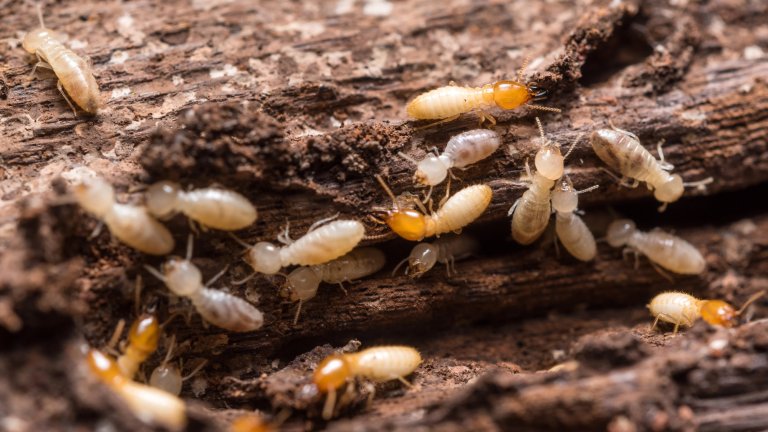
Zombie worms have gone missing

Biologists investigate the case of the lost ‘bone devourers’ that feed on whale carcasses.

A close-up photograph of a young girl's face peering out from under a large, white duvet or blanket. She is lying in bed, holding the blanket close to her chin, and has a frightened expression. The background is dark, emphasizing the light on her face.
Ask Us Anything

Why you ‘see’ things in the dark, according to an ophthalmologist

Science explains why we see flickers of light and patterns in the darkness.

Screenshot of ROV video showing icefish nests on floor of Weddell Sea
Ocean

The quest to find Shackleton’s ship uncovered an Antarctic mystery

Beneath the ice, an underwater robot discovered something far stranger than the 'Endurance' shipwreck.

Dreo space heater heating a room
Smart Home

Dreo space heaters are on sale at Amazon just in time for the cold weather to roll in

If your feet are chilly or your nose feels dry, you're going to want to jump on these limited-time Amazon deals on Dreo heaters and humidifiers.

The best portable power stations in a row
Home

The best portable power stations for 2026, tested and reviewed

A portable power station can run all manner of devices and equipment, wherever you go.

A large planetary nebula. The nebula’s central star is hidden by a blotchy pinkish cloud of dust. A strong red light radiates from this area, illuminating the nearby dust. Two large loops extend diagonally away from the centre, formed of thin ridges of molecular gas, here coloured blue. They stretch out to the corners of the view. A huge number of bright, whitish stars cover the background, also easily visible through the thin dust layers.
Space Telescope

Red Spider Nebula glows in ethereal new JWST image

Twinkle twinkle spidey star.

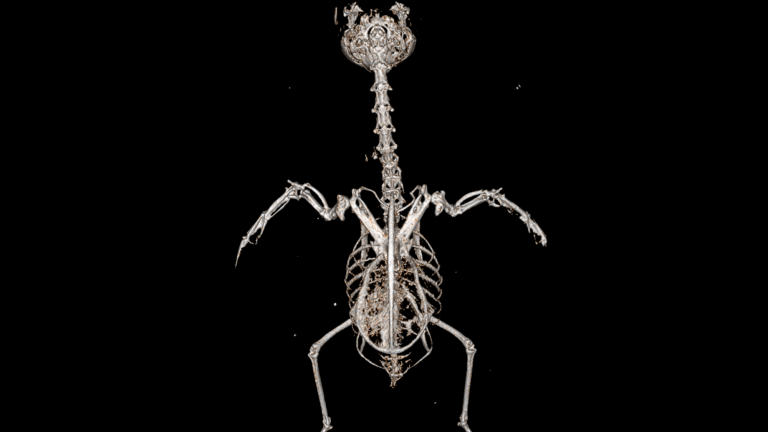
CT scan displaying German sword blade with engraved name on it
Science

Renaissance sword reveals a hidden engraving

CT scans peel back the layers of a 16th century German degen.

Artist's recreation of ‘Epiatheracerium itjilik’ in its forested lake habitat, Devon Island, Early Miocene, 23 million years ago. The plants and animals shown, including a rodent, rabbit and the transitional seal ‘Puijila darwini,’ are all based on fossilized remains found at the site.
Wildlife

Rhinos once lived in Canada

A newly discovered species of Arctic rhino lived 23 million years ago.

Two close up shots of two tube-nosed bat species
Bats

Six new bat species discovered in the Philippines

The archipelago's total bat tally now stands at 85 different flying mammals.

The blue marked Queen of a Carniolan honey bee (Apis mellifera carnica) colony is searching for a place to insert an egg.
Bees

Queen bees are violently ousted if worker bees smell weakness

The hive rulers produce a pheromone that helps keep workers loyal. What happens when it's gone?

A colorful vintage poster illustration featuring a large Uncle Sam figure in a stars and stripes outfit, leaning down to adjust the hands of a massive clock with Roman numerals, which has a red center. Below him, a smaller man is running frantically with a small clock showing the time is one hour earlier. The text at the top reads "VICTORY! CONGRESS PASSES DAYLIGHT SAVING BILL." The style is reminiscent of early 20th-century American political or war-time posters.
Science

The U.S. tried permanent daylight saving time—and hated it

In 1974, America set its clocks forward for good in the name of energy savings.

Scan of hieroglyphs on Mayan Foundation Rock
Archaeology

Mystery Mayan ruler was no king

Ix Ch’ak Ch’een was one of at least four women who oversaw the city of Cobá.