
We may earn revenue from the products available on this page and participate in affiliate programs. Learn more ›
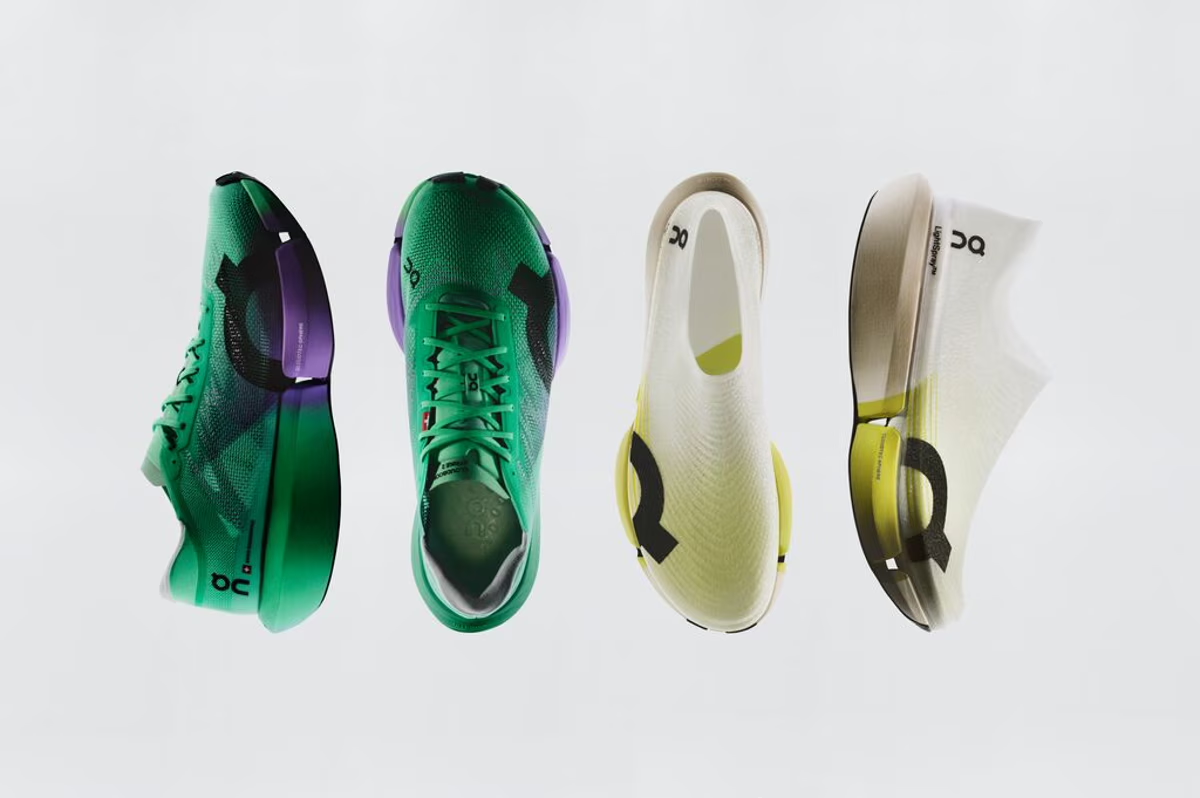
Marathon super-shoes have spent five years in a foam arms race, each brand stacking a taller, lighter, springier midsole under its racers and hoping it still has life left at mile 23. On’s answer for 2026 rethinks the foam and, on its top model, skips the part of shoemaking most brands still do by hand. The Cloudboom Strike 2 ($250) and LightSpray Cloudboom Strike 2 ($310) both ride a new cushioning geometry the company calls CloudTec Sphere, and both go on sale July 30.
The pricier shoe’s headline trick is its upper. Rather than cutting and stitching panels of mesh, a robot sprays about 1.5 kilometers of filament, leaving a one-piece, laceless shell that On compares to a second skin. It’s the same LightSpray process On first sent down the road on the CloudMonster 3 Hyper, now stretched over a racing platform. On says the result, measured in a University of Cape Town study, is a 1.6 percent gain in running economy against leading benchmarks, and that six of its athletes have already set personal bests in the shoe, including Hellen Obiri taking 1 minute 48 seconds off her London time.
What CloudTec Sphere changes underfoot
CloudTec Sphere is the structural change that spans both shoes. On builds engineered channels into the geometry, hollows that the company says both absorb impact and return it, and the pitch aims squarely at the last few miles of a marathon, when your stride breaks down and a shoe that still feels fresh can claw back seconds. On calls that a fresh-leg advantage. Whether it holds up over 26.2 miles is the kind of thing only a full test settles, but the engineering target is clear.
Underneath sits a new version of On’s Helion HF foam, which the company says is 15 percent lighter than the foam in the first Cloudboom Strike. Sandwiched inside it is a curved carbon Speedboard, On’s stiff propulsion plate, which the company says is lighter and stiffer than the previous one and handles the job of rolling you forward through each stride. Both shoes keep a 5mm heel-to-toe drop, low enough to keep a racer up on the forefoot where the foam and plate do their work.
The upper a robot sprays in minutes
The LightSpray upper is the reason the flagship weighs 158 grams. A conventional running-shoe upper can take roughly 200 steps across multiple factories to cut, layer, and stitch. LightSpray replaces all of that with a single automated pass: a robot arm winds about 1.5 kilometers of filament around the last, building a one-piece shell with no seams and no laces. Fewer seams means fewer spots to rub a blister loose at speed, and no laces means nothing to retie at the start line.
On has been scaling the process since it debuted the technology in 2024. It opened the first LightSpray production facility in Zurich in 2025 and a second near Busan, South Korea, in April 2026. The payoff shows up in race results On is happy to cite: Yeman Crippa shaved 48 seconds off his time for a tactical win in Paris, and Joe Klecker ran 4 minutes and 41 seconds faster in Boston, both racing in the LightSpray Cloudboom Strike 2.

Price, and where the two land
At $250, the standard Cloudboom Strike 2 costs less than the $280 original, and it lands right on top of the Adidas Adizero Adios Pro 4 ($250) while undercutting the Nike Alphafly 3 ($285). For a carbon-plated racer from a brand that wants to be mentioned next to those two, matching them on price is the move.
The LightSpray Cloudboom Strike 2 runs $310, which is $20 below the first LightSpray model’s $330 and still the priciest shoe here. That money buys the robot-sprayed upper, the lightest weight in the line, and a pair of On’s Elite Run Sock High Hyper socks in the box. It’s the closest thing On sells to what its sponsored marathoners are racing in.
When you can buy them
Both shoes go on sale July 30 at on.com and select premium retailers, in EU sizes 36 through 49. Each one keeps the 5mm drop and the new CloudTec Sphere midsole, so the difference between them comes down to the upper, the weight, and about 60 dollars.
The standard Cloudboom Strike 2 is the one most runners will lace up. The LightSpray version is the lighter, laceless halo model. Here’s how they compare.
