
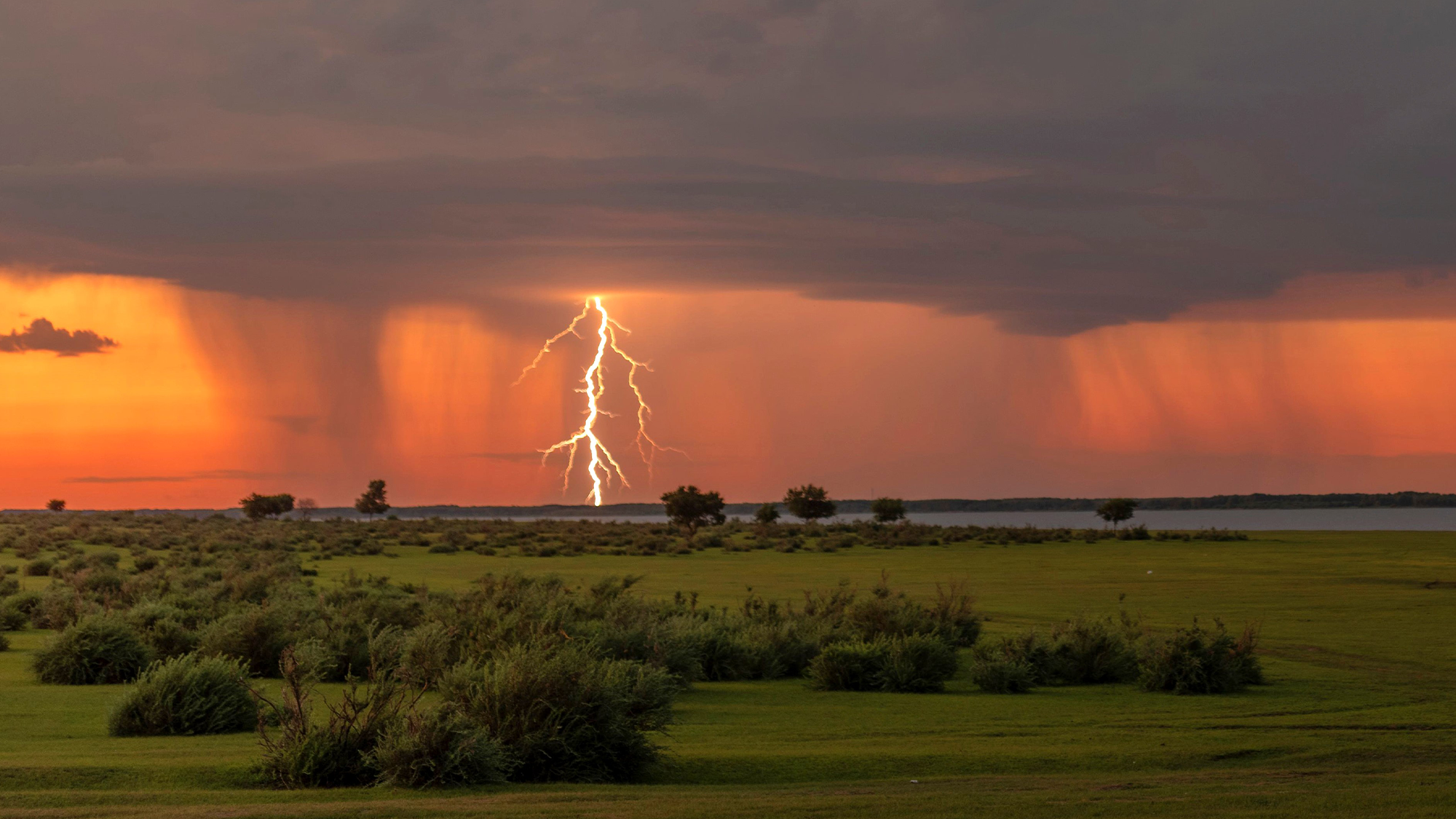
Thunderstorm safety often comes down to some common sense. Do not go outside or stand under a tree during a thunderstorm. Seek shelter instead of crouching down in a field if there are nearby strikes. And follow the life saving 30/30 rule: Wait 30 minutes after hearing the last rumble of thunder before going outside.
But storms are incredibly dynamic forces of nature, and sometimes it is possible to hear loud crashes of thunder or see lightning flash when it is completely sunny outside. Though unusual, these seemingly rogue strikes and their accompanying thunder can spoil summer fun at best and be dangerous at worst.
“Lightning is known to travel up to 30 miles away from a storm,” meteorologist Cyrena Arnold tells Popular Science. “When this happens it’s usually when a lot of lightning comes out the back [of the storm].”
‘Bolts from the blue’
Where there’s lightning, a crash of thunder isn’t far behind. If a storm has passed and the sun has returned, it can make lightning flashes difficult or even impossible to see. Meteorologists call these lightning strikes a “bolt from the blue.”
According to the National Weather Service, most of these types of bolts are a type of cloud to ground lightning, which strike downward from the storm cloud to the ground below. Cloud to ground lightning can happen day or night and is a fairly common type of lightning. However, “bolts from the blue” are a much less common sub-type of cloud to ground lightning. They typically come out of the back of a thunderstorm cloud, instead of the front like most lightning bolts. Lightning flashes like these are particularly dangerous, since it looks like they are coming out of a clear sky.
Lightning travels at the ridiculously fast speed of light (about 186,000 miles per second), while thunder travels at the speed of sound (about 11,000 feet per second). The way that light and sound move in the atmosphere affects what we can (and cannot) see or hear during a storm.
Thunder and lightning are both two parts of the same event in the atmosphere. The lightning itself is a discharge of electricity within a cloud. The lightning heats the air, causing it to rapidly expand. The expansion creates a shock wave that eventually create’s thunder’s signature booming sound. Essentially, thunder could not happen without the conditions in the cloud created by lightning.
According to Arnold, it helps to think about thunder like throwing a stone into a perfectly still pond. At first, the initial ripple is very close to where the stone was plopped in. That first ripple will continue to expand until it eventually goes away.
Sound waves in the atmosphere move similarly. Thunder and lightning strikes heat up the air, creating large ripples of sound that spread out. As the ripples travel through the atmosphere, they dissipate and get softer the same way that those in water do. So, if you are located in close proximity to a thunderstorm, it’s like being right where a stone was dropped into a pond.
“This is why thunder, when it’s very close to you, bangs and cracks and is ridiculously loud, “ says Arnold. ”
The monster megaflash of 2017
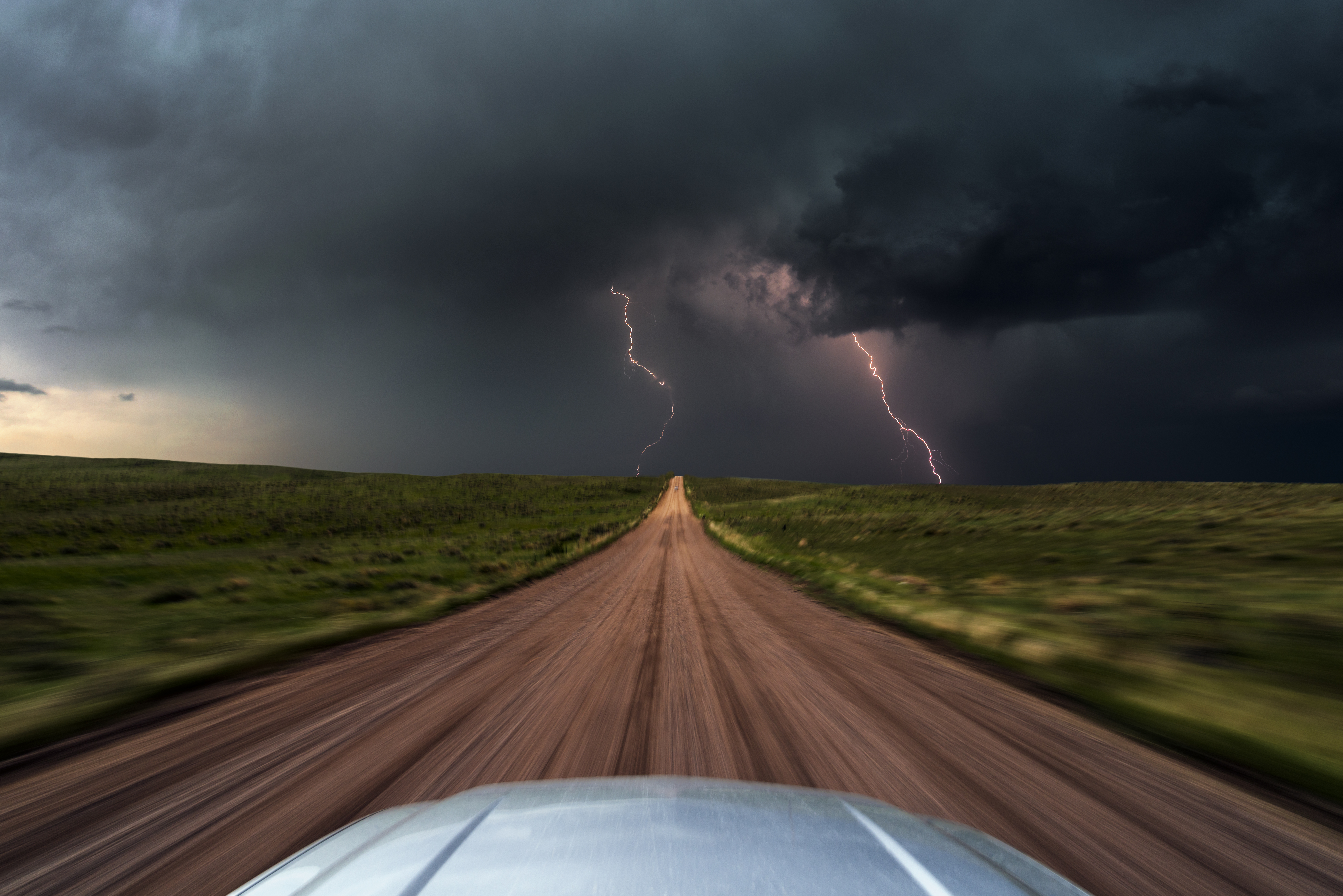
Lightning and thunder popping up at an unusual point is also related to one of meteorology’s most exciting new discoveries: the megaflash. In October 2017, a single flash of lightning streaked across the Great Plains for 515 miles. By comparison, the majority of lightning flashes reach less than 10 miles. To be considered a megaflash like this one, a lightning bolt must reach 60 miles (or 100 kilometers, to be exact). In July 2025, the World Meteorological Organization (WMO) certified that the October 2017 megaflash is the longest single lightning flash ever recorded in the United States.
As of now, Arnold and other meteorologists believe that megaflashes like this record-breaker occur due to how the storm is built. Those same storm structures could influence bolts out of the blue.
“You’re looking at a storm that has a very strong squall line, or a very strong storm on the front,” says Arnold. “But behind it, it has what I call rubbish.”
The “rubbish” behind the initial storm is in the form of stratiform clouds (which indicate instability) and a light drizzle. The calmer backside of the storm can still have an imbalance of electrons from friction in the atmosphere, but it is not enough to make a lightning strike happen and balance things out again. These parts of the storm can be inactive for over 30 minutes, Arnold says.
Typically, you won’t see a single lightning strike for a long time, making it easy to think it’s safe to go back outside. But it’s not.
“What happens in megaflashes, is you have a lightning bolt that begins in the front part of that storm, where it’s more severe. It then goes back into that stratiform and sets off a domino effect,” explains Arnold. “It sets off the charge for the whole stratiform [cloud] section, and it discharges all at once.”
That resulting discharge is the megaflash, which can result in numerous lightning flashes all at once. The 2017 megaflash set off 116 individual strikes within that 515-mile-long flash.
‘Time is always on our side’
Lightning kills roughly 20 to 30 people and injures hundreds more every year in the United States. A total of 12 fatalities were reported to the National Lighting Safety Council in 2024. As this year’s storm season continues, there are a number of ways to keep safe.
First and foremost, it’s always better to wait until a storm has passed before going outside.
“Time is always on our side,” says Arnold. “If you’re nervous and questioning if you should go back out again, just don’t. Find an indoor project to do, go grab some lunch, do something that’ll pass the time. The risk may be low, but if something were to happen, the results are really dangerous.”
[ Related: Actually, it’s not safe to crouch during a lightning storm. ]
To follow the standard 30/30 rule for lightning, count the amount of time that passes between seeing lightning and hearing thunder. If it is 30 seconds or less, the thunderstorm is close enough to be dangerous and you should seek shelter. Then wait at least 30 minutes after the last rumble of thunder and lightning flash before leaving. If you can’t see any lightning, just start counting down from 30 minutes after you hear the last thunder rumble as a good back-up rule.
Also, listen to some of nature’s signals if you do go back outside. If your hair starts to stand up, showing signs of static electricity, or you feel a tingling sensation on your skin, it is a sign that an electrical charge is building and you should seek shelter immediately.
There are also a number of apps that you can use to monitor lightning strikes in your area, including MyRadar, WeatherFront (currently only available on iOS platforms), and a snarky app called Carrot.
This story is part of Popular Science’s Ask Us Anything series, where we answer your most outlandish, mind-burning questions, from the ordinary to the off-the-wall. Have something you’ve always wanted to know? Ask us.
