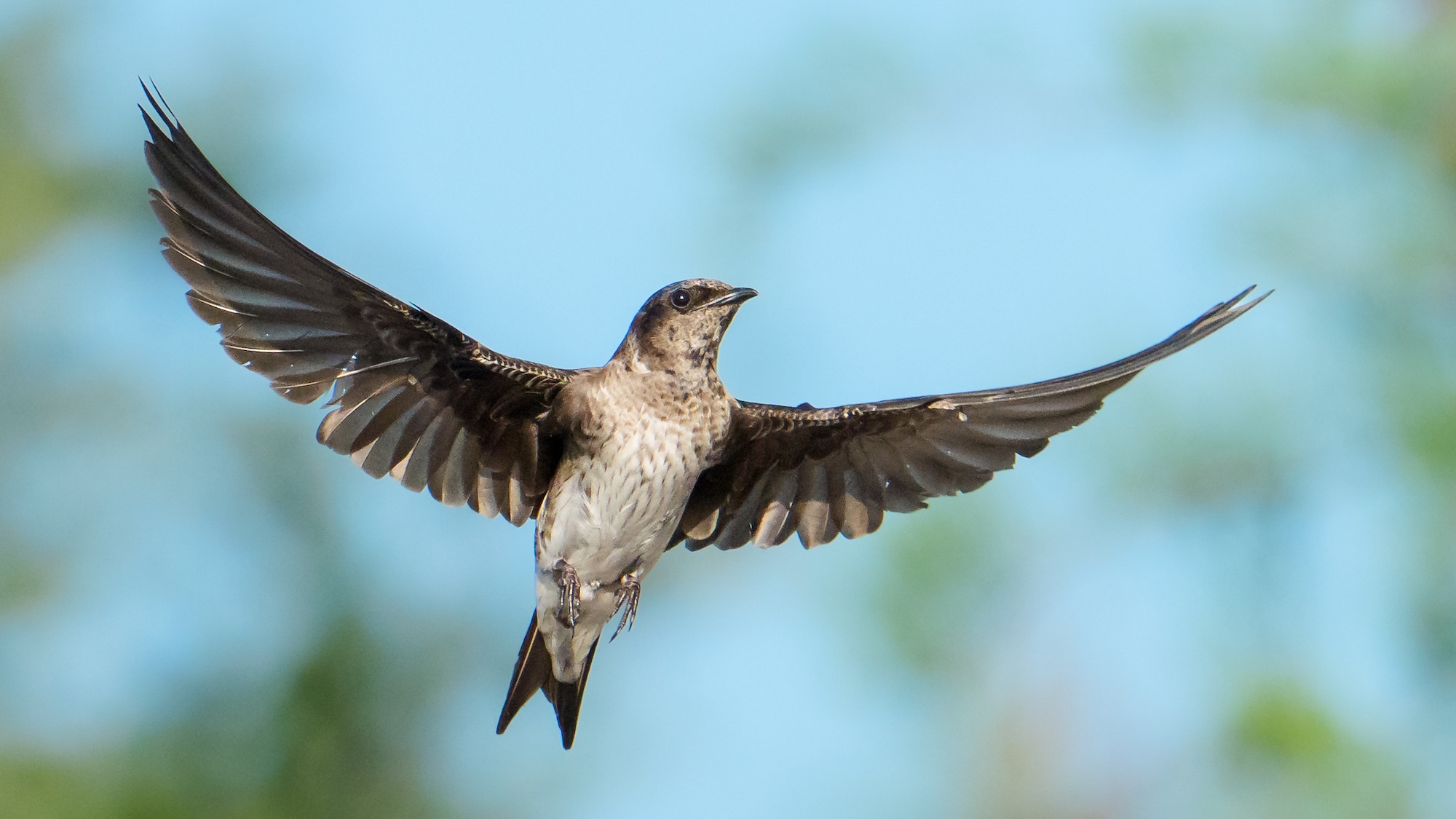
Tonight, there will be more birds in the sky than there are people in the United States. According to Cornell Lab’s BirdCast, an estimated 373 million winged migrators will continue their journey north during the early evening hours of May 4th. Most of the activity will be visible in the South and along the East Coast, but wildlife experts are politely reminding everyone hoping to catch a glimpse of the traveling birds to make sure you’re not blinding them from below.
Birds migrate for two primary reasons: food and nests. In the Northern Hemisphere, this typically means traveling north during warmer months when insects and budding plant life are more abundant. Colder seasons prompt a return south to avoid freezing temperatures, although many birds do just fine in snowy conditions.
But how do the ornithologists behind BirdCast calculate how many birds are in the air on any given night? The modeling is largely based on data collected by both the National Centers for Environmental Prediction (NCEP), as well as 23 years of atmospheric monitoring information using weather surveillance radar. Studying potential links between various weather conditions and migration observations allows researchers to generate computer models for any given day’s forecast.
No matter the total number of birds or their flight direction, migrators must now navigate a far brighter night sky than ever before. Light pollution isn’t only a problem for stargazers and your sleep cycle. All of the ambient, artificial glow from towns and traffic throws countless animals off their biological rhythm. This is true for millions of migratory birds, including species like Allen’s hummingbird (Selasphorus sasin) and the golden-winged warbler (Vermivora chrysoptera). Skyglow can easily disorient and confuse traveling birds, throwing them off course or exhausting them. The results are often fatal, with birds unexpectedly flying into buildings or never making it to their intended destination.
Projects like Audubon’s Lights Out Program encourage businesses and homeowners to reduce the wattage during the evenings, especially during the spring and fall migratory seasons.
No matter where you live or how many birds you count tonight, do them a favor and dim those lamps.