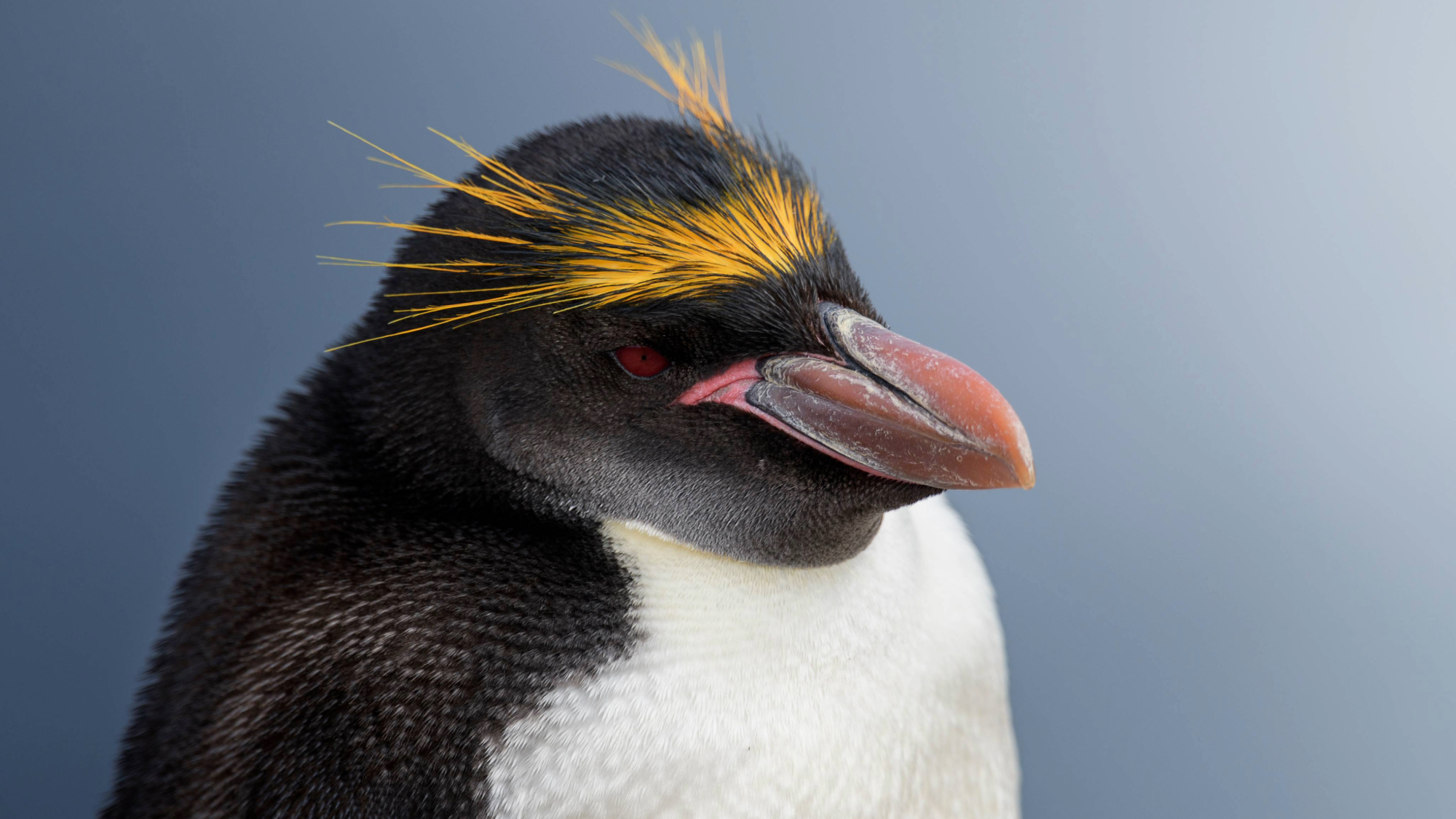
Some pretty tough muscles lay beneath the macaroni penguin’s (Eudyptes chrysolophus) somewhat goofy exterior. These small penguins from the islands and waters of the South Atlantic Ocean are known for their distinctive bright-yellow plumes. They are also built for powerful and efficient movement for both walking and swimming, according to a study recently published in the journal The Anatomical Record.
Since penguins don’t fly through the air like most birds, they’ve evolved to fly through the water instead. For macaroni penguins, their key wing muscles look different than in flying birds. For example, a muscle responsible for lifting the wing called the supracoracoideus is much larger in penguins. A bigger supracoracoideus allows them to generate more power during the upstroke and downstroke of their flipper motion, which appears to be a crucial adaptation for swimming through dense water. This special configuration of shoulder muscles also gives penguins a stroke akin to underwater flying that has a stronger backwards component. This backwards motion improves their propulsion through water, which is over 700 times more dense than air and offers more resistance.
The study also solved a penguin mystery that has puzzled scientists for over 100 years. A distinct muscle in the macaroni penguin’s hindlimb appears to help the penguin’s legs stay tucked close together. Just like with dolphins, whales, and even humans, that streamlined posture makes the penguins more efficient swimmers, while also helping them maintain balance while standing up on two legs when on land. The team proposes that this new hindlimb muscle be called the adductor tibialis.
The penguin’s signature waddle may also come from this combination of leg position and specialized muscles that keep their limbs close to their body. While it looks clumsy to us, that walk is an energy-efficient way to get around on land and in the water.
According to the team, solving these anatomical puzzles could help penguins in zoos and wildlife rehabilitation settings. Understanding the penguin musculature could improve veterinary care, injury treatment, and rehabilitation strategies.