
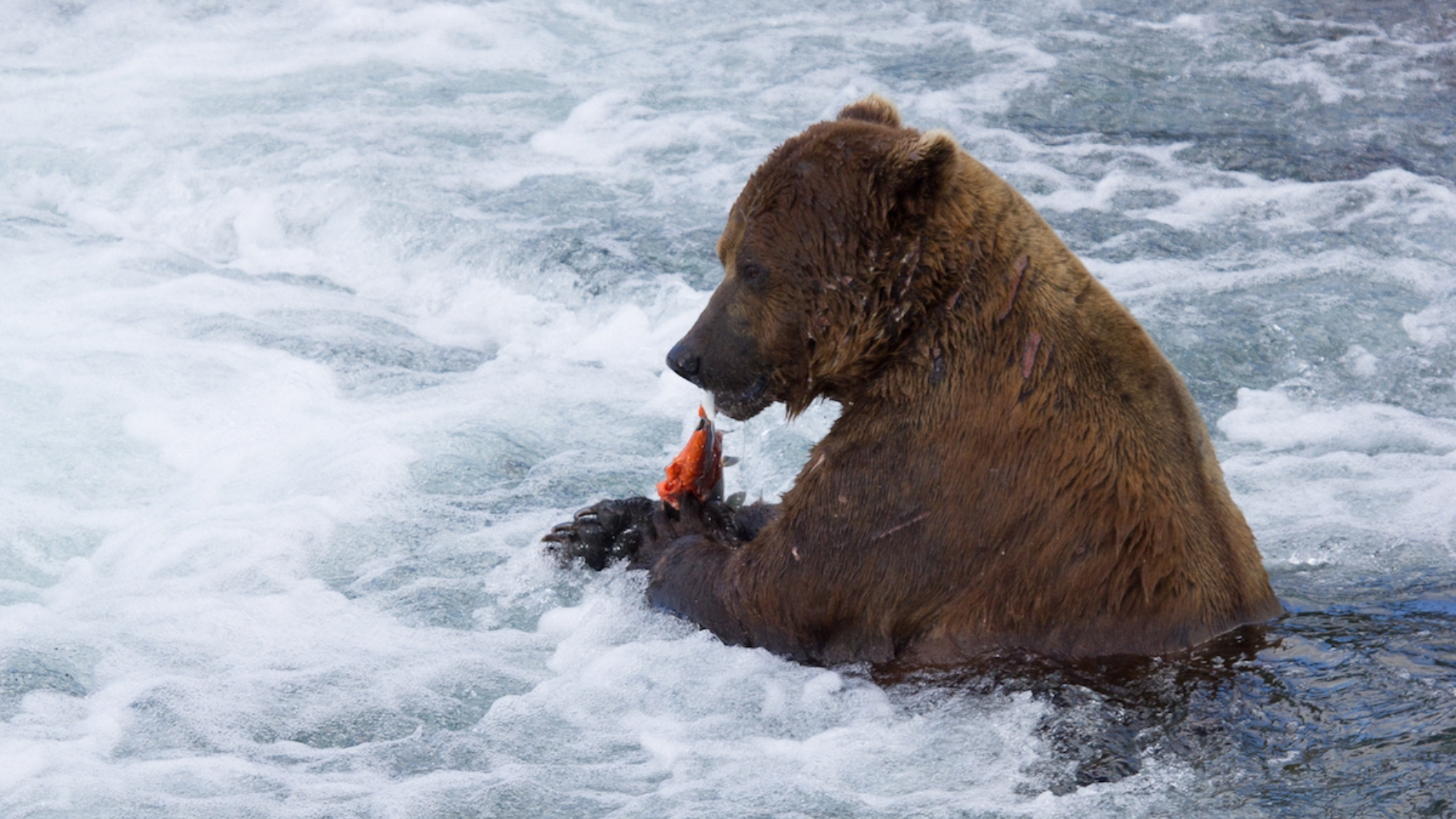
The king has returned. Maintenance workers at Katmai National Park in Alaska spotted 2025 Fat Bear Week champion Chunk. In a video shared by Katmai Conservancy, National Park Service (NPS) maintenance crews spotted the roughly large adult male brown bear (Ursus arctos) walking along on a patch of ice in the park.
Bears are not seen as frequently during the spring, so this early glimpse of Chunk is exciting. Katmai is a home and hunting ground for some of the largest brown bears in the world. They bulk up every summer on the salmon running up the Brooks River. Fatter bears are more likely to survive hibernation and the long winter ahead. To celebrate and raise funds and awareness, Katmai hosts Fat Bear Week, an annual tournament every fall where nature enthusiasts can vote online for Katmai’s fattest bear. Chunk was crowned last year’s winner, receiving 96,350 votes. The runner up— Bear 856—received 63,725 votes.
Chunk—aka Bear 32—is known for his dominance and size, but also narrow-set eyes, dark fur, a prominent brow ridge, and a distinctive scar across his muzzle. He weighed roughly 1,200 pounds after gorging on salmon last summer.
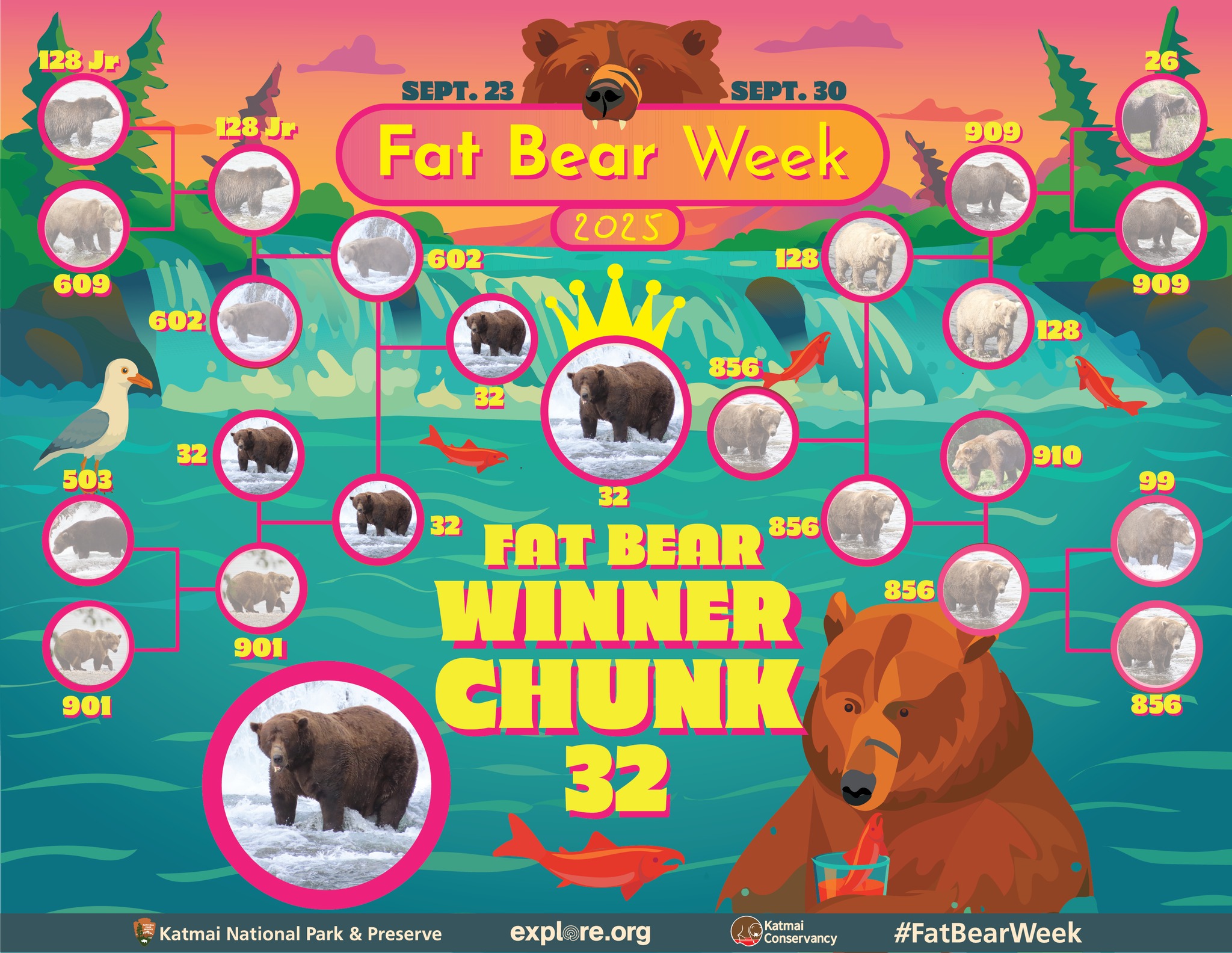
Bears like Chunk return to Brooks River every June when the salmon run begins. Last year, he was spotted with a freshly broken jaw. As it was also mating season, Chunk was likely injured while fighting with another bear for a mate. Even with his injury, Chunk managed to catch the salmon swimming in the river.
“Chunk proved immediately adaptable,” explore.org writes. “He adjusted his behavior to avoid most direct confrontations with other large male bears. He quickly learned to eat salmon without the full use of his mandible. Additionally, his large body size still gave him easy access to many productive fishing spots. He remains one of the largest bears at Brooks River.”
Mating season generally begins in May, with peak mating in June. The males will sometimes pursue the females for up to one week before mating even occurs. The salmon run in Brooks River begins in late June, and the bears will spend the summer gorging on salmon. The largest number of bears are typically seen during the middle of July.
