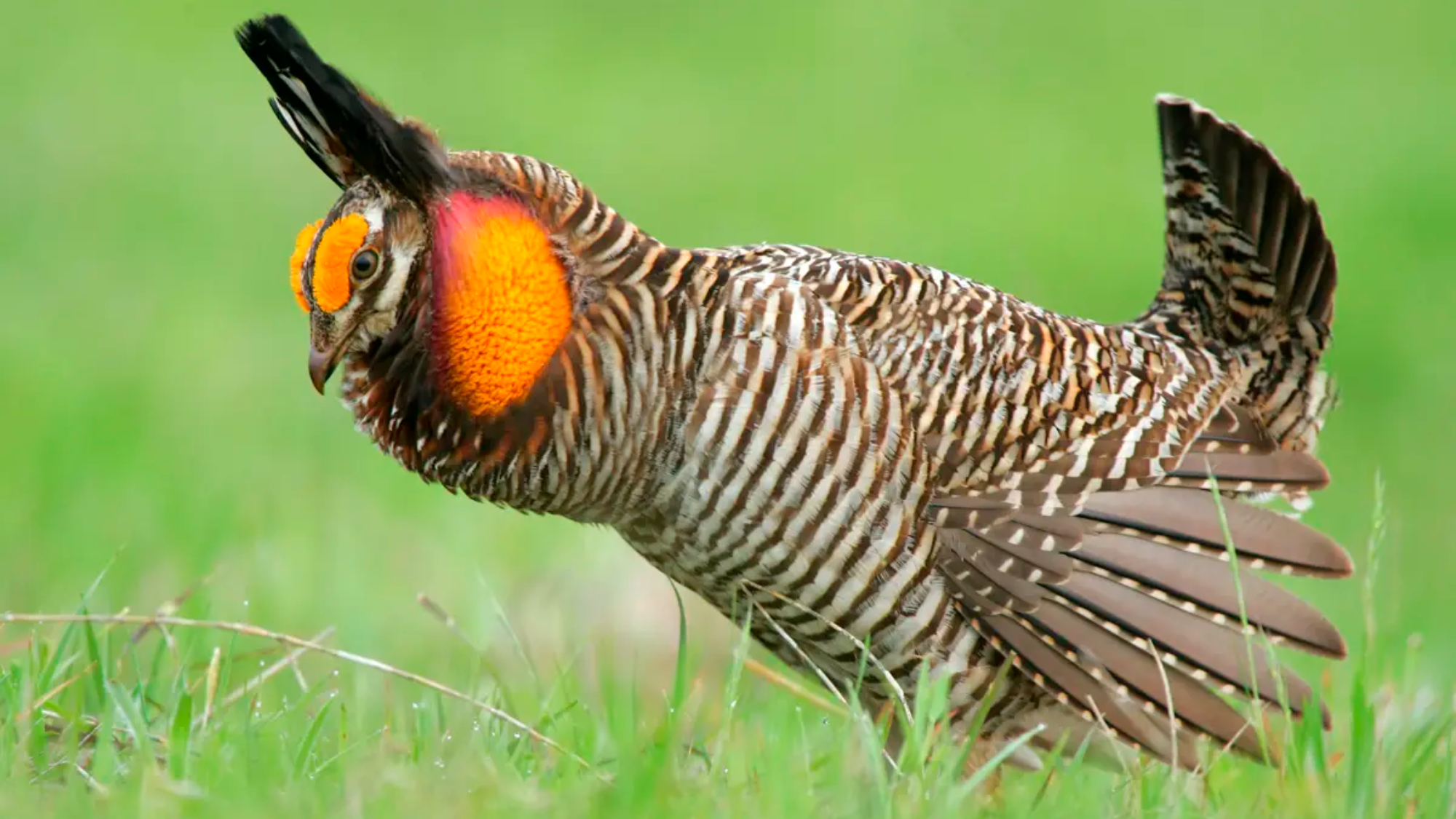
An exclusive dance party is raging in the coastal marshes along southern Texas—and it’s coming to an end. However, to score an invite to this event, you have to be an Attwater’s prairie chicken (Tympanuchus cupido attwateri). From February through May, the males of this colorful bird species do a quick-stomping dance and make a low booming sound to attract a mate.

The Attwater's Prairie Chicken Dance
Beginning in late January and into February, male prairie-chickens begin to gather in low grass to start this elaborate courtship display. These “booming grounds” will be the male’s stage for the next few months to show off for the females. Booming grounds are typically found in naturally occurring short grass flats or sometimes artificially maintained areas like dirt roads.
The real fun happens from February to May. Every morning, male prairie-chickens grab their spot on a booming ground and dance for hours. They drop their heads to inflate the two large orange sacks on the sides of their face to make a low booming sound. The chickens stomp with swift feet like an Irish step dancer, keeping their tails erect and wings drooped. They will even jump and charge at each other while dancing—pretty much whatever it takes to attract a mate. Unlike the club scene, this ritual is more of an older male’s game. Most of the females only choose two to three of the older and more experienced males, leaving most of the younger males out.

Attwater's Prairie Chicken "Booming" Display
Once a female chooses a mate and breeds with him, she will leave the booming ground. Prairie-chickens build their nests in shallow depressions on the open prairie, typically about one mile away from the booming ground. Hens lay eight to 13 eggs that will hatch roughly 26 days later—if she’s lucky. Only about 30 percent of all nests evade their many predators, including skunks, opossums, raccoons, coyotes, snakes, and even domestic dogs and cats.
This mating dance is more than just an annual ritual for the birds. Attwater’s prairie chickens are among the rarest birds in the Lonestar State and are highly-endangered. According to Nature Conservancy working lands program director Kirk Feuerbacher, 98 percent of their habitat in coastal marshes has been redeveloped or altered.
Roughly 200 exist in the wild, down from over 400 in 1993. They live in two isolated colonies in Texas—the Attwater Prairie Chicken National Wildlife Refuge in Colorado County, and a parcel of privately owned ranch land. This important ranch land is part of the Nature Conservancy’s Refugio-Goliad Prairie Project, a protected 660,000 acres along the Gulf Coast between Houston and Corpus Christi. According to Feuerbacher, the population here has been increasing about 20 percent every year. In 2025, the Nature Conservancy counted 102 males on the booming grounds. This year, the team counted 138 males.