Popular Science. Demystifying the worlds of science and technology since 1872.

Podcasts

Latest Articles

This image features data from Webb’s NIRCam (Near Infrared Camera) and MIRI (Mid Infrared Instrument) to capture the most detailed mid-infrared view yet of the field that hosts the highly evolved star IRS 3, which is located just 0.55 light-years from Sagittarius A*, the Milky Way galaxy's central supermassive black hole. An international team of astronomers have discovered that dust and water can form and survive surprisingly close to this supermassive black hole. The observations reveal that the evolved star IRS 3 continues to enrich its surroundings with newly formed material despite the intense radiation environment around Sagittarius A*. The data in this image were taken with Webb programmes #1939 (J. Lu), #3571 (F. Yusef-Zadeh), #2491 (N. B. Sabha), and #2075 (C. Chan). [Image description: A dense star field fills the entire image, with countless stars scattered across a backdrop of glowing clouds in shades of red, orange, pink, white, and blue. At the centre, a brilliant concentration of stars creates a bright, almost white core surrounded by intricate filaments and wisps of illuminated gas and dust that radiate outward. Dark, irregular patches of opaque dust interrupt the glowing clouds, particularly toward the left side of the image, where they appear as silhouetted shapes against the brighter background. The surrounding stellar population varies in brightness and colour, with cool blue stars and warmer orange and red stars distributed throughout the scene.]
Space Telescope

Our galaxy’s supermassive black hole actually doesn’t devour everything

Cosmic dust and water is withstanding radiation near the Milky Way galaxy’s black hole, Saggitarius A*.

The first inter-city train from Beijing to north China's Tianjin departs from Beijing South Railway Station in Beijing, capital of China, Aug. 1, 2008. China, home to the world's largest high-speed rail network, has expanded its total operational mileage beyond 50,000 kilometers with the launch of a new high-speed line.A "Fuxing" bullet train departed Friday morning from Yan'an, a sacred revolutionary heartland in northwest China's Shaanxi Province, for the provincial capital Xi'an, inaugurating the new route. (Photo by Gong Lei/Xinhua via Getty Images)
Engineering

China’s experimental bullet train hits 497 mph in 5 seconds

The maglev test vehicle is nearing commercial aircraft speeds.

A man with dark hair, white shirt, and blue shorts wearing red boxing gloves kicks a pad another asian man is holding in a garage workout space.
Fitness & Exercise

Do rage workouts really help to blow off steam?

Research suggests that using exercise as an outlet for anger and frustration may be counterproductive.

a hermit crab grabbing a plant that looks like a mushroom
Wildlife

Hermit crab poop spreads a parasitic plant’s seeds

The crustaceans are both external and internal seed dispersers.

The canals and raised fields of La Mojana during wet season.
Land

Ancient South American families built massive waterways by themselves

As few as 800 volunteers could finish a project—all without centralized government.

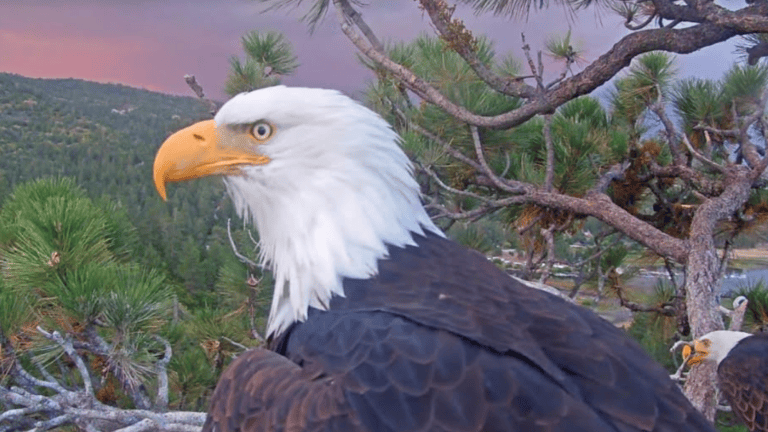
two eagles on a nest
Birds

Jackie the bald eagle dead at 14

‘Soar free, Jackie.’

YELLOWSTONE NATIONAL PARK, WYOMING -AUGUST 7: Visitors walk the boardwalk as White Dome geyser erupts. The 12-foot-high geyserite cone is one of the largest in the park and has eruptions as tall as 30 feet on August 7, 2024 in Yellowstone National Park, Wyoming. (Photo by Jonathan Newton/Getty Images)
Land

How Yellowstone builds boardwalks beside piping hot thermal pools

Thermal cameras and a lot of planning.

a small brown rodent standing on dirt
Endangered Species

The cute, tiny Texas kangaroo rat needs help

Concerned ranchers and conservationists team up to help save the small, hopping rodent.

two lizards with brown with yellow-green coloring sitting on a branch
Wildlife

New lizard named after colorful ‘House of the Dragon’ character

It can’t really breathe fire—we think.

Two people piloting a cardboard boat designed to look like a red biplane during the Cardboard Boat Regatta in New Richmond, Ohio
Vehicles

Ohio’s Cardboard Boat Museum is a tribute to improbable homemade vessels

Some win the ‘Titanic Award’ for best sinking. Others continue to compete for 16 years.

four dogs with black and white fur sitting on grass in front of bushes
Dogs

Dogs can tell if you’re angry, scared, or sad

Our canine companions may really understand what we’re going through, new study suggests.

Saumos (33), July 24, 2026: Fire in the Temple and Saumos area of Gironde; the smoke cloud creates an apocalyptic atmosphere at night in broad daylight above the forest.
Climate Change

Europe’s wildfires have raised the danger posed by unexploded WWII bombs

At least 75 explosives were recovered from the scorched earth in France.

Popular Science Cover Art Store

Own a piece of science history.

Browse all covers

Popular Science has been demystifying the worlds of science and technology since 1872. We explain the inner workings of the phone in your pocket, explore world-changing innovations, and examine everything from the marvels of deep space to the secret lives of staples like bread. We deliver an engaging, approachable, and inclusive look at emerging technologies and scientific advances.
Daily, Popular Science unpacks the science behind the top current new stories, dissects the latest technology and digital trends, and helps readers live smarter, safer, and happier through clever DIY projects.

Meet the team

Our writers and editors