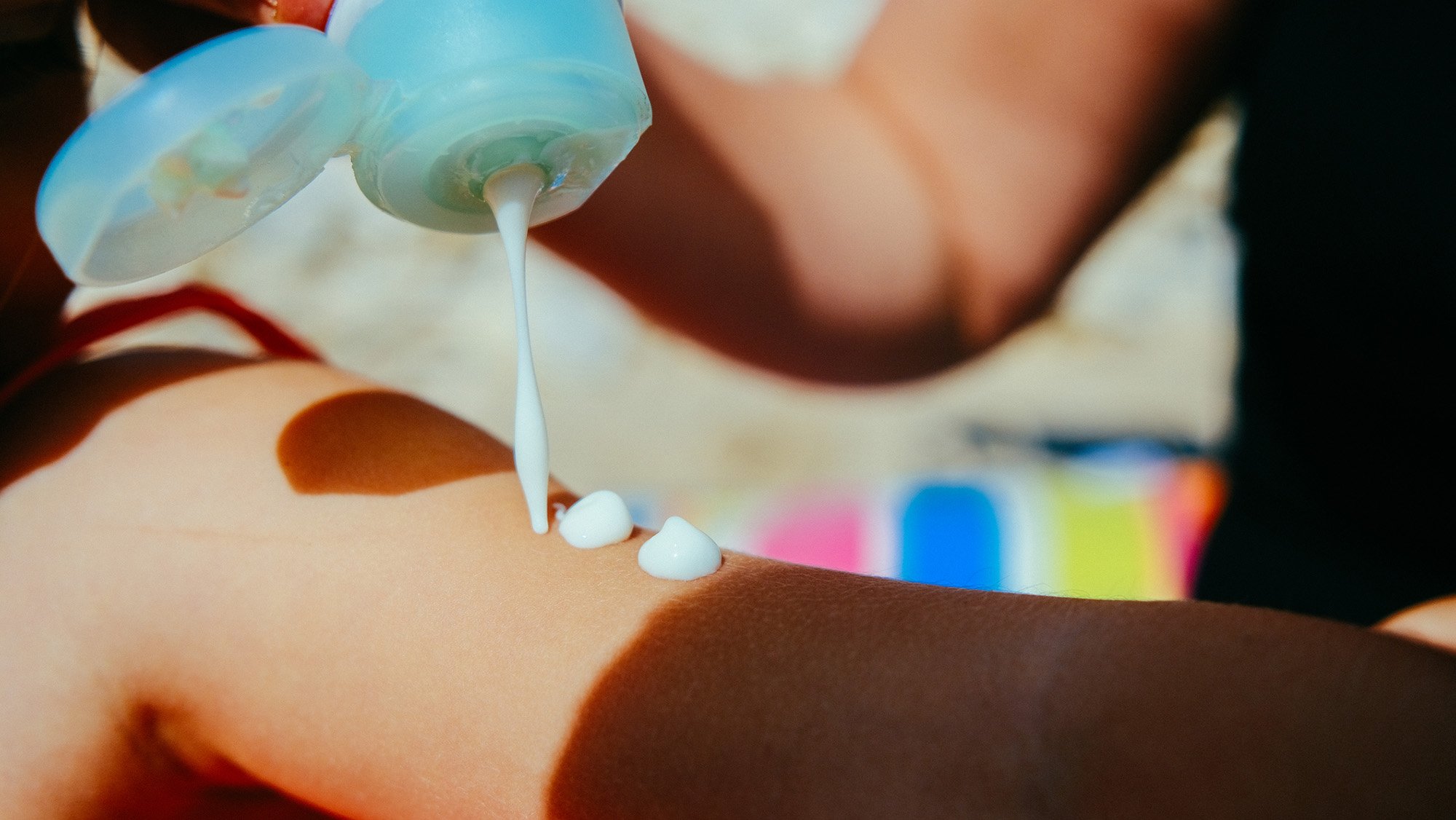
Do you really need to reapply sunscreen every two hours? Is chemical sunscreen bad for you? If it’s cloudy out, do you still need to wear sunscreen? There is plenty of misinformation about sunscreen out there, and it can be really tricky to parse out what’s true from what’s a flatout lie. That’s why in our most recent episode of Popular Science’s Ask Us Anything podcast, we dive deep into the most common sunscreen myths. Turns out, I’ve been thinking about spf completely wrong.
Ask Us Anything answers your most outlandish, mind-burning questions—from the everyday things you’ve always wondered to the bizarre things you never thought to ask. So, yes, there’s a reason most of us are right handed and no, dinosaurs have never actually spit venom. If you have a question for us, send us a note. Nothing is too silly or simple.
This episode is based on several Popular Science articles, including: “Do I really need to wear sunscreen every day? We asked dermatologists.,” “Mineral vs. chemical sunscreen: What’s best for protecting your skin?,” and “What exactly is the UV Index? A dermatologist explains.”
Subscribe to Ask Us Anything
Listen and follow Ask Us Anything on your favorite podcast platform:
Spotify | Apple Podcasts | YouTube | Or wherever you get your podcasts.
Full Episode Transcript
Sarah Durn: Quick: True or false?
You only need sunscreen if it’s sunny. Higher SPF means you can stay outside all day. Chemical sunscreen is dangerous. Mineral sunscreen works better. On cloudy days, you don’t need to wear any sunscreen.
If you answered true to any of those, congratulations, you’ve fallen for one of the most common myths about sunscreen.
Welcome to Ask Us Anything from the editors of Popular Science, where we answer your questions about our weird world, from “Why do parrots talk?” to “Why are airplane seats so tiny?” No question is too offbeat or banal.
I’m Sarah Durn, an editor at Popular Science.
Laura Baisas: And hello, I’m Laura Baisis, PopSci‘s news editor.
SD: And this week, we’re wondering about sunscreen, specifically, what are the most common sunscreen myths—something, Laura, you’re kind of an expert on.
LB: Guilty as charged. Big sunscreen enthusiast over here. Not a dermatologist, did not go to med school, but yes, sunscreen enthusiast.
SD: Yes. Okay, so I feel like sunscreen has become weirdly controversial.
Laura Baisas: It really has, and it’s absolutely unfortunate. Somewhere along the way, protecting yourself from skin cancer turned into an internet debate.
SD: Ugh. Yeah, people argue about mineral versus chemical sunscreen, whether sunscreen causes cancer, whether you need it indoors, whether SPF 100 means you can bake on the beach for eight hours.
LB: And spoiler alert, like a lot of things on the internet, the takes are not great.
SD: Surprise, surprise. Today we’re separating sunscreen fact from sunscreen fiction.
We’ll bust some of the biggest myths, explain how sunscreen actually works, and answer a question that before prepping for this episode I had never stopped to ask: Who even invented sunscreen?
LB: Turns out the answer involves ancient Egyptians…
SD: …Olive oil…
LB: …and World War II.
SD: Buckle up, we’ll get there.
Now, before we dig into it, we want to know what questions are you pondering? If there’s something you’ve always wondered, submit your question by clicking the “Ask Us” link at popsci.com/ask. Again, that’s popsci.com/ask, and click that “Ask Us” link.
LB: Please send us your questions.
SD: Send them! And with that, we’ll be right back after a quick break to tell you everything you’ve ever wanted to know about sunscreen
Welcome back! Laura, now before we get into all of these sunscreen myths, I kind of wanted to know: Who invented sunscreen?
LB: Hmm. Good question.
SD: Yes, because it feels like one of those things that just kind of has always existed.
LB: Right, always was in your medicine cabinet.
SD: Yeah.
LB: So like people didn’t just turn into red tomatoes in the sun without it, right?
SD: Well, not surprisingly, people have been trying to avoid sunburn for literally thousands of years, ’cause painful. Although sunscreen meant something very different in the past.
For instance, in ancient Egypt, people mixed together pastes made from things like rice bran, jasmine, and other plant ingredients, and rubbed the paste into their skin to make it appear lighter since, problematically, lighter skin was associated with wealth and royalty.
LB: So did they know that they were actually blocking the sun’s harmful UV rays with those pastes, or no?
SD: No, not at all. So sunscreen actually started more as a beauty product than a health product.
LB: Kinda wild when you think about it.
SD: I know. And the ancient Greeks, meanwhile, rubbed olive oil on their skin.
LB: But wait, doesn’t oil make you burn more easily?
Like I’m thinking, you know, 1960s, poolside tanning oil, you know, vintage polka dot bikinis, those types of things, no?
SD: Totally. But yeah, not olive oil. Modern testing suggests olive oil actually had an SPF of around eight, so not great by today’s standards.
LB: Better than nothing.
SD: Yes.
LB: Honestly I wasn’t expecting olive oil, as you can tell from my surprise, to be such a success story.
SD: Eh, success story. You know? Temper your expectations.
Unfortunately, you know, things did go downhill after that. Pretty early on Europeans became obsessed with skin whitening creams—again, problematic—many of which contained really, really harmful ingredients, also problematic, like lead and mercury.
LB: Not mercury. No, no, no, no, no, no, no.
SD: Yeah, yeah, and lead is no picnic either.
History has a fun habit of discovering something that’s shiny or mysterious and deciding, you know what? Let’s put it on our skin.
LB: What’s the worst that could happen? It’s just our skin.
SD: Right?
LB: Just our body’s biggest organ.
SD: No. Oh, yeah.
LB: So wait, does that mean that sunscreen’s history briefly also kind of became poison’s history?
SD: Yeah, unfortunately. Modern sunscreen didn’t really show up until around World War II. Soldiers were using this thick, red petroleum jelly
LB: Mm-hmm.
SD: They must’ve looked great, to prevent sunburn. And then after the war a pharmacist named Benjamin Green mixed it with things like cocoa butter, you know, to make it a little less gross. And eventually that became Coppertone.
LB: Truly one of my favorite smells in the whole world. So that, you know, petroleum jelly to Coppertone, kind of a big glow up.
SD: Oh, yeah, right. From wartime to beach vacations. And now sunscreen is a multi-billion dollar industry.
LB: Which is really great progress, but it has also created about a billion myths about when to use what kind of sunscreen, what UV rays even are, if it gives us cancer, things like that.
LB: Yeah, so let’s get into it, because there is a lot of misinformation out there. So sunscreen myth number one: If it’s cloudy, I can skip sunscreen, Laura?
SD: This is, uh, probably the easiest one. Basically, no, you still need it when it’s cloudy. Clouds block visible UV light much better than they do ultraviolet light.
About 95 percent of the UV radiation reaching Earth comes in the form of UVA rays, and those rays can come through clouds and even windows.
SD: Hold up, windows?
LB: Yeah, windows don’t fully protect the skin from UV rays. So this is why dermatologists recommend a broad spectrum sunscreen that blocks both UVA rays, those are the ones that cause tanning and aging, and UVB rays, which are more responsible for sunburn and many skin cancers.
SD: Okay, so are most sunscreens broad spectrum, or is this something we have to look out for?
LB: Most are, but to be absolutely sure, always check the labels to make sure it says broad spectrum, and ask a dermatologist. That’s personally my favorite route.
SD: Oh, man, I’m gonna need to, like, check mine immediately.
Okay, so myth number two: What about mineral sunscreen versus chemical sunscreen? I feel like the internet loves to debate which one is better, so which one wins out?
LB: Honestly, there is no winner. Both are great when used the right way.
SD: Mm.
LB: They just work a little bit differently. Mineral sunscreen uses zinc oxide or titanium dioxide to reflect UV rays.
So think about that classic goopy white sunscreen from every beach movie in the ’80s.
SD: Ah, yes, the completely white nose.
LB: Yeah, exactly. Luckily, modern zinc oxide and mineral, uh, sunscreens are much less ghostly, um, unless you’re me. Sometimes I admit I look like a ghost, but that’s a whole separate story.
SD: Me too.
LB: Chemical sunscreens, they work a little bit differently. Instead of reflecting the UV rays, they will absorb the light and release it as these, like, little puffs of heat. Unfortunately, you can’t see the little puffs, but that’s kind of what’s happening.
SD: Fascinating. So neither one is bad.
LB: Exactly. Sometimes people hear chemical and panic, but dermatologists are very clear on this. There is no evidence that sunscreen actually causes skin cancer, whether it’s mineral or chemical, and the evidence overwhelmingly says the opposite, that it can prevent cancer.
SD: So this next one is definitely something I’ve wondered about/kind of maybe still believe.
Myth number three: If I wear a higher SPF, am I set all day? Please, maybe?
LB: As someone who swims for long periods of time outside, I really, really wish this one was true, but it’s not. SPF is unfortunately not a timer. Whether it says SPF 30 or SPF 100, activities like sweating, swimming, touching your face all will slowly remove the sunscreen throughout the day.
One dermatologist I interviewed actually told me something I really love that kind of helps understand how that works. After about two hours, your sunscreen has basically just turned into a moisturizer. It’s not effective anymore.
SD: Okay. Bummer. Definitely don’t do that enough. Um, okay, myth number four: It’s not hot, so I don’t need sunscreen.
LB: This is a really common misconception, and it’s even gotten me in trouble before. You know, we’re really marketed sunscreen way more in the summer, but yeah, that hunch is right. Temperature itself has absolutely nothing to do with UV exposure. You could have a really chilly fall day with a surprisingly high UV index. You can even get burned skiing because all of that, you know, pristine white snow will reflect sunlight back onto your exposed face. So the thing to check is not temperature, it’s UV index.
SD: Not fun. Yeah, so this whole time my weather app and the UV index has been trying to help me.
LB: Exactly. It’s usually right there near temperature. Check the UV index. It’s basically a little forecast of how intense the sun’s ultraviolet radiation is gonna be on any given day.
SD: Okay. This is maybe silly, but what exactly is ultraviolet light?
LB: No silly questions on this podcast. Come on. You can basically think of sunlight as this giant rainbow of different kinds of energy.
SD: Huh.
LB: The light we can actually see is just, like, one tiny slice of that rainbow.
SD: Sure.
LB: Ultraviolet, or UV light, sits just beyond the violet end of that rainbow. It’s invisible to our eyes.
SD: Invisible, but definitely not harmless.
LB: Exactly. Definitely not harmless, and invisible to humans. Some animals can absolutely see in UV light, which is pretty cool
And yeah, they’re not harmless. UV rays can damage the DNA inside your skin cells, and that’s what leads to sunburn in the short term.
SD: Yikes.
LB: And over many years of exposure to UV rays and subsequent burning, your risk for skin cancer increases, along with signs of aging like wrinkles and dark spots.
Not as serious as cancer, but also something most of us want to prevent.
SD: Okay, yikes. So the UV index is basically telling you how aggressive those invisible sun rays are going to be that day.
LB: Exactly. The higher the number, the less time it takes for your skin to start getting damaged.
SD: So is there ever a UV index where I can just, you know, skip the sunscreen?
LB: Well, according to the dermatologist I spoke with, if you’re, like, truly indoors and the UV index is, like, a two or lower, let’s say at some time in February if you’re in the Northern Hemisphere, you’re generally okay. But the thing is they still recommend making sunscreen use part of your daily routine, ’cause that way it just becomes a habit.
It’s a lot easier to build on that habit than to remember which days are considered UV safe, which are pretty much none.
SD: Bummer. So the advice is basically just put on your dang sunscreen.
LB: Exactly. Your future skin will thank you.
SD: Man. Oh, well. So, so much for an easy answer. And with that, it’s time for a quick break.
LB: But when we return, we’ll talk about how E. coli might just become the next big sunscreen ingredient.
SD: Oh my God, E. coli?
LB: Yeah, that E. coli.
SD: Oh, no.
Okay, so Laura, E. coli. Tell me what the heck a gross bacterium that spreads disease has to do with sunscreen.
LB: I know. This one is really, really weird, but kind of fascinating. Um, yeah, that same bacterium that is found in our poop and can shut down pools and beaches, not exactly the skin ingredient anyone was asking for.
SD: I, I definitely did not ask for it, just to clarify.
LB: No, no, same, same. Sunscreen enthusiast and I didn’t say put the E. coli on my sunscreen, please. But a team of researchers aren’t just, you know, haphazardly putting this bacteria into sunscreen. They’re actually turning the bacteria into these tiny chemical factories.
Um, they basically engineered E. coli to produce a compound called gadusol.
SD: Oh my gosh, gesundheit.
LB: Yes. So gadusol is this natural compound that some fish make, especially in their eggs, to protect themselves from that same ultraviolet light that damages our skin. But the problem is there’s not a lot of gadusol in nature, and it’s very difficult to extract.
SD: Mm.
LB: So instead of harvesting it from fish like fish oil, these scientists taught bacteria how to actually make gadusol.
SD: Okay, wild. So future sunscreen inspired by fish, manufactured by bacteria, approved by science?
LB: Approved potentially.
SD: Okay.
LB: You know, we’ll, we’ll, we’ll get to that. It’s, it’s not ready for primetime just yet.
But what’s cool is the bacteria got really good at it. Um, after the team tweaked their genetics and growing conditions, they boosted the gadusol production by almost 93 times.
SD: Whoa.
LB: Yeah. Early tests suggest that the gadusol has antioxidant properties as well, kind of like vitamin C, so this could help neutralize some of those damaging free radicals that are, um, caused by sun exposure.
SD: Wait, wait, wait. So it might not just block UV rays, it could help clean up some of the damage that they cause? I mean, that’s pretty cool.
LB: It is. I mean, it’s obviously still really early on, so again, don’t go out looking for E. coli sunscreen at the pharmacy. They haven’t compared it head-to-head with current sunscreens. They still have to prove it’s safe and effective on our skin. It would need that lengthy regulatory approval before it ends up on store shelves, but it’s just something kind of cool that scientists are working on. So yeah, don’t throw out your favorite SPF just yet for many reasons, including this.
SD: Wow, I would never think I would be into E. coli sunscreen, but maybe I’d try it.
LB: I definitely would. I’m a little weird on that, on, on that front.
SD: Whoa.
LB: But yeah, science is, science is weird.
SD: Science is weird. Fish sunscreen made by bacteria. Who knew?
LB: But that’s why we love science, right?
SD: We love it.
LB: And that’s it for this episode. But don’t worry, we’ve got more episodes of Ask Us Anything live in our feed right now. Follow or subscribe to Ask Us Anything by Popular Science wherever you enjoy your podcasts. And if you like our show, leave us a rating and review.
SD: Do you have a favorite sunscreen? Let us know in the comments.
Our producer is Alan Haburchak, and this week’s episode was based on a series written for Popular Science by our very own Laura Baisis.
LB: Thank you, team. Thank you, sunscreen, and thanks everyone for listening.
SD: And one more time, if you want something you’ve always wondered about explained on a future episode, go to popsci.com/ask and click the “Ask Us” link.
Until next time, go reapply sunscreen and keep the questions coming
LB: Just put on the dang sunscreen, please.
SD: I probably need to reapply, like, right now.