
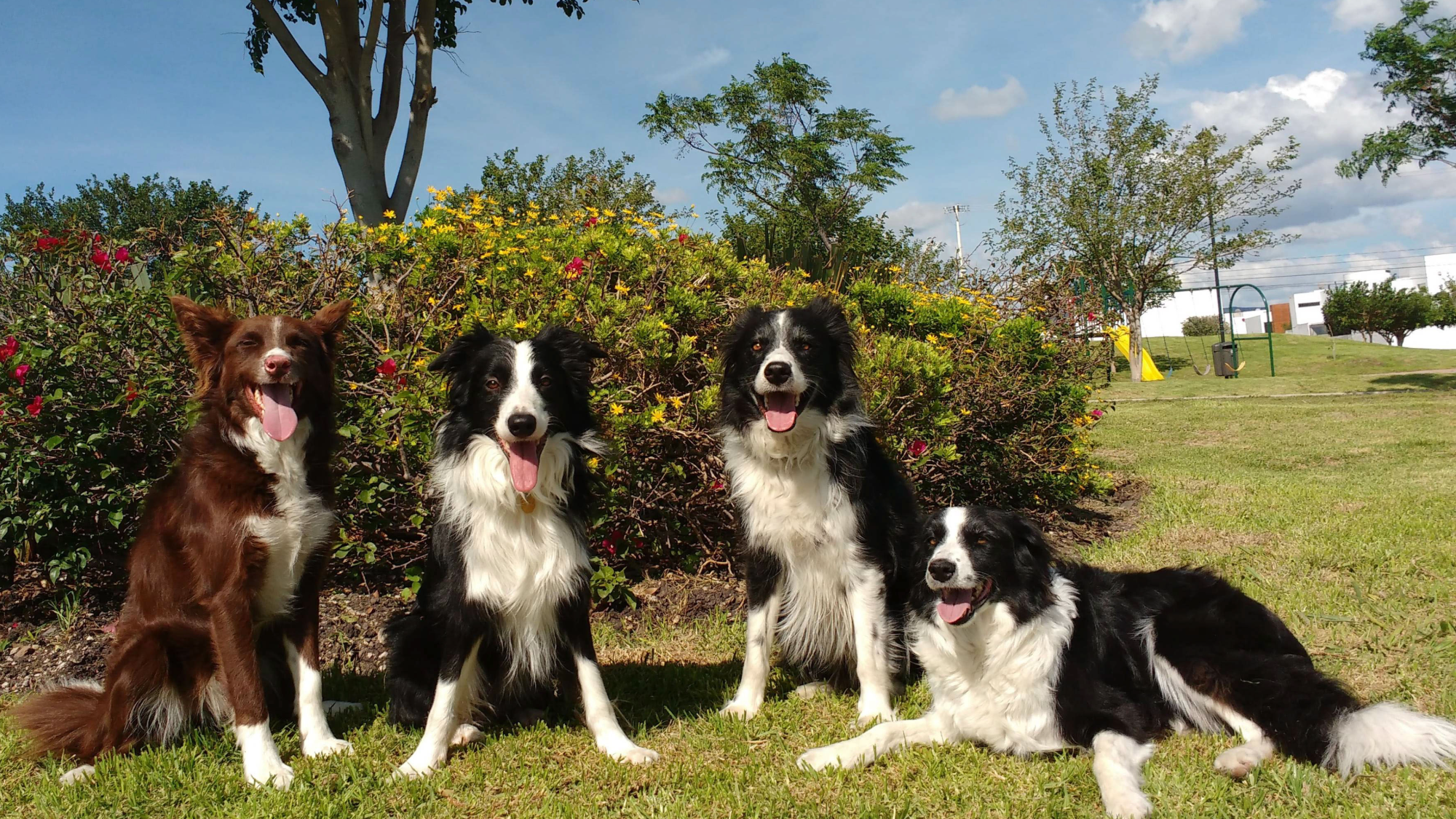
Spend any time with a dog, and it’s clear many have a remarkable ability to understand how we’re feeling. But while there are endless anecdotes of empathetic dogs coming to comfort us when we’re sad and barking happily when we’re feeling good, actual hard scientific evidence of the extent to which dogs really understand human emotion is surprisingly thin on the ground. This is because ultimately, we can never know what it’s like to be a dog—and sadly, we can’t just ask them. In the famous words of British veterinarian and author James Alfred Wight (better known by his pen name James Herriot): if only they could talk.
Nevertheless, scientists are slowly developing a more sophisticated understanding of the ways that dogs relate to us. Multiple recent studies have provided strong evidence that dogs can respond to human facial cues and distinguish between human facial expressions. Now, a study, published today in the journal iScience, has found evidence that dogs appear to be able to make such distinctions on a more sophisticated level than simply understanding “positive” or “negative”.
“Previous behavioral studies [in dogs] have compared faces expressing a negative emotion with faces expressing a positive emotion,” study co-author and psychologist Laura Verónica Cuaya-Retana from Mexico’s National Autonomous University, explains to Popular Science.
This study takes our understanding of how well canines interpret our emotions a step further than comparing the differing nature of how a dog’s brain responds to witnessing positive and negative emotions in humans. It also examines whether seeing differing emotions within those categories elicited different cerebral responses.
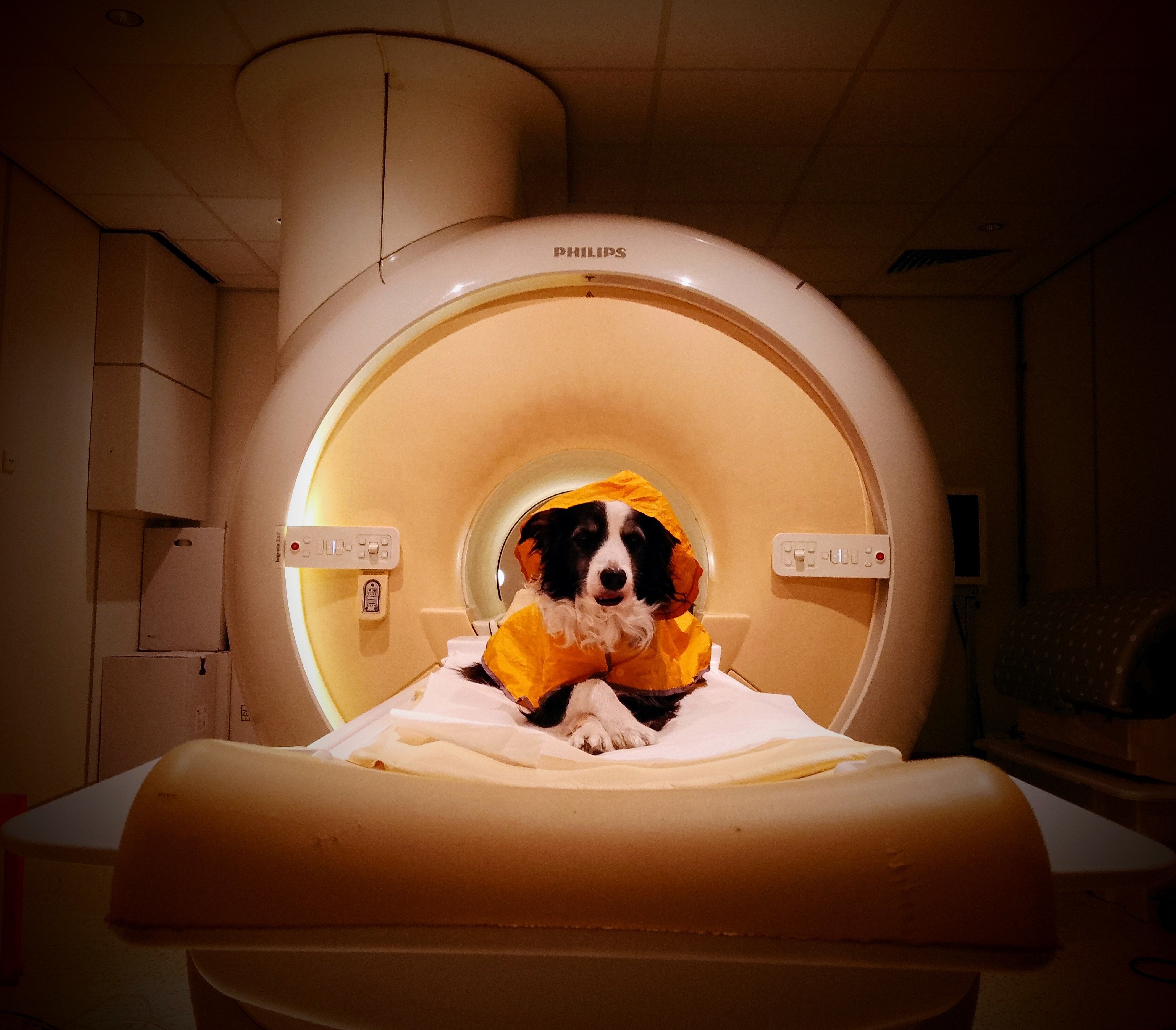
To carry out the research, the team placed eight different dogs within a fMRI (functional magnetic resonance imaging) machine. For the record, these were very, very good dogs.
“The dogs participated awake, unrestrained, and remained still voluntarily in the fMRI scanner after gradual training,” Cuaya-Retana says. “The study was possible thanks to [the dogs’] cooperation and that of their families.”
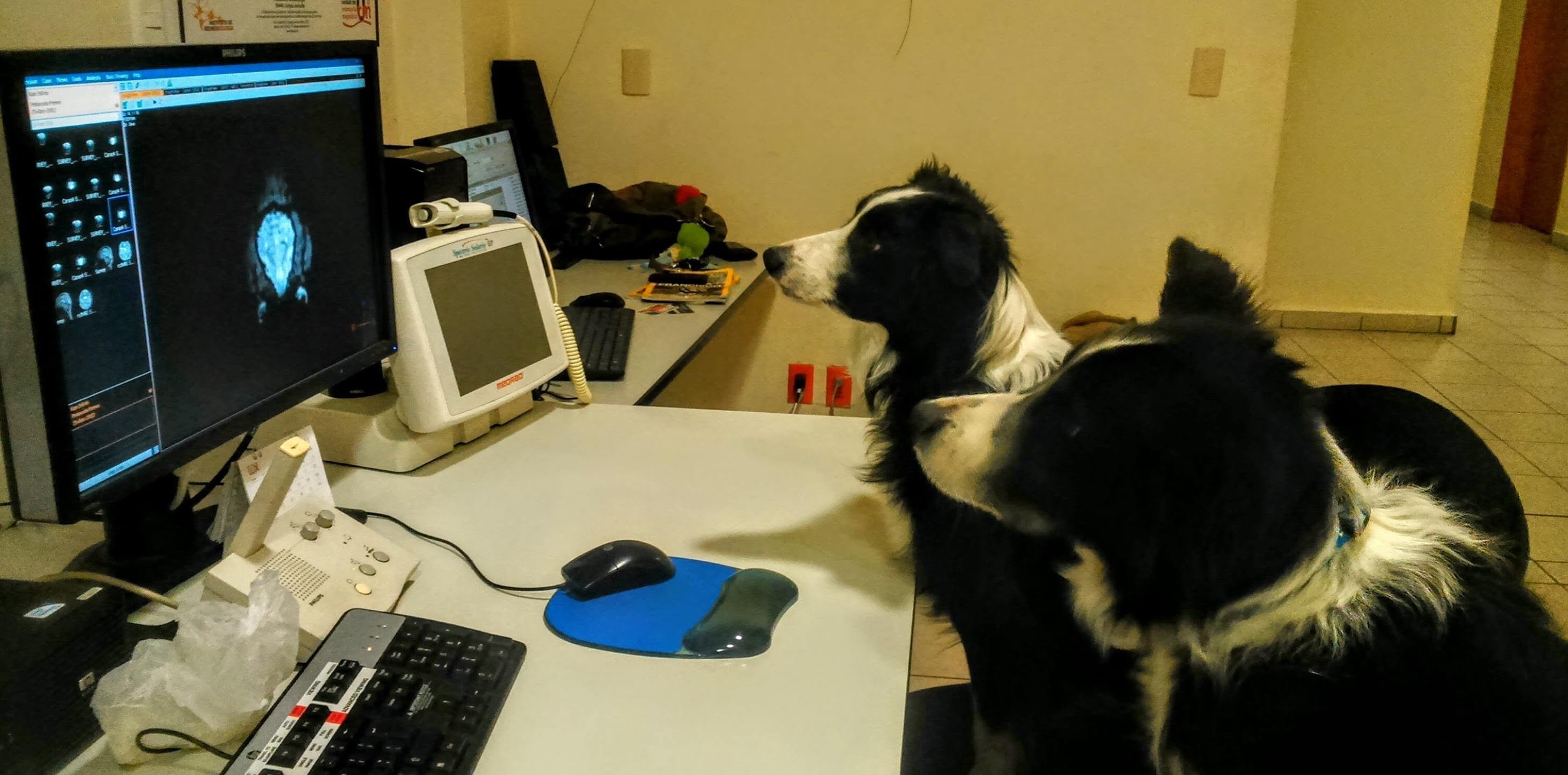
While in the fMRI machine, the dogs were shown photos of the same person expressing three negative emotions—fear, anger and sadness—as well as one positive emotion, happiness. The researchers then examined activity in the animals’ brains in response to each image.

They found that anger, fear, and sadness appeared to stimulate different areas of the dogs’ brains. Interestingly, while the dogs displayed differing responses to fear and anger, and to fear and sadness, they did not seem able to differentiate anger and sadness.
“This is the first evidence in general that the dog brain can distinguish between some human facial expressions within the same [category]. This suggests more detailed processing [than simply positive or negative],” Cuaya-Retana explains.
Familiarity also appears to be a key factor in a dog’s understanding of human emotional cues. For this reason, the team showed the dogs images of strangers.
“We do know that experience influences dogs’ ability to discriminate emotions, and that familiarity is highly relevant to how the dog brain processes faces,” says Cuaya-Retana. “For this reason, we presented faces of strangers, allowing us to test whether brain responses differed according to facial expression rather than familiarity.”
According to the team, these robust results are particularly striking because, like humans, dogs take their cues from many sources in addition to facial expressions.
“The dogs viewed static images of unfamiliar people, without voices, body movements, odors, or context… [and] even under these restricted conditions, we found a robust brain representation of happy faces and evidence that some negative expressions were processed differently,” Cuaya-Retana says.
The results provide a tantalizing suggestion that our canine companions can identify our expressions for what they are—that their understanding seems to be more along the lines of, “This human is smiling, so they are in a positive emotional state,” than, “This human’s emotional state appears more happy than it was five minutes ago.”
However, Cuaya-Retana cautions against anthropomorphizing these findings since we can’t truly access a dog’s subjective experience.
“Our results suggest that dogs’ brains can differentiate between some facial expressions as distinct categories, rather than merely detecting that one expression is more positive or negative than another,” she explains. “The evidence goes beyond dogs simply detecting whether their caregiver is pleased or displeased with them. Still, we cannot conclude that dogs understand/experience emotions in the same conceptual way that humans do.”
Using three negative emotions and one positive one also raises an interesting question. Is it reasonable to expect that the same sorts of results would arise from multiple positive expressions? Cuaya-Retana says, “Yes, … but it still needs to be tested.”
While the nature of dogs’ understanding of our emotions is fascinating in and of itself, Cuaya-Retana suggests this study could also help us understand the development of our own responses to emotional cues. “Studying the dog brain can also help us understand the evolution of social brain networks,” she says. “Humans and dogs are evolutionarily distant species with very different brains, yet both are sensitive to human emotional signals. Comparing how each species processes these cues can reveal which neural solutions evolved independently and which may reflect more general principles of social cognition.”
There’s also one final unanswered question here. Cuaya-Retana says that dogs may take their cues more from non-visual sources. The most obvious cue is scent. While humans are visual creatures, relying first and foremost on our eyesight to understand the world, dogs rely on their peerless sense of smell.
Expanding research beyond visual cues is therefore one possible future direction for research.
“Future studies could include active tasks in which dogs respond to emotional cues, allowing us to connect brain activity with what they perceive, learn, and choose to do,” Cuaya-Retana says. “It would also be valuable to use more naturalistic and multimodal stimuli, and to incorporate the dogs’ perspective into the experimental design.”
