brilliant 10

Feature

Ten Young Geniuses Shaking Up Science Today

Meet PopSci's annual Brilliant 10--a selection of the brightest young researchers in the country. They're helping to keep us healthy, prevent disasters, and make green energy cheaper than coal. Lucky for us, our future is in their capable hands

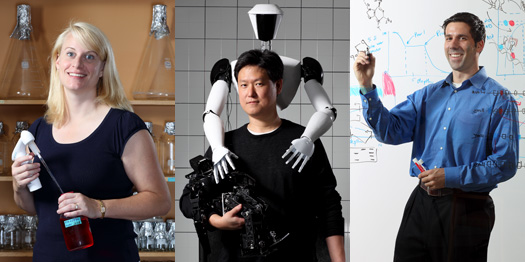
Three of the Brilliant Ten:  John B. Carnett
We have a credo around here: The future will be better. It may sound optimistic in light of our wheezing environment and limping economy, but then you haven’t met the Brilliant 10, PopSci’s annual selection of the nation’s most promising young researchers.

[ Read Full Story ]

The Atomic Visionary

He peers into the most mysterious materials using home-built, one-of-a-kind microscopes

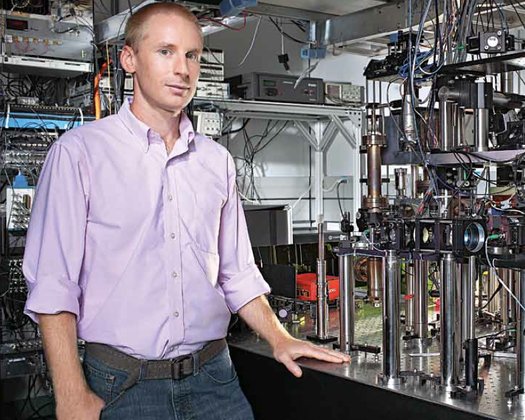
You’d think cracking a 20-year-old physics mystery would require equal parts ego and genius. But physicist Ali Yazdani, who recently overturned the accepted thinking on high-temperature superconductors, swears he’s not all that smart. He’s just a tool-builder.

[ Read Full Story ]

The Materialist

He designs nanomaterials with outrageous abilities

Earlier this year, Francesco Stellacci announced that his group had developed a material that can suck 20 times its weight in oil out of a sample of water. The material could be used to clean up massive crude spills, and chemist Joerg Lahann of the University of Michigan called the work a blueprint for scientists who hope to design nanomaterials that protect the environment. Yet Stellacci doesn’t consider this his best work. He’s excited about tricking cells.

[ Read Full Story ]

The Bond Breaker

She’s invented a way to build exactly the right molecule for the job

Why are there so many diseases and so few cures? It’s not just that medicine moves slowly; chemistry holds us back, too. To build drugs, chemists start with a base molecule, then add and subtract atoms from it one by one in a sequence of reactions. The process is tedious and wasteful—a 10-step reaction might convert only 8 percent of the starting material into the right end product. And that’s if chemists can make the drug at all.

[ Read Full Story ]

The Drug Pumper

He builds under-the-skin chips that deliver drugs straight into the blood

When he was 12, John Santini's ankle swelled up to the size of a grapefruit. Several hospital visits later, he was diagnosed with lupus, a chronic disease marked by the immune system's attacks on healthy parts of the body. He learned he'd have to take medication indefinitely. But he has used his condition as inspiration, and has spent his life devising a completely new way to deliver drugs.

[ Read Full Story ]

The Neural Puppeteer

He plugs straight into the brain to map our thoughts, neuron by neuron

"Here's what happens when we turn on the light," Karl Deisseroth says. He points to a mouse, ordinary save for the thin optical fiber protruding through its skull. When a lab tech presses a lever, blue light shoots through the fiber, and the mouse -- which had been sauntering straight ahead -- starts to run in circles. "He's doing that because the blue light turns the neural circuit on," Deisseroth explains. "As soon as we stop the stimulation, he'll walk straight again."

[ Read Full Story ]

The Body Builder

She creates injectable scaffolds that help the body heal

As a Ph.D. student at the University of Colorado, Kristi Anseth built advanced materials for semiconductors. But the chemical engineer’s past would soon draw her away from microchips and into the body. “I played basketball and volleyball in school and had my fair share of knee injuries,” says Anseth, who has won nearly two dozen awards for her research. “I also had an aunt die in childbirth from a heart defect, and a brain aneurysm killed my father. I realized that the processes I was developing could work inside the human body to mimic healing.”

[ Read Full Story ]

The Turtle Trainer

He lured the ocean’s premier coal-mine canary into captivity

Word spread quickly that Todd Jones, a young doctoral candidate in zoology, had something fantastic in the blue tanks of his lab at the University of British Columbia. The attraction was juvenile leatherback sea turtles, about the size of garbage-can lids. Why the attention?

[ Read Full Story ]

The Infant's Philosopher

She studies how our brains create accurate representations of the world

In a small room on the second floor of the Boston Children's Museum, six-month-old Hasan Helal is watching a short video. Underneath the screen, an infrared device tracks his eye movements, which appear as small red dots superimposed on a second video screen behind a curtain a few feet away. Most infants fixate on bright objects, but Hasan is unusual: He already prefers faces, his eyes tracing the characteristic triangle shape -- left eye, right eye, mouth, left eye again -- that older kids and adults make when they examine a new face.

[ Read Full Story ]

The Jellyfish Engineer

He finds inspiration for tomorrow's underwater vehicles in the planet's first swimmer

It's just after sunset in Long Beach, California, and John Dabiri stands on the end of a wooden dock, peering down at the water. In his white sneakers and striped polo shirt, Dabiri might be just another boater checking out a well-known local spectacle: a pulsing mass of hundreds of softball-size moon jellyfish that regularly gather here.

[ Read Full Story ]
Page 1 of 2 12next ›last »


Download Our iPhone App

Stay up to date on the latest news of the future of science and technology from your iPhone with full articles, images and offline viewing


Follow Us On Twitter

Featuring every article from the magazine and website, plus links from around the Web. Also see our PopSci DIY feed


Become a Fan On Facebook

Share links with friends, comment on stories and more


December 2009: Best of What's New

In our December issue, Popular Science names the 100 best innovations of the year: bombproof wallpaper, self-parking cars, the fastest helicopter, and 97 more. Plus inventor profiles and videos.

Check out the best of what's new here.

Popular Science Photo Pool


Share your photos in the Pop Sci pool at www.flickr.com!
tags_sprite.png
POP_embeddedForm_cover_May09.jpg