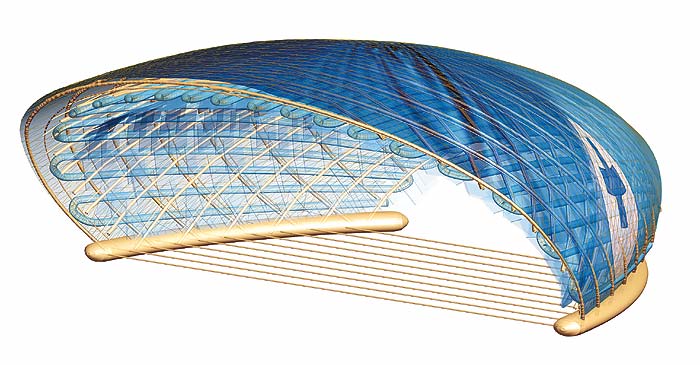
Tower of the Sun
It's huge, it's green--and it may even happen.



New databases and digital techniques are broadening the kinds of evidence available to the crime scene investigator.
If you cheat on your spouse, you can't yet plead biochemistry in divorce court. But rodent-brain research sheds light on why some lovers stay, some stray.

Visionaries insist we'll soon be hailing small jets and zipping directly to our destinations. Will the plan fly?
The answer is probably not what you want to hear.
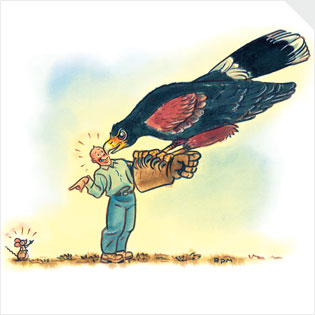
It's an ultrafast killing machine with bleeding-edge aerodynamics. Not a pet.

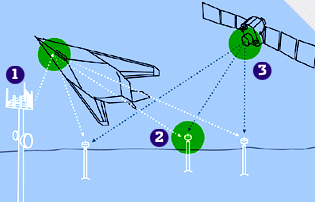
The White House backs a remarkable boost in space-based war technology. Here's the blueprint.

Genetics: The moistness of your earwax is controlled by a single gene—and that may be more important than you think.

Inventors long promised that a cheap, easy-to-fly helicopter was nigh. Can Woody Norris finally bring one to market?

Attention: Hollywood, Wall Street & Washington. Here's the real Power List, and you're not on it.

Lint is composed of tiny bits of fabric fibers that are shed from the edges of our garments.

What's it like to grow up with a mother who is a distinguished physicist and the sister of one of the most famous scientists of the 20th century? In the month of Mother's Day, Popular Science News Editor Charles Hirshberg remembers.
Our eyes only see objects by processing light waves reflected off the object or absorbed by it.
All organisms, including humans, have the ability to regenerate something in the body. But the process is much more developed in lower organisms.
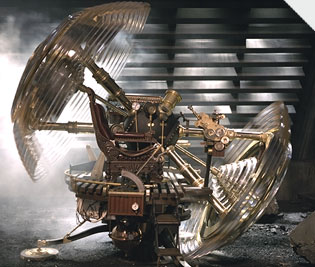
Scientists tell us it's technically possible. Here's a how-to guide for the ambitious tinkerer.
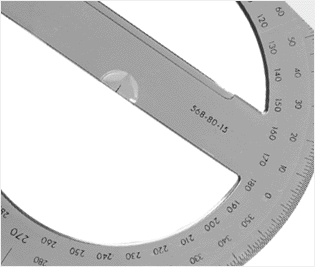
Our FYI editor explains how the 360-degree circle came to be.
On Dec. 8, 1941, one day after Pearl Harbor, the United States was at war. As private industry scrambled to convert its assembly lines to weapons production, Popular Science's editors were moving speedily as well.
Who is the weakest link? We all are when it comes to science, says new research -- especially women.