
We may earn revenue from the products available on this page and participate in affiliate programs. Learn more ›
Restaurants are surprisingly good age tests. When the menu lands, do you squint at the tiny fonts, tilt the page toward some inadequate candle, or blast it with your phone flashlight just to read it? Do you ask a friend to tell you the options because you refuse to wear the readers you know, in your heart, you probably need?
And when did restaurants get so loud? Can you still follow the jokes from the far end of the table, or do you quietly converse with the person next to you because that’s all you can hear?
These aren’t quirks. They’re brutal little reminders of your own mortality before the appetizers arrive—and I’m noticing them more when I go out with friends, some of whom have their phone fonts so big a single word takes up a line. Middle age doesn’t announce itself all at once—it’s sneakier than that. And that oh-so-helpful smartphone? It’s part of the reason eye strain is showing up earlier and more often.
This is the first generation to live such intensely digital, hyper-visual lives—and human vision simply wasn’t built for it. EssilorLuxottica, the powerhouse of modern vision care, acknowledges this and invited international journalists to the company’s facilities in Paris to learn about presbyopia, how this very normal age-related loss of near vision is changing, and how the company is evolving lens technology while pushing eyewear beyond simple correction.


A universal eyesight problem in a digital world
Even if people aren’t familiar with the term “presbyopia,” most know vision gets worse with age. And it’s surprisingly universal. Everyone will eventually be affected because eye lenses become less flexible over time, but when exactly is individual. Presbyopia affects about 85% of people over 40 years old, which is about 826 million people worldwide, according to the World Health Organization.
Traditionally, people notice symptoms starting between 40 and 45—things like eyestrain after staring at a computer screen, difficulty reading in dim light, or suddenly holding things at arm’s length to read. But as daily screen time rises, presbyopia is emerging as early as 35 years old in some populations, particularly among women and urban residents, according to EssilorLuxottica experts who accompanied us on our tour of the labs.
And screen time continues to rise, with global daily use averaging six hours, though it’s more like 10 for office workers. Devices are also getting closer. The experts explained that we hold books about 16 inches from our faces, but smartphones hover at about 8 to 12 inches, and smartwatches tend to be even closer. It’s often called multitasking, but really, it’s rapid task-switching that creates focus challenges, particularly for older eyes. Digital eyestrain is now one of the first symptoms for most presbyopes, but it’s easy to brush it off as just being tired.
For the individual, the world up close gets blurrier and blurrier, while you end up quietly engineering your life around what you can still see. But zoom out, and it’s not a quirky inconvenience; it’s a global productivity problem. WHO estimates that vision impairment costs about $411 billion annually in lost productivity, even though addressing unmet vision correction would be about $25 billion.
The fix is simple: glasses. A pair of readers, bifocals, or progressive lenses corrects the problem. Don’t love glasses? Contact lenses are an option, as are eye drops that constrict pupils for a few hours. Access and affordability matter, of course, but denial might be the biggest hurdle of all—especially for younger wearers.
Think back to the restaurant where nearly each of those acts—turning on a light to see a menu or leaning in to hear your tablemate—could be brushed off as the restaurant’s problem. You don’t need glasses; the restaurant is too dark. It’s not your hearing; the restaurant is too loud. Sound familiar?


From grandpa’s glasses to AI-customized vision
EssilorLuxottica is one of those companies most people have used without ever connecting the product to the name. If you wear glasses, there’s a good chance you’ve interacted with something they made, sold, or helped design.
They come from two giants. Essilor, founded in France in 1849, built its reputation on lenses and introduced the first Varilux progressive lens in 1959. Luxottica, an Italian company founded in 1961, became a powerhouse for frames, including brands you see everywhere (such as Ray-Ban, Oakley, Persol) and luxury labels (think Chanel and Prada). When they merged in 2018, they formed a single company that can handle the entire pipeline: designing, measuring, making, and selling both lenses and frames. They also build diagnostic tools and manufacturing equipment, and they own major retailers like LensCrafters.
That scale matters. When the company makes a breakthrough, it can change how opticians measure vision, how lenses are designed and manufactured, how frames are built around them, and how millions of people experience their glasses.
For instance, progressive lenses are supposed to be a simple solution for people with mixed vision needs: one pair of glasses that works for distance, computer range, and reading. But for many people, the first pair is frustrating. Part of that is the unwelcome red flag that you’re aging. Part of it is practical. If a progressive lens doesn’t match how you specifically move your eyes and head, you get edge distortion, a “swimming” sensation, headaches, and a long, uncomfortable adjustment period.
EssilorLuxottica leans hard into user-centric design, collecting mountains of data on how people see in real life. You feel that immediately at the company’s R&D center in Créteil (a southeastern suburb of Paris). The place isn’t about glamorous frames like the Luxottica Digital Factory and showroom in Milan. It’s about the unglamorous mechanics of vision: how people scan text, how they tilt their head toward a phone, how fast their eyes hop between distances, and how those habits change with age and fatigue.
Some researchers measure those behaviors directly, using sensor-equipped frames to track things like light exposure and screen use instead of relying on people to remember what they did. Others zoom out and study environments, looking at how small design choices can make public spaces easier to navigate for people with vision impairments, such as airports that add guidance and signage at floor level rather than assuming everyone can comfortably scan overhead boards.
Taken together, that work points to a broader shift: EssilorLuxottica is treating eyewear as one layer in a more medical approach to eye health. Working with Dassault Systèmes, the company is building digital twins of the eye and visual system, an advanced modeling approach that lets teams explore how disease and aging processes progress over time without the need for active participants and decades. And in the labs, they don’t stop with virtual models. They also build human-scale ones.
I’ve managed to dodge the need for near-vision correction so far, but spent decades wearing glasses for distance until I got LASIK a few years ago. In Créteil, a researcher strapped me into an optical simulator to try progressives: a virtual reality headset, a treadmill, the works. I’d never worn bifocals or progressives before, so I had no muscle memory to lean on. I kept turning my whole head instead of just shifting my eyes, and it became painfully obvious that I would need some time to figure out how to use progressives.
However, the simulator isn’t for patients. Engineers use it to test and refine lens ideas before they’re prototyped. What the experience highlighted was how little I’d thought about lenses when I picked out new glasses. I would obsess over how frames look and let insurance limits dictate the lenses, even though the lenses were the entire point.
EssilorLuxottica’s experts told me my thrown-into-the-deep-end experience is precisely what not to do. It’s easier to adapt to progressives when your prescription is still mild, but most people wait until their vision has significantly shifted, then leap into complex lenses. Your eyes were not built for this, so EssilorLuxottica is building responsive systems that are easier on your eyes.
The R&D work at Créteil complements the data EssilorLuxottica gathers at scale. In LensCrafters stores, opticians can fit would-be Varilux wearers with a small sensor clipped to the frames and run them through guided viewing tasks that capture how they naturally hold their head and move their gaze. Over time, those measurements have built a huge dataset with consistent patterns: how far people hold objects, how much their eyes drop when reading, whether they steer more with their eyes or their head, and even subtle left-right offsets.
That dataset trained the AI model behind Varilux XR—the company’s most advanced progressive lens technology. When a new prescription comes in, the system uses the model to predict how that person is likely to look and move, even if the store doesn’t have the full measurement setup. The precise positioning of focus zones is then calculated point by point using both the prescription and the predicted behavior, aligning with how the wearer views the world rather than forcing the wearer to adapt. From there, additional algorithms refine binocular vision, how the two eyes and head work together, so switching between distances feels steadier and less “swimmy.”
The result is bespoke optics at scale: faster adaptation, less distortion, and progressives that feel more intuitive. It also clarifies why progressives have such a mixed reputation. The label covers wildly different experiences. The cheapest options lean on averages and symmetry, even though most people’s eyes differ from left to right and don’t move in perfect unison. For first-time wearers, especially in midlife, that mismatch can feel like “progressives don’t work,” when it’s really a poor fit between lens design and a particular person.


Bringing innovation into focus
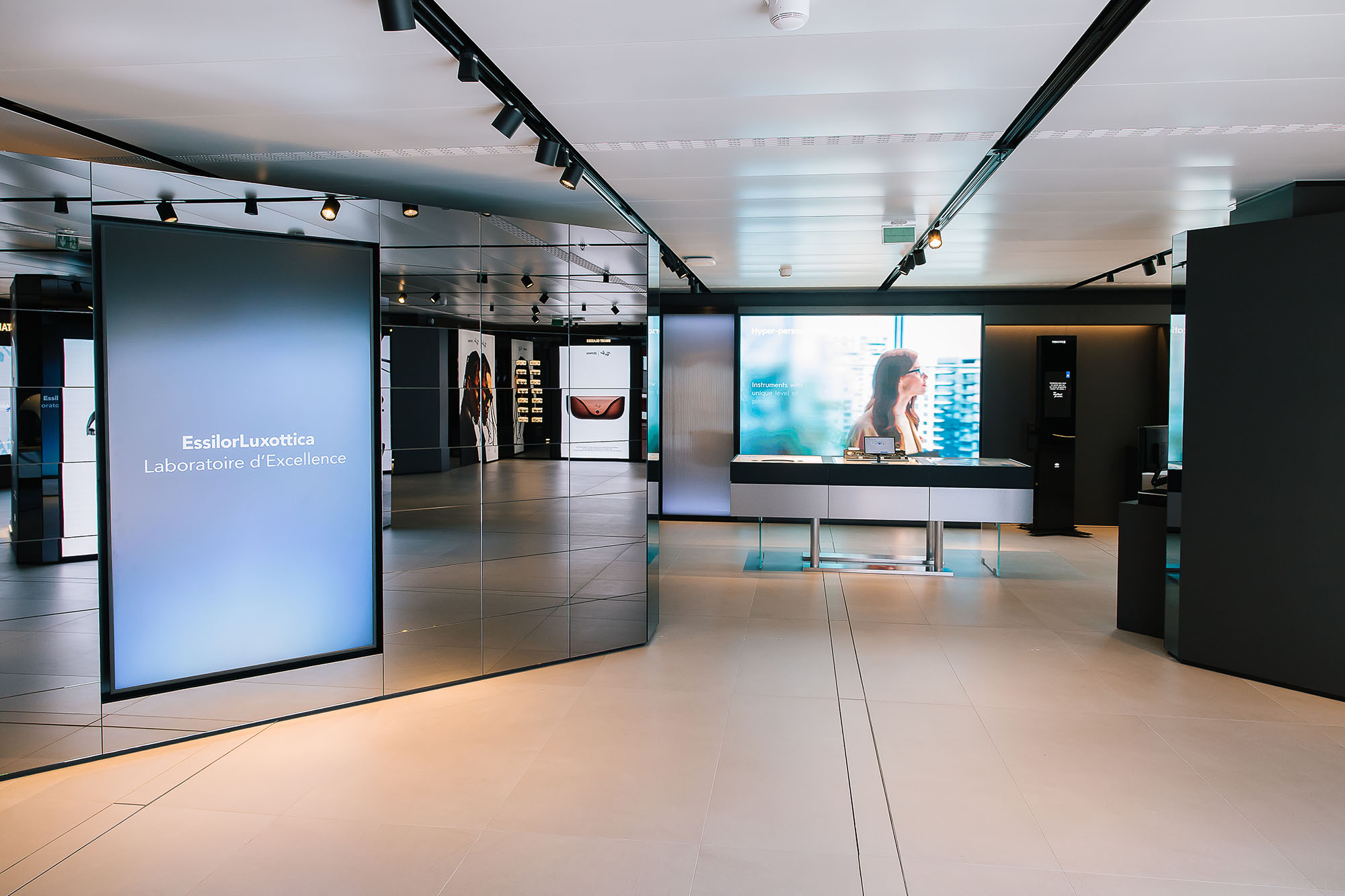
At EssilorLuxottica’s new Laboratoire d’Excellence (LABEX) facility outside Paris, the company is testing its ideas where they matter most: on a working factory floor with real throughput, real deadlines, and real operators. The site plugs fresh ideas into live production lines and sends the results back to collaborators for refinement. That feedback is an essential part of the company’s innovation.
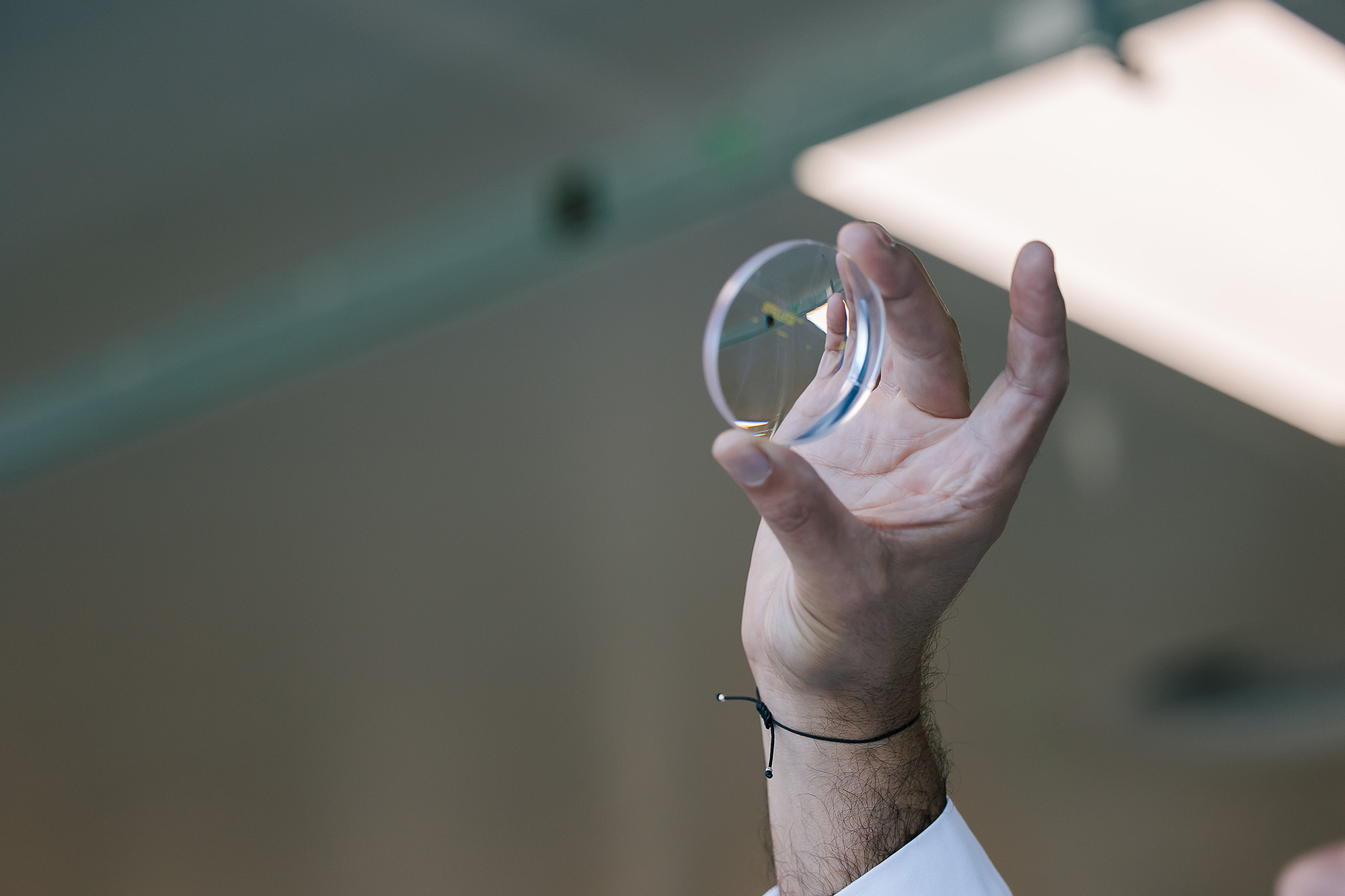
LABEX produces prescription lenses for the French market, with a focus on premium products, including high-end Varilux lenses. For many orders, turnaround is about 24 hours. That speed sounds like logistics until you remember what’s being shipped: lenses made on demand, starting as clear plastic blanks [shown below] and becoming individualized optical devices through surfacing, polishing, coating, and inspection. The end product is individual. The scale, meanwhile, is industrial. The facility can handle around 4 million prescription lenses a year, plus additional volume in distribution, while still serving as a reference model for how the rest of EssilorLuxottica’s manufacturing network can evolve.


Sustainability is built in as infrastructure. LABEX runs on green electricity, uses solar panels for part of its energy, and recycles water used during surfacing, enough to process roughly a million lenses before the system needs refreshing. Heat from equipment is captured and reused.
Inside, it feels closer to an advanced robotics lab than the old mental image of someone hand-polishing glass. Robots and autonomous vehicles move trays of lenses through different stages. The layout keeps production largely in line, minimizing handoffs and unnecessary handling. A lens gets its prescription cut, then coated for durability and clarity, then routed toward inspection.
Cosmetic inspection is one of the most challenging jobs for staff in modern lens-making. It’s specialized, repetitive, and unforgiving, and qualified inspectors are increasingly difficult to find and retain. At LABEX, AI-powered systems take on much of that load, scanning finished lenses for surface issues—think tiny scratches or microscopic chips—that can slip past even trained eyes after hours of repetition. The real value is catching those defects, shift after shift, without fatigue creeping into the process.
EssilorLuxottica sells many of the machines and technologies used along the production line, so the same tools can end up in other labs, including those run by competitors. But company representatives say their advantage in execution lies in line design, sequencing, tolerance discipline, and the day-to-day know-how that turns high tech into consistent output.
When eyewear becomes something else
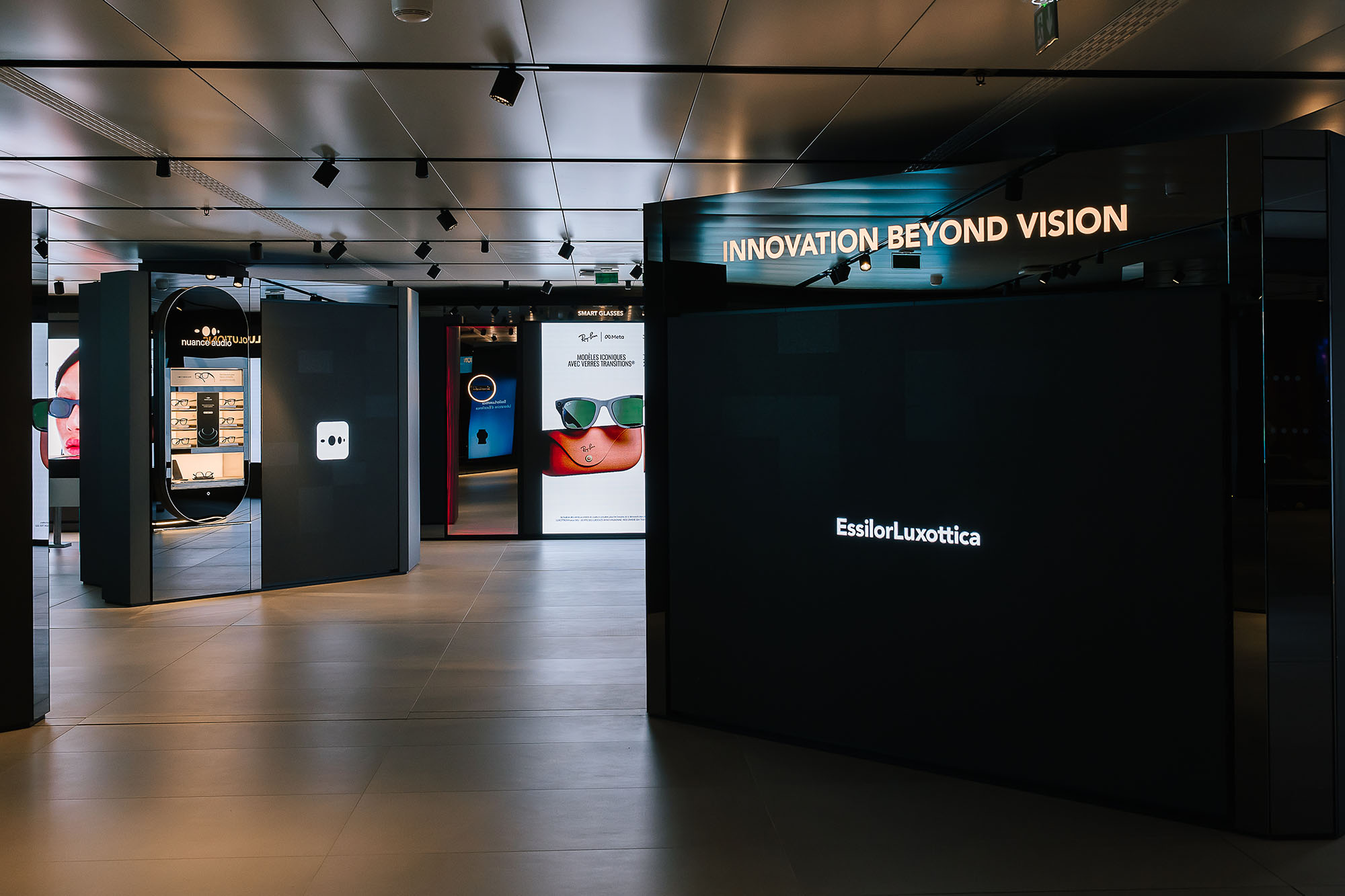
In addition to the Rx factory, LABEX houses a showroom that asks a deceptively simple question: once you’re already wearing something on your face to correct your vision, what else could it do?
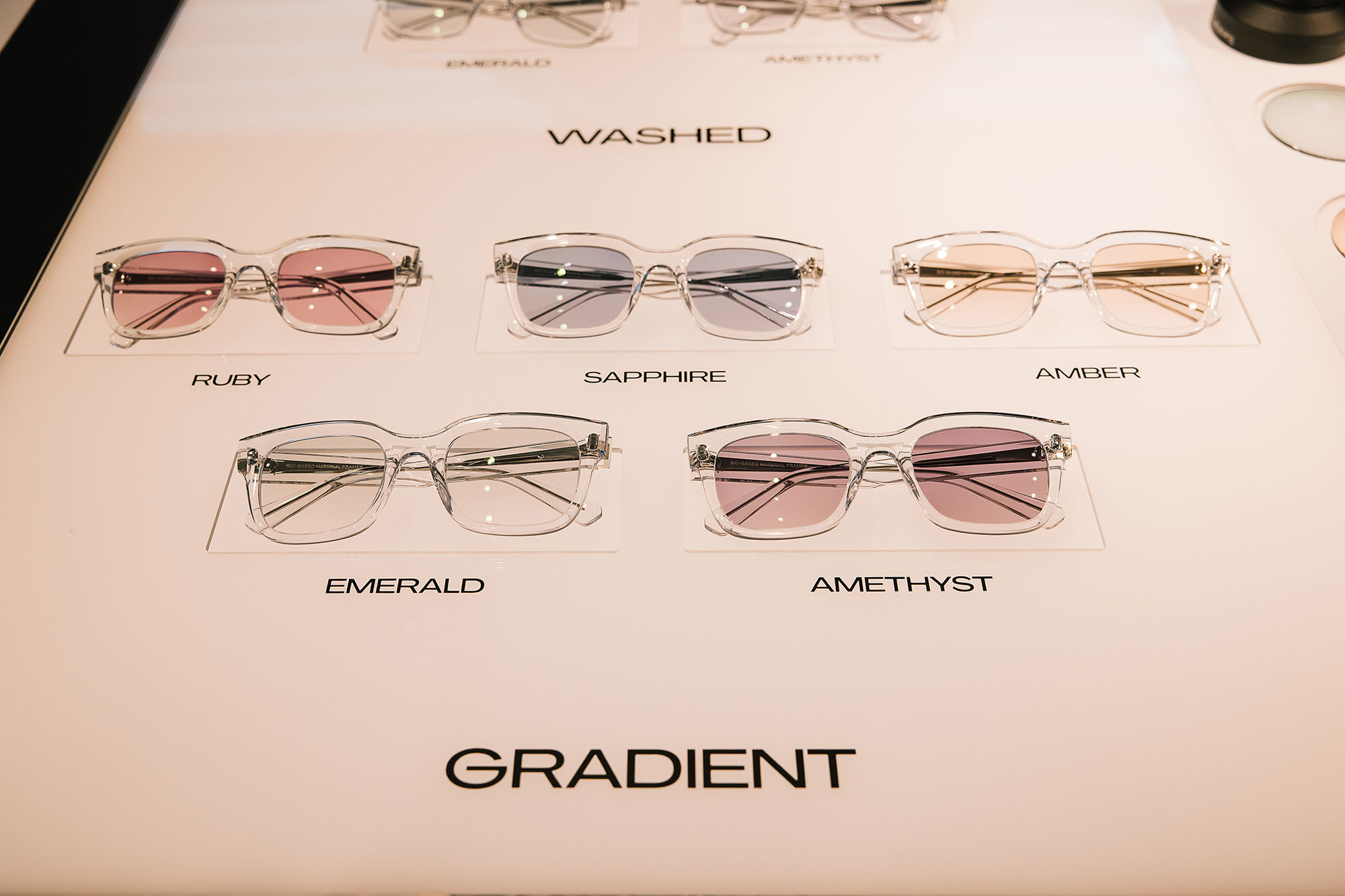
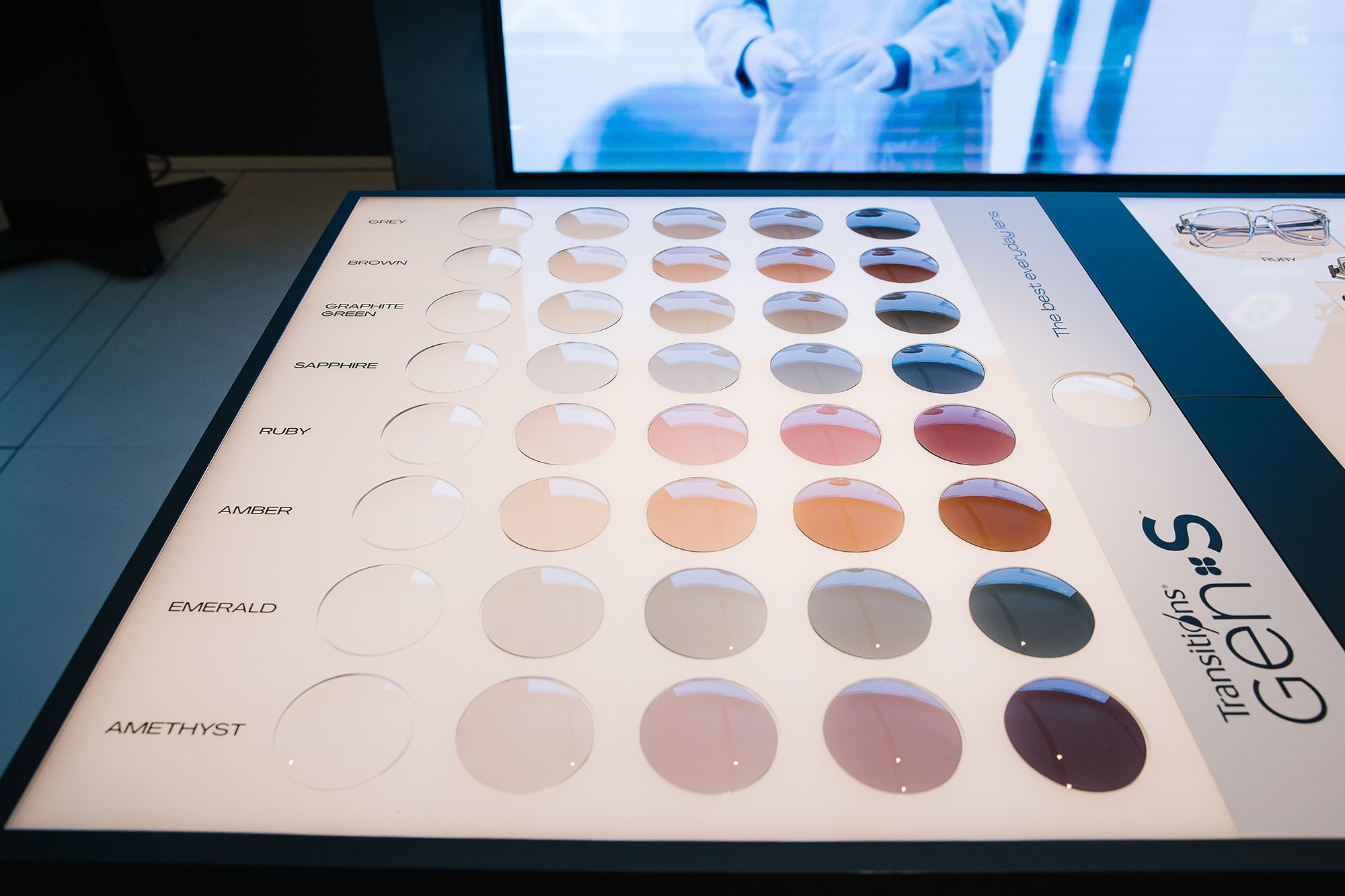
That idea starts modestly. Varilux progressive lenses reduce the need for multiple pairs of glasses by combining distance, intermediate, and near vision into a single lens. Transitions lenses, in various colors for different aesthetics and conditions, push that logic further. Embedded with trillions of reactive molecules that cluster in the presence of ultraviolet (UV) light, EssilorLuxottica’s photochromic lenses darken outdoors and reset to clear indoors, eliminating the constant swap between regular glasses and sunglasses. Layering these features does raise the price, but the comparison isn’t one lens versus another. It’s one pair versus many.
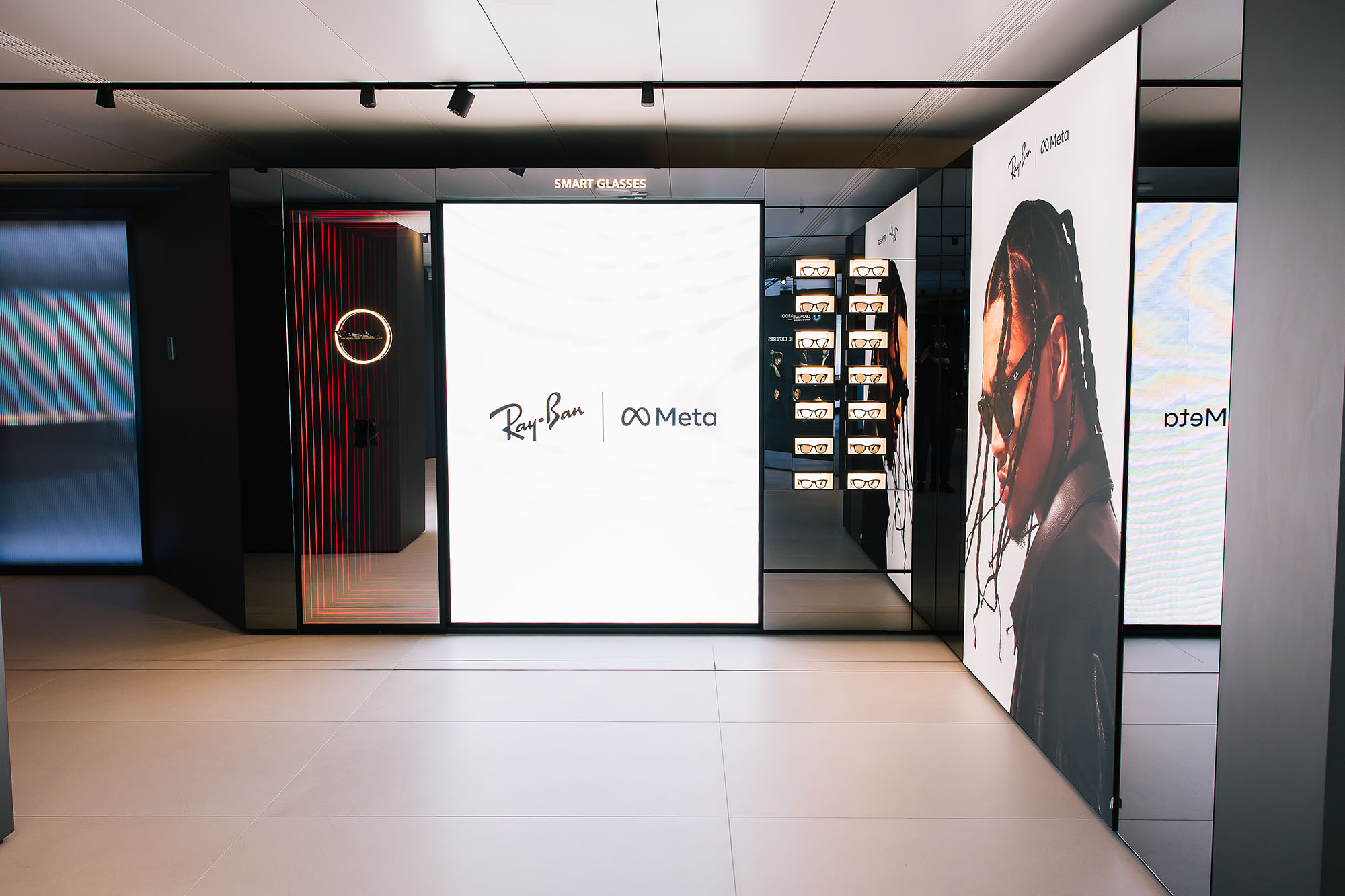
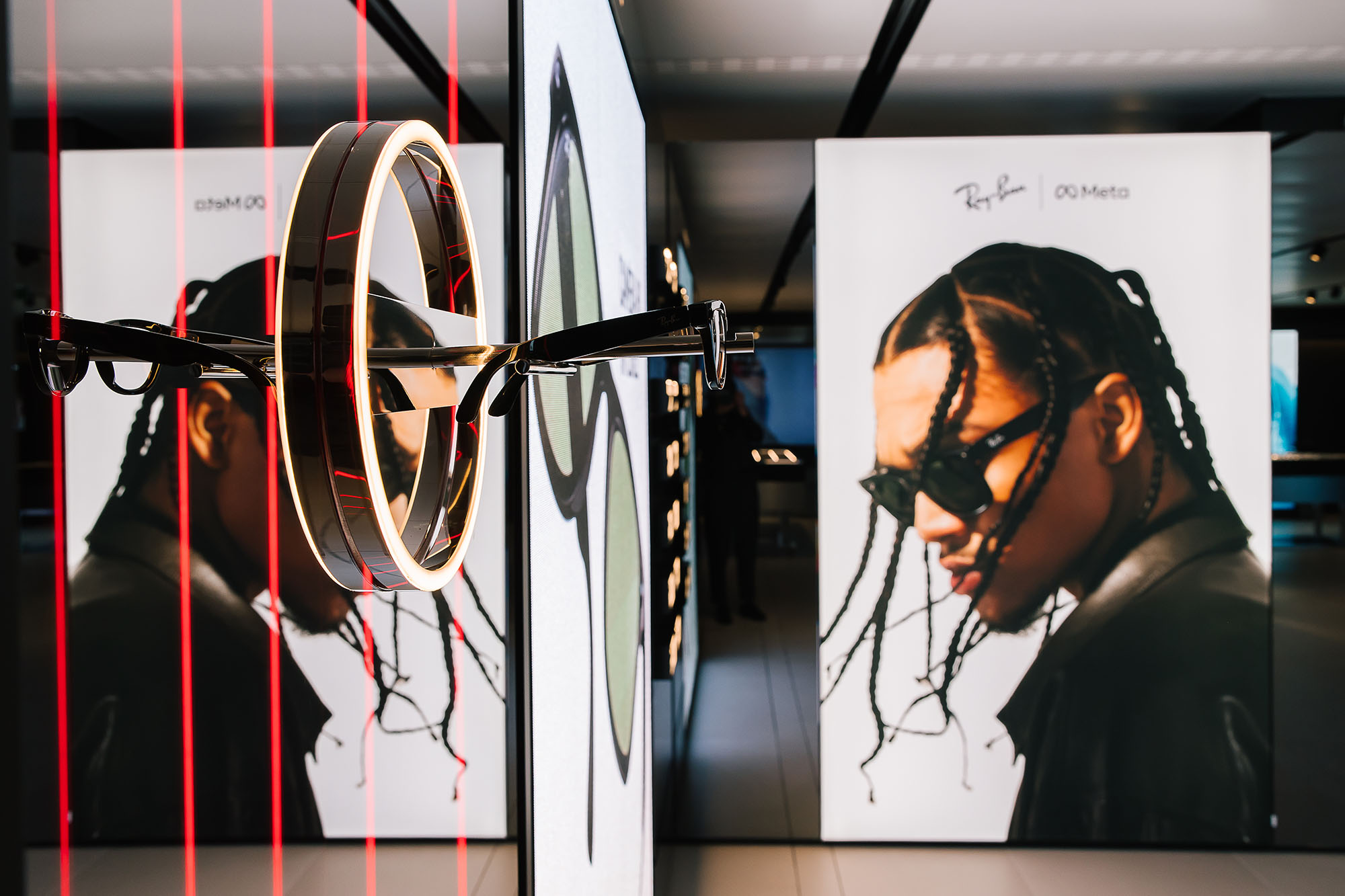
From there, the showroom takes a sharper turn. Ray-Ban and Oakley Meta smart glasses recast eyewear as a platform rather than a static prescription. Meta smart glasses function like an extension of a smartphone, minus the tyranny of a screen. Cameras built into the frames capture photos and short videos from your perspective. Open-ear speakers in the arms play music, podcasts, calls, or directions while keeping you aware of your surroundings. Microphones handle calls and voice commands, and Meta’s AI assistant can answer questions, translate phrases, or identify landmarks without pulling out a phone. If you’re already spending your FSA funds on a new prescription, there may be more you can get out of that investment.
Touring EssilorLuxottica’s GrandOptical store on the Champs-Élysées, staff told us that Ray-Ban Meta Wayfarers are especially popular with tech-savvy, middle-aged customers, even if the marketing skews younger. As premium frames, they’re not wildly out of band for shoppers already accustomed to spending on high-end eyewear—and unlike ordinary glasses, software updates can continue to expand what the frames can do.
Nuance Audio glasses explore the platform idea from a more intimate angle. Instead of cameras and AI assistants, they weave hearing support directly into eyeglass frames, prescription lenses or not. These Food and Drug Administration-cleared, over-the-counter glasses tuck directional microphones and open-ear speakers into classic frames, offering subtle, situational amplification for people who fall below the bar for traditional hearing aids. Through a companion app, users can choose presets based on common hearing-loss patterns, then fine-tune volume, background noise reduction, and microphone direction. I have a pair of these I specifically use at restaurants and bars, and it sounds like a joke: I turn down the music in the car to see signs better, and I put on glasses to hear. But they help.
Walking through the showroom, I realized the biggest shift is psychological, not technological. Many of these products feel like permission slips for people to accept a little help without making a big deal about aging. Lenses that adjust to light automatically. Smart features that borrow a few jobs from your phone. Hearing support that fades into the frame. None of it promises a cure-all. The argument is smaller and more persuasive than that: eyewear can remove more of the everyday friction, in specific moments, if you’re willing to let it. Then you can just lean back, laugh, and enjoy the appetizers.
