
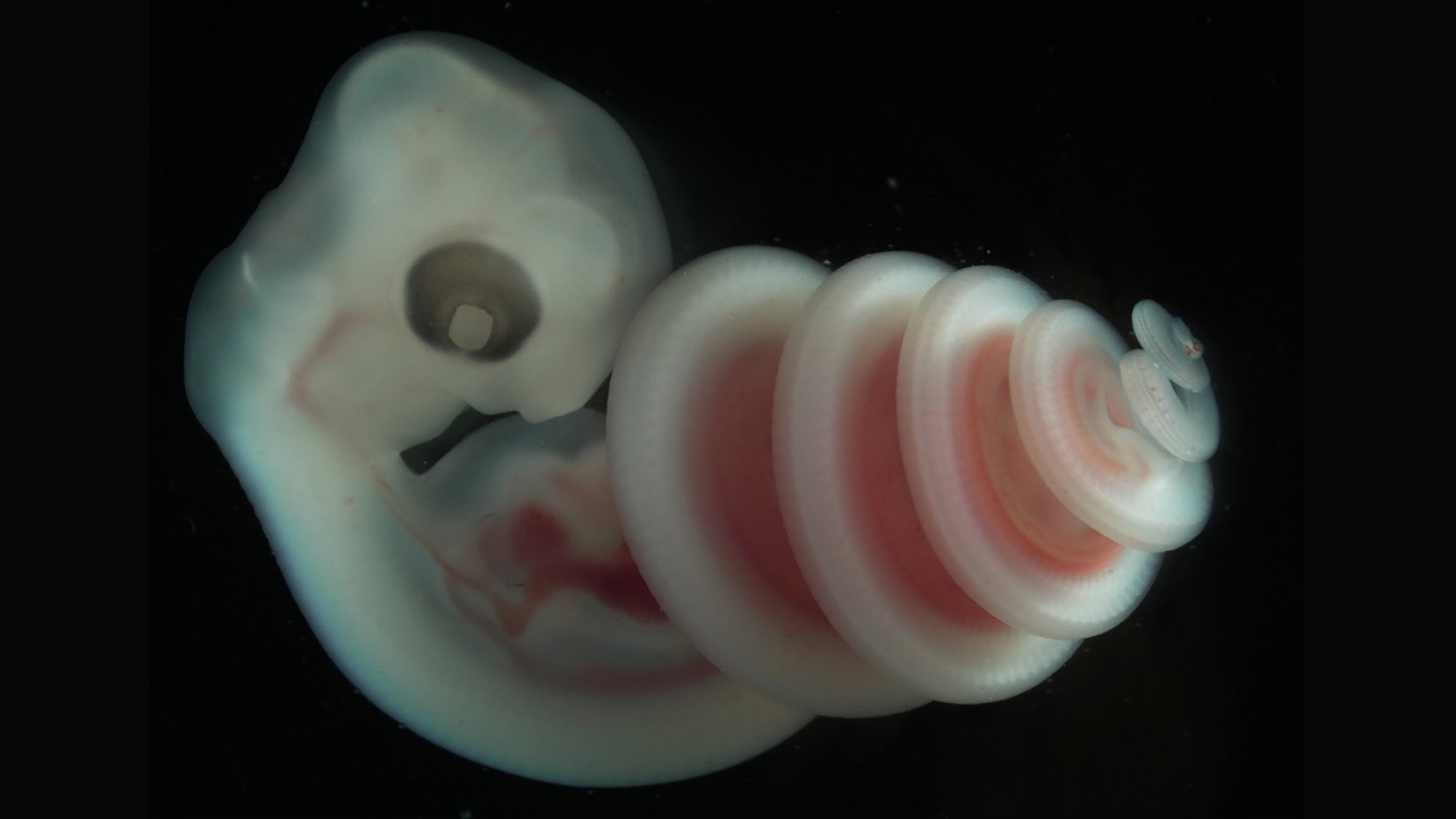
When it’s time to finally greet the world, snakes emerge from their shells with the longest bodies of any vertebrate animal. This remarkable evolutionary achievement is only possible due to their limber gestational contortions. Snake embryos develop in a tight spiral, and these early stage coils always form dextrally, or towards the right. But how (and why) the reptiles consistently favor this right angle has baffled biologists for years.
“There is a touch of mystery to spirals,” explained University of British Columbia zoologist Alexandra Weber. “We are only beginning to understand how these shapes are produced in animals, such as our looping intestine, snail shells, and now these beautifully coiled snake embryos.”
Weber and an international team of scientists finally have an answer. As they explain in a study published today in the journal Current Biology, it all has to do with a snake’s gut.
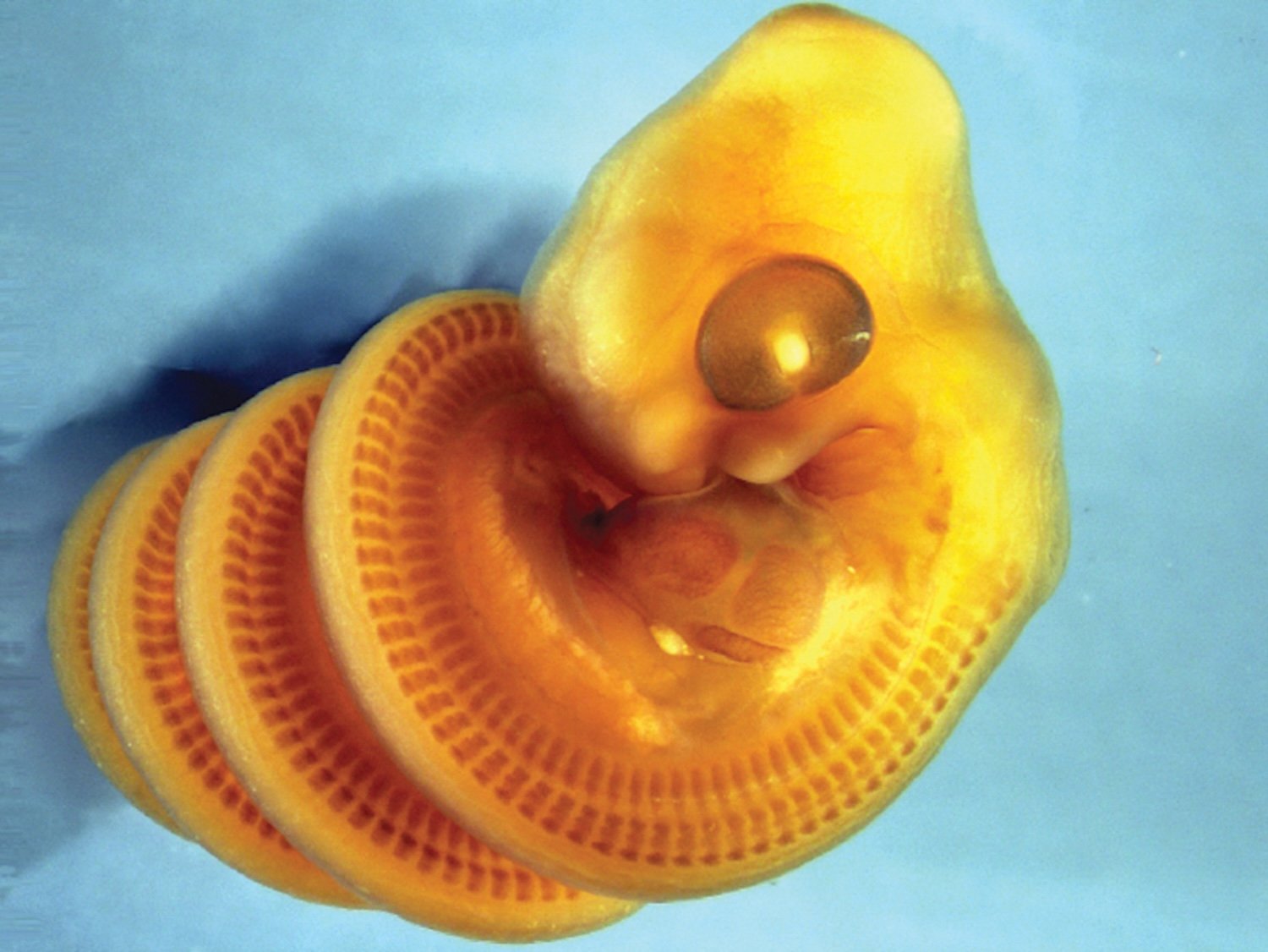
The investigation kicked off during the COVID pandemic lockdowns of 2020. At the time, an evolutionary biologist and study co-author at the Canadian Museum of Nature in Ottawa named Tetsuto Miyashita was struggling to envision a remote research project for his students. He eventually recalled his PhD advisor’s deep interest in evolutionary asymmetries, particularly when it came to snakes.
“Every time I saw images of snake embryos in papers, I wondered whether they are right- or left-handed in their coiling,” said Miyashita.
After sending out a request call to various museums, Miyashita and his students amassed images of over 900 embryos from 39 snake and other limbless reptile species. They then meticulously reviewed all of them and saw a striking biological pattern. Snakes began their right-handed coiling within the first few weeks of embryonic development—but they were doing it before they had any muscles.
“Different forces are making them coil…but we didn’t know what’s making them do that,” said Weber.
CT scans began to fill in the gaps, revealing a previously unidentified biological structure: an intestine located outside the embryo’s body, but enveloped by blood vessels stretching from the yolk. According to Miyashita, this “pillar of gut” slowly detaches from the yolk while tethering the elongating body.
As the snake embryo develops, it twists into a coil on the opposite side of the yolk. And since the yolks are always on the left side of the embryo, the snake coils rightward. Miyashita likens the dynamics to adjusting a strap’s length so that the longer, buckling loop always twists. Snakes eventually gain the ability to wriggle as the embryo matures and its muscles develop. Once this occurs, around half of the late-stage spiraling bodies recoil to the left.
Many evolutionary biologists previously focused on detailed snake genetic analysis to explain their unique anatomies, which importantly helped explain many of their attributes. Miyashita is thankful for these “key discoveries,” but noted how answers sometimes can be found thanks to simple observation skills.
“Out of the COVID lockdown, we uncovered a snake’s secret with a startlingly simple approach,” he said. “Just scroll through an album of snake embryos and record which way they are coiled, and take a good look at their anatomy.”
