
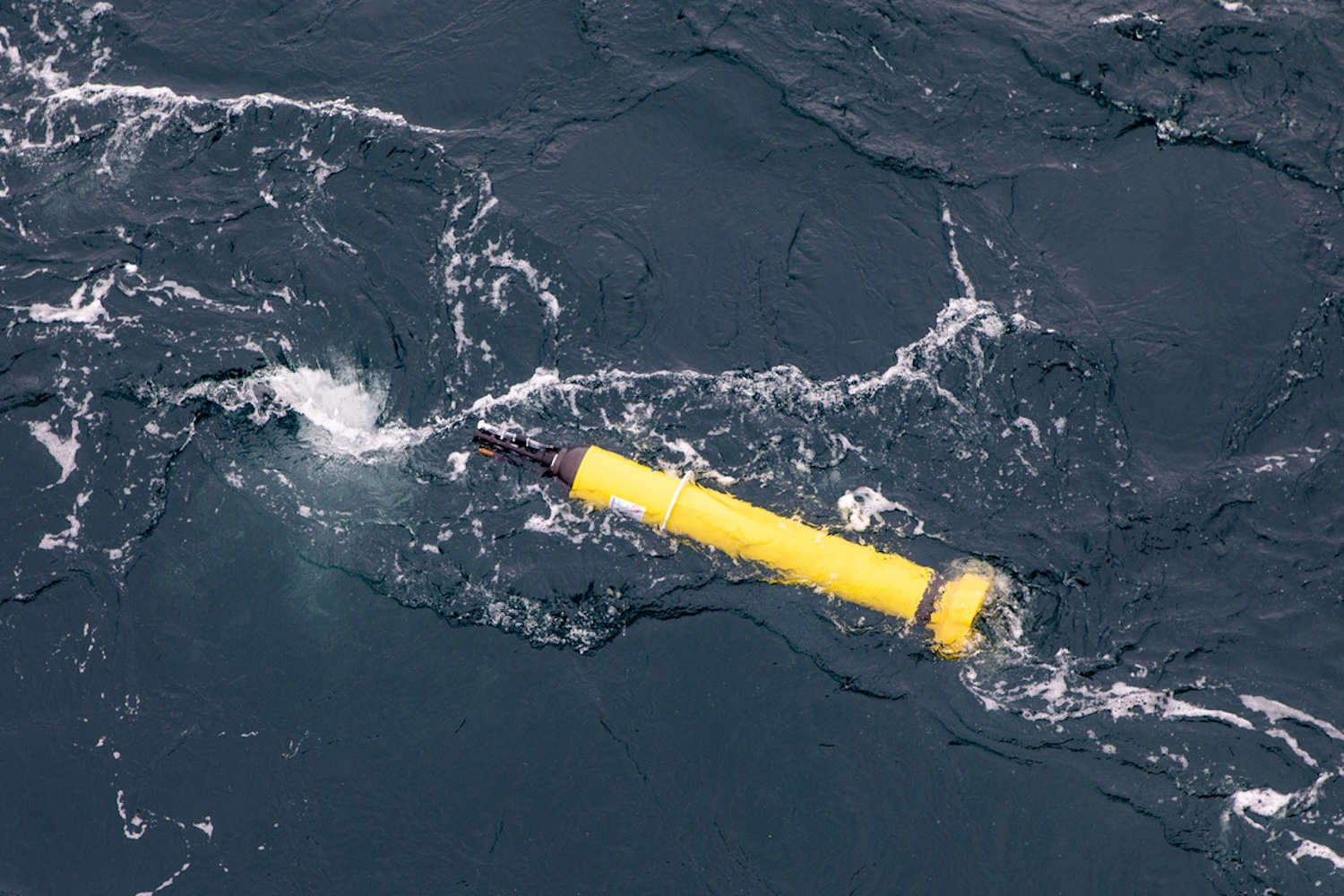
Thanks to an underwater survey robot, oceanographers are getting the first-ever readings collected from underneath East Antarctic’s vast ice shelves. But for a moment, it wasn’t clear when(or if) the bright yellow float would return to the ocean’s surface after it dove underneath the ice.
“We got lucky,” Steve Rintoul, an oceanographer with Australia’s Commonwealth Scientific and Industrial Research Organization (CSIRO), said in a statement.
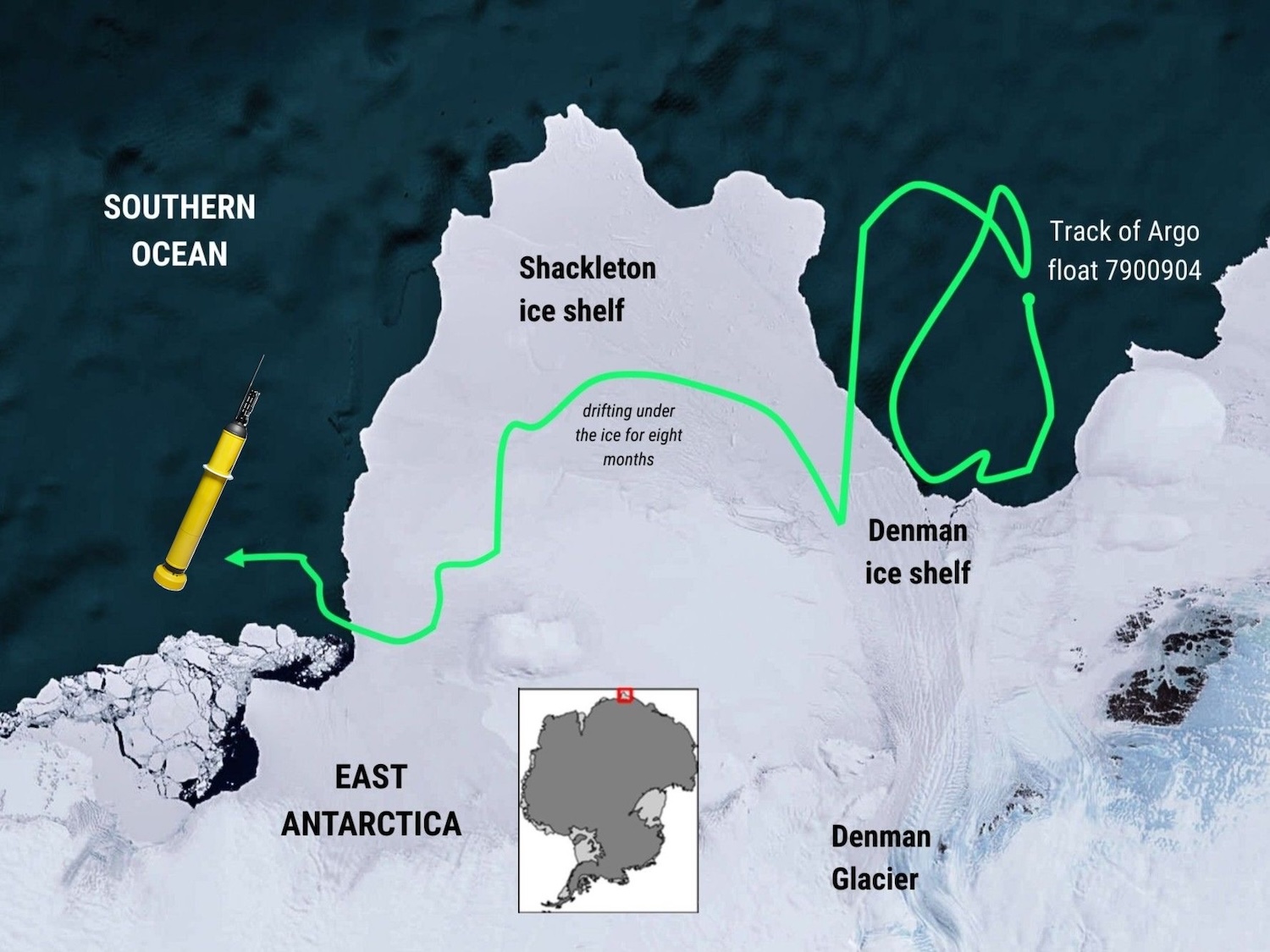
Part of the ongoing Argo survey project, the autonomous device has spent over two-and-a-half years drifting through roughly 186 miles of frigid ocean currents. In that time, the device has amassed almost 200 reports containing data on water temperature, pressure, and salinity, as well as oxygen, pH, and nitrate levels. However, the float at one point journeyed underneath the Denman and Shackleton Ice Shelves, where it spent the next eight months collecting readings from a never-accessed region of the planet.
“These unprecedented observations provide new insights into the vulnerability of the ice shelves,” Rintoul added.
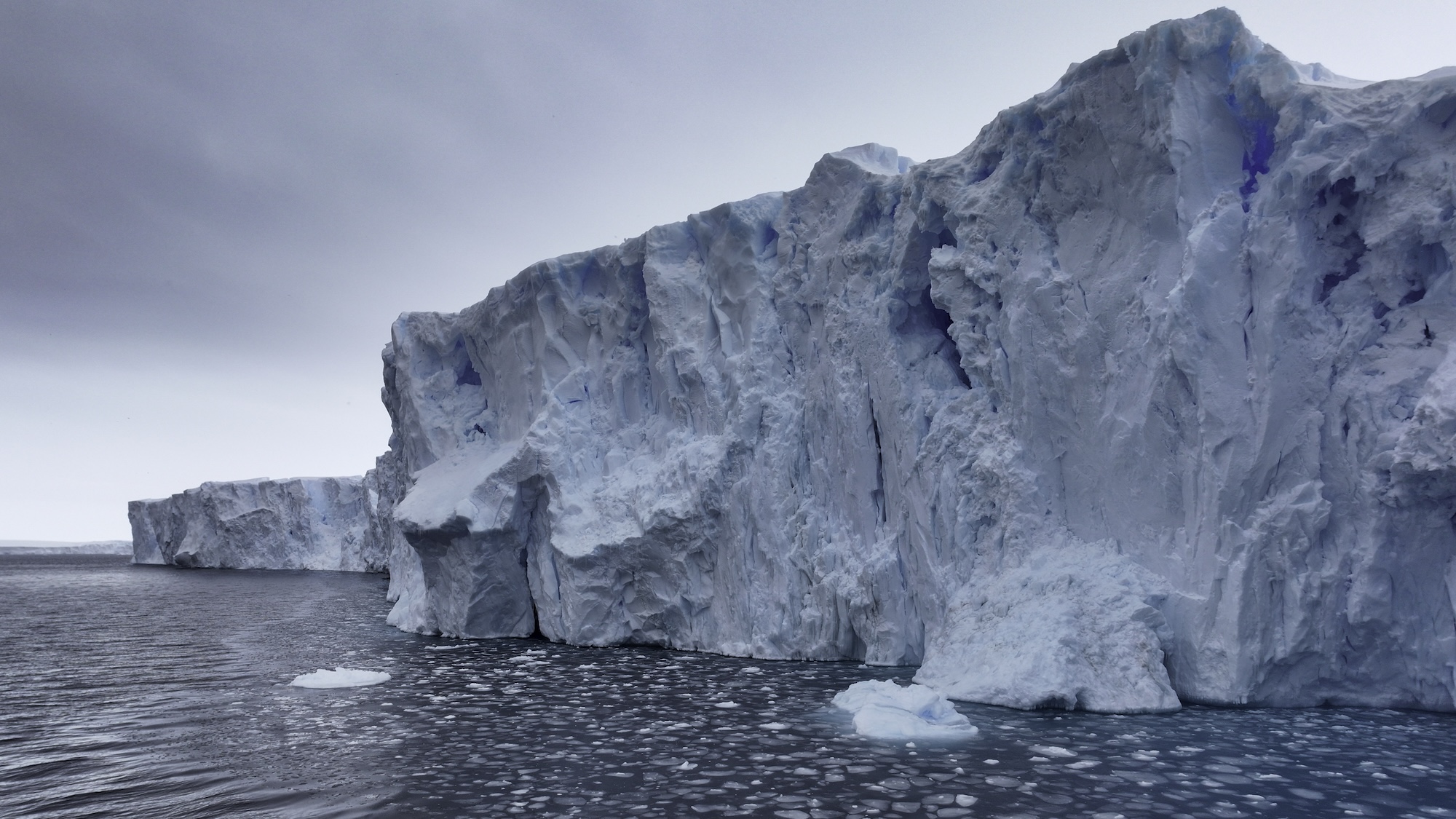
The team’s findings, detailed in a study published in the journal Science Advances, both reinforce and update our current understanding of icy shelf health. The Shackleton Ice Shelf is the furthest north in the East Antarctic and remains unexposed to warmer waters that might melt it from below. However, the Denman Glacier is in a more precarious state. Denman’s disappearance alone would contribute to a nearly five foot rise in global sea levels. Unfortunately, Denman is now exposed to some warmer waters, which could accelerate melt rates and facilitate a more unstable ice retreat.
This melting is largely dependent on the ocean’s state within a nearly 33-foot-thick boundary layer that exists directly underneath the ice shelf itself. Argo floats are designed to measure various elements inside this boundary layer, but until now, none have spent such an extensive amount of time near one.\
“Against the enormity of such a wild region, this is an amazing story of the little float that could,” added Delphine Lannuzel, an oceanographer unaffiliated with the study who sampled ocean health near the Denman shelf earlier this year. “Under incredibly testing conditions, a relatively tiny instrument has delivered us a wealth of invaluable information.”
Researchers hope the Argo float won’t be the last to visit these and other ice shelves. Rintoul explained that these types of robots offer vital data that helps improve climate computer models and reduce uncertainties about sea level rise.
“Deploying more floats along the Antarctic continental shelf would transform our understanding of the vulnerability of ice shelves to changes in the ocean,” said Rintoul.
