
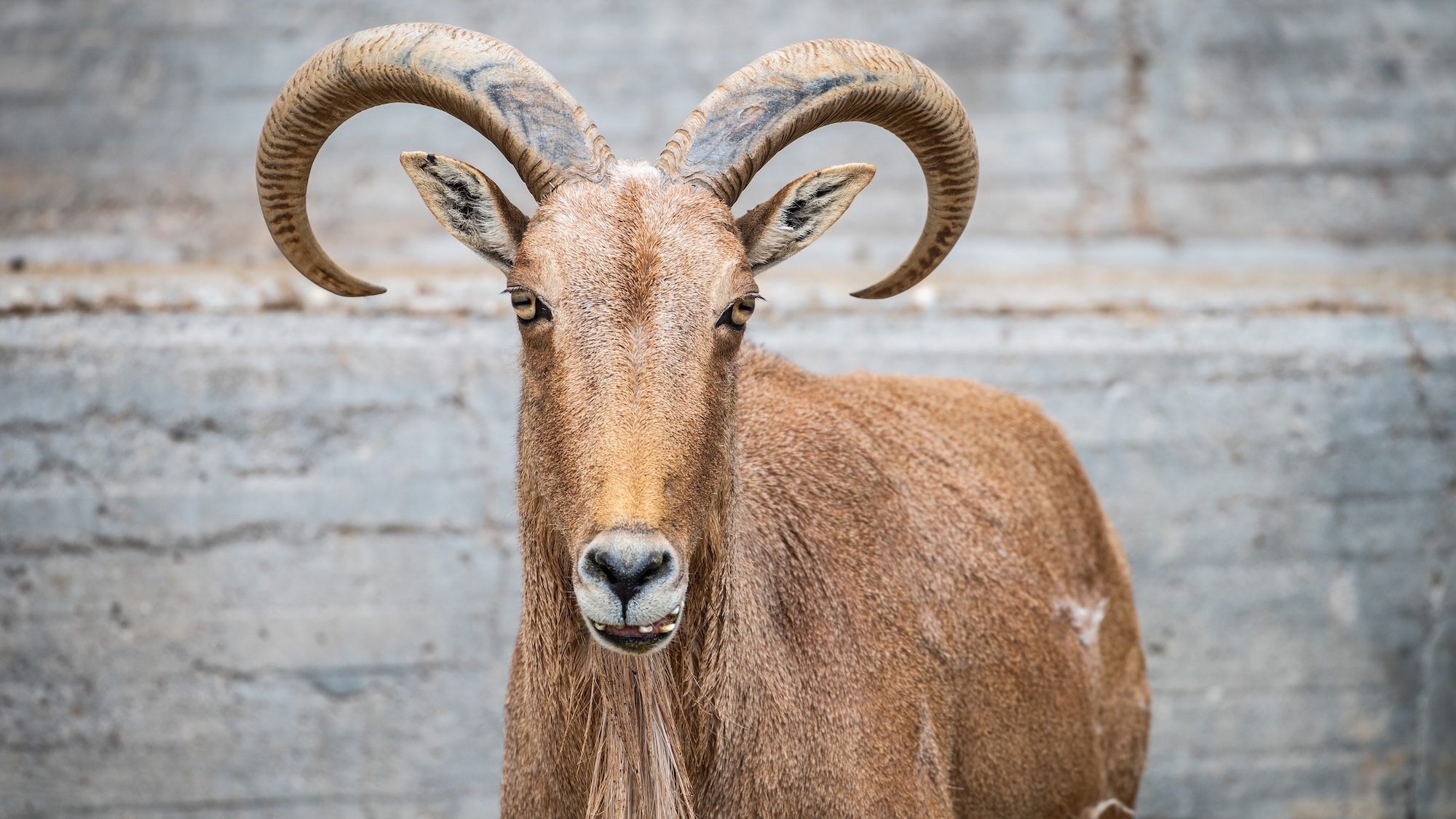
An invasive sheep called the aoudad (Ammotragus lervia) is causing problems across Texas, but the biggest issue has likely remained underexamined for decades. A study recently published in the journal Scientific Reports suggests seemingly asymptomatic aoudads are spreading pneumonia-causing respiratory pathogens to the state’s native bighorn sheep. Based on recent experiments conducted by a team of wildlife biologists and veterinarians, the sick bighorn sheep only have a one-in-five chance of survival.
“Wildlife managers have been concerned about the potential aoudad disease threat for our native species since the late ’70s, but relatively little work had been done to characterize these risks,” Logan Thomas, a study co-author and Kansas State University biologist, said in a statement.
Aoudads first arrived in West Texas shortly after World War II, when veterans returning from North Africa’s Barbary Coast arrived home with the large, horned sheep intending to breed them for big game hunting. Aoudad numbers have since exploded by over 1,800 percent, with an estimated 30,000 of them now living in the region. Their drain on local food sources is nudging out the state’s remaining 1,500 bighorn sheep, while bacteria like Mycoplasma ovipneumoniae spread by the aoudads threatening commercial livestock, goats, and sheep. The animals are such a nuisance that Texas even recently introduced a bill allowing hunters to shoot them from helicopters.
To better understand the true impact of diseases carried by the aoudad, researchers recently exposed native bighorns to the pneumonia-causing pathogens, M. ovipneumoniae and Pasteurellaceae. They discovered aoudads often remain infectious for prolonged periods of time despite showing comparatively few symptoms, while sick bighorn sheep exhibit far more severe issues. What’s more, the sheep mortality rates may be as high as 80 percent.
“Some other work we did on this suggests aoudad handle these pathogens far better than bighorn sheep, possibly because aoudad evolved with some level of exposure to them whereas bighorn did not,” explained Thomas.
A subsequent survey of 351 free-range aoudad throughout Texas showed nearly 10 percent were carriers of M. ovipneumoniae DNA, while over 55 percent possessed antibodies from previous exposure. Juvenile aoudads also appear to shed more pathogens than adults.
More investigations are needed, particularly when it comes to understanding various strains’ virulency. Conservationists also continue to adapt their strategies to protect the state’s remaining bighorn sheep.
“This research has changed the way TPWD manages bighorn in Texas,” veterinary pathologist Walter Cook explained. “For example, they recently relocated over 70 uninfected bighorn to Franklin Mountains State Park in El Paso, where there is very little chance of aoudad reaching the area.”
In the meantime, Thomas warned that any aoudad spotted in Texas should be viewed as a possible problem.
“Because aoudad show little, if any, signs of infection, every aoudad on the landscape should be conservatively considered a risk to bighorn sheep,” he added.
