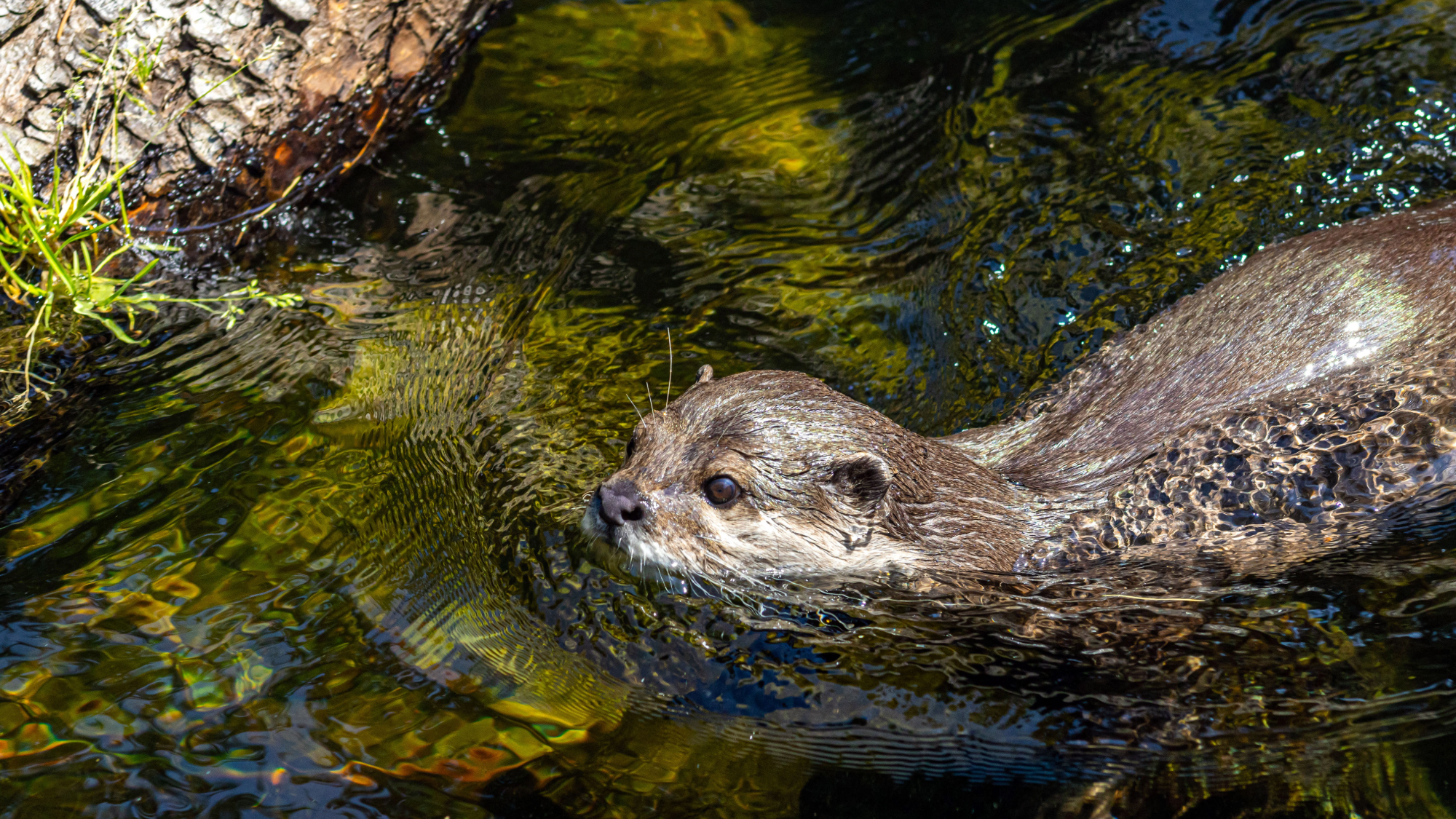
El Capitan. Glowing waterfalls. Half dome. River otters. Yosemite National Park is home to all of these natural wonders and more. The plucky and playful mammals have officially been spotted in the population park in Northern California—and park rangers want the public’s help to monitor them.
Even for experienced rangers and biologists, North American river otters (Lontra canadensis) are difficult to monitor. They have a very high metabolism, and can eat about 15 to 20 percent of their body weight in a single day. They spend a lot of their time looking for prey, including fish, crayfish, crabs, frogs, birds’ eggs, and even some reptiles like turtles.
Additionally, one otter can travel five to 10 miles a day along rivers and streams, making them difficult to track. According to the California Department of Fish and Wildlife, river otters’ range stretches all of Northern California’s five coastal counties from Oregon down to San Francisco Bay, the Sierra Nevada Mountains from Mariposa County north, and large parts of the inland northern valley. Yosemite National Park itself has over 1,700 miles of streams, so that’s a lot of wet ground to cover when looking for otters.

River otter sighting on Yosemite Valley trail cam
Park rangers are asking the public to note the location, date, and time of any river otter sightings in Yosemite. Written sightings can be reported in the comments section of this Facebook post or the park’s contact us form. Any videos or photos can be shared through a direct message on Instagram.
“Your observations can help us better understand how otters roam and use Yosemite’s waterways,” the rangers write.
River otters are not endangered, but they have had a rocky history. During the 19th and 20th centuries, they were extensively hunted and trapped for their fur and many were removed from their natural range. Decades of conservation and reintroduction efforts are currently helping populations to recover. California’s population is considered fairly stable, but they are still at risk from further habitat destruction and water pollution.