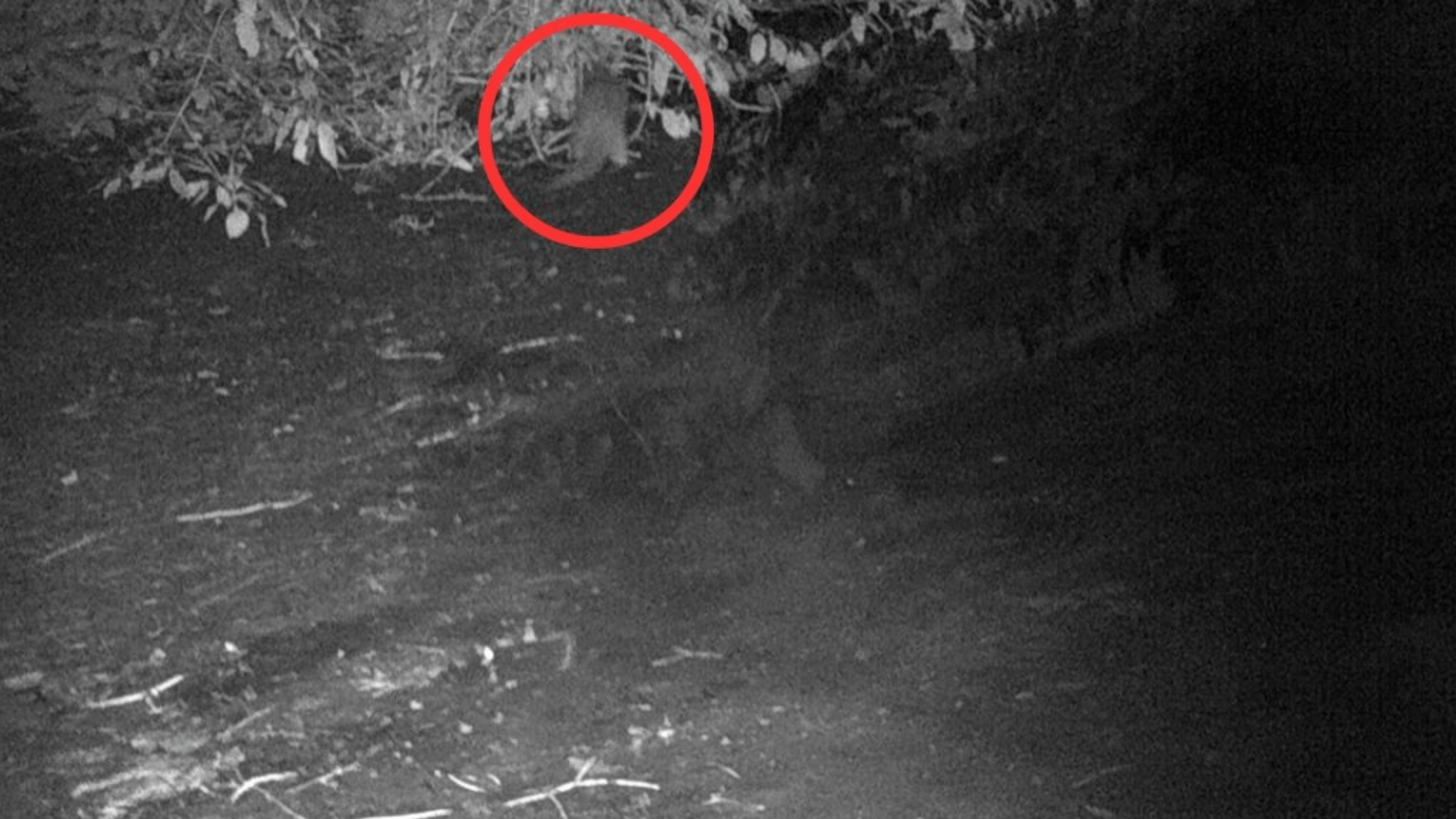
A North American river otter (Lontra canadensis) was recently spotted along New York City’s Bronx River for the first time in roughly 100 years. Now, the Bronx River Alliance and Bronx Zoo would like the public’s help to choose a name for this symbol of conservation success.
Voters can choose from three names—Nessie, Ruthie, and Morgan. The names honor Nessie Panton, Ruth Armstrong, and Morgan Powell, three community leaders connected to the river.
You can vote by commenting on Instagram. Voting closes on Tuesday, September 29, at 11:59 p.m. EST and the winner will be announced at the live at the Bronx River Alliance’s Upstream Soiree fundraiser on October 1.
On August 19, the Wildlife Conservation Society (WCS) Bronx Zoo announced that the river otter had been spotted in the Bronx section of the river for the first time in approximately a century. Bronx Zoo scientist RJ Hawkins captured the image while conducting long-term camera trap monitoring for wildlife along the river overseen by the Wildlife Conservation Society’s Education Department based at the Bronx Zoo
“When I first reviewed the images, I could hardly believe what I was seeing,” Hawkins said in a statement when the photo was released. “Knowing this may be the first documented river otter in the Bronx in generations was an incredible moment. It shows why long-term wildlife monitoring and environmental restoration efforts matter.”
The 23-mile-long Bronx River is sourced from the Kensico Reservoir north of New York City, and winds through Westchester County into the Bronx. It is also the only major watercourse within the city limits that is not entirely tidal. River otters once ranged throughout New York’s waterways, but disappeared from many places due to pollution, habitat degradation, and unregulated trapping. The Bronx River itself was once heavily polluted and regarded as one of the most neglected urban rivers in the United States.
Over the past 25 years, restoration work led by public agencies, nonprofit organizations, community volunteers, and conservation partners has helped clean up the river. In 2007, beavers returned to the river for the first time in over 200 years. Hawkins also spotted a mink this summer.
River otters are considered indicators of a healthy freshwater ecosystem because they depend on clean water, plenty of fish, and intact river habitats. The WCS says it offers evidence that decades of conservation and restoration work are transforming the Bronx River.
“There are moments in conservation that remind us why this work matters, and this is one of them,” added Craig Piper, Wildlife Conservation Society’s Interim Executive Vice President of Zoos & Aquarium and Director of the Bronx Zoo. “Thanks to a broad coalition of public and private partners, we can celebrate the return of an otter as a result of decades of restoration work to provide cleaner water and healthier habitat. It’s a win for both wildlife and people.”
While researchers caution that one single observation does mean that a resident population has moved in, the sighting shows that the Bronx River is increasingly capable of supporting native wildlife.
“This otter’s return is a gift, not just to the Bronx River but to the communities that have fought for 50 years to bring this river back to life,” said Javier Lopez, Interim Executive Director of the Bronx River Alliance. “For too long, the Bronx River was treated as a neglected afterthought, and our communities bore the burden of that neglect. Today, this otter reminds us that when we invest in nature, nature responds, and when communities lead, change is possible.”