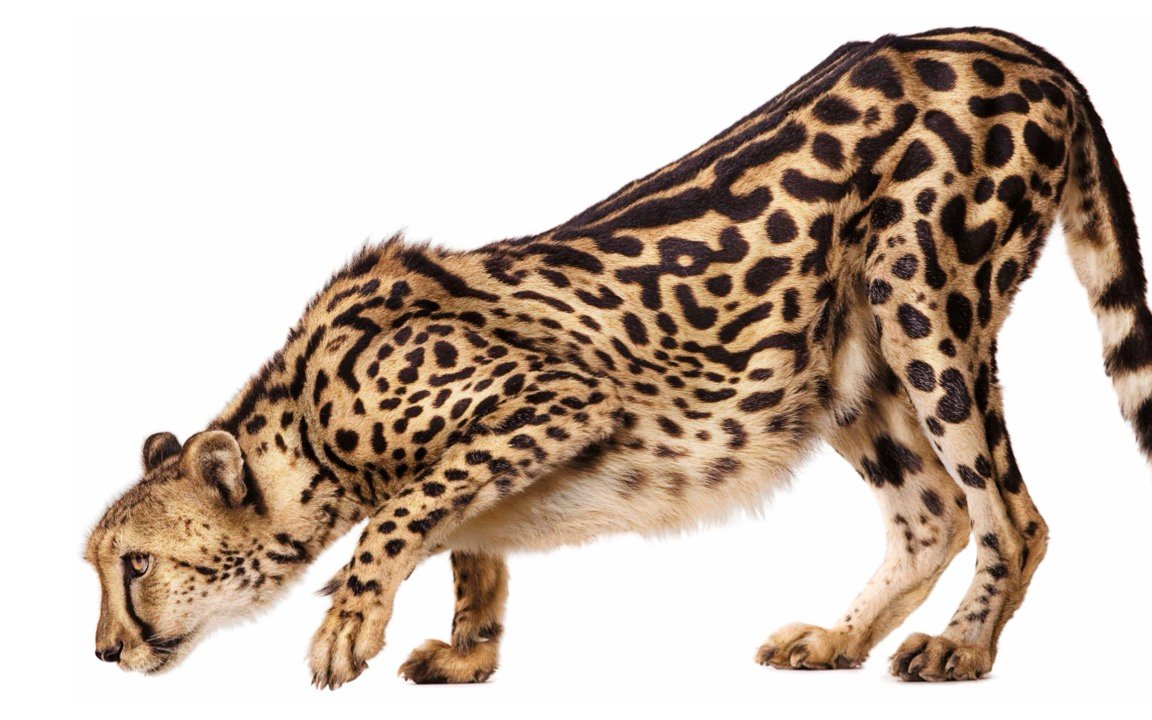
Excerpted from UNITED NATURE by Andrew Zuckerman. Copyright © 2026 by Andrew Zuckerman. Published in the United States by Crown, an imprint of the Crown Publishing Group, a division of Penguin Random House LLC.
For as long as I can remember, I have made images. Much of my childhood was spent in the darkroom in my parents’ basement, surrounded by the smell of chemicals and the magic of forms slowly appearing on paper. Of all the things I’ve pursued in my life, the camera has been the one constant. It has shaped how I see: a device that slows me down, compels me to look more deeply and to understand the subjects on an essential level. And for me, the subject has always been other forms of life.
In that sense, I am part of a long tradition. The very first images humans made were not of themselves, but of other beings. Almost forty thousand years ago, in the caves of Chauvet in France, someone painted lions, rhinoceroses, mammoths, and bears with striking naturalism, allowing the animals to emerge from the contours and relief of the stone walls. Nearly twenty thousand years later, in the caves of Lascaux, we find more painted walls: herds of horses in motion and bison colliding, painted with sophisticated perspective and composition. Humans have never stopped depicting other beings. In Egypt, cats and jackals accompanied the dead into eternity. Dolphins appear again and again on Greek pottery. In medieval manuscripts, we find lions and owls used to represent human virtues and vices. Enlightenment engravers focused on the natural world, seeking order through detail. A generation later, John James Audubon’s The Birds of America presented perhaps the most realistic natural history illustration: life-size depictions of herons, warblers, and owls, rendered with exquisite precision.
With the arrival of photography two centuries ago, the human act of depicting the natural world shifted profoundly. This was not just a new tool, it was a rupture: the first time nature could enact itself with a fidelity and presence previously unseen. The world’s first published book of photographs arrived in 1843: Photographs of British Algae: Cyanotype Impressions by Anna Atkins. Atkins treated paper with a chemical solution, added specimens onto the treated paper, and left them under sunlight. This produced a white silhouette against a blue background. Atkins created these pictures of algae at the height of botanical illustration. While her peers were exhibiting artistic mastery over nature, she was removing herself. Here, the algae left its own impression directly on the paper. The plant depicted itself. The plant had agency.
One year after Atkins’s algae cyanotypes, William Henry Fox Talbot published The Pencil of Nature, a book containing twenty-four calotypes, the first paper negative, which allowed multiple positive prints to be made from a single negative. Photography was so new that Talbot felt required to include a notice: “The plates of the present work are impressed by the agency of Light alone, without any aid whatsoever from the artist’s pencil. They are the sun-pictures themselves, and not, as some persons have imagined, engravings in imitation.” Like Atkins, Talbot emphasized that the image was not mediated by the hand of the artist but drawn directly by nature itself—“sun-pictures” made by light. These early inventors of photography were introducing a new way of observing and recording the living world—one in which nature was no longer simply depicted, but allowed to speak for itself.
Only a few years later, in 1859, Charles Darwin published On the Origin of Species, advancing the radical idea that all life was in flux and that variation, adaptation, and transformation were the fundamental conditions of existence. In this light, Atkins’s cyanotypes seem almost prophetic: life depicted not as a fixed emblem to be mastered, but as a living process.
Skipping forward to the late nineteenth century, Cherry Kearton was pioneering what is now considered wildlife photography by hiding in hollowed-out ox carcasses or building bird-shaped blinds to get close to subjects. In the early twentieth century, photography extended into motion. Eadweard Muybridge’s studies of horses and birds revealed the invisible mechanics of gait and flight, moments too fast for the human eye to clock. Jacques Cousteau created ocean documentaries that gave the general population access to and intimacy with distant species.
By the late twentieth century, nature photography and film had become not only a way of seeing, but also a way of caring—shaping public consciousness about endangered species, vanishing habitats, and the fragility of ecosystems.
This notion of the image as a tool to influence our thinking found perhaps its most profound expression in the late 1960s, when Stewart Brand lobbied NASA to release the first photographs of the whole Earth seen from space. When those images finally appeared on the cover of his Whole Earth Catalog, they offered a new planetary perspective: not a map or an illustration, but the living sphere itself. For the first time, humanity could see Earth as a singular organism.
That one image—blue oceans swirling with white clouds, landmasses without borders—reshaped the cultural imagination. It gave rise to the environmental movement, inspired new sciences of systems and ecology, and embedded the idea that the planet itself is alive into the culture.
In the decades that followed, technology expanded the reach of our seeing. Satellite imagery made the whole Earth continuously observable: forests shrinking, glaciers collapsing, storms forming in real time. Microscopy revealed networks of neurons firing, cells dividing, viruses mutating. Telescopes peered to the edges of the universe, returning images of galaxies colliding and stars being born. Today, cameras can show bacteria and galaxies with equal fidelity.
Each age has found its own surface, its own technique, but the effort has always been an attempt at understanding both the lives of others and our own experience. Across this long arc, from the walls of Chauvet to the cyanotypes of Atkins, from Muybridge’s horses to Brand’s Whole Earth, images of the living world have not only recorded what is here, but affected how we think and feel about it. They remind us that seeing is never neutral: It is always an act of framing, and an invitation to imagine our place within the larger weave of existence.
The frame itself is an extraordinary tool of delineation. As an editor, it decides what belongs and what does not. The power of the frame lies in its capacity to determine which information matters.
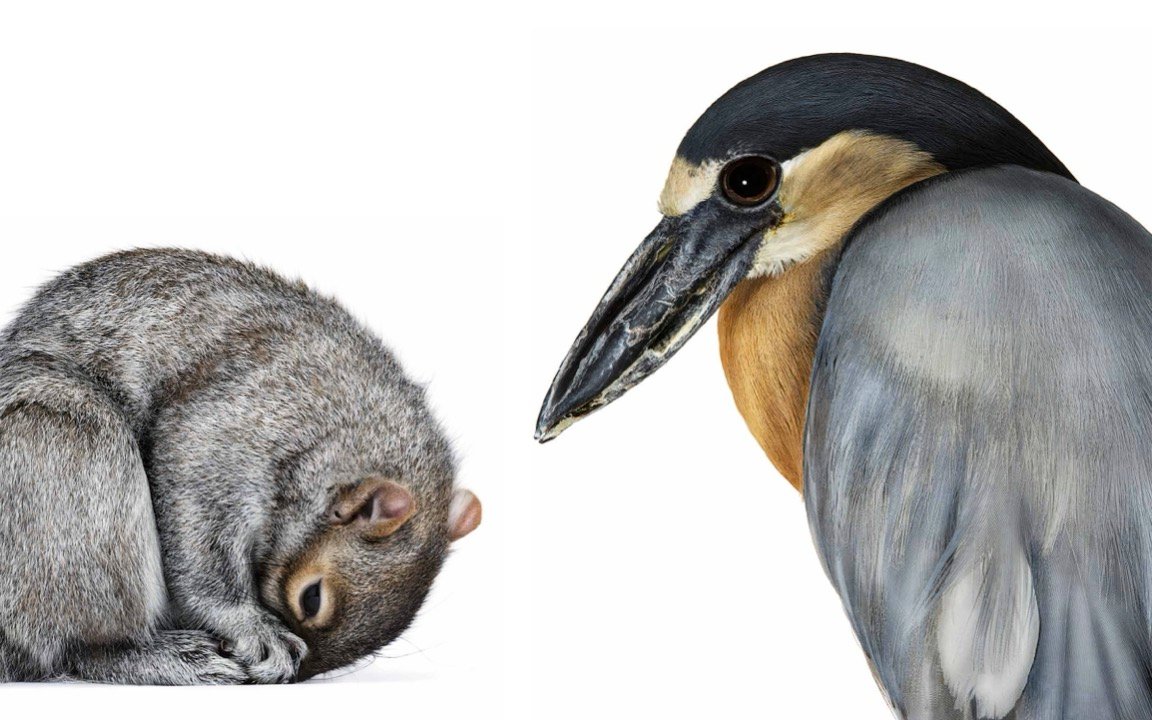
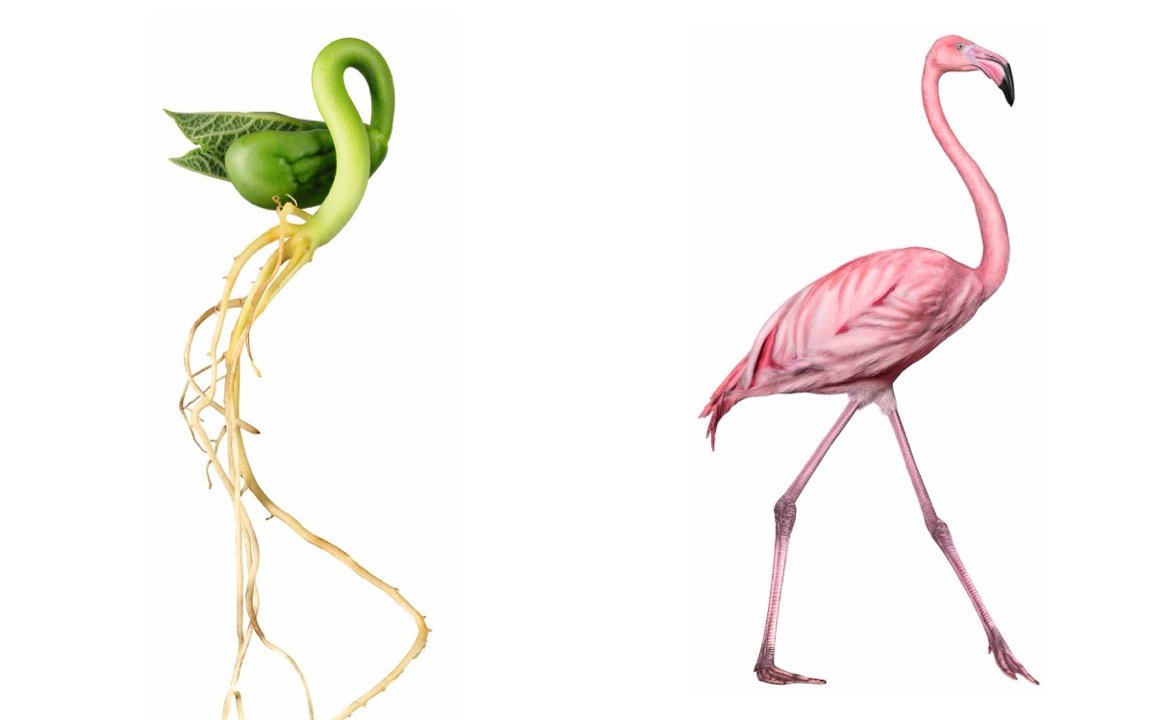
My focus then started to come out in how I made pictures. The subject itself mattered less to me than resolving how to present it. Eventually, I found the pure white background, where the image becomes an encounter: a relation between two living beings shaped by a shared evolutionary history.
The white background was never an aesthetic choice. It’s purely functional. We never look at something singularly, but rather are simultaneously looking at the subject in relation to ourselves. I’ve often felt that our sense of ourselves is not a figure, it’s an abstraction. We don’t think of ourselves as a figure in relation to the ground. And so when wanting to provide the opportunity of connection to the subject—the other—that subject presented on white creates a shared plane for it and us. White space isn’t empty. It’s a condition that allows perception to happen. It lets the image reach the body before it’s interpreted by the mind. In that space, assumptions can fall away and the subject can be encountered in a preconceptual field, before meaning has settled.