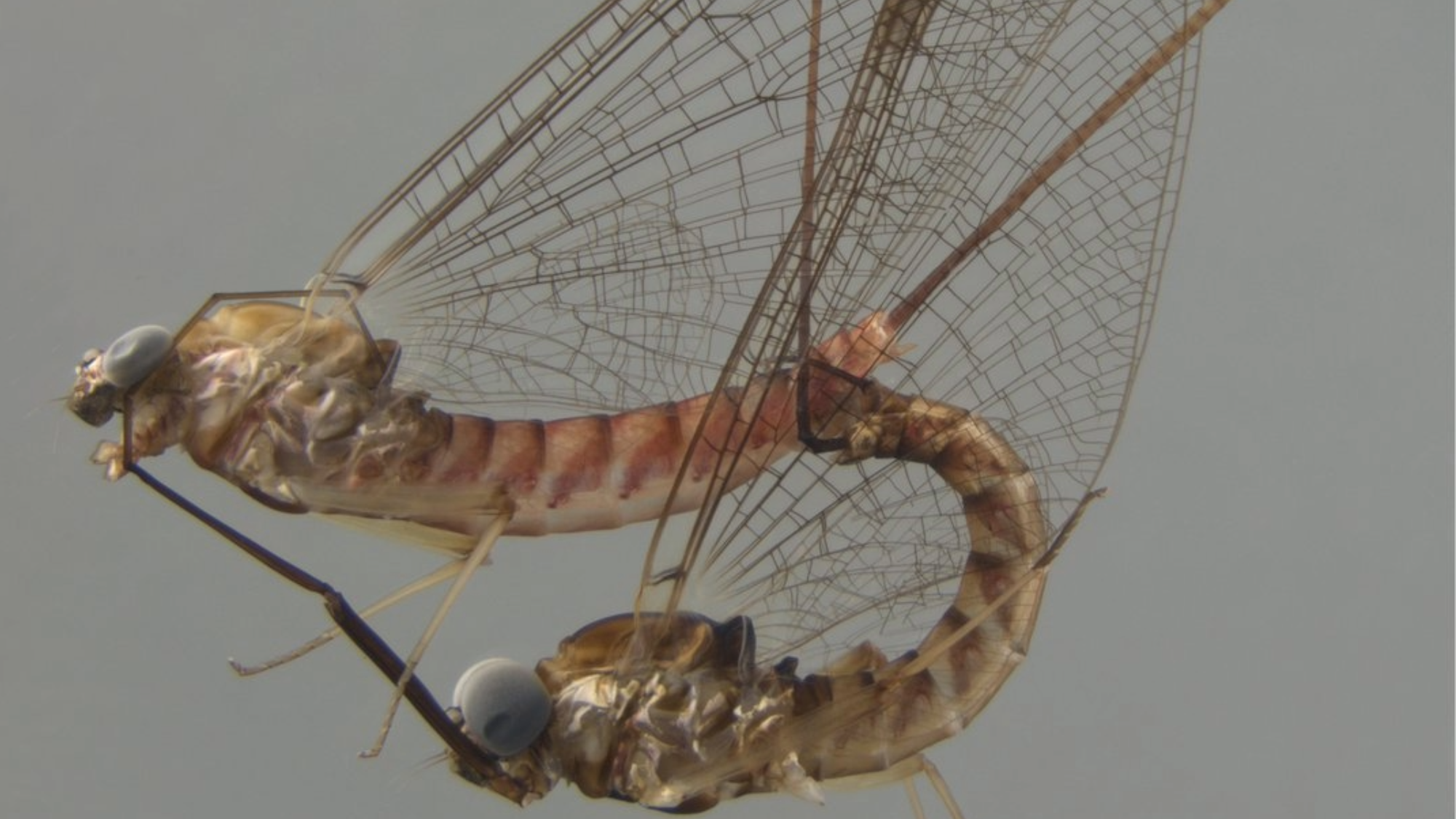
Researchers studying copulation in mayflies pulled off a stunt worthy of the naughtiest ancient Greek myths. Just like Hephaestus used an unbreakable net to trap his wife Aphrodite and her lover Ares in the middle of their adulterous act, a team of scientists in Germany deployed a long-handled net to catch mating insects, and then used freezing spray to preserve the moment for study.
And that’s not even the strangest part of the study titled, “When mayflies have an erection: functional morphology of the genitalia in Ecdyonurus.”
Frozen in the act
Mayflies are a group of strange winged insects with dramatic life cycles. They live as larvae in freshwater for most of their lives. When they finally become adults, they stop eating (their gut closes off and turns into a balloon) and they exist to fulfill a single mission—sex.
Before the Insect Systematics and Diversity study, researchers knew very little about mayfly mating. It’s easy to see why, since the act is fast and it takes place mid-flight, in the air. The team was clearly undeterred in their quest to understand the intimate affairs of much smaller beings.
The team collected Ecdyonurus venosus mayflies in Germany’s Black Forest. There, they used a long-handled net to catch copulating pairs. Unsurprisingly, most of the captured duos split up right away. Those that didn’t, however, would experience the literal meaning of Dolly Parton’s hit song “I Will Always Love You.” The team then shock-froze them with freezing spray and preserved them in ethanol.
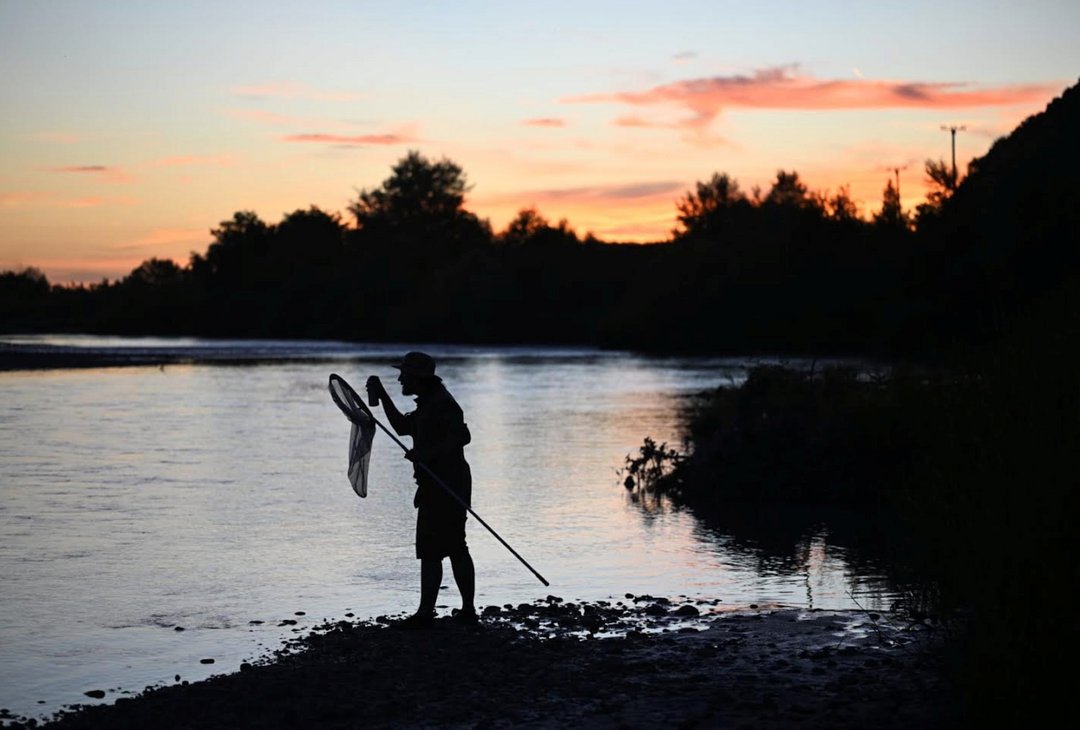
The researchers then used synchrotron X-ray microtomography (µCT) at the synchrotron particle accelerator of the Karlsruhe Institute of Technology, producing images for a digital 3D model.
“The aim of the present work is to clarify the function of genital interactions during copulation in the mayfly genus Ecdyonurus,” the team wrote in the study, “and to unravel the mechanisms that lead to the change in the penis configuration during mating.”
Yes, you read that right. Their penis changes—and the males sort of have two of them.
A tale of two penises
Mayfly sex is of a shockingly acrobatic dynamic. Males swarm over bodies of water to seduce females. When a female introduces herself into the fray, the copulation occurs immediately and in midair. The male attaches onto the female from below, using forelegs to hold onto the bases of her wings, and then bends his abdomen up and over. He also uses specialized genital forceps called claspers to secure his grip. Mating can now take place.
Females have a copulatory pouch that opens towards the back. Males have two separate penis lobes that have spines in between them and claspers on both sides of the “paired penis.” Similarly to the claspers, the spines keep the paired penis in place during mating.
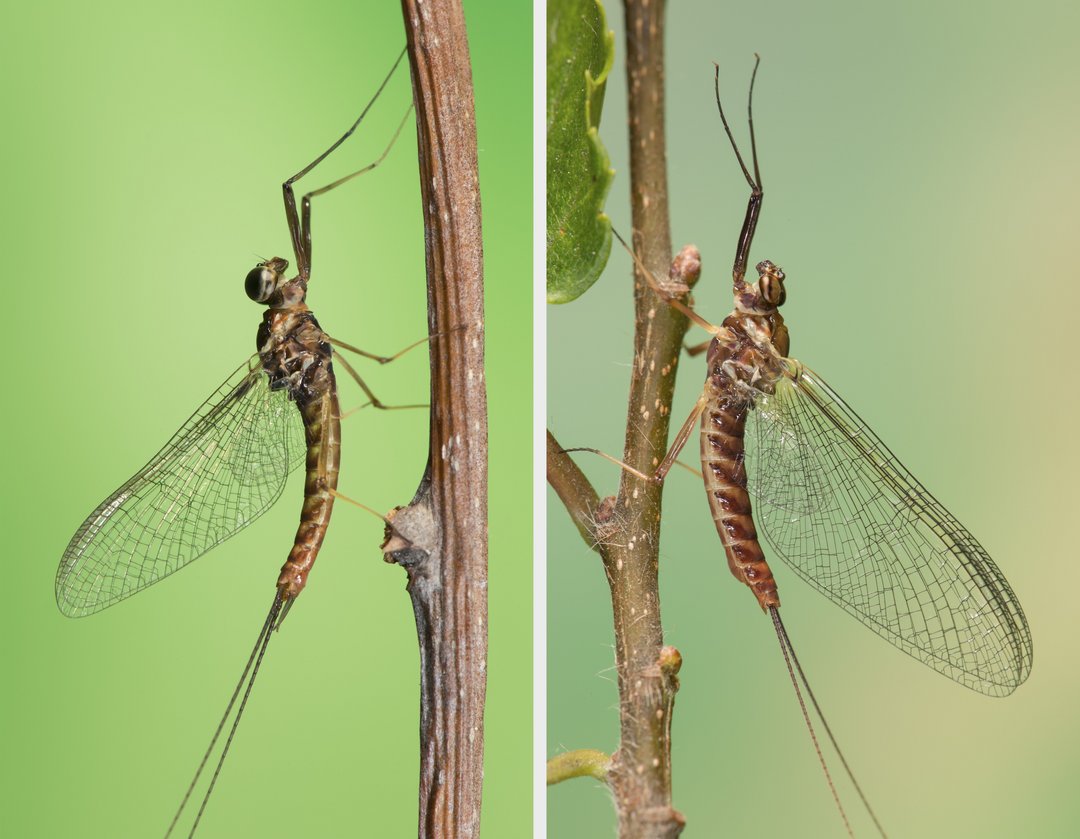
“µCT scans show that the penis changes shape during mating powerful muscles cause[ing] a deformation of the penis shaft, making the penis lobes fold over. At the same time, the penial spines extend and prick into the thin membrane of the female’s copulatory pouch,” per a statement. “This stretches the pouch so that it can receive large amounts of sperm, which are stored in a folded membrane at the front of the copulatory pouch.”
As if mayfly mating wasn’t complicated enough, other males frequently attempt to steal the female, so male mayflies’ sturdy attachment is doubly useful. Once the mating is done, however, the couple doesn’t get to celebrate their achievement for long.
Researchers don’t know if they mate multiple times, but not much time passes before the males die of exhaustion from the swarming flight. The females lay the fertilized eggs in upstream water—and then also die.