
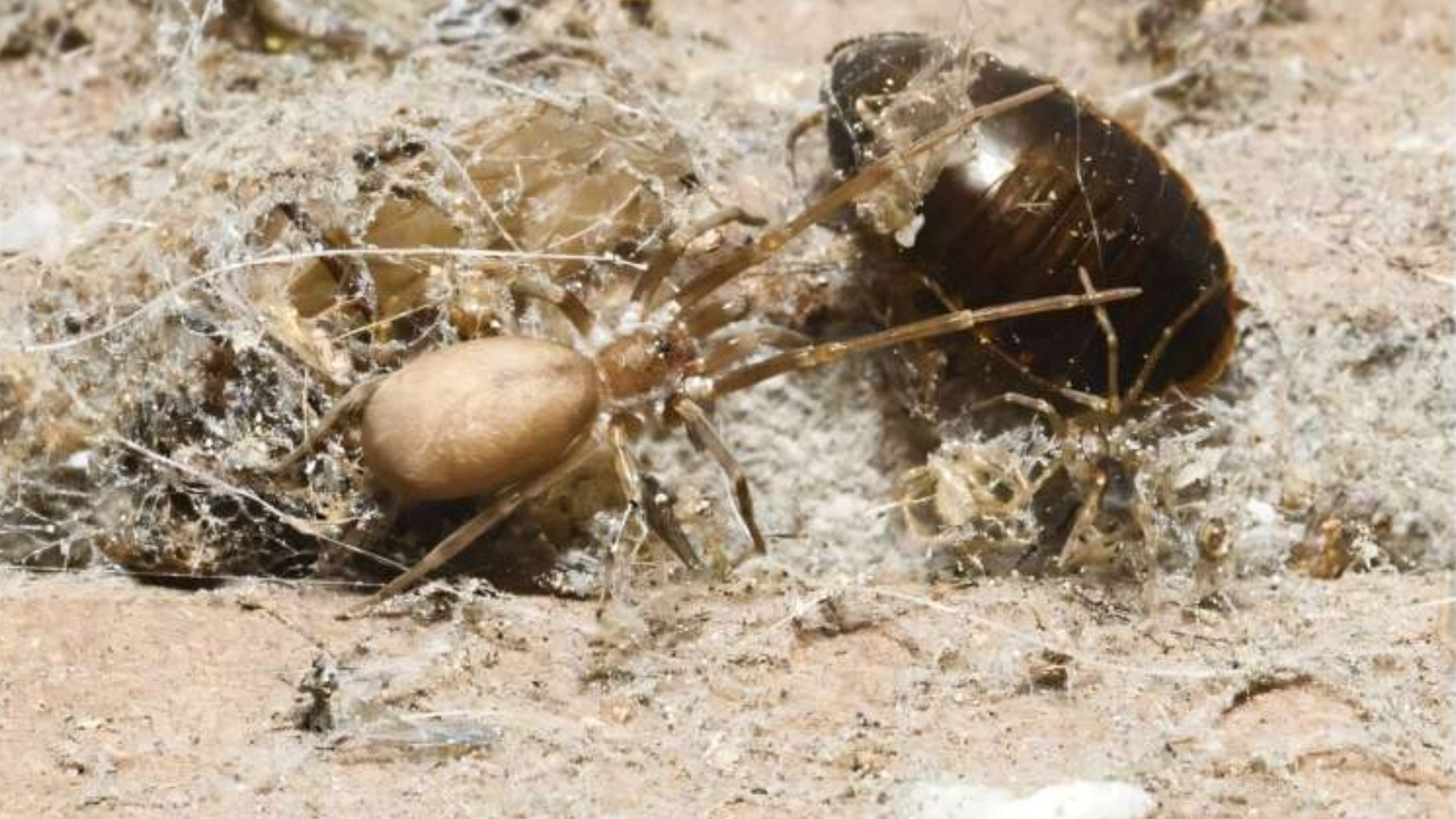
We can call this newly discovered spider another brick—or web—in the wall. Scientists in Colombia named the new species Pikelinia floydmuraria in honor of English rock band Pink Floyd and the arachnid’s preferred habitat—walls. “Muraria,” is derived from the Latin word for “wall,” and alludes to the psychedelic band’s 1979 multi-platinum album, The Wall.
The team found Pikelinia floydmuraria living on the walls of buildings and even spotted one on a colorful mural in Quindío, Colombia. This new species of crevice weaver spiders is described in a study published in the journal Zoosystematics and Evolution (ZSE).
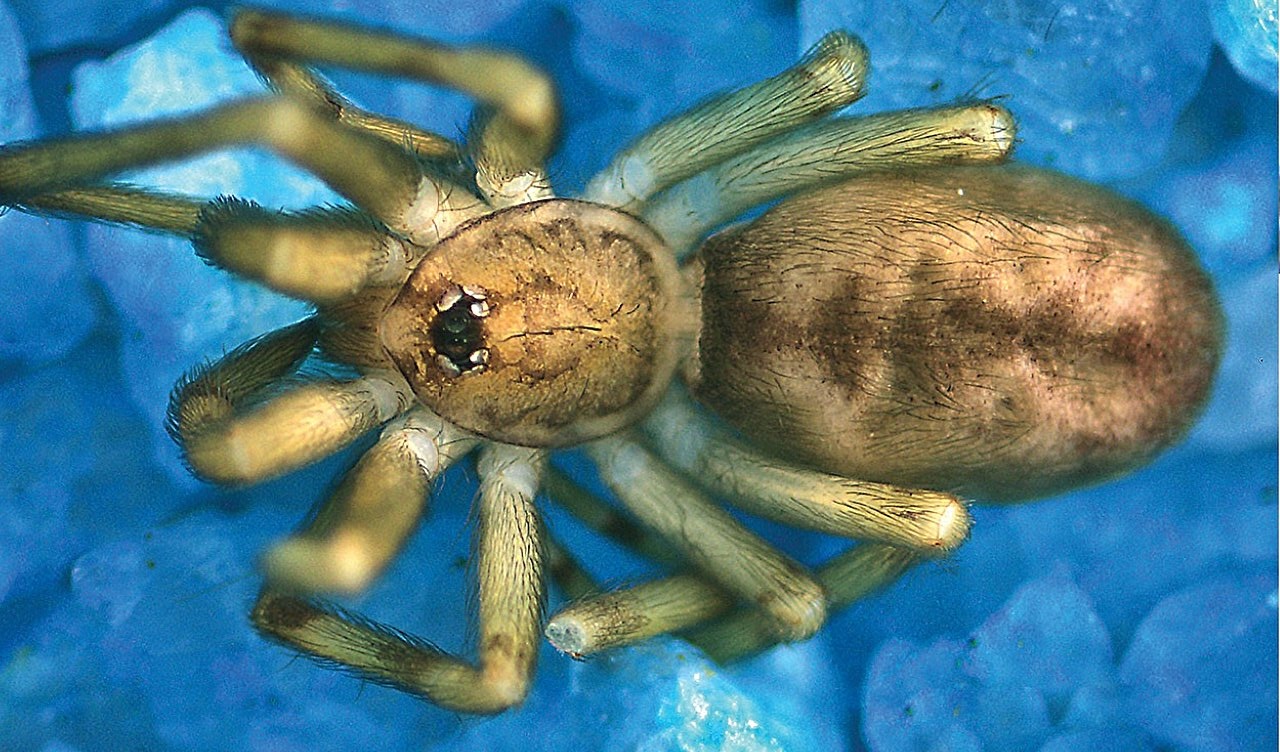
Pikelinia floydmuraria is considered a synanthropic spider. These species have adapted to human-created environments over time. While they serve an important role in the ecosystem in Colombia, researchers knew little about their biology and nutritional ecology until now.
The team found that these spiders are skilled hunters, mostly feeding on insects such as flies, beetles, and ants. They typically build their webs near streetlights to catch insects attracted to the glow. While they only measure a tenth of an inch long, Pikelinia floydmuraria can take down prey up to six times bigger than them. These notable hunting skills help keep local insect populations under control.
In addition to only being about 3 to 4 millimeters long, their females have reproductive organs made of long and slender S-shaped tubes. The spiders are often tucked into cracks and crevices of building walls.
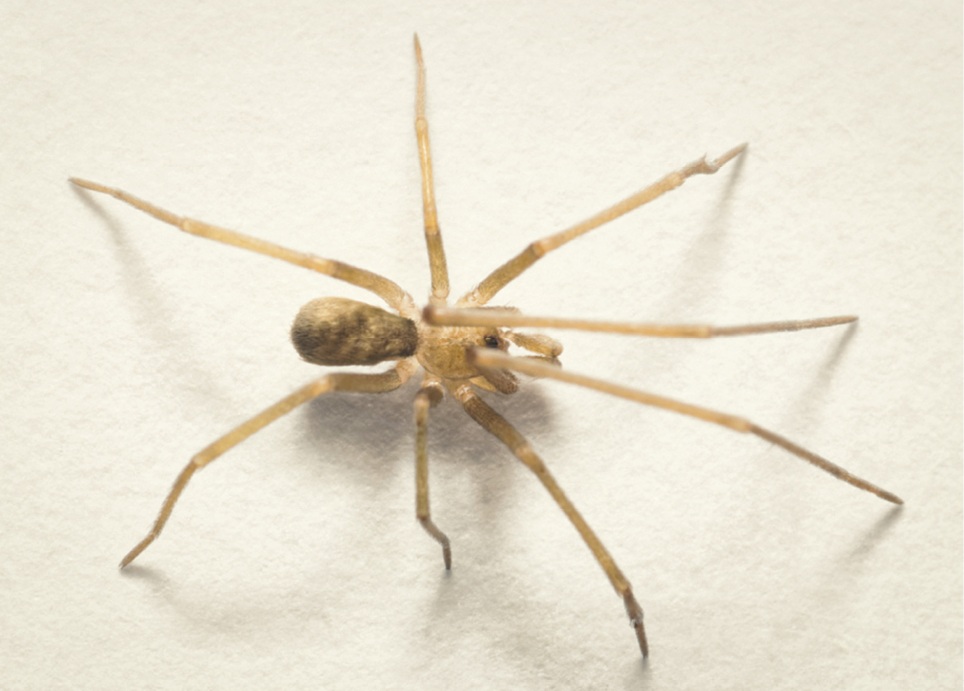
Despite being separated by a stretch of the Pacific Ocean and Andes Mountains, Pikelinia floydmuraria is a very close relative of a Galápagos Islands spider species called Pikelinia fasciata. The two look almost exactly alike, and scientists are still figuring out how such similar species ended up living over 1,000 miles apart.
More research is needed to understand the ins and outs of this new spider’s life, particularly DNA barcoding. This could explain their evolutionary history. What’s clear is that while they may be small and not headed to the “dark side of the moon,” their impact on maintaining a healthy urban ecosystem is as bold as their namesake’s music.
