
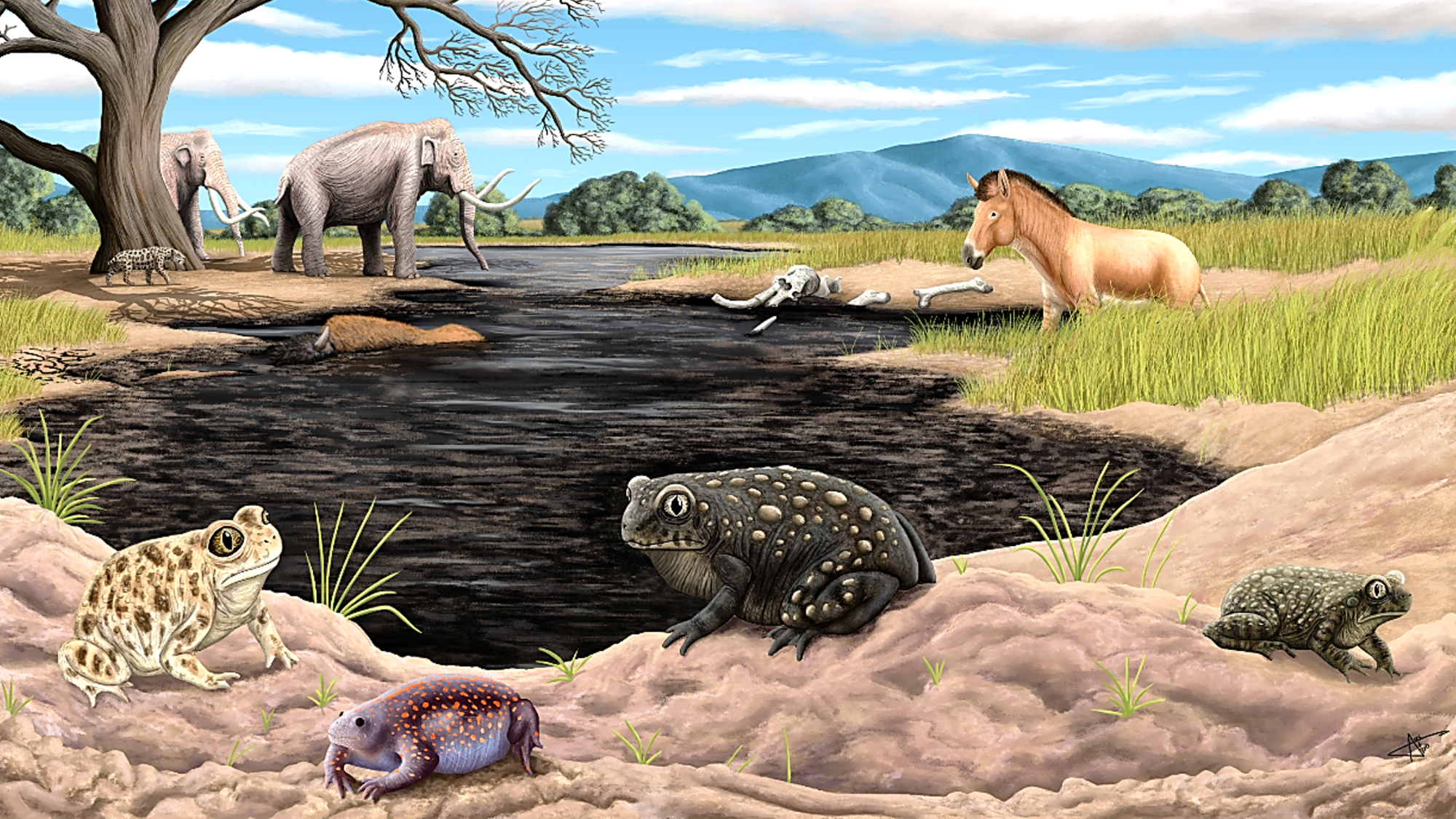
Paleontologists sifting through the archives of Los Angeles’ La Brea Tar Pits have discovered a new species of extinct Ice Age amphibian. While the deposit is famous for its direwolves, saber-toothed cats, mammoths, and other long-gone animals of the most recent ice age, much rarer creatures are lurking in the fossil deposits. This newly discovered spadefoot toad named Spea labreae isonly the second Pleistocene amphibian species ever found in North America. The new frog is described in a study published today in the Journal of Vertebrate Paleontology.
“It’s a great example of how we’re still finding new things at La Brea Tar Pits, even after a century of ongoing excavation and research,” Dr. Emily Lindsey, a study co-author and Curator and Excavation Site Director at the Samuel Oschin Center for Global Ice Age Research at La Brea Tar Pits, said in a statement. “There’s definitely more to come.”
A 1950s discovery in the 2020s
Despite digging through the Tar Pits’ understudied collections of amphibians and reptiles, study co-author Dr. Alberto Cruz, wasn’t looking for new species.
“I’m really more of a paleoecologist, paleogeographer, not a taxonomist,” Cruz said in a statement. Cruz is a Research Associate at the La Brea Tar Pits and a full time researcher for Mexico’s SECIHTI-Centro de Investigación Paleontológica Quinametzin (CIPAQ), and Instituto Nacional de Antropología e Historia (INAH).
He noticed the distinctive features that separate S. labreae from known spadefoot toads. Initially, he thought that this must have been an example of paleopahtology—finding a specimen that had been sick or injured during its life. A closer look and comparing the specimens to modern spadefoot toads made it clear that this probably was not a sick frog.
“I reviewed and reviewed a lot of specimens until I was convinced. I thought, ‘Oh my gosh, this is a new species.’ This material is originally from the 1950s, but when you study it again, you can find gold in these specimens,” Cruz said. “It’s very cool.”

Why frogs are a big deal for paleontology
The smaller reptiles and amphibians that Cruz studies can tell scientists more about ancient climate and environmental change than the larger mammals we typically associate with the Ice Age and La Brea Tar Pits.
Amphibians don’t travel very far within their lifetimes, and are also very sensitive to environmental conditions. This limited movement and extreme sensitivity makes them excellent climate proxies. The presence or absence of amphibians can help scientists pinpoint changes in climate at a much smaller scale.
“If you change the environment, you change the vegetation, the climate is warmer or colder, it affects these animals directly,” said Cruz.
However, frogs, toads, salamanders and other amphibians are often missing from the fossil record. Their fragile skeletons are often crushed by the ravages of time, making the discovery of a small amphibian like S. labreae an extraordinary find.
Amphibians past, present, and future
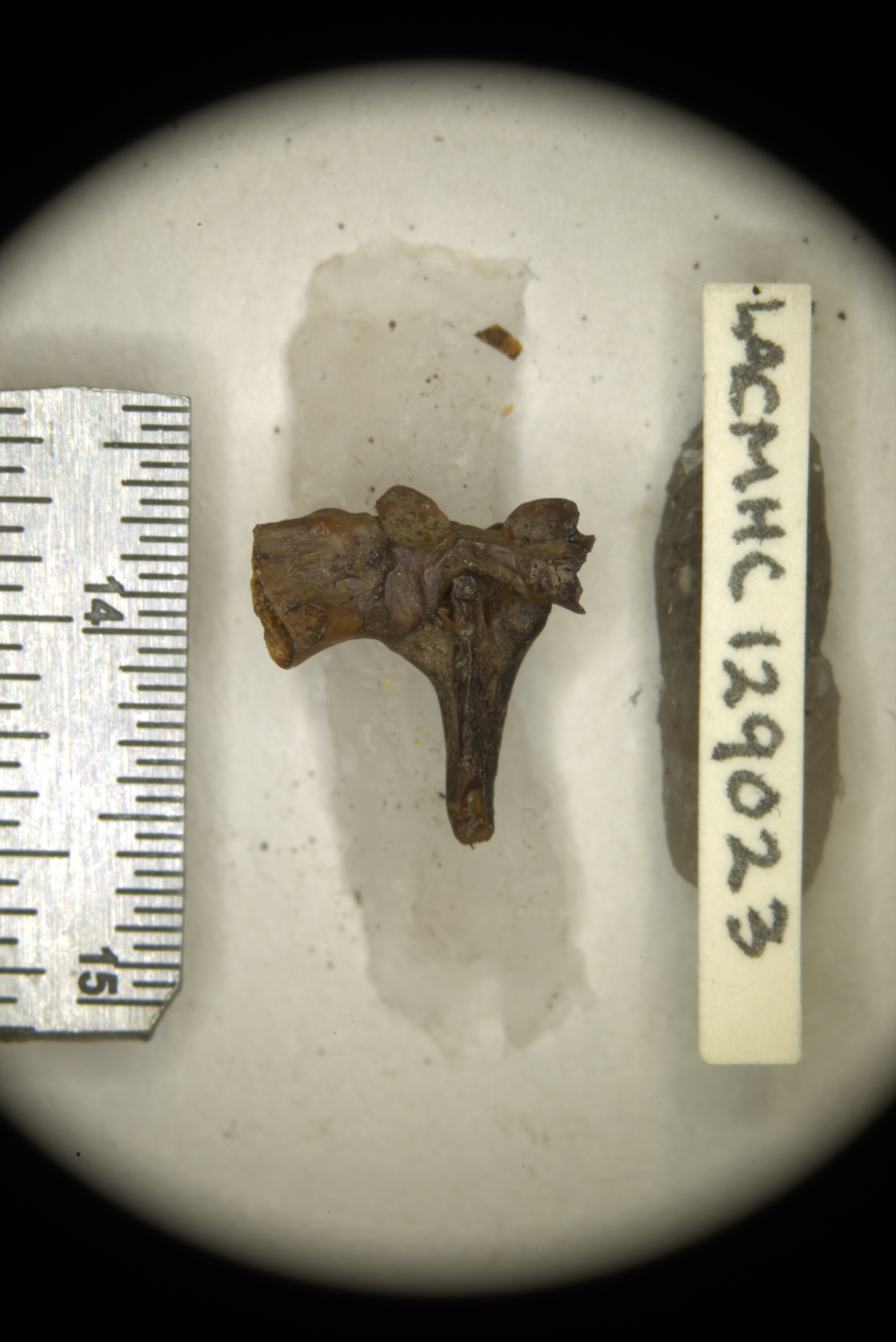
To identify the new species, Cruz carefully examined the bones inside the La Brea Tar Pits amphibians collection for the first time in almost 30 years. After making detailed observations of their shape and size, Cruz compared Tar Pits amphibians to 80 specimens at the Natural History Museum of Los Angeles County and the Museum of Vertebrate Zoology at the University of California, Berkeley.
In addition to the new spadefoot toad, the study identifies the first record of the Mexican burrowing toad (genus Rhinophrynus) from the southwestern United States. These still-living toads are no longer found in Los Angeles, and their nearest populations are nearly 1,500 miles away in southern Mexico. According to the team, this significant shift in range and S. labreae’s extinction sheds light on the nuanced story of how the environment changed at the end of the last ice age 10,000 years ago.
Since amphibians are the vertebrates that are most threatened by today’s human-caused climate change, specimens like these that saw previous climate upheaval can help scientists protect today’s amphibians.
