
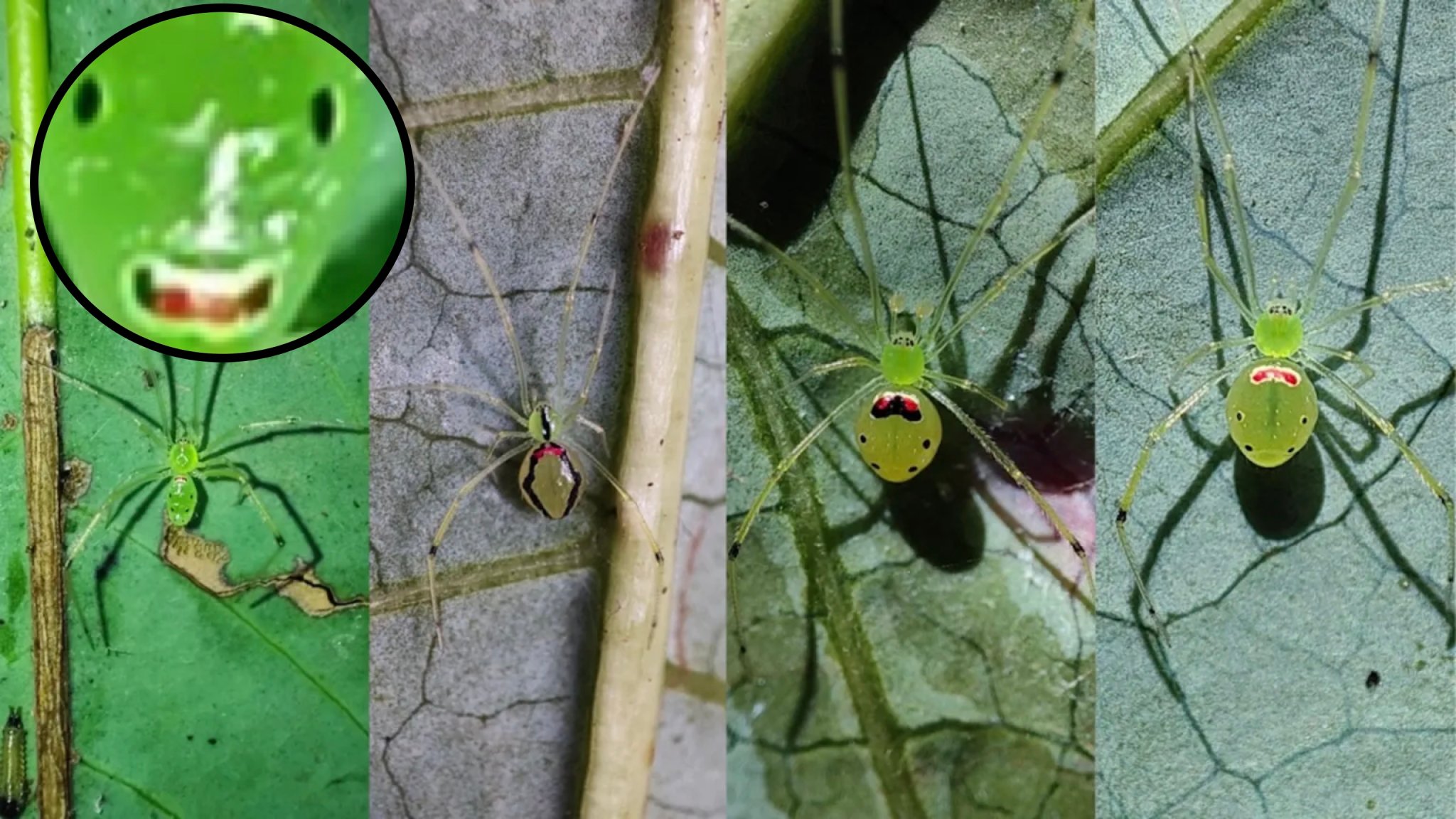
The happy-face spider (Theridion grallator) is famous for the particularly cheery looking patterns on top of its abdomen. Ecologists in Hawaii first described the tiny, vibrantly green arachnids in 1900, and have long assumed them to be unique to the islands. However, an unexpected encounter thousands of miles away recently surprised researchers combing through the forested slopes of the Himalayan mountains.
According to their study published in the journal Evolutionary Systematics, there is at least one more smiley spider species in the world. Of course, such a discovery deserves an equally appropriate name. Without further ado, it’s time to meet the Himalayan happy-face spider (Theridion himalayana).
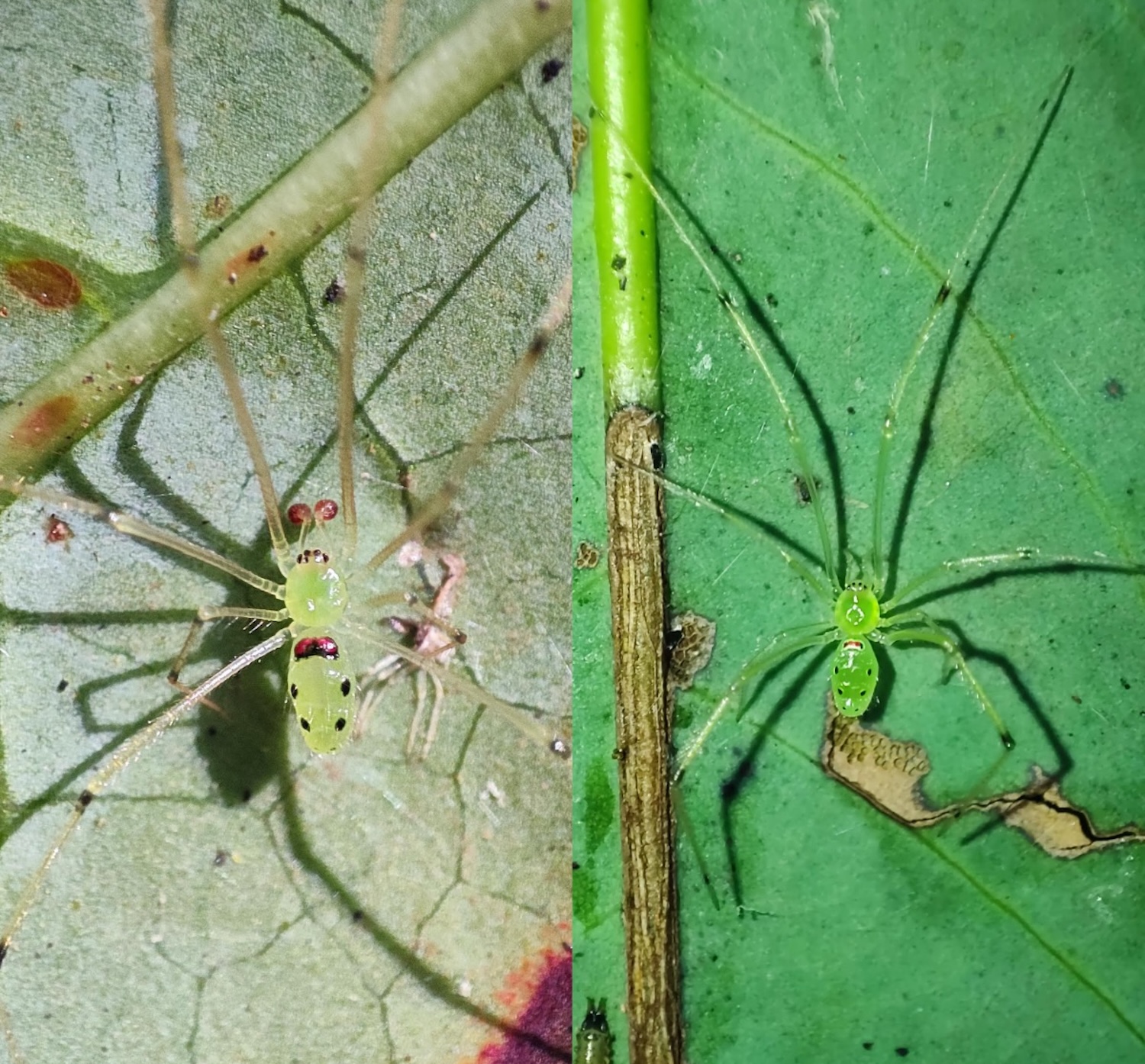
The meetup began in 2023 during an expedition in the northern state of Uttarakhand, a region home to many animals that remain unknown to science. Researchers from India’s Forest Research Institute and the Regional Museum of Natural History intended to catalogue ant biodiversity at the foot of the Himalayan mountains, but they kept getting distracted by the insects’ eight-legged neighbors.
“My co-author [Ashirwad Tripathy] kept sending me spiders from high altitude regions for identification,” Regional Museum of Natural History biologist Devi Priyadarshini said in a statement.
Priyadarshini recalled on “one fine day,” her colleague sent a photo of an arachnid clinging to a Daphniphyllum leaf. That was when she “froze in shock.”
“I had seen the Hawaiian spider during my master’s program…I knew instantly we had a jackpot because of its striking resemblance,” explained Priyadarshini.
Over the next few months, Tripathy continued to document every similar spider he saw during his survey. While each of the 32 examples clearly belonged to the same species, they all showcased an array of smiley dot-and-stripe coloration patterns (known as morphs) on their bodies. Once in the lab, the team conducted a DNA analysis of their specimens and discovered about an 8.5 percent genetic variation from the Hawaiian happy-face spider. This confirmed it evolved completely independent of the almost identical island spiders, thus earning the name Theridion himalayana.
“The name [Theridion] Himalayana was decided as the species name because we both wanted to pay our respects to the mighty Himalaya mountain ranges, which have been standing tall not just guarding our country but also holding a plethora of biodiversity within them,” added Tripathy.
Although the green coloration obviously helps both spiders blend into the surrounding vegetation, the exact reason for their back patterns remains unclear. Priyadarshini said this question is “definitely indicative of a deeper genetic mystery” that deserves further investigation. However, another shared trait is even stranger. Both species have a fondness for ginger plants, even though ginger isn’t native to Hawaii.
“How did the [Hawaiian] spiders choose an invasive species and ginger exactly?” wondered Priyadarshini, who theorized T. himalayan may be an “elder cousin” of T. grallator.“Although this sounds like a tall claim now, it will be our further scope of work to establish any missing links,” she said.
