We cover biomedical science and engineering a lot, and sometimes I get to wondering: if I was rebuilding my own flimsy, flesh-based body–presumably because I’d had some ghastly dismembering, eviscerating accident–and replacing my limbs, joints, senses, and organs with the most futuristic, top-of-the-line bionics, what would I get? Would I want an artificial lower leg that sprinters use in Olympic-level races, or a motorized leg that can climb a slope as well as a natural leg? I gathered a list of 15 bionic body parts that I’d want to wear, or have installed.
Some of these body parts are available now, saving or making lives easier, while some have only been seen in prototype or even just proof of concept form. Some are designed to replace an existing body part with as few sacrifices as possible, and some may even provide an advantage over our flesh-and-bone bodies. This is the current and near-future state of bionics.
Arm: A Brain-Controlled Limb from DARPA
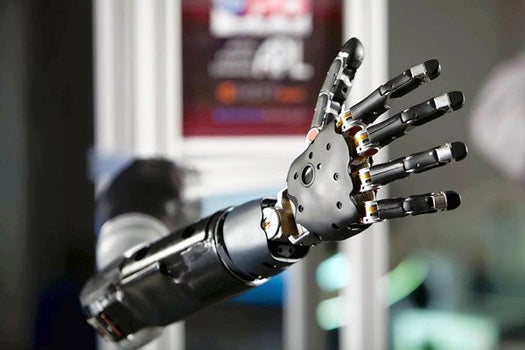
DARPA’s robotic arm is legendary. It’s the result of years of work and a whopping $100 million, but it just might be worth it: This arm mimics the natural motion of the arm, elbow, wrist, and hand with 27 different movements (including rotation, bending, and extension) that’s at the top of the field. But what’s really notable about this particular arm is how it’s controlled: DARPA wants to implant a small chip in the brain that would sense and measure the firing of neurons, then convey those commands to the arm, all near-instantaneously. Basically, this is a mind-controlled robotic arm. It’s the followup to the “Luke” arm, the prosthesis developed by Dean Kamen (perhaps best known as the inventor of the Segway), but its thought-control system is far beyond the Luke arm’s foot-pedal control. If I was going to rebuild myself, I’d want the natural control of my meaty “birth arm” with the added bonus of superhuman cyborg strength–so thought-controlled arms are a must. Current status: Last we heard, back in February, the FDA was fast-tracking the project. That could knock years off the development cycle, but we’re still an estimated four or five years away from actually using this amazing arm. Runners-Up: The Luke arm
Hand: Otto Bock
Back in May, a Serbian man embarked on a journey we ourselves don’t have the cojones for: he cut off his own hand to have it replaced with a bionic one. To be fair, “Milo,” as he’s pseudonymically known, was in a terrible motorcycle accident some ten years earlier, skidding from his bike shoulder-first into a lamppost, so it wasn’t exactly a cosmetic choice. After many surgeries, he regained much of the use of his arm–but not his right hand, which remained paralyzed. This year, he opted for surgery to replace his now-useless hand with a prosthesis. Like DARPA’s robotic arm, this prosthetic hand from German company Otto Bock boasts naturally-controlled movement. In this case, you don’t even have to connect the nerves from the arm to the hand–it’s sensitive enough to pick up signals via two sensors placed on his forearm, picking up nerve stimuli very similar to those that trigger movement in organic hands. The Otto Bock hand boasts three degrees of movement (rotation, bending/flexion, and extension) and can both pinch and perform a full-hand grip. There’s always room for improvement, as this video shows, but it’s a remarkably capable device. Milo wasn’t the first to volunteer to be fitted with an Otto Bock hand–the same surgeon, Austrian Dr. Oskar Aszmann, performed this surgery about a year before on a man named Patrick with a similarly dead hand, this time due to electrocution. Patrick can now tie his shoes and open bottles, which are two of my favorite activities. If it’s good enough for these men, it’s certainly good enough for me. Current status: Available now. Runners-Up: The Stark hand, the i-LIMB
Fingers: Touch Bionics
The Otto Bock hand is my dream bionic hand, but assuming I wanted to keep my flesh-palm and just get some bionic fingers for some reason, I’d go with these guys. Of course, the Touch Bionic ProDigits can’t be used in tandem with Otto Bock’s hand–the ProDigits are designed to replace individual fingers, not the entire hand. But they’re just as amazing in their own way. The ProDigits are all custom-made to fit–you can’t go to a shop and buy these, they have to be constructed from scratch to precisely fit each user’s needs. Like the Otto Bock hand, these fingers are triggered by myoelectric sensors which pick up and react to the minute muscle movement in the hand and arm. They can both pinch and grip, and have a sensor that tells the hand when it is closed around something, so you can pick things up without crushing them. Current status: The ProDigits have been used in dozens of surgeries–they’re out there and ready to go, with setups ranging from around $57,000 to $73,000. Runners-up: The PossessedHand wristband (sort of)
Lower Leg/Foot: PowerFoot BiOM by iWalk
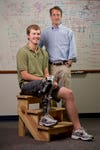
Hugh Herr, the head of the MIT Media Lab’s Mechatronics Group, isn’t just the creator of the PowerFoot BiOM, an amazing lower-leg robotic replacement. He’s also a dedicated user. Herr lost both his legs at age 17 after getting trapped in a New Hampshire blizzard while hiking. Many surgeries later, the frostbite and damaged tissue were deemed too severe for repair, and both his legs were amputated below the knee. The loss of his legs seems to have spurred Herr on to impressive heights. He attended college, then received degrees from Harvard and MIT before landing at MIT’s prestigious Media Lab, a group that amazes us on a regular basis. His new task: create a set of prosthetics that would allow him to return to his passion, mountain climbing. (Check out a great interview with him over at NPR.) The PowerFoot BiOM isn’t just notable because of the story behind it; this is an outrageously advanced bionic leg and foot. Rather than merely acting as a spring, like Oscar Pistorius’s Cheetah legs, the PowerFoot BiOM actually senses your environment and reacts accordingly. “The reflexive action in the PowerFoot,” says iWalk, “returns 100% of the energy of a biological limb while accommodating for real time terrain changes, thus normalizing the amputees gait dynamics.” It uses a dedicated spring to simulate the motion of the calf muscles and Achilles tendon, rather than relying on the entire leg as a counterbalance. That means walking feels like, well, walking. You can see it better in this video. This is a truly robotic leg, taking in 250 points of data per step and analyzing them instantaneously to figure out how best to respond–how much to extend, how much to retract, how much to twist. And yes, they’ve allowed Herr to return to climbing–he further modified the PowerFoot BiOM to be smaller, with no heel (which he says he doesn’t need for rock-climbing) and an optimized angle, unlike anything a human foot would be capable of. A bionic foot designed by a biomechanics wizard who also happens to be an amputee himself–that’s the foot I want. Current status: The PowerFoot BiOM is in the early stages of market release, but is definitely available. Runner-up: Oscar Pistorius’s Cheetah prostheses are a close runner-up, but they’re limited-use legs and I don’t even like running with two regular legs.
Knee: Vanderbilt’s Knee-Ankle Coordination Prosthesis
Developed at Vanderbilt University, this prosthetic knee is actually the first to sync with a prosthetic ankle. It’s the result of a seven-year development, funded by both the National Science Foundation and the National Institutes of Health, and represents a pretty major improvement over traditional “passive” prosthetics. As it’s powered, users can walk essentially as they would with an organic leg, rather than the draggin motion required for non-powered prosthetic limbs. That means that it requires about 30-40% less energy for the user, and makes it easy to travel up inclines and stairs, usually very difficult for amputees. It’s outfitted with the usual array of sensors and microprocessors to sense the user’s motion and adjust accordingly. Current status: Not publicly available, but the current version is undergoing testing. Runner-up: The Ossur Power Knee is one of the first motor-powered knees in the world equipped with an artificial intelligence system and on-board computer that analyzes the gait of your other leg and synchronizes with it.
Eye: Retinal Implants that Use a Patient’s Real Eyes
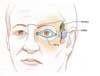
Retinal implants are at a bit of a turning point, with the first major successes just now being seen. In the past decade, we’ve seen some minor successes with what are essentially video cameras plugged into the brain, but the level of detail available in those is limited to roughly “is it bigger than a breadbox” territory. The most impressive bionic eye at the moment, at least to me, was developed by researchers at University Eye Clinic in Tübingen, Germany, and implanted in 11 people with varying–but undeniably impressive–success. This retinal implant is unusual in that it relies on a chip that’s implanted into the patient’s own eyes, doing the job the retina normally would: converting light that hits the eye into electrical impulses, and feeding those impulses into the optic nerve. A formerly blind Finnish man outfitted with the new chip was able to see letters, read a clock, and even catch the tricky researchers when they misspelled his name. So that’s the present (if by “present” we are loosely including anything that has been demonstrated, even if it’s still years away from wide adoption, which I am). The future, however, looks absolutely insane for bionic eyes–check out the “runners-up” section below. Current status: It’s not currently being used by any patients; the researchers are working on higher-resolution models with power sources implanted beneath the skin. But with one working prototype under their belt, you can bet this one isn’t too far off. Runners-up: A European-Commission-funded group is working on a retinal implant that relies on nano-sized diamonds, Patrick Degenaar is working on LED-driven eyes, Oxford University is working on a pair of sight-restoring glasses, and a University of Oregon professor is working on an optic implant that relies on tiny fractals.
Eyelid: EPAM
It’s hard to get worked up about bionic eyelids that don’t function as optional one-way mirrors (you think I’m sleeping, but I’m not!), but the EPAM (Electroactive Polymer Artificial Muscle) has so many practical uses that could solve so many serious medical problems that I’ll slot it into my dream bionic body even without the ability to prank. The EPAM is a little bit of silicon that can contract or expand based on voltage, which coincidentally is exactly how muscles work. When you want to blink, your brain will send a small electrical signal which is picked up by the EPAM, which expands or contracts, and bam: blink party. Losing the ability to blink is a widespread and serious problem, resulting from strokes, facial injuries, and certain muscular diseases–it can lead to blindness or corneal ulcers, so it’s no small feat to be able to restore it. But even more interesting is the generalized nature of EPAM: since it works basically like a replacement muscle, it could be slotted in to replace or assist many different types of small muscles throughout the body. When we first covered EPAM back in 2010, we noted that it could be used to restore muscle functions to those suffering from ALS, Parkinson’s, or all kinds of other degenerative illnesses. Current status: This is only the first-generation outline, but research is moving along and is predicted to be available to patients within five years.
Eardrum: A Cochlear Implant App for Smartphones
Cochlear implants are widely available, though expensive–about 190,000 have been installed in the ears of people suffering from profound deafness. They have some serious limitations, some of which will take lots of time and effort to improve: the hearing restoration is very limited, for example (click here to hear what speech sounds like to someone with a cochlear implant). But the Cochlear Implant Lab at the University of Texas at Dallas is awaiting FDA approval for an idea that could dramatically improve the usability of cochlear implants right away: link them with smartphones. The two main reasons to link a cochlear implant with a smartphone are simple: control and record. Current cochlear implants have very little in the way of flexibility, with the user mostly unable to adjust the implant to suit the sounds in the user’s environment, but a smartphone app could fairly easily be written that would enable all sorts of controls, including volume and frequency modulations. Also, doctors and researchers find it very difficult to get much data from cochlear implant patients–the space requirements are, as you’d imagine, very tight, so there’s no room for a universal recording device. Smartphones could very easily record and store all sorts of data so doctors and researchers could better understand the way cochlear implants work, and the ways they could be improved. Current status: Enmeshed in the FDA approval process. Runners-up: There are four major manufacturers of regular (i.e. non-smartphone-compatible) cochlear implants: Cochlear, Advanced Bionics, MED-EL, and Neurelec.
Inner Ear: A Vestibular Prosthesis
Sufferers of the inner-ear disorder Ménière’s disease cope with vomit-inducing vertigo that comes completely at random. It’s treatable, sort of, with diet changes and medication that alters the pressure inside the inner ear, but, estimates IEEE Spectrum, as many as 15% need to undergo surgery to essentially kill off the functions of the inner ear. Jay Rubinstein, a biomedical engineer at the University of Washington, has a “vestibular prosthesis” that he claims will be able to modulate the workings of the inner ear by using electrical stimulation. As a gross simplification, Ménière’s disease is caused by a buildup of fluid (potassium, to be exact) in the inner ear. That’s a problem: scientists believe that the motion of fluid in the inner ear triggers a sort of gyroscope function in the vestibular nerve, which is responsible for our sense of balance. The excess fluid can’t be drained successfully and can thus thoroughly screw with a person’s ability to sense balance. The vestibular prosthesis is similar in appearance to a cochlear implant, pictured here. It’s designed to send electrical signals directly to the vestibular nerve, bypassing the body’s natural method of modulation (which in this case is broken). Rubinstein describes it as an “on-demand pacemaker.” Sense of balance, like the eyelid, is one of those things we don’t think much about–but without it, normal life is frighteningly difficult to achieve. Current status: Rubinstein is also a surgeon, and implanted the first vestibular prosthesis early this year. It seems to be working properly, but will have to undergo more testing before it’s widely available.
Tongue: Sweet Taster
We’re all for eating healthy, but if I was shopping around for a new artificial tongue (let’s try not to imagine the kind of mishap that would result in that kind of situation), I’d want to make sure I could tell the difference between American and Mexican coke. Chemists at the University of Illinois have come up with an artificial tongue that they are aiming at the food industry, but which I would very much like in my mouth, in the event that my tongue is no longer residing there. This artificial tongue is actually surprisingly simple: it measures sweetness in all its wonderful and varied forms by measuring pH changes when that sweetness hits some boric acid. In 80 different trials, it correctly identified 14 different types of sweetener with 100% accuracy, which is almost certainly better than my dumb flesh-tongue can manage. It’s a major step up, at least for sweet foods, from traditional artificial tongues, which usually have difficulty sensing the difference between artificial and natural sweeteners. Current status: The “tongue” was demonstrated last summer, and will eventually end up in factories, tasting all kinds of sweet foods you and I can only dream of. Runner-up: This electronic tongue can tell the difference between different Cava wines. If they make one for Malbec, we’ll talk.
Nose: RealNose, Inspired by Dogs
Electronic noses have been around for about 20 years, but the term “electronic nose” is sort of misleading: they’re really more like molecular sensors. Usually, like in this undeniably impressive e-nose based on DNA, they recognize different molecular compounds in the air and change color to show what they’ve sensed. It’s useful, but it’s not a “nose,” really. That’s why the DARPA-funded RealNose project is so interesting: it’s a real nose, if you know what I mean. RealNose, which is sponsored by DARPA but actually led by a whole mess of university teams as well as a few private types like Northrup Grunman, is designed to discover and replicate a dog’s olfactory system, since as we know, there’s no better sniffer than a dog’s. They’ve already found out a few really interesting things, like that air passes through a complex, labyrinthine system in a dog’s nasal cavity to expose the air to as many olfactory receptors as possible, a bit like our own intestinal system. The latest work is an effort to specifically identify the olfactory receptors in a dog’s nose, which they’ll then try to replicate–current attempts use carbon nanomaterials to convert scents into electronic signals. If it succeeds, DARPA may be able to phase dogs out of the more dangerous places they’re deployed–or even detect cancer. Current status: It’s a DARPA project, so details aren’t exactly forthcoming, but this one seems to be in the early stages, judging from the announcements, which are mostly based on what the project wants to achieve rather than what it has achieved. Runners-up: This DNA-based sniffer is impressive, but not a “nose,” really, and this cancer-sniffing sensor seems more suited to hospitals than on my face, smelling Ben & Jerry’s stores or whatever. Pictured: Jackson, a U.S. Air Force Belgian shepherd, hangs out on a giant scary tank before a mission in Iraq.
Heart: No Heartbeat Necessary
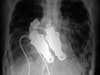
Artificial hearts have been designed and redesigned for decades, but a new one, designed by Drs. Billy Cohn and Bud Frazier at the Texas Heart Institute, goes in a totally new direction. Instead of trying to replicate the human heart’s pumping, this new heart simply whirs. Someone outfitted with this new artificial heart would have no pulse, no heartbeat, at all. The design is based on two attached ventricular assist devices, a sort of bladed rotor that pushes blood continuously rather than in pumps. It’s been used before, but only to replace a single ventricle–nobody had ever tried to replace the entire heart with these devices. That’s because it was assumed that the beating of a heart, which we think of as so fundamental to being alive, was necessary for the well-being of other organs as well. Turns out, not so much: the beating is only required for the heart itself. Says Cohn, to NPR: “The pulsatility of the flow is essential for the heart, because it can only get nourishment in between heartbeats. If you remove that from the system, none of the other organs seem to care much.” Cohn compares this to the development of the airplane: at first, we saw birds and bats, and figured flying must require a flapping motion. But a more detailed understanding of aerodynamics led to the airplane, a distinctly un-organic design. Current status: The pulseless heart has been installed in calves with success, but only one human: a 55-year-old named Craig Lewis who suffered from amyloidosis. The heart actually worked perfectly, but Lewis died from complications of the disease (complications, for the record, unrelated to his heart: it was liver and kidney failure that ended his struggle with amyloidosis). The reason I’d pick this heart? Lewis’s wife noted that in place of a heartbeat, his heart hummed. If I’m going to be a cyborg, I’m going to sound like one too, dammit. Runner-up: This heart was installed earlier this month in an English man. It’s more proven, but the idea of a pulseless heart strikes me poetically in the right way, if we’re thinking in terms of cyborgs. Pictured: An x-ray of the pulseless heart installed in Craig Lewis.
Lung: Breathing Normal Air
Typical modern artificial lungs are bulky and inefficient, but the worst part is that they require pure oxygen rather than normal air to operate. That necessitates carrying around big tanks of oxygen, which have to be replaced every few days–hardly an ideal solution. But a new lung built by researchers at Case Western University is a biomimicking wonder that is so efficient, it’ll be able to use air, just like an organic lung. Our own Clay Dillow wrote earlier this summer that the new lung “is modeled on the natural human lung and contains a bunch of breathable silicone rubber analogs of blood vessels that branch out like real blood vessels down to the point that they reach a diameter smaller than one quarter that of a human hair. This bio-mimicking miniaturization offers a much better surface-area-to-volume ratio, lending the device its higher oxygen exchange efficiency.” The greater efficiency also means smaller size requirements, and the team believes the design is so efficient that it could eventually be inserted into the human chest cavity and even powered by the heart itself–no external power source necessary. Amazing. Current status: Testing is underway with other animals, and the artificial lung is proving to be an estimated three to five times more efficient than traditional artificial lungs. The team thinks it could be ready to install within a decade. Runner-up: The lung-on-a-chip, which is amazing but pretty far off in terms of availability. Pictured: An iron lung, a relic of yesteryear (yesterdecade?) that this new artificial lung puts to shame.
Intestine: Grown in a Lab
Earlier this summer, researchers at the Saban Research Institute of Children’s Hospital Los Angeles created a mouse’s small intestine in a lab, a huge breakthrough for regenerative medicine. It’s just the latest in a tremendously promising movement that’s already given us regenerative rabbit bones and leg muscles, but this mouse intestine might be the most impressive yet. The intestine, says one of the authors of a paper on the subject, is a great subject for regenerative medicine because it’s a “particularly regenerative organ. The cells are constantly being lost and replaced over the course of our entire lives.” This particular organ was created by taking samples of every layer of cells in a mouse intestine, including muscle and epithelial cells, and then implanting them onto a sort of polymer base within a mouse’s abdomen. It was encouraged to grow with a healthy portion of growth factor proteins. Current status: The team is continuing to test the artificial organ, with an eye towards pediatric medicine, particularly the treatment of infants born with intestinal disorders. Runner-up: This intestine from the University of Maryland is constructed of silicon, complete with cells growing in it.
Trachea: Grown From Stem Cells
The world’s first synthetic organ transplant was conducted just last month, and if this doesn’t convince you of the value and amazing potential of stem cells, I can’t imagine what would. An Eritrean doctoral student was hit with a rapidly-growing malignant tracheal tumor, one so big that it was actually blocking his windpipe. 3-D scans of his trachea were sent to scientists at University College London, who constructed a sort of glass scaffolding from it. Stem cells taken from the patient’s own bone marrow were implanted into the scaffolding, took hold, and the entire scaffold was implanted into the patient. Because it was, in biological terms, the patient’s own tissue, there was no need to find a donor, no risk of his body rejecting the new organ, and no need for anti-rejection drugs. A month later, he was recovering nicely, with no sign of cancer. Current status: Fully operational.