An article in last week’s New York Times must have struck terror into the hearts of readers whose old tube televisions sport rabbit-ear antennas. The punchline: Many of them will be staring at a black screen after next year’s transition from analog to digital television broadcasts—even if they purchased a government-subsidized converter box. And broadcasters are to blame.
The real story, though, is more complicated and harder to predict. So what will happen to your television on February 18, 2009?
If you’re paying for TV service, nothing will change. The digital conversion has no effect on cable or satellite broadcasts. Comcast or Direct TV will be happy to continue taking your money. The transition affects only the free, over-the-air radio signals people get with an antenna.
In other words, it will mean nothing to most Americans.
But a good chunk of people—21 million households, according to the Times—will be affected. If they have an analog TV—virtually any set made before 2000 and almost any picture-tube model made afterwards—and only watch free over-the-air broadcasts, the screen will go ebony, unless they buy a government-subsidized digital-to-analog converter box.
All that is old news. Here’s the new part: A converter box by itself might not be enough. You might also need a new antenna—possibly an attic or rooftop model, and maybe even a signal amplifier.
The Times article was based on data from market research firm Centris which, the paper said, had “found gaps in broadcast signals.” But that’s not how Centris tells the story. “I’m not saying they won’t get coverage,” the company’s senior vice president Barry E. Goodstadt told me. “I’m saying they won’t get coverage unless they put a new antenna in.”
As far as broadcasters are concerned, they are doing their job if they send out a signal that anyone can get using the right antenna—but that might not necessarily be the antenna you currently have. “Our idea is to get the idea of antennas out on the table,” said Mr. Goodstadt, who feels that the federal government is ignoring that topic and falsely assuring people that all they need is a converter box.
Even experts like Goodstadt concede that we won’t really know how the digital conversion will shake out until it happens. But you can find out today if you are likely to have trouble.
Centris based its research on data from the Web site antennaweb.org--a service run by the Consumer Electronics Association. On the site, you’ll find a form where you fill in your address and a few other details about where you live. Then the page spits out a list of channels—both analog and digital--that you’ll be able to get with a rooftop antenna. As Antennaweb explains “Due to multiple variables in determining good reception in a specific location with indoor antennas, these antennas are not included in this mapping system.”
So there is no guarantee that an indoor antenna will work, but look closer at the results. First click “Show Digital Stations Only.” That’s what we’re interested in. The results show not just what channels you’ll be able to get, but what size antenna you’ll need to get them. For my apartment in lower Manhattan, I can get every major channel, except NBC, using the smallest type of outdoor antenna—color-coded yellow. In fact, my urban setting is a prime scenario for an indoor antenna. Communications company Harris which just concluded a nationwide survey of TV broadcasters, says that indoor antennas are most likely to work in urban settings, within a 10-mile radius of the transmitter.

If it’s fuzzy of ghosted, your antenna probably isn’t up to snuff. “Some people have watched these kinds of pictures for years. And to them, that’s television,” said Jay Adrick, VP of broadcast technology at Harris. “They’re going to have problems, because they’re actually beyond the measured coverage range.”
In the analog world, even a signal that’s technically too weak might still put something on the screen. Not so for digital. At best, you’ll probably get an image that occasionally breaks up into what resembles a mosaic missing a bunch of tiles. At worst, you’ll be staring at a blank screen.
If you don’t want to climb up on the roof to install an antenna (and who does?) or you can’t climb up there (if you live in an apartment), try the indoor options first. On Antennaweb, notice that they tell you not just what size and shape antenna to get but also what frequency ranges it receives: UHF or VHF. No need to become an expert in physics. Just keep this in mind: In most cases, you’ll want an antenna that picks up both UHF and VHF frequencies to get all the channels in your area.
One other thing to remember: There is no such thing as a digital antenna. “That’s a great marketing scheme,” said Jay Adrick from Harris. “There’s no difference between an antenna that was designed for analog and one that was designed for digital.” Radio waves and antennas work the same whether they are carrying analog data, digital data, or both. So don’t pay extra for an antenna just because it’s advertised as being “digital.”
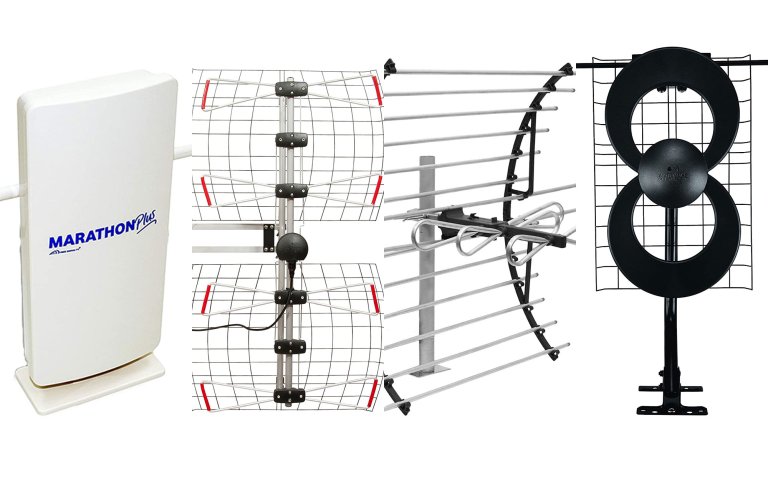
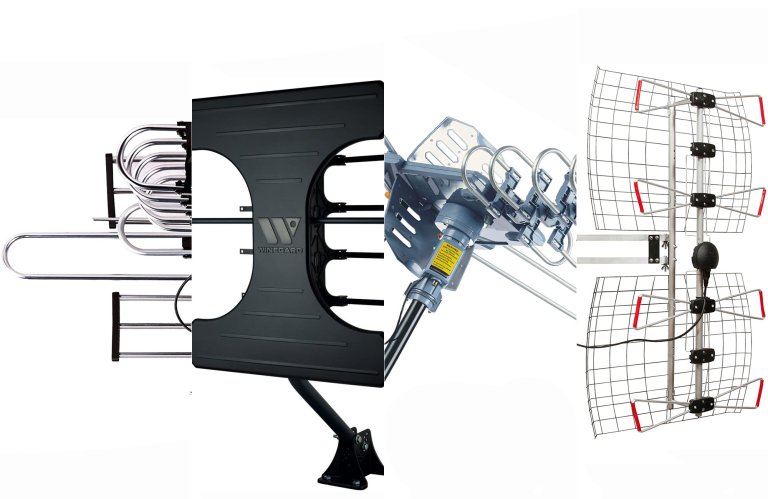
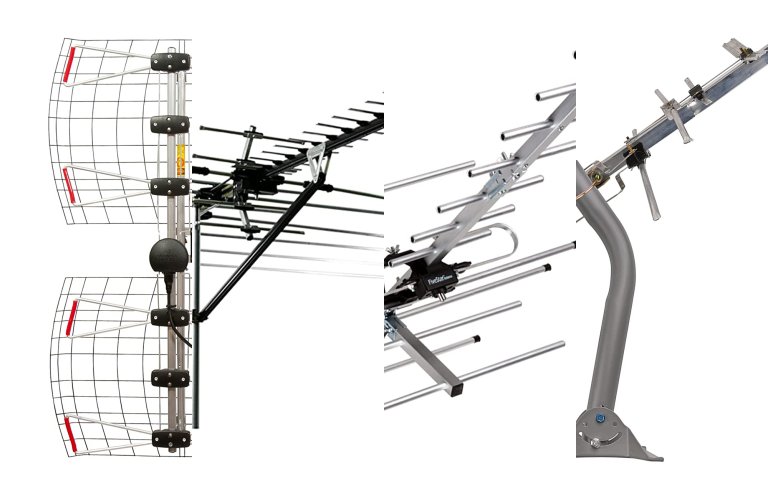
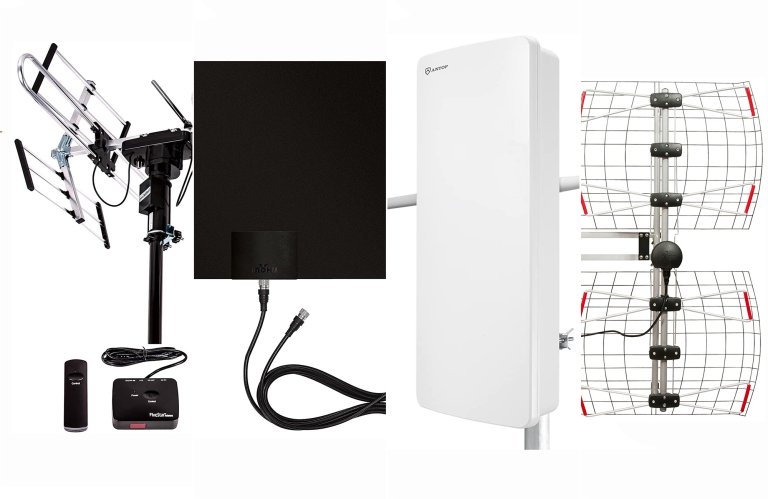
Instead, choose an antenna with a built-in amplifier to boost the strength of whatever signal it does pick up. And consider how well it will fit in your house. Most antennas look like something that would be hanging from a space probe, but others are more subtly stealthy, hidden inside a picture frame, for example. Of course, The uglier antennas perform better, but if you live close enough to a receiver, a smaller antenna might work.
If your analog channels (both VHF and UHF) come in crisply, chances are the digital ones will, too. Of course, you can also pick up a converter box now to see if you can pull in the channels that are already broadcasting in digital. Dozens of converter models are already on the market, selling for about $40 to $80. Before you shop, sign up for a government voucher and check the site for a list of models that are certified to work.
But remember, those signals may get a bit stronger after the transition—when broadcasters take down their analog equipment, put up bigger digital antennas, and crank up the transmission to full power.
A digital set (whether it's high-def or standard) is unlikely to work any better than an analog model with a converter box. If there’s a reception problem, it’s probably the antenna.
But here’s the silver lining about digital TV broadcasts: If you do have the right antenna, you can get scads of great TV for free. Even a standard-definition TV (with a converter box) will probably pick up more channels because of multicasting.
In the same amount of bandwidth that held a single analog channel, digital can squeeze in multiple channels. So in addition to getting Fox or ABC from your local broadcaster, you might also get 24-hour weather and traffic channels, at no extra charge. Speaking of traffic, stations may also offer broadcasts that are specially formatted to be receivable in your car –either by handheld devices or in-dash displays. (No word yet on how getting that service affects your auto insurance rates.)
And if you have an HDTV (in your living room, not your Toyota) the best thing about digital is that it brings you glorious high-definition TV for free. Just like old analog reception, HDTV is free from all the networks and PBS. So, if you do have to put up a new antenna, at least you'll get not only the low-res reruns of I Love Lucy on public access, but also crisp, widescreen showings of the Superbowl, American Idol or any other current HD fare.
Will sales of rear-projection TVs be killed off by the end of 2011?
Will a device featuring a flexible screen be released in the U.S. by September 1, 2008?


Comments
Nice how the federal governemt that works for us can tell all the broadcasters what kind of signal they can and can not have!
0 out of 0 people found this comment helpfulLook at the time line that analog tv has been around and then look at radio. You would think that as evolution progressed they would ban the oldest signals first! That would mean that ham operators could not broadcast morse code!
Yeah like the AARL would allow that to happen. So why do we allow our government to tell our favorite stations how to conduct their buisness that they have had for years and decades?
I thought this country was based on freedoms, like free enterprise?
Let the stations decide if they want to go digital or not!
Sean:
Most of the points in your article are accurate and very helpful. But I would like to add some information that your readers may find interesting.
You stated "Comcast or Direct TV will be happy to continue taking your money. The transition affects only the free, over-the-air radio signals people get with an antenna."..."In other words, it will mean nothing to most Americans." You also cited research from Centris (www.centris.com), a leading market research firm. Centris also estimated that of the 117 million TVs not connected to cable or satellite, up to 80 percent have set-top rabbit-ear antennas that may not be able to pull in an adequate digital signal. Many of those sets will require a better antenna or a cable or satellite connection to do so.
Although cable and satellite program providers will continue to serve the great majority of homes as the primary signal source, missing HD local reception, higher costs, billing add-ons, service outages, contact difficulties, in-home service waits and no shows have left many subscribers looking to OTA antennas as alternatives and backup.
"There is no such thing as a digital antenna" True. If you’re close enough to all the broadcast towers you wish to receive and have clear line of sight, you can use a metal coat hanger. One study of the first HDTV station by Oded Bendov, the consultant hired to replace the broadcast antennas on the Empire State Building, found that digital signals did not travel as far as either model had predicted. “For the people with rabbit-ear antennas, I would say at least 50 percent won’t get the channels they were getting,” Dr. Bendov said.
Several dynamics are affecting millions of households now relying on analog signals for reception of their broadcast TV signals, with antennas older than 2 years. They need to upgrade to the new antenna technology, along with cable and satellite customers looking for alternatives.
"indoor antennas are most likely to work in urban settings, within a 10-mile radius of the transmitter" "but your old faithful antenna might not be"…”ready”. "don’t pay extra for an antenna just because it’s advertised as being “digital.” True. But Multipath (bounced signals reaching the antenna at different intervals) will be a big issue in metro/urban locations because of tall buildings. The newest antennas have been designed to deal with multipath and are smaller and more powerful. Why invest thousands of dollars in a home entertainment setup and not spend the few dollars for a state-of-art off-air antenna.
"choose an antenna with a built-in amplifier to boost the strength" Well that depends on where you are and where the broadcast signal is coming from. With an amplified antenna, it is possible to over-drive the receiver, degrading the signal. You should use an amplified antenna only were it is needed. The same goes for an external powered amplifier.
"The uglier antennas perform better" Not true. The newest designs are small, more efficient and, yes esthetically pleasing. Check them out.
As to Cable or Satellite subscribers, the benefits of Off-Air antennas are compelling. There is only so much room on cable or satellite bandwidth in which to squeeze signal, so data is compressed to fit, resulting in a somewhat "soft" picture. An OTA signal is the gold standard in digital reception because it's almost completely uncompressed and also FREE. Local digital TV broadcasts are everywhere. But bandwidth limitations force cable and satellite providers to not carry all local channels in many areas, or may not offer all of them in high definition. Contract disagreements between local cable operators and local broadcasters mean that major networks may not be available in several areas. DISH Network® offers local HD coverage to about 47 percent of U.S. markets, while DIRECTV® reaches about 76 percent, but for an additional monthly fee.
What about those other millions of viewers who want to see their favorite local shows and in HD. The answer is to add an OTA antenna to other signal reception sources. This not only gives a viewer the ability to receive all their local stations, but, with the right digital antenna and location, some viewers may even be able to receive out-of-town channels, carrying blacked out sports programs or network broadcasts not available in their home town. As an added benefit, an OTA antenna provides back-up reception options for local cable or satellite signal loss due to equipment failure or rain, snow and ice fade and to smaller TVs and second sets in homes not wired for whole-house signal distribution.
0 out of 0 people found this comment helpful