Theodore Gray

Gray Matter

Gray Matter: The Hidden Uses of Everyday Explosives

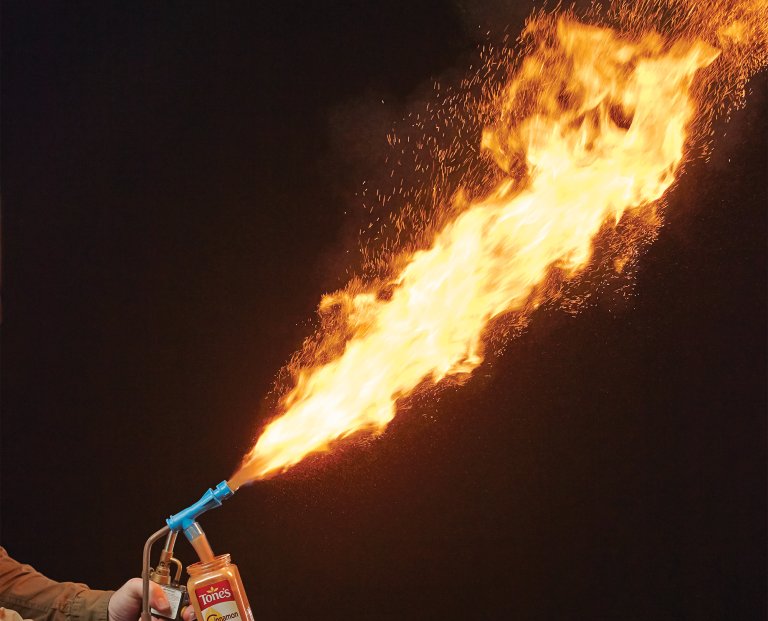
When you stop and look, you may be surprised to find yourself surrounded by all kinds of explosives--some that detonate easier than dynamite

The explosive C4, a favorite for everything from demolition to terrorism to action movies, is in fact one of the safest explosives. How can an explosive be safe? If it’s hard to set off by accident. C4 is so stable that you can light it with a match (it burns but does not explode) or shoot it (it splatters but does not explode). To go bang, it requires a detonator that produces both heat and shock.

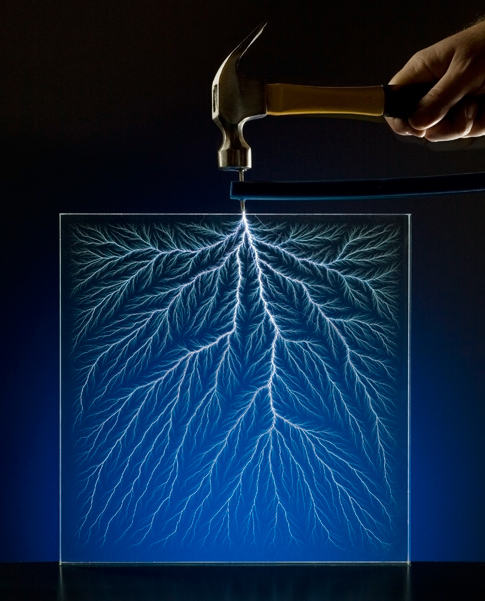
At the other end of the spectrum are mixtures that ignite simply from being scratched or knocked. There are obvious challenges in mixing, storing, and handling these substances so that they explode only when intended, yet they’re surprisingly common.

[ Read Full Story ]
Gray Matter

Gray Matter: An Elemental Recipe For Creating Great Showers of Sparks

How to make a spark-spitting special effects rig out of mischmetal

Metals can be classified by hardness, malleability and conductivity. One quality you won’t find listed in the reference books is sparkiness.

A delicate balance between flammability and hardness determines which metals spark. For example, magnesium is a famously flammable metal, but grinding it produces no sparks because the energy needed to cut chips from the soft metal is not enough to heat them to their ignition point.

[ Read Full Story ]
Gray Matter

Gone In a Flash: Burning Diamonds With a Torch and Liquid Oxygen

Diamonds are for, well, a couple seconds


I can’t stand diamonds. No, really, they just tick me off, because nearly everything about them is a lie. Diamonds are neither rare nor intrinsically valuable nor uniquely romantic. Those are ideas invented by the diamond industry. And no, despite what the ads tell you, diamonds are not forever. They are flammable and will burn brightly with a little help from a torch. This makes perfect sense when you consider that they are made of pure carbon, which reacts with oxygen to form carbon dioxide (“reacts with oxygen” just being another way of saying “burns”).

[ Read Full Story ]
Gray Matter

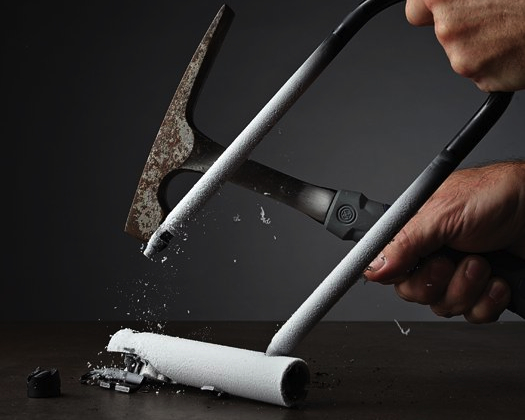
Carve Steel with Saltwater, Electricity and a Tin Earring

Using electrochemical machining, steel can be molded with a soft, cheap piece of tin without any physical contact


I remember seeing a demonstration of a seemingly magic process at an engineering open house decades ago, in which a soft metal bit carved detailed shapes into far harder metals. It's called electrochemical machining (ECM), and it's so simple in principle that you can do it at home with a drill press, a battery charger and a pump for a garden fountain.

[ Read Full Story ]
Gray Matter

Frozen on Video: Theo Gray Sculpts in Solid Mercury, with Some Help from Liquid Nitrogen

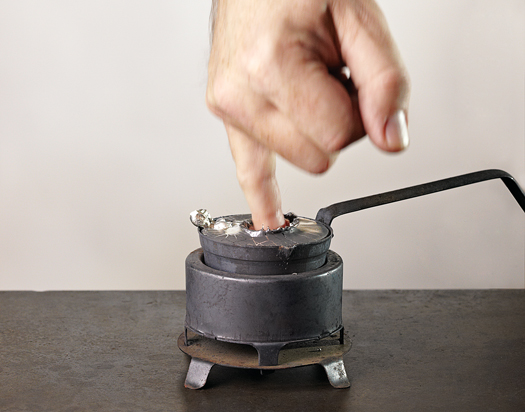
How to cast solid, if fleeting, shapes in mercury: Just keep it at 320 degrees below zero

What you consider solid, liquid or gas depends entirely on where you live. For example, men from cold, cold Mars might build their houses out of ice. Women from Venus, where the average temperature is about 870°F, could bathe in liquid zinc.

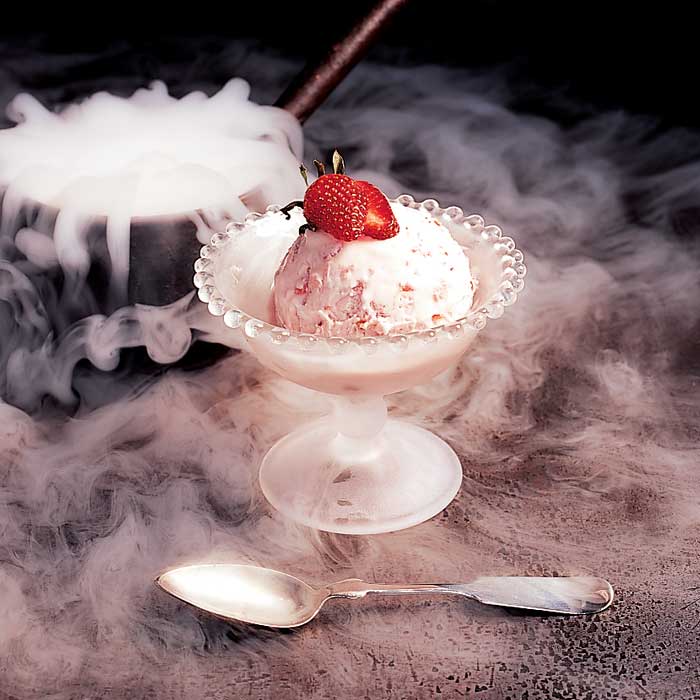
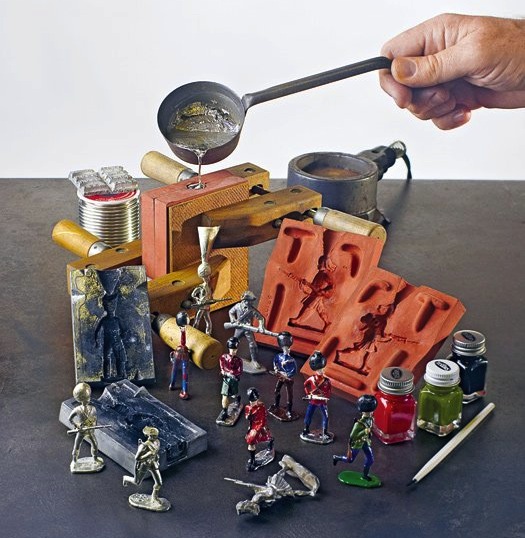
We think mercury is a liquid metal, but it’s all relative. At one temperature, the mercury atoms arrange themselves into a solid crystal; at another, they flow freely around each other as a liquid. Children from Pluto (like mine, for example) could happily cast their toy soldiers out of mercury, because on that frigid planet it is a solid, malleable metal a lot like tin. Here on temperate Earth, you need a stove to cast tin, but a tank of liquid nitrogen to make mercury figurines.

[ Read Full Story ]

Wolfram Co-Founder On Why Wolfram|Alpha Doesn't Need to Kill Google

Gray Matter's own Theodore Gray reports from his day job at Wolfram on how his new "knowledge engine" provides exactly what Google can't

PopSci's Grouse recently reviewed Wolfram|Alpha. I guess that's what happens when you ignore your editors for a week: They let someone else write about your project!

[ Read Full Story ]
Gray Matter

Apple Juice

Charge your gadgets with a piece of fruit and some pocket change

Arthur C. Clarke wrote that "any sufficiently advanced technology is indistinguishable from magic," but he was wrong. It's easy to tell the difference -- technology works. For example, "remote-viewing" mentalists claim they can see events far away, yet they fail every test. In fact, remote viewing is simple: It’s called TV.

Another example that recently circulated online was a fake video of someone charging his iPhone by jamming the end of a USB cable into an onion. How do I know it was fake? First, you need contacts made of two different metals, and second, you can't get enough voltage out of a single vegetable. What makes the ruse so disappointing is that it is possible to charge an iPhone this way, if you do it right.

[ Read Full Story ]
Gray Matter

Bacon: the Other White Heat

You know bacon is delicious, but did you know it contains enough energy to melt metal?

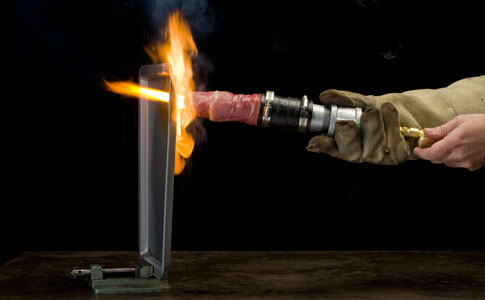
I recently committed myself to the goal, before the weekend was out, of creating a device entirely from bacon and using it to cut a steel pan in half. My initial attempts were failures, but I knew success was within reach when I was able to ignite and melt the pan using seven beef sticks and a cucumber.

[ Read Full Story ]
Gray Matter

Blowing (Up) Hydrogen Bubbles

A dramatic demonstration -- with exclusive video! -- of why the same gas that heats your house can also make it explode

Living in the Midwest, where heating homes with propane is common, I periodically see reports in the local paper that yet another unoccupied house has exploded. They often note that the roof was found in the basement, while the walls were spread some distance into the neighboring fields.

[ Read Full Story ]
Gray Matter

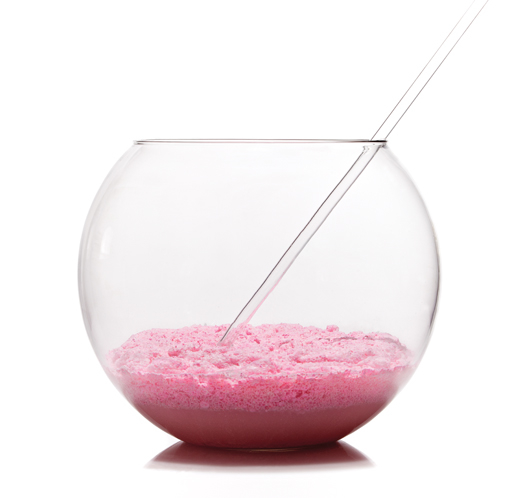
Homemade Titanium

With heat and common chemicals, the author turned ore into metal

An iron crowbar costs about $8; one made of titanium, $80. Solid-titanium scissors start at $700, and don't even ask about the titanium socket wrench. Titanium must be a rare and precious substance, right?

Actually, as raw ore, titanium is 100 times as abundant as copper. Nearly all white paint is white because of the titanium dioxide found in the ore. Something like four million tons a year go into paint, sunscreen, toothpaste, even paper.

[ Read Full Story ]
Page 1 of 2 12next ›last »


Download Our iPhone App

Stay up to date on the latest news of the future of science and technology from your iPhone with full articles, images and offline viewing


Follow Us On Twitter

Featuring every article from the magazine and website, plus links from around the Web. Also see our PopSci DIY feed


Become a Fan On Facebook

Share links with friends, comment on stories and more


December 2009: Best of What's New

In our December issue, Popular Science names the 100 best innovations of the year: bombproof wallpaper, self-parking cars, the fastest helicopter, and 97 more. Plus inventor profiles and videos.

Check out the best of what's new here.

Popular Science Photo Pool


Share your photos in the Pop Sci pool at www.flickr.com!
tags_sprite.png
POP_embeddedForm_cover_May09.jpg