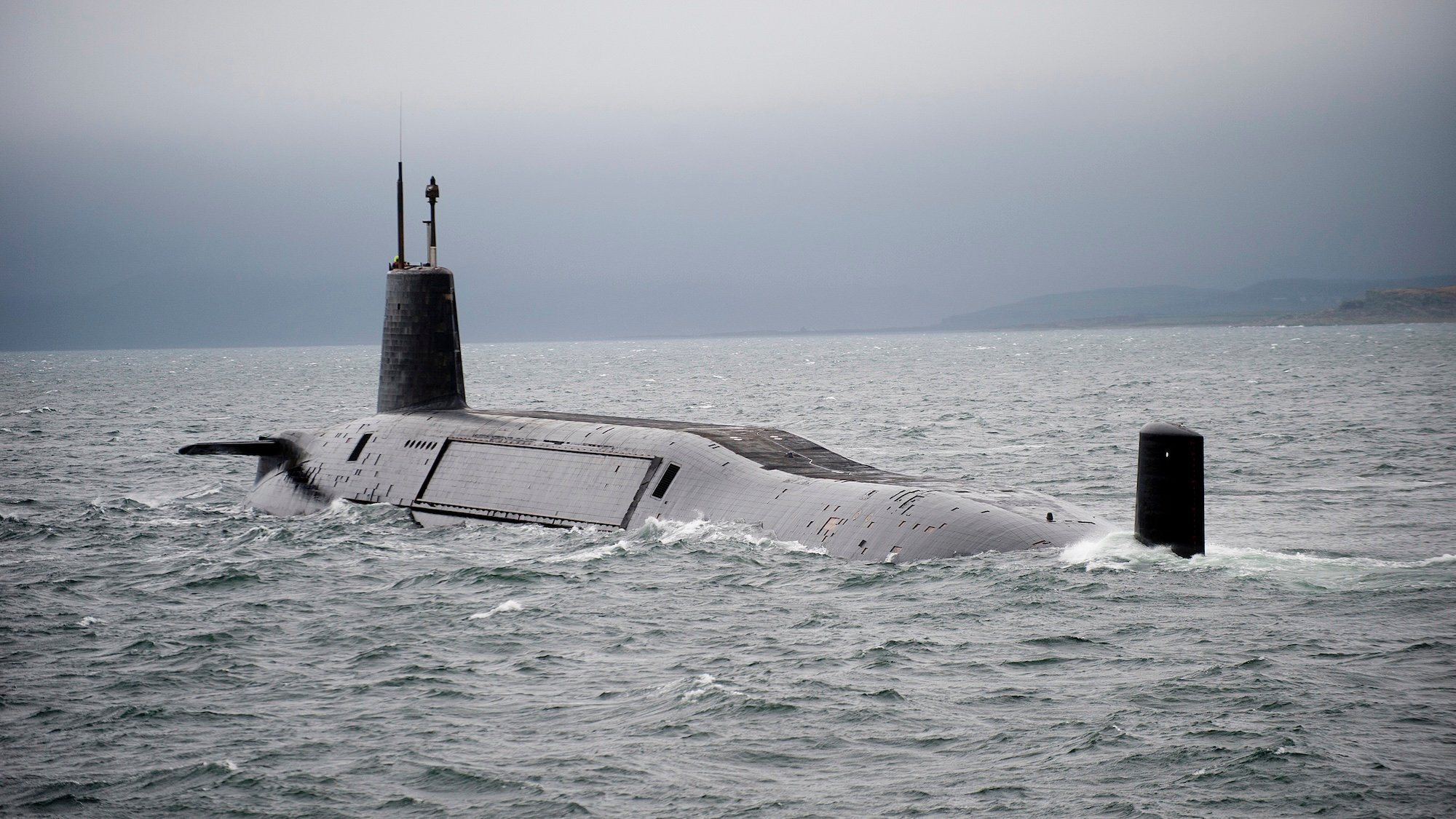
A nuclear submarine recently returned to Scotland after setting a Royal Navy record of 217 days underwater. The HMS Vengeance’s seven-month deployment overtook the 205-day milestone set by the HMS Vanguard in April. But with the Vengeance crew finally back home, critics now argue the two submarines’ lengthy back-to-back voyages are causes for concern, not celebration.
“The fleet was designed around three-month tours, and that was considered to be a long time to be stuck underwater in a metal box with no contact with the outside world,” nuclear submarine expert David Cullen told The Guardian on November 15.
The 17,526-ton, nearly 500-foot-long HMS Vengeance is one of Britain’s four Vanguard-class submarines constructed to carry monstrous Trident nuclear missiles. First launched in 1998, the vessel features 16 missile tubes, each loaded with one Trident containing up to a dozen, 100-kiloton multiple independently targetable reentry vehicles (MIRVs). The MIRV is specifically engineered to simultaneously deploy a payload of individual nuclear weapons aimed at a list of targets. The Royal Navy continuously keeps at least one Vanguard submarine at sea, which hypothetically allows the United Kingdom to still conduct nuclear strikes in the event its land-based systems are compromised during a nuclear war.
Vanguard submarines were originally built to host around 140 crewmembers during three-to-four month deployments. Although a 100-day excursion was once considered rare, underwater stints are now often double the length of time, forcing sailors to stack extra provisions along already cramped corridors and inside any additional nooks. The U.K. government attributes the extended missions to budgetary cuts that have dramatically slowed down the pace of multimillion-dollar vessel maintenance projects.
Deployment aboard a submarine like the Vengeance is considered one of the navy’s most psychologically difficult assignments. The nuclear sub remains underwater in total radio silence for the entire length of a patrol to keep its position secret. The vessel can travel to a depth of around 984 feet, but it may occasionally ascend to shallower waters to communicate via a transmission buoy or floating wire antenna. Crewmembers may receive a weekly, 120-word “Familygram” message, but each dispatch is previewed by naval officials. These readers retain the right to censor any bad news or information they feel may compromise sailors’ effectiveness. Regardless of what a sailor ultimately reads, they are strictly prohibited from responding.
The toll on crew is steep, but it’s particularly difficult for the women comprising roughly 10-percent of the navy. In 2022, whistleblower Sophie Brook generated international headlines after reporting a “constant campaign of sexual bullying” while serving as one of the Royal Navy’s first female submariners. In 2024, First Sea Lord Adm. Sir Ben Key called the crew misogyny “intolerable” and apologized to the growing number of women who subsequently came forward with their own stories. The Royal Navy’s investigations ultimately resulted in the firing, demotion, and disciplining of dozens of servicemen—including Key’s own termination.
Key’s successor, Gen. Sir Gwyn Jenkins, said he had “nothing but tremendous respect” for Trident crews earlier this month, while admitting the need to “improve our submarine maintenance.”
The Vanguard fleet was designed for about 25 years of service, but will likely accumulate roughly four decades of sailing by the time its first replacement is ready. That submarine, the HMS Dreadnought, isn’t expected to sail until around 2032.