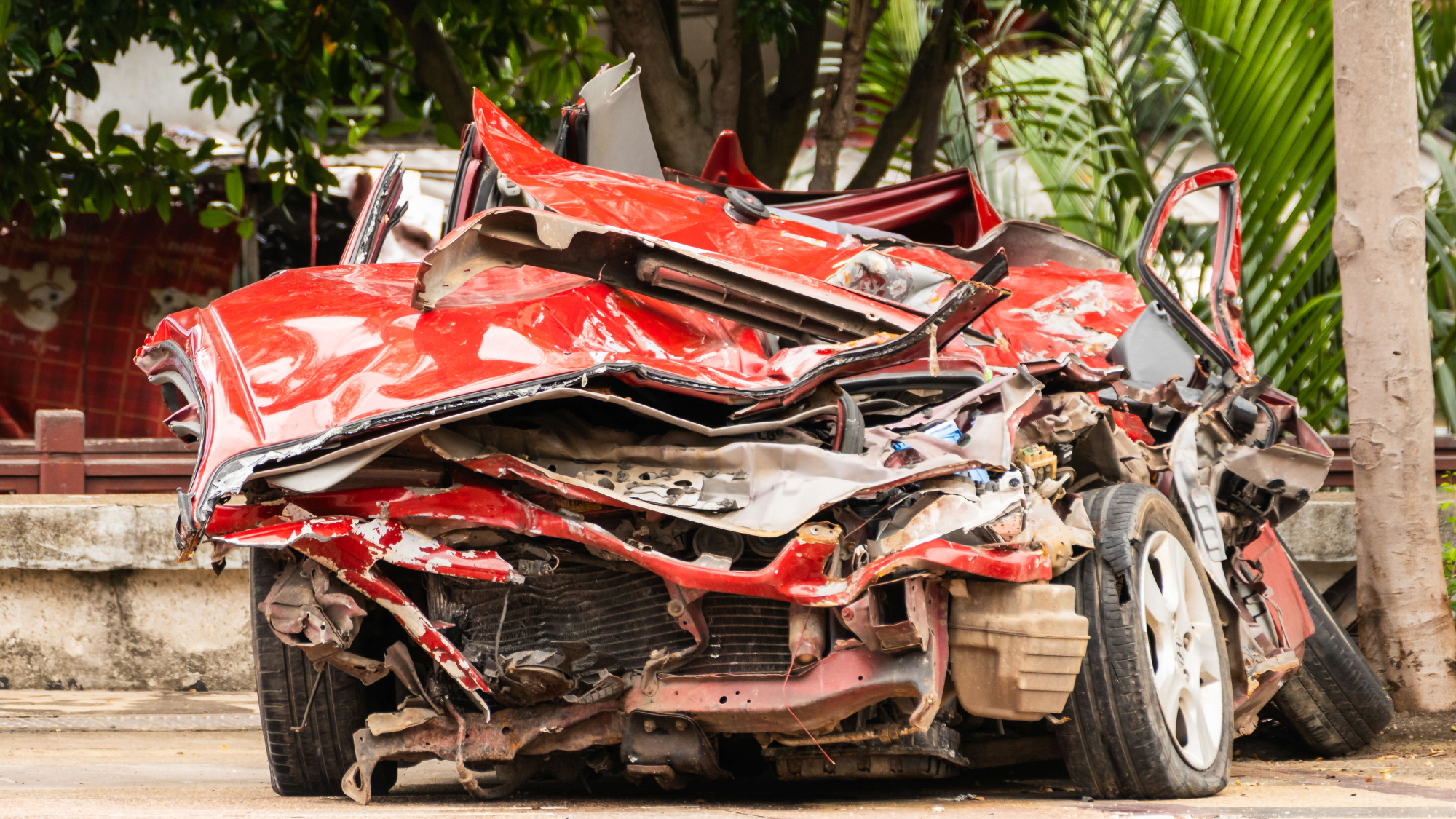
One law enforcement agency in Japan reportedly wants to make something normally confined to sci-fi crime thrillers a reality: interactive, AI-powered reconstructions of real-world accidents. According to The Japan Times, Tokyo’s Metropolitan Department is developing a system that combines AI with security camera footage and 3D spatial data captured by camera-equipped mapping vehicles to digitally reconstruct traffic accidents. Investigators using the tool would reportedly be able to measure vehicle speeds and distances on a screen and replay the event in simulation from multiple perspectives, including overhead or even through the eyes of a nearby driver or pedestrian.
That’s the goal, at least. Details about how this proposed system will actually work remain sparse, though the report says that the police plan to begin testing in June 2027 and potentially launch full operations in January 2028. In theory, digital reconstructions could reduce the need for labor-intensive physical, on-site inspections (the current approach) which can close off roads for ours and lead to traffic jams.
However, AI reconstructions bring risks of their own, especially if they rely on generative AI tools that are prone to hallucinating fabricated data. In the United States and elsewhere, courts are struggling to reign in examples of inaccurate, AI-generated court filings and police reports. The use of AI-enhanced video and audio and even deepfake clones presented in trials are also forcing the legal system to reevaluate how it treats algorithm-altered evidence.
AI crime-scene reconstructions are nascent, but coming
As far as we can tell, the Tokyo police proposal would be the first systematic use of an AI reconstruction for traffic assessments. In 2024, law enforcement in Pune, India, east of Mumbai, reportedly considered using an AI-enabled “digital reconstruction” to analyze a high profile drunk driving incident that killed two pedestrians. But it’s unclear whether that system was ever actually realized or used in court.
Researchers have been exploring the underlying technology for such a system for years. In July, a team from the Technical University of Munich and the Bavarian State Criminal Police Office in Germany showed off an AI system they say is capable of compiling thousands of photographers from a crime scene to create a digital reconstruction. In that case, the team said the system could automatically identify and classify objects in the scene. Investigators could then virtually go in and query the 3D crime scene to try and collect and analyze evidence long after the actual event occurred.
Meanwhile, researchers at Hasselt University in Belgium, are also in the early stage of developing a tool aiming to use multimodal language models for digital reconstructions which they say could aid law enforcement and insurers.
Seeing is believing. Or is it?
Generative AI tools are also creating new headaches for the legal system. Hundreds of lawyers around the globe have been sanctioned by courts for filling legal briefs with bogus, hallucinated case law. In June, a judge in Mississippi canceled a civil trial’s proceedings after all four lawyers on opposing sides of the case were caught citing a fake, AI-generated court filing. And citations are not the only issue. A growing number of police departments in the U.S. are using AI tools to analyze evidence and draft police reports, which the American Civil Liberty Union warns “removes important human elements from police procedures.”
At least partially AI-generated evidence, like the kind that many result from a digital reconstitution, has already appeared in some legal proceedings. In 2024, a Washington State judge overseeing a murder case barred the defendant’s lawyers from introducing cellphone footage that had been digitally enhanced using AI software. According to court filings at the time, the judge in that case worried that admitting that AI- enhanced footage could “lead to a confusion of the issue and muddling of eyewitness testimony.”
The core tension here, and with other uses of AI as evidence, is whether or not the AI system can be trusted to accurately reflect reality. An AI system reconstructing traffic scenes, though potentially less higher stages than a murder trial, may nonetheless face similar headwinds.