
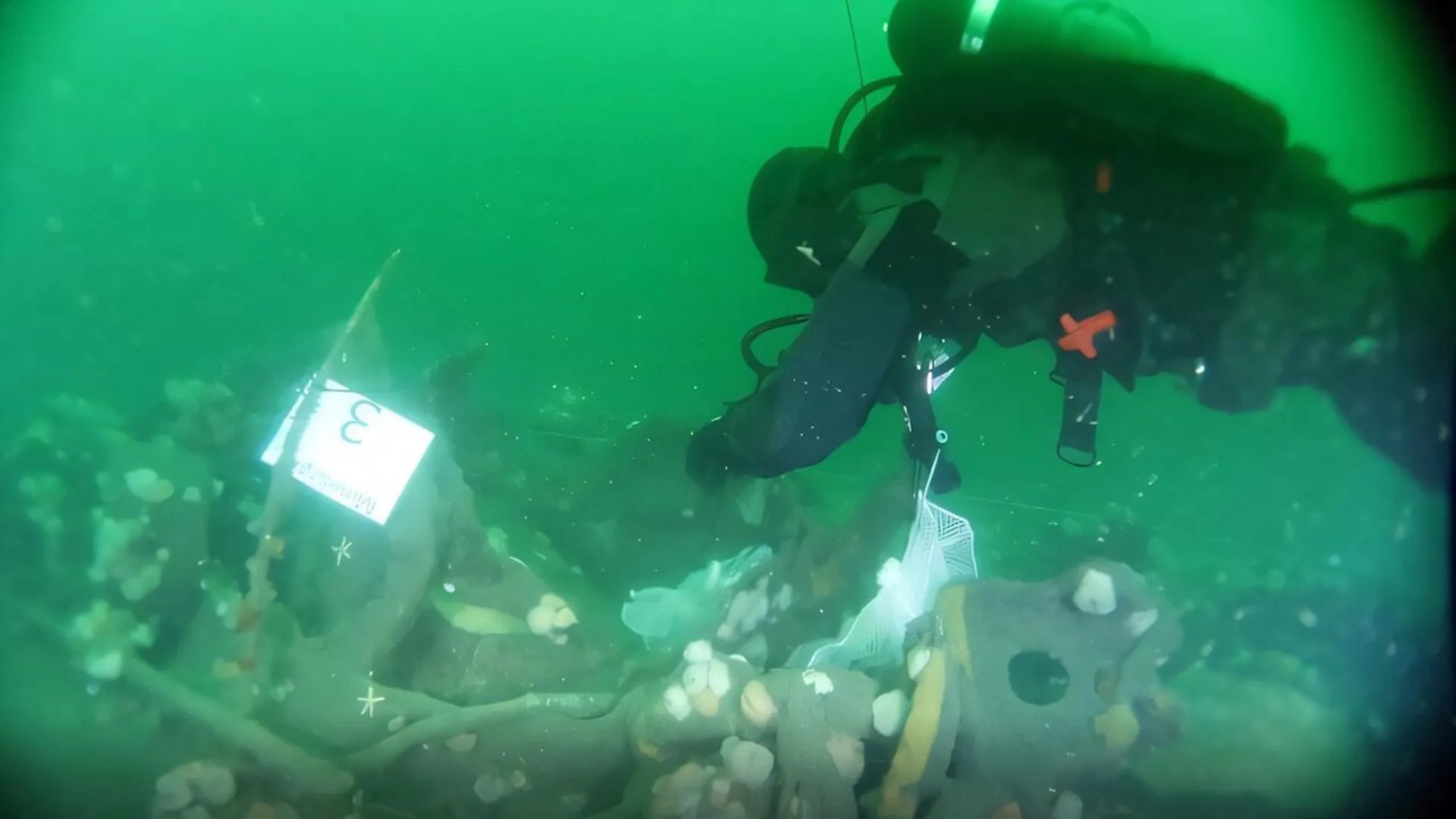
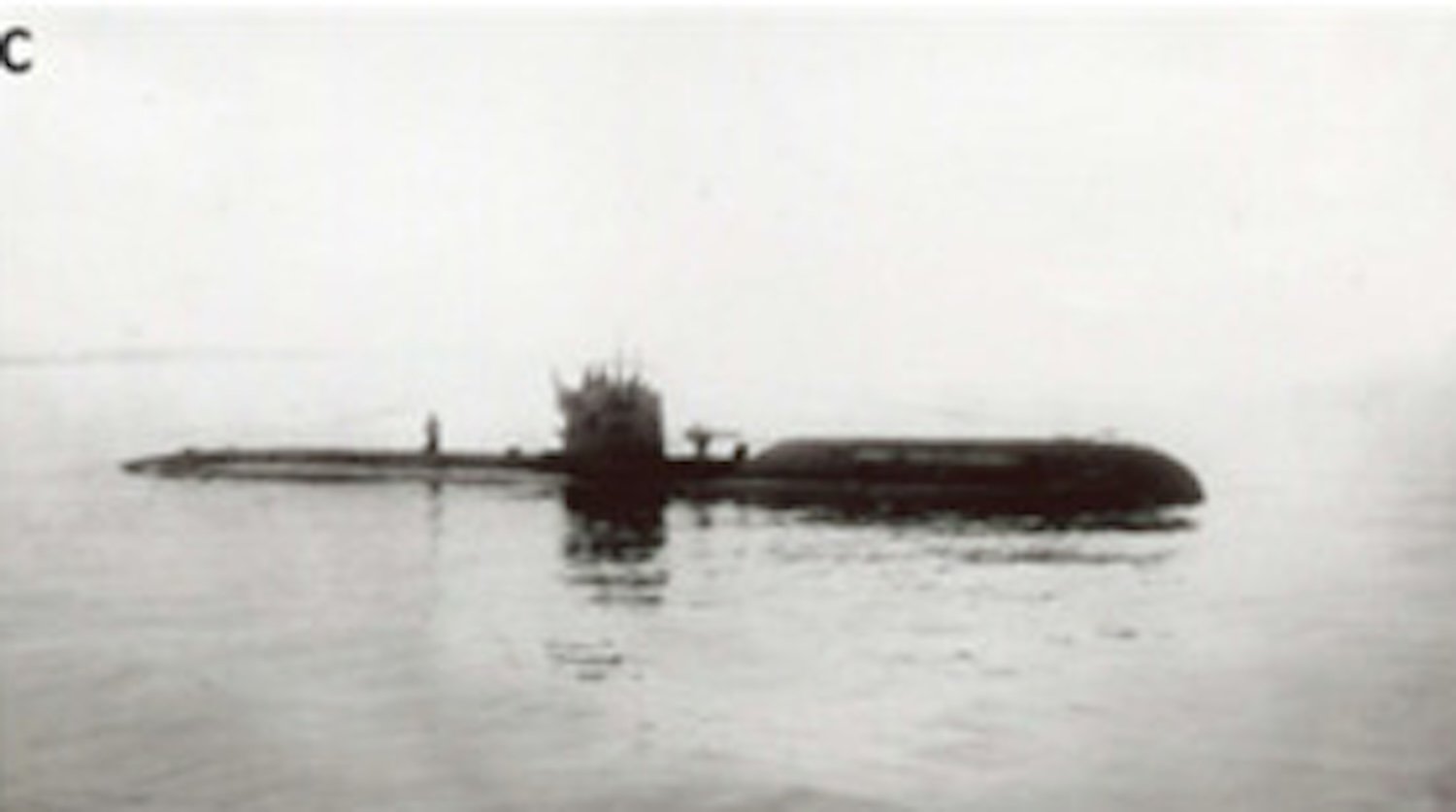
A World War I submarine that sank nearly 110 years ago has been leaking explosive pollutants into the North Sea for decades. What’s more, ocean researchers say the problem may worsen over time—not only near the German vessel itself, but at thousands of similar shipwrecks.
On April 19, 1917, Germany’s UC-30 submarine was attempting to return home due to engine problems when it struck a British mine near the Danish island of Rømø. All 27 crew members perished, and the sub remained missing until its rediscovery almost a century later in 2016. As part of the North Sea Wrecks research project, marine ecologists recently collaborated with Danish navy divers to visit the UC-30’s remains. There, they collected water and sediment samples as well as mussels and starfish specimens that lived near the vessel’s remains.
Subsequent laboratory analysis showed that traces of TNT are filtering into the surroundings from at least some of the submarine’s six torpedoes and 18 mines. The residual toxins aren’t concentrated in one specific area, either.
“We found traces of TNT in the wildlife, the seabed, and the water column,” study co-author and Aarhus University geoscientist Katrine Juul Andresen said in a recent profile. “The question is how significant the effect is and how far from the wreck the pollution impacts the marine environment.”
Andresen and her colleagues suspect the pollutants remain “relatively localized,” but that will change as the wreck continues to deteriorate from the North Sea’s corrosive conditions. UC-30 is only one of likely thousands of similar historic wrecks that litter Denmark’s waters. Andresen cited a Danish Environmental Protection Agency report focused on the ongoing problem that she co-authored in 2024.
“I found that there are 10,127 wrecks in Danish waters,” she said, adding that around 15 percent likely date back to both World Wars. “That is quite a high number.”
Addressing the issue isn’t simply a matter of towing wrecks to the surface. Many of the unexploded munitions remain volatile, and detonating them underwater frequently risks worsening the surrounding pollution.
Andresen conceded options are currently slim, but they are working with European Union officials on a way forward. One potential strategy may employ underwater robots to survey the seafloor for particularly dangerous or eroded shipwrecks. In the future, similar machines could potentially retrieve explosives themselves and neutralize them in a safe location.
“We are trying to identify the most gentle solutions to the problem, as there is unfortunately no easy way to clean it up,” said Andresen.
