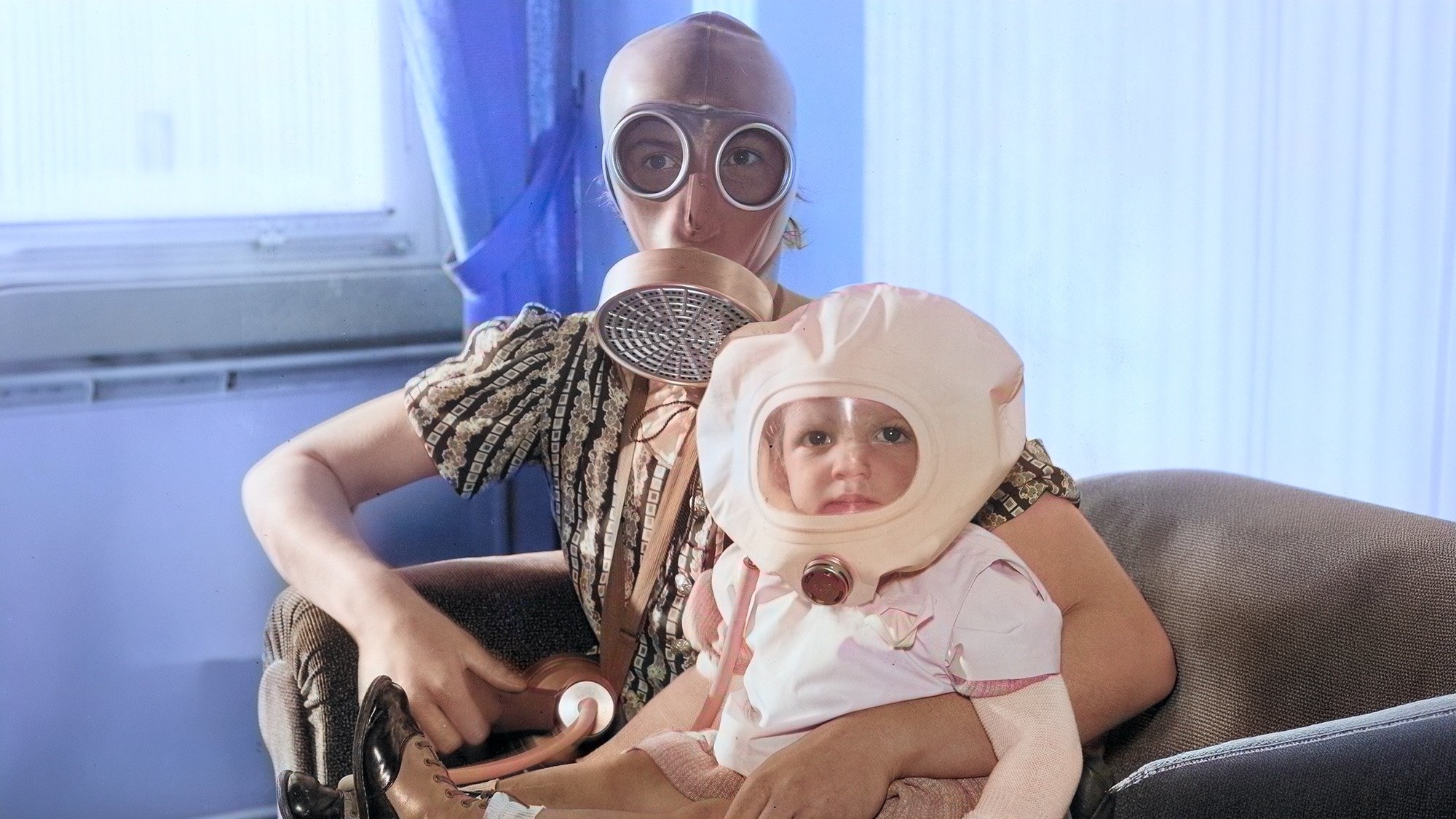
Time forgets the vast majority of inventions—usually for good reason. As parents and children everywhere get ready for trick-or-treating, we’d like to turn your attention to one such invention: the baby gas mask.
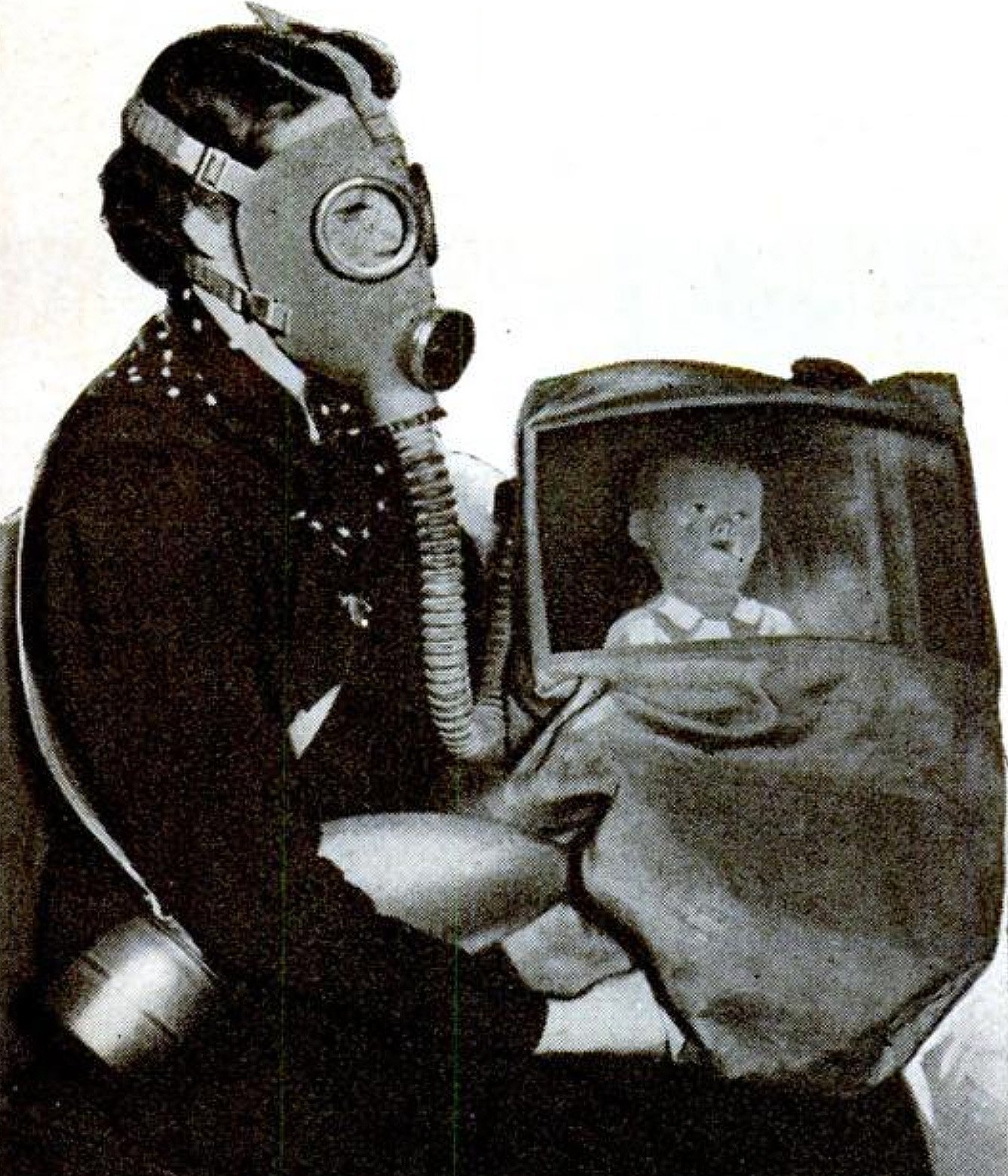
In the November 1938 issue of Popular Science, “a doll demonstrates the use of the baby gas mask” in an undeniably creepy image. The word mask is perhaps a misnomer here, because this contraption actually completely engulfs the baby as “filtered air is pumped in with an artificial lung.”
These baby gas masks were developed at a time when around the world people feared another world war would—and eventually did—ignite. The brief story on the contraption reads, “Babies are protected from poison gas in case of a wartime attack” by these novel masks.
But it’s still hard to imagine any baby well-behaved enough to sit inside such a creepy invention. Nonetheless, the French inventors behind the technology thought this would be a good idea—even a profitable one. And in the lead up to World War II, the baby gas mask briefly caught on, with several vintage photographs showing off different iterations of the device.
In one 1937 image (featured above), a woman and young toddler both sport gas masks in Germany.
The baby gas masks of wartime England
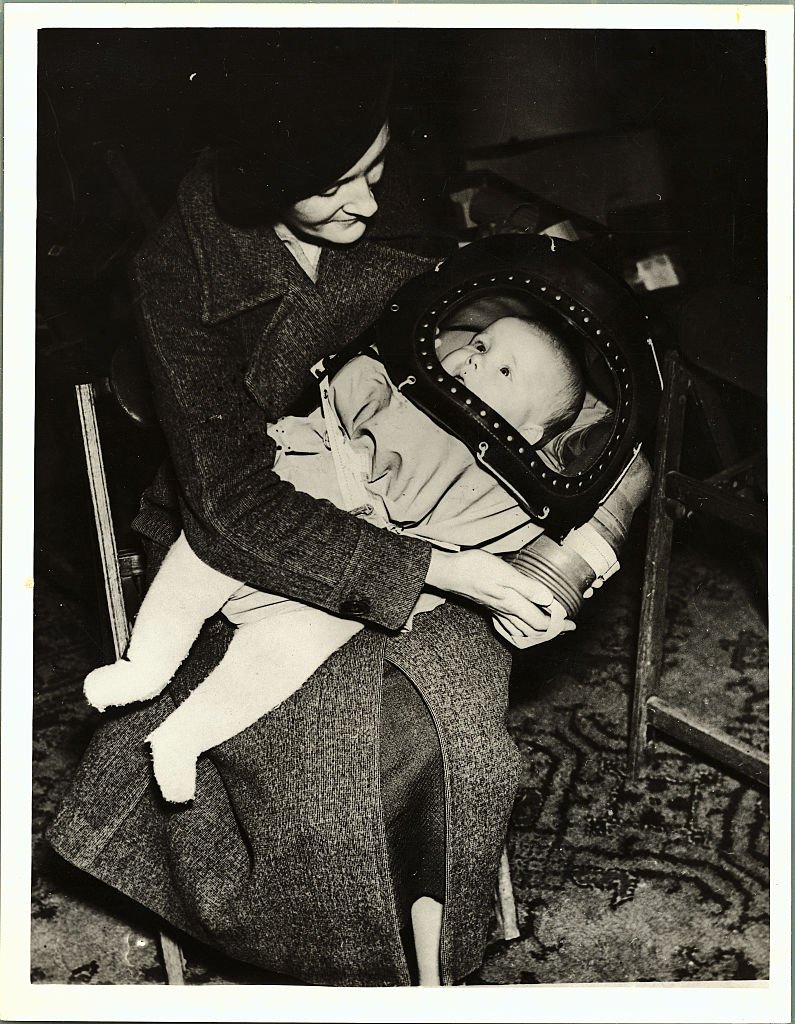
There’s also a whole slew of children and babies wearing gas masks in vintage photographs from England. One photograph (below) shows how a baby gas mask, also known as a hood, worked as a woman demonstrates using the contraption at the historic Holborn Town Hall in London, England.
This particular design took three years to develop. An infant is placed inside a fabric hood featuring a large cellulose acetate window. A drawstring cinches the hood at the infant’s waist, so that the arms, shoulders, and head are completely contained. An adult then operates a rubber bellows to filter air into the hood.
There was apparently no time limit for how long a child could be kept inside the airtight mask—as long as air was steadily pumped in, of course. As to whether the infant enjoyed the contraption, no one could ask.
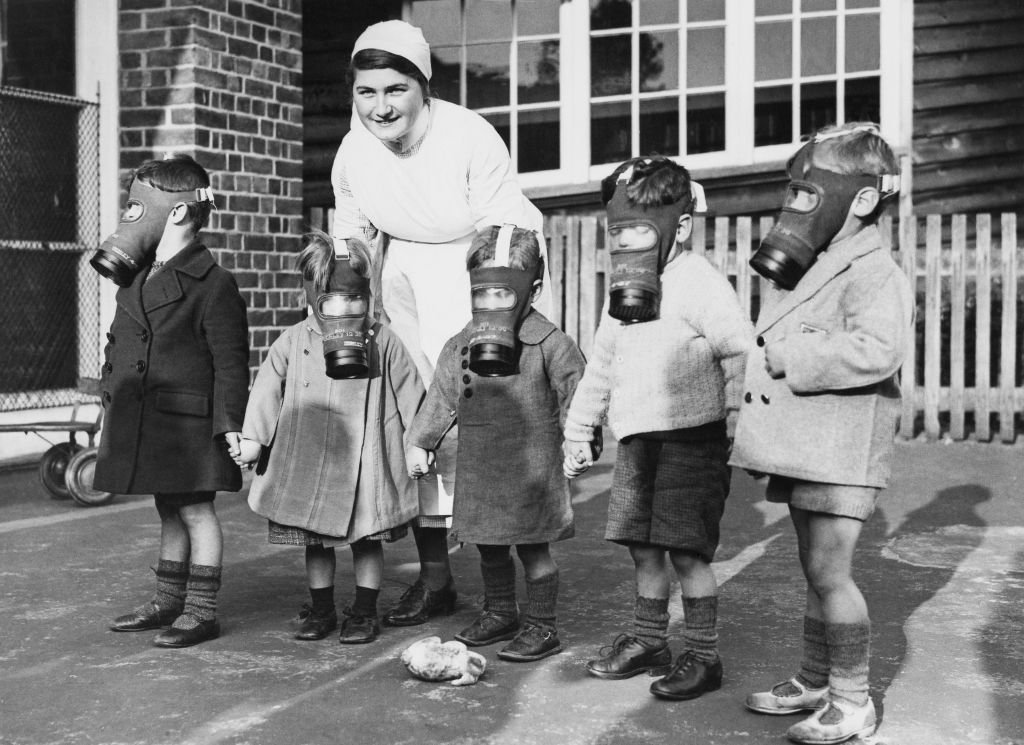
Another photograph taken (fittingly) during Halloween season, on October 20, 1937, at Dr. Barnardo’s nursery home in Hawkhurst, Kent, England, shows several toddlers in a more traditional face gas mask. The home was actually nicknamed the Babies’ Castle. It originally opened in 1883, after a Mr. Theodore Moillet donated two adjacent mansions and an acre of meadowland for the nursery.
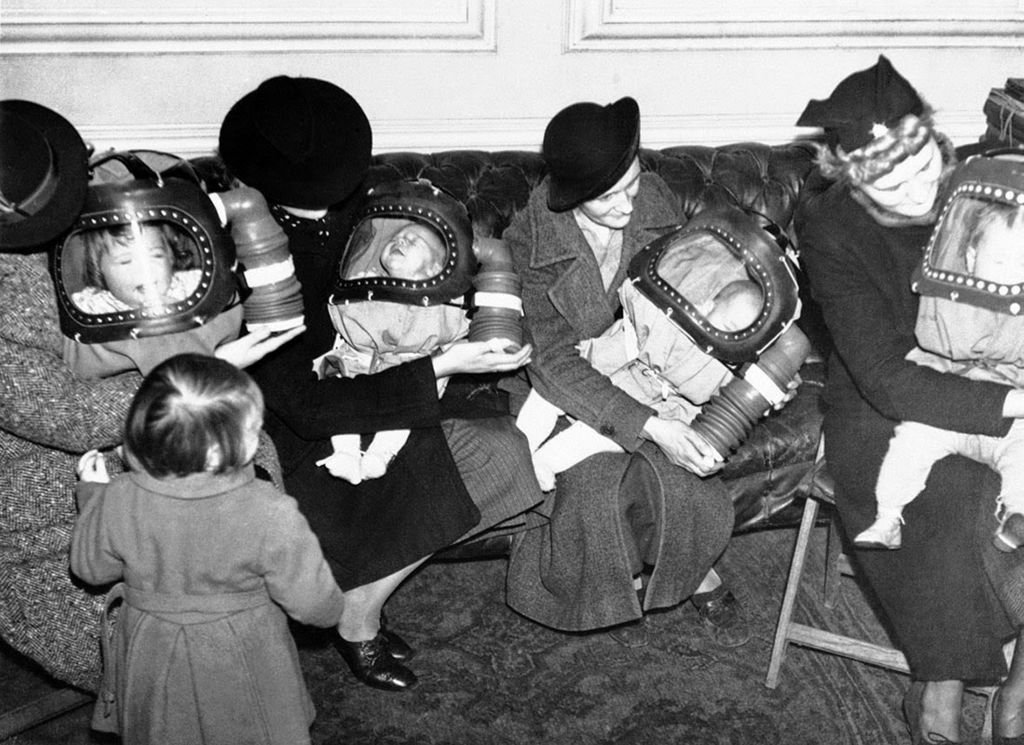
Yet another photograph from England shows several mothers holding babies fitted with the hood-style gas mask designed by the Royal Air Force.
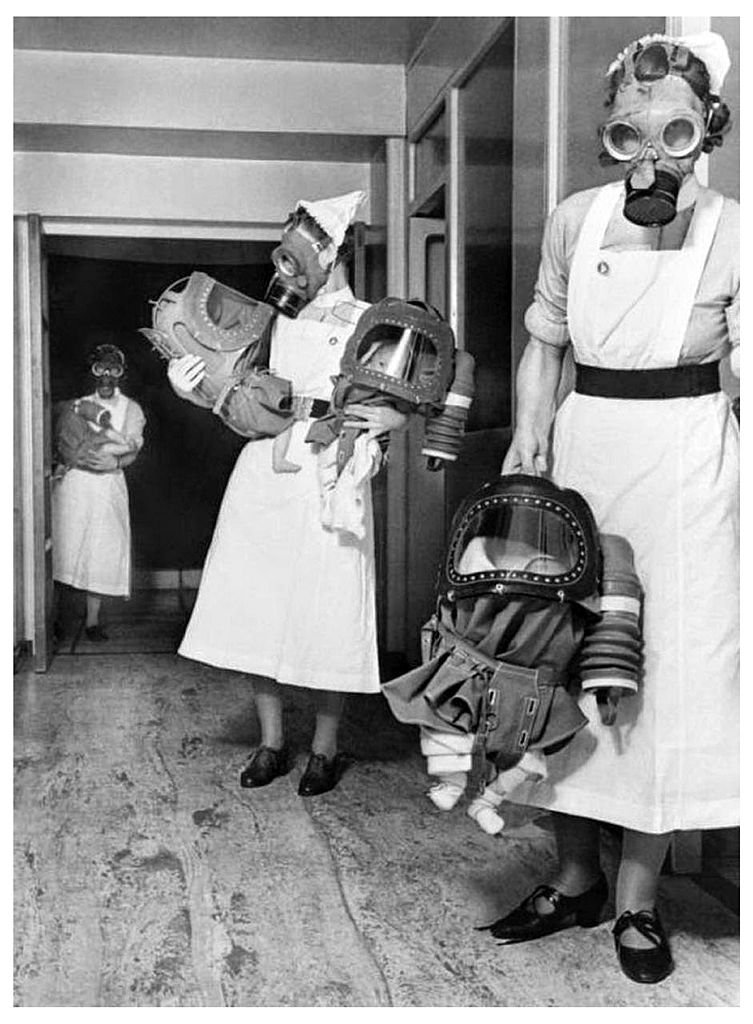
Hospitals in England were also fitted with baby gas masks, and one 1940 photograph shows several nurses testing out the new technology.
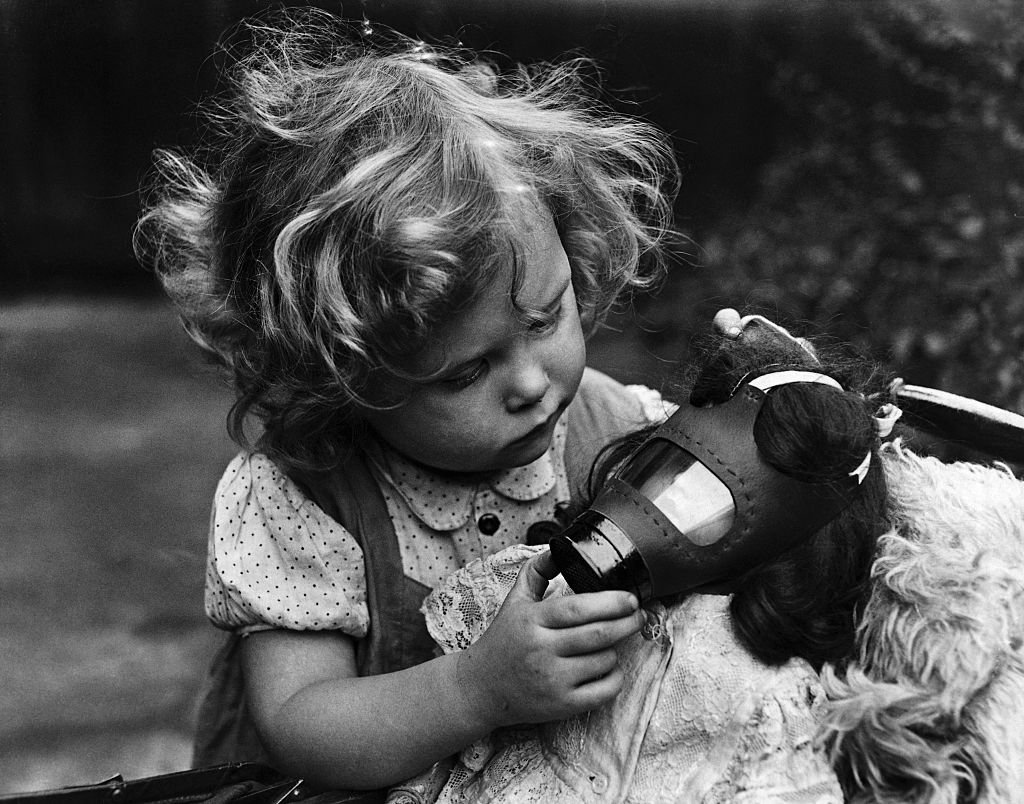
One little girl named Jean Panter even convinced her father to make her doll a gas mask. This photograph of little Jean with her doll was taken in England on February 11, 1938, shortly before World War II began. The fact that even a young girl wanted a gas mask for her beloved toy certainly speaks to how much fears of poison gas permeated society before and during World War II.
Dr. Jacques Marie Le Mée’s baby gas mask in France
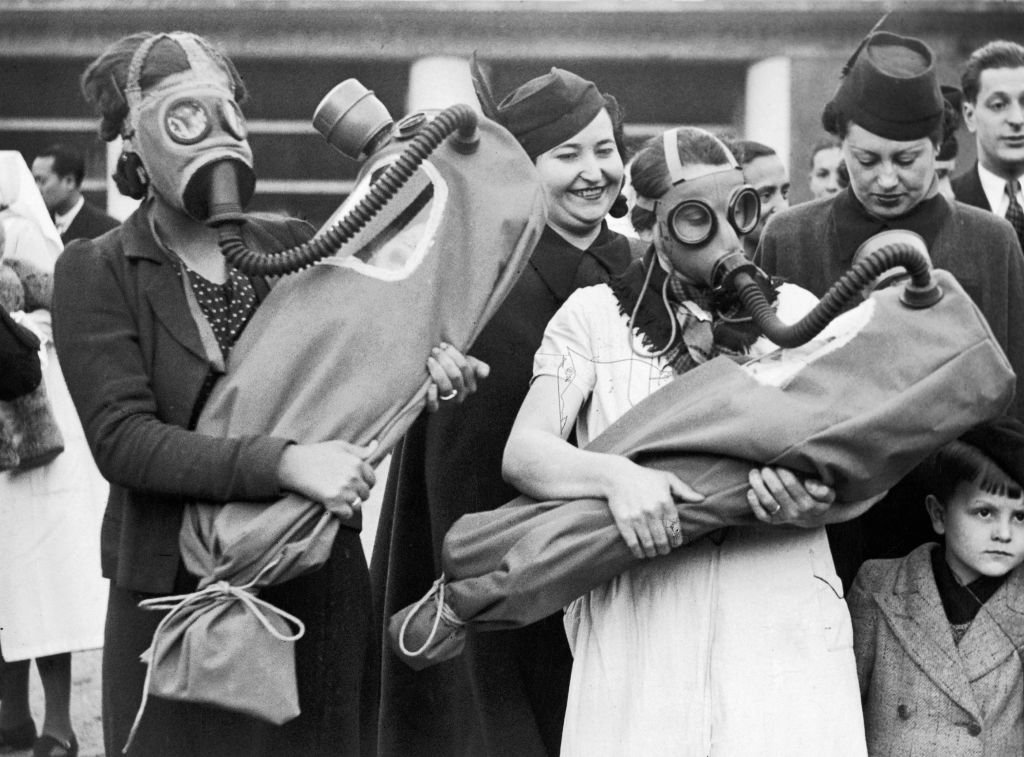
In 1938, Dr. Jacques Marie Le Mée (sometimes spelled La Mee or Le-Mee), the head physician at the Hôpital Necker-Enfants-Malades in Paris, developed another type of baby gas mask. In fact, the hospital Le Mée worked at is the oldest children’s hospital in the Western world, initially founded in 1801 as Hôpital des Enfants Malades.
In one 1939 photograph, several women and their babies don Le Mée’s baby gas mask in a Parisian square. As opposed to the baby gas hoods on display in vintage English photographs, Le Mée’s invention envelopes the entire baby’s body. Even the baby’s legs will get clean air.
The baby gas mask featured in Popular Science
Even though the November 1938 issue of Popular Science says the baby gas mask gracing its pages was developed in France, it’s markedly different to the above photograph of Le Mée’s baby gas mask.
In this design, the window is larger and it’s also unclear how the baby gas mask cinches or becomes airtight around the infant.
Someone holding the child pumps fresh air into the hood-style gas mask. “The person holding the infant controls the amount of fresh air entering the [baby] shelter by pressing on the rubber-lung unit,” the short story in the magazine reads.
But even in dark times, children always find a way to have fun. In one delightful comment on a BBC story about baby gas masks, one reader, William Irwin, remembers having “endless fun playing ‘divers’ with one” baby gas mask.
“We were so far removed from bombing risk areas so I do not believe I was ever put into it as a war-baby. It gave me the interest to eventually become a scuba sports diver.”
Even though this technology thankfully fell by the wayside and seems very strange to modern eyes, it still offers us a lot to think about. The inventions that come out of hard times can even inspire—at least if you’re William Irwin.
In That Time When, Popular Science tells the weirdest, most surprising, and little-known stories that shaped science, engineering, and innovation.