We may earn revenue from the products available on this page and participate in affiliate programs. Learn more ›
I love hiking, but most of my body does not. I have POTS (Postural Orthostatic Tachycardia Syndrome), which sends my heart rate into the 150s during moderate exertion, and Ehlers-Danlos syndrome, which means my joints sit looser than the average hiker’s. My muscles also fatigue earlier, which means the trek back to the car typically feels particularly taxing. These conditions make the Hypershell X Ultra S exoskeleton appealing to me. It weighs less than 5 pounds and adds AI-driven assistance to every step during hiking or even everyday ambulation. Hypershell hosted a group of journalists at the Grand Canyon to experience the assistive device and determine just how much it can help all bodies, including one like mine. [Disclosure: Hypershell provided travel accommodations during the creation of this story.]
What it does
Hypershell X Ultra S
See It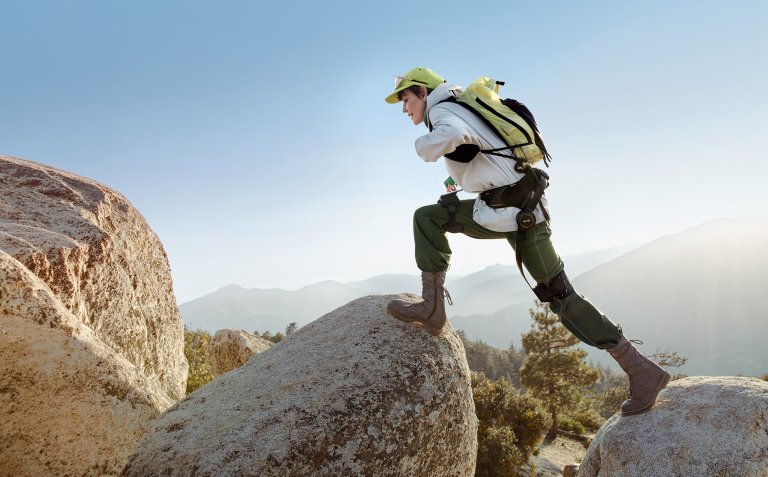
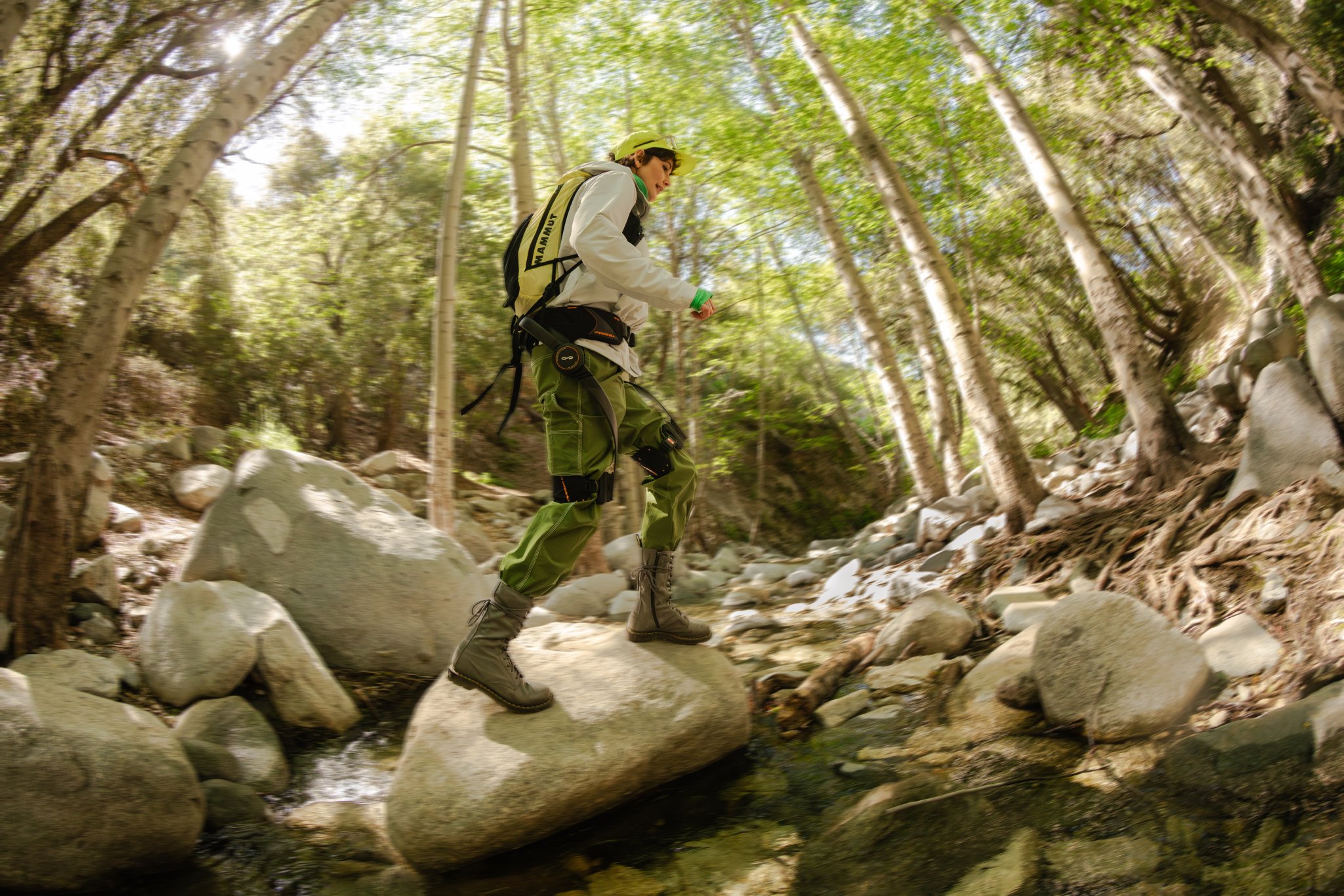
The Hypershell X Ultra S is a $1,999 hip-mounted exoskeleton with motors at both hips, designed to assist your stride during walking and hiking. It weighs 4.7 pounds, thanks in large part to its construction from titanium alloy and carbon fiber [there are also less expensive, less powerful carbon fiber + aluminum versions for $1,499 and $999]. The hardware is paired with what Hypershell calls a HyperIntuition AI motion-control system that can handle a wide variety of terrain, rather than just pulling on your legs to move things along. The company lists 12 terrain modes the system adapts to in real time, including stairs up, stairs down, uphill, downhill, gravel, snow, and dunes. The M-One Ultra motor is rated for 1,000 watts, and a single charge is rated for 30 kilometers, which Hypershell says is enough to cover the famous Bright Angel Trail without a swap. Mine held a full day of testing on one charge with juice left over for normal movement.
A companion app provides access to the controls. There are four modes to choose from before selecting a terrain: eco (assistance with an adjustable strength slider), hyper (more assistance, same slider), transparent (motors disengaged), and fitness (resistance instead of assist). There are physical buttons on the unit, too, but the press sequences for switching modes never became muscle memory for me. The app was always faster, but it’s nice to have a tactile control in case your device is buried in your bag, or you’re wearing gloves.
How it fit
The three-zone lumbar pad sits in a soft pack against my lower back, and over a full day on the trail, I never had a chafe complaint. The hip piece is designed to ride above the belly button, and EDS comes with gut issues that change my shape throughout the day, so the belt slipped down past my navel as the day went on. My middle is not the same shape at 9 a.m. as it is at 4 p.m. Hypershell sells optional shoulder straps for narrower waists and hips, and on my build, I would consider them required. The system adjusts at the hip and the knee, so the fit range itself is wide, but the geometry of where the belt sits is fixed.
On the trail

The closest sensation I can compare the assistance to is high knees during a warm-up at the gym. The motors don’t push your legs forward; they take some of the lifting work off the front of your stride. You feel it most when you start moving, less as you settle in, and within a few minutes, I stopped registering it as a sensation and started registering it as energy I still had at the end of the hike.
You feel the AI adjusting to your pace and gait as the terrain changes under you, and the adjustments are small enough that they never rush my stride or lag behind it. The system also tries to keep your gait in alignment. If I turned a hip out or in, the motors pulled me back toward center in a way I could feel. As someone whose joints dislocate easily, I watched for any sense of the device causing or preventing a dislocation and felt neither. It doesn’t assist with balance, and it’s not meant to.
Downhill is where I’m slowest to trust new gear. I’m hesitant on descents in regular hiking shoes, and adding an assist mechanism to a hesitant hiker felt like a steeper learning curve. I worked through it. The Hypershell didn’t pull me down the trail or accelerate my stride in a way I couldn’t override, and I came to trust it on descents in eco mode. It’s a unique sensation, and you get more accustomed to it over time.
Fitness mode was the surprise. It requires increased effort, similar to walking with a resistance band around your legs. The resistance shows up on lunges and on flat walking; it doesn’t engage on squats. For me, the practical effect was proprioception. Hypermobility means I don’t always know where my limbs are in space, and the resistance gave me a constant low-level feedback signal about what my legs were doing. I’m planning to try fitness mode in the gym for the same reason, to see if it can help my body get the feedback it usually lacks during training.
Same hill, three modes
I climbed the same hill in the Grand Canyon three times, switching modes between climbs. In transparent (no assistance), my heart rate ran from 102 beats per minute at the bottom to 158 at the top. In eco, the same hill peaked at 126. In hyper, the highest assist setting, my peak was 118.
The flat-terrain numbers told the same story. Walking at roughly a 2-mile-per-hour pace, my heart rate in transparent mode averaged 128 beats per minute, which is normal POTS territory for me. In eco or hyper, my average dropped to 96 at the same pace. I’m essentially never in double digits in motion. The Hypershell put me there. My conditions made those differences easy to measure. They didn’t create them.
The other measurements I can speak to are softer. My lower extremity functional scale rates me at mild to moderate limitations, and I usually take frequent rest breaks because my muscles tire quickly. I didn’t develop knee pain during testing. I stepped up using either leg with confidence rather than defaulting to the leg I usually favor. My posterior chain felt more engaged. My legs were less fatigued during and after the hike.
The verdict
The Hypershell X Ultra S changes the cardiac and metabolic cost of walking and climbing in ways I could measure on myself, and, while my specific conditions play a role in determining its efficacy, it has the potential to help pretty much anyone who wants some ambulatory assistance. As an adaptive athlete who packs in to a campsite and then loses the next day to soreness, this changes the math on what I can take on. Hike in with assistance, save the legs for the way out. If your hiking problem is more conventional, that you stop on long climbs because your legs are done before you are, the same assist principle should help.
I didn’t test the Hypershell running or making quick directional pivots; my dislocation risk kept me deliberately out of those movements, and the company’s claims about transition response don’t tell me what would happen to my joints if I planted hard and turned. But during normal conditions, it helps and lets people get out and go hiking more easily. That’s a win for everyone.