
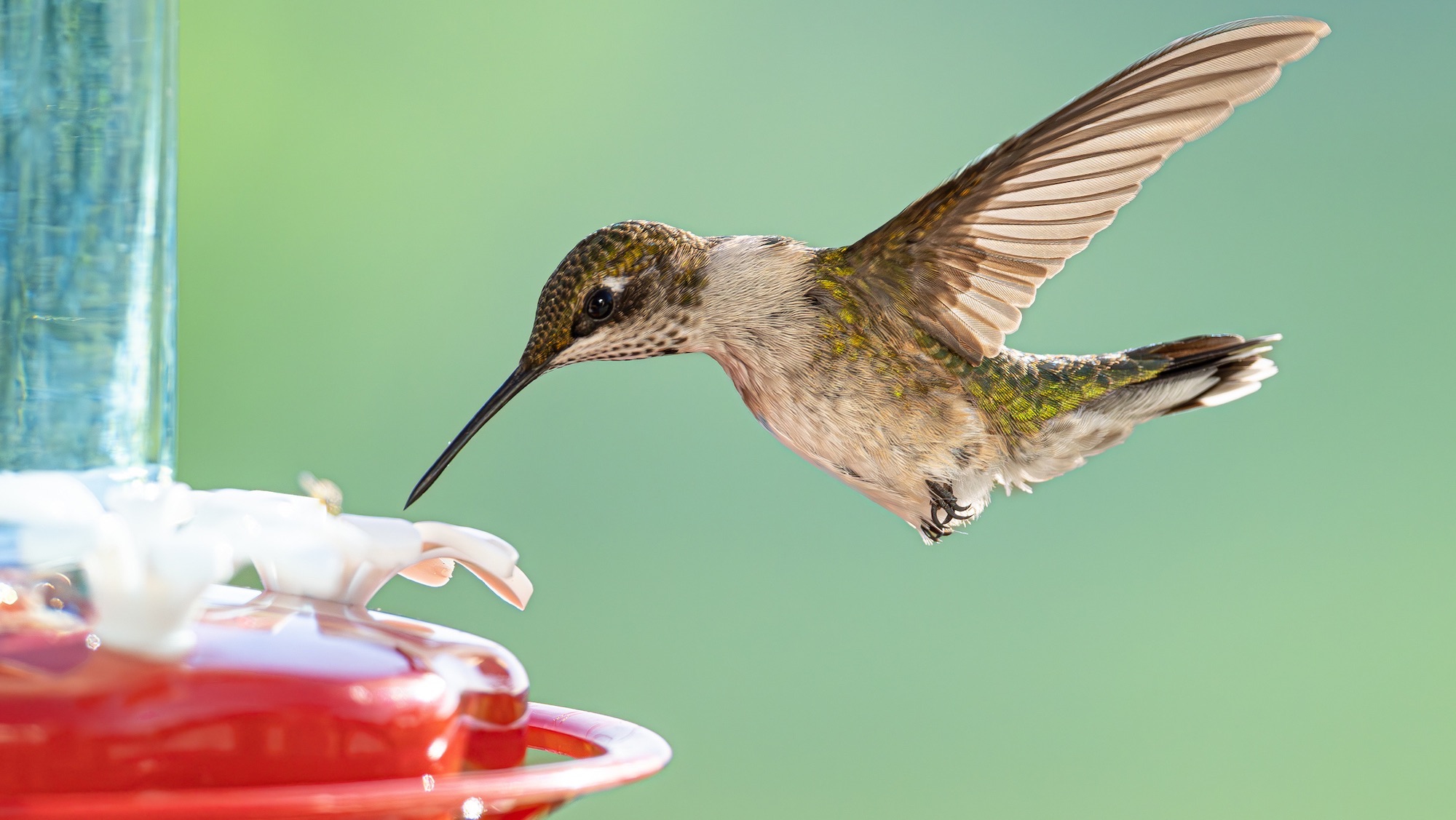
Hummingbirds mesmerize us with their lightning-fast zips across the yard and their impossibly tiny stature. It’s tempting to think attracting them is as simple as hanging a bright red feeder and calling it a day. But there’s more to drawing these tiny visitors than most people realize. What brings them in and keeps them coming back comes down to the bigger picture happening in your yard.
Build the habitat first
Hummingbirds often return to the same area where they hatched to feed, nest, and raise the next generation. A yard designed with structure, shelter, and seasonal blooms will not only attract the tiny birds but also keep them coming back year after year.
Creating a hummingbird habitat is easier than it sounds, and you may already have what you need in your yard or neighborhood. Start by adding small trees and flowering shrubs. Small trees provide hummingbirds with lookout perches and safe nesting sites. Flowering shrubs provide mid-level cover that protects them from predators and harsh weather. You can even incorporate these plant structures with containers! Tuck them into sheltered corners to create essential protection, especially during nesting season, when females are raising their young.
Next, focus on nectar-rich plants. The best plants for hummingbirds tend to have tubular blooms in shades of red, orange, or pink. These colors naturally catch their attention. Reliable favorites include Bee Balm, Salvia, Cardinal Flower, Columbine, and Coral Honeysuckle.
For the most success, stagger bloom times so something is flowering from early spring through fall. Plant in clusters rather than single specimens to make food sources easier to spot from above. And whenever possible, choose native varieties. They’re better adapted to your region and more beneficial to local wildlife.
Feed the whole bird
It is a common misconception that hummingbirds survive solely on nectar. While nectar provides a quick burst of energy, it is only part of their diet. Because hummingbirds burn calories at an astonishing rate, they must eat frequently throughout the day to sustain their high metabolism.
Insects play a critical role in their nutrition. Tiny prey such as gnats, fruit flies, small spiders, and aphids supply the protein they need for muscle development, feather growth, and successful nesting. During breeding season, females rely heavily on insects to support egg production and to feed their young.
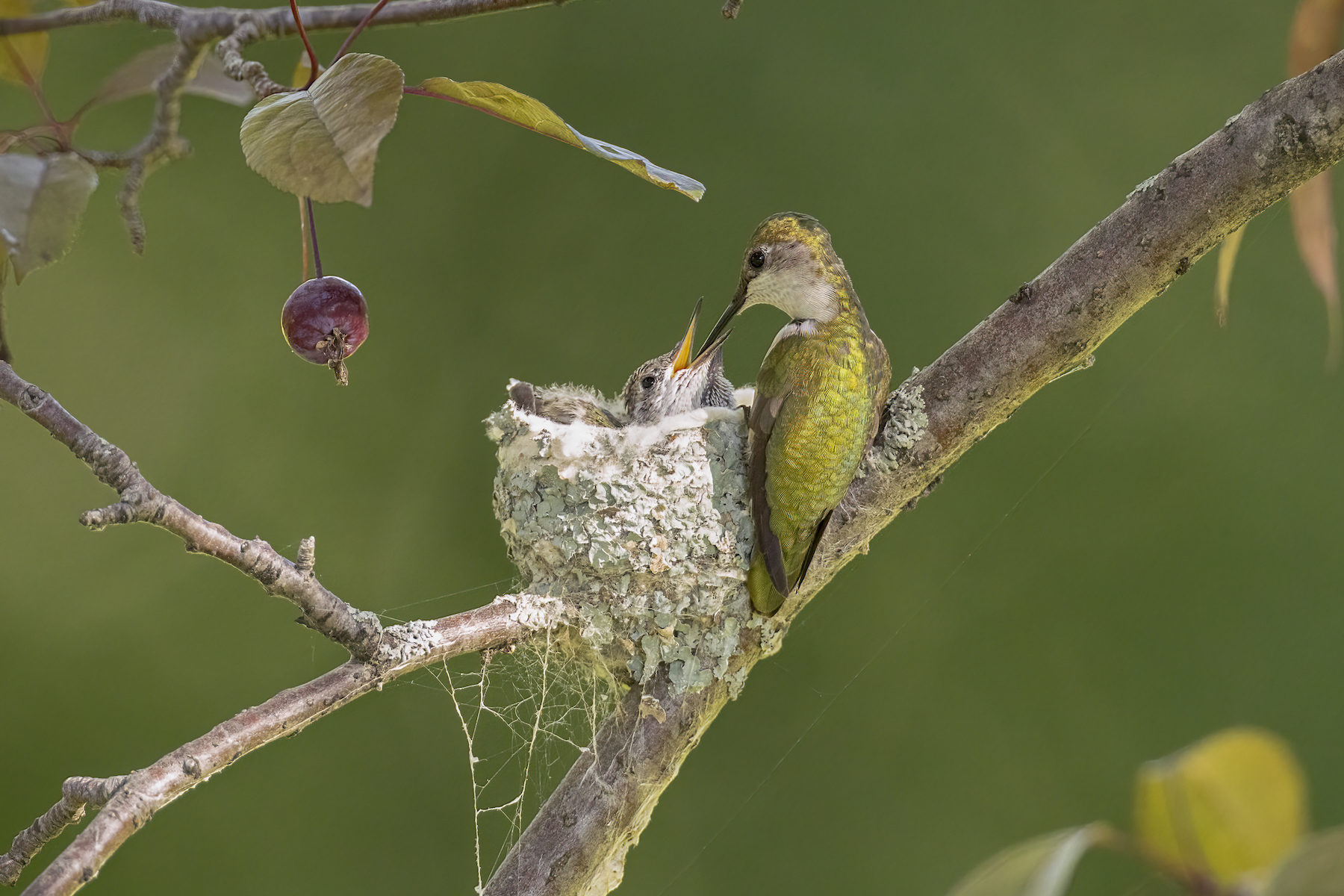
Create a healthy garden ecosystem by avoiding pesticides, since they eliminate the very insects hummingbirds depend on. Flowering plants naturally attract small insects and help create a balanced food web. Even spider webs serve a purpose. Hummingbirds use the silky strands as binding material to hold their delicate nests together.
Supplement with strategy
Once your yard provides shelter, structure, and natural food sources, feeders can serve as supporting features to attract more hummingbirds. When used thoughtfully, feeders enhance a well-designed habitat. They are most effective when used strategically and adjusted to the season.
In early spring, feeders are especially important when hummingbirds return from migration and natural blooms may still be limited. The extra energy helps them recover from their long journey. Through summer, feeders provide a steady supplement during periods of intense activity and extreme heat. By late summer and fall, they become even more valuable as flowers fade and hummingbirds increase their nectar intake to fuel migration.
Go ahead and hang those feeders, but choose simple designs with red or yellow accents at the feeding ports. Skip artificially dyed nectar, which offers no benefit to the birds. Instead, make your own by combining 4 parts water with 1 part plain white sugar.
Place feeders near shrubs or small trees so birds can reach cover quickly, but avoid hanging them deep inside dense foliage. Choose a spot in partial shade to keep nectar fresh longer, and hang more than one feeder if territorial behavior becomes an issue.
Create a place to stay
Food may bring hummingbirds in, but comfort and safety encourage them to stay. A truly inviting yard includes reliable water sources, resting spots, and nesting support. Unlike many backyard birds, hummingbirds rarely use traditional birdbaths. They prefer shallow water or a fine mist where they can fly through and bathe midair. A gentle fountain spray or mister mimics the moving water they are naturally drawn to.
Perching spots are equally important. Leave small, bare twigs or thin branches exposed so hummingbirds can rest between feeding flights and keep watch over their territory. These lookout points are especially valuable during the breeding season.
If possible, avoid pruning during nesting months. Hummingbird nests are tiny, only 1 to 2 inches in diameter, and well-camouflaged. They are often tucked into the fork of a small branch. Maintaining layered vegetation with trees, shrubs, and flowering plants provides the structure and protection they rely on year after year.
Attracting hummingbirds is not about hanging a single feeder and hoping for the best. It is about creating a living, layered habitat that provides food, shelter, water, and protection throughout the season. When you build the right ecosystem, feeders simply enhance what is already working. Do that well, and the tiny birds will grace you with their presence every year.
